, exact location withheld
Urbex Safety Checklist
A plain urbex safety checklist covering tetanus, boots, gloves, eyes, lungs, light, check ins, weather and signs to leave, tied to CDC, OSHA and NIOSH.
A good urbex safety checklist covers eight things before you go anywhere. Check your tetanus shot, your boots, your hands, your eyes, your lungs, your light, who knows where you are, and the weather, and then know the signs that mean you should leave. None of it makes a building safe, and a checklist is a poor substitute for deciding not to go.
This is entertainment, not medical, safety or legal advice. Every claim links to the agency it came from, and none of it is a reason to go inside anything.
Is your tetanus shot current?
Start here, because it costs nothing on the day. CDC’s Pink Book says tetanus bacteria usually enter the body through a wound, that the spores are widely distributed in soil, and that deep puncture wounds and crush wounds are among the injuries tetanus follows. Old floors have nails in them and old yards have soil on them.
The schedule is short. CDC’s current recommendations say adults should have a Td or Tdap booster every 10 years, and that after a wound a tetanus vaccine is indicated if more than 5 years have passed since the last dose. The Pink Book puts the 5 year rule on any wound that is other than clean and minor. I can’t tell you when your last shot was, and your doctor or pharmacy can. The longer version is in tetanus and rusty metal.
What goes on your feet, hands and head?
The U.S. Fire Administration’s guide for people evaluating vacant buildings gives a kit list. It says personnel entering should have work boots, gloves, eye protection, a hard hat, a flashlight and a radio or mobile phone. That list was written for fire departments, so it’s a floor and not a ceiling.
OSHA’s guidance on picking protective gear says safety shoes or boots with puncture protection are needed where nails, wire, screws, scrap metal and similar things could be stepped on, and that helmets are required where falling objects are a hazard. The same appendix says OSHA is unaware of any gloves that protect against all hand hazards, which is why the glove has to match the job. Details are in the best boots guide and the best gloves guide.
For eyes, EPA’s mold course says goggles have to keep out dust and small particles and that safety glasses or goggles with open vent holes are not acceptable. Dust is the thing an abandoned building has the most of.
What should you wear over your nose and mouth?
A cloth mask is not a respirator. For mold, CDC says to wear at least a NIOSH approved N95 respirator, and a half face or full face respirator for extended work or tearing out moldy drywall. EPA says only NIOSH approved respirators should be worn, and that an N95 gives no eye protection.
Two other hazards depend on disturbance. EPA says asbestos fibers may be released into the air by the disturbance of asbestos containing material, and that disease symptoms may take many years to develop. CDC says histoplasmosis spores are released after contaminated soil is disturbed, and that most outbreaks followed events that disturbed soil contaminated with bird or bat droppings. A respirator is for the air you can’t avoid, and it is not a reason to move things around. The respirator I list on the gear block is the 3M 6200 half face respirator, and the respirator guide covers what to look for.
Do you have a light you can trust?
You do not have a light you can trust if the only one you have is a phone. NIOSH says inadequate lighting can be a contributing factor in accidents, including slip and fall hazards that are harder to detect in low light. Most flashlights, including brand ones, aren’t bright enough, so I carry one good light and think of anything else as a spare. The best flashlight guide and the best headlamp guide go through what to check.
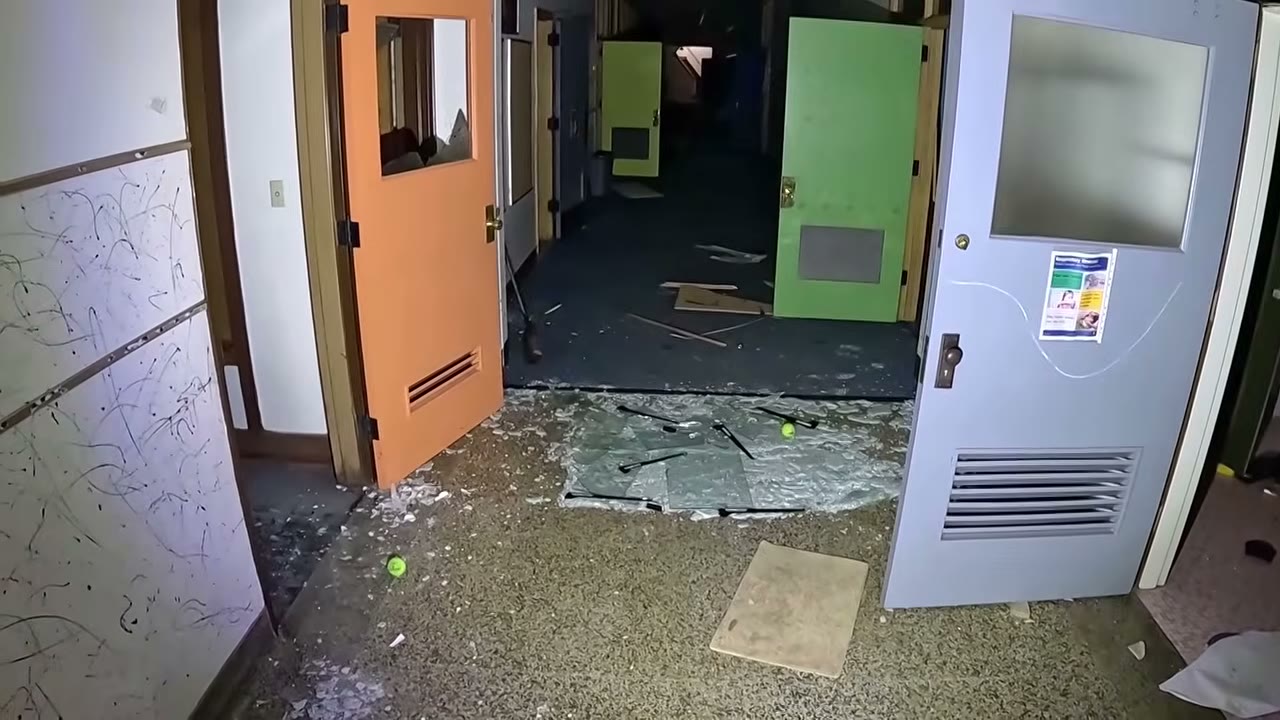
In the Catholic school video I said the hallway was very dark, and later that I wanted to get to the gym before my flashlight died. Plan for a light that is too dim and for a light that dies.
Does anyone know where you are?
This is the item people skip. The same USFA kit list includes a radio or mobile phone, and the NIOSH report on a maintenance inspector who died after falling 36 feet down an elevator shaft in an unoccupied office building recommended that people who work alone have a communication system and an emergency assistance plan. He was checking a building for damage and was by himself.
Tell one person where you are going and when you will check in, so someone can find you if you don’t. That is different from posting a location, and I keep most of mine private on purpose. The longer discussion is in should you explore abandoned places alone.
What will the weather do to your plan?
More than you think. CDC says hypothermia can happen at cool temperatures above 40°F if rain, sweat or cold water chills you, and it recommends several loose layers and water resistant boots for cold weather.
Heat is the other half. NIOSH describes heat stroke as showing up with confusion, altered mental status and slurred speech, and the first instruction is to call 911. For the seasonal versions read exploring in winter and exploring in summer heat.
What are the signs to leave?
Know them before you need them. Carbon monoxide is odorless and colorless, and CDC says the common symptoms are headache, dizziness, weakness, upset stomach, vomiting, chest pain and confusion. If you notice them, leave the building. Generators, stoves and furnaces are the sources it names.
OSHA’s definition of a confined space includes limited or restricted means for entry or exit and a design not meant for continuous occupancy, so a cellar with one stairway counts for that part of the definition. Leave anything that looks like that. For bats, CDC says bat bites can be tiny and to avoid touching them. If a needle is in your path, don’t touch it. NIOSH says that after a needlestick you should wash the site with soap and water and seek medical treatment immediately, and that is the whole plan.
What should you leave exactly where it is?
Almost everything. My code is to leave every place exactly as I found it, with no stealing, no vandalism and no spray paint, and to take only pictures and leave only footprints. That is a safety rule as much as a manners rule. Every object you pick up is a chance to disturb dust, cut a hand or open a drawer that holds something you didn’t expect.
Paint is one example. CDC says lead based paint was banned for residential use in 1978 and that homes built before then are likely to have some. When the paint peels and cracks it makes chips and dust. Peeling paint is easy to find in a building nobody has painted in years. The longer version is in lead paint in abandoned buildings.
What does this look like in practice?
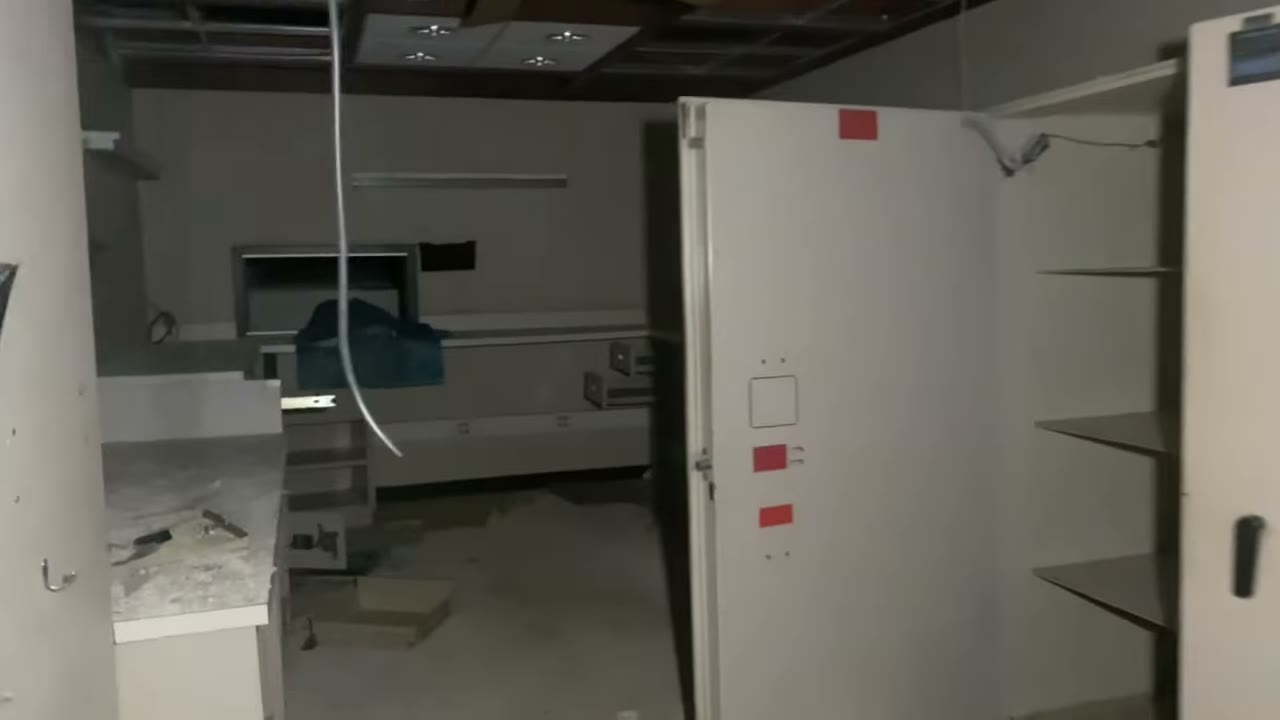
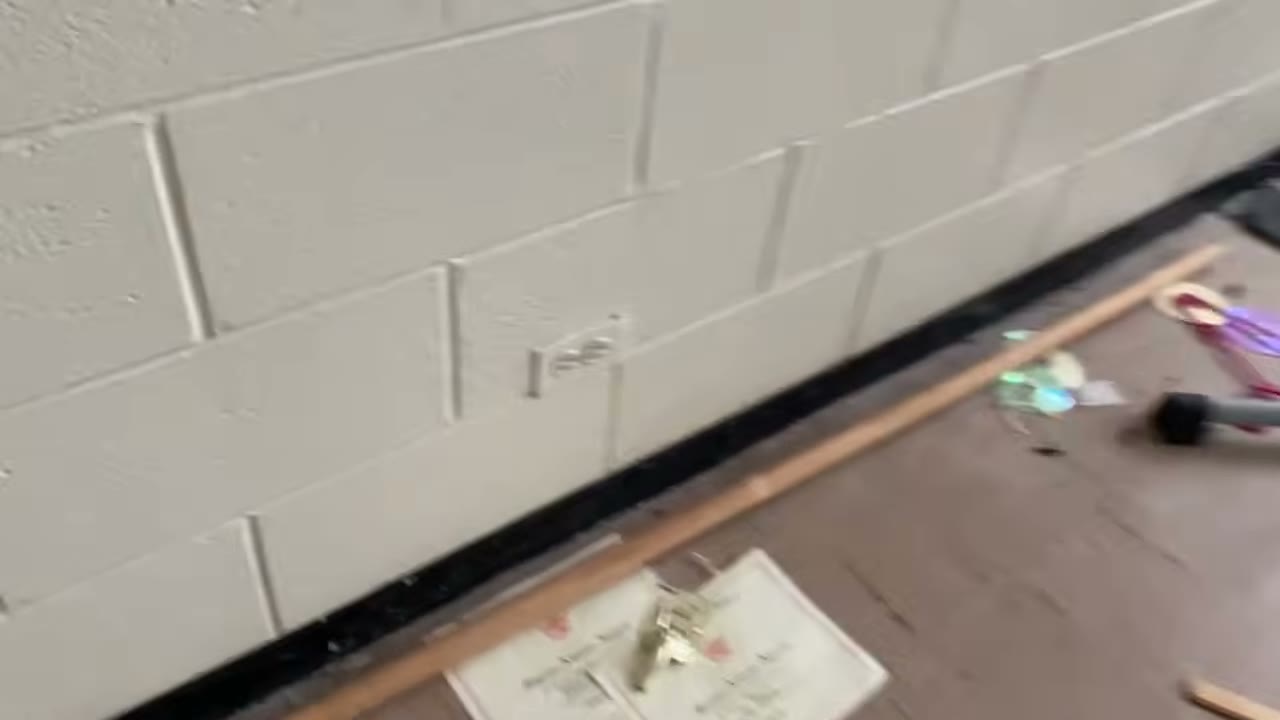
Mostly it looks like paying attention to small things. In the historic church video I said I didn’t know how safe the upstairs floor was to walk across, then that it was a little soft in one spot, and that it got really dark. That is a floor, a light and a decision in about thirty seconds. In the Catholic school there was glass on the floor of a hallway, and in the bank there was a ceiling with a cord hanging out of it.
How I find places, stay safe and film without burning locations is in my guide, How to Find Abandoned Places. Before any of that, is urban exploring illegal is worth reading, and what’s actually dangerous inside abandoned buildings has the hazards in more detail.
Run the list at home, and if you can’t tick every box, the building will still be there another day.
What I carried in
Same list as every video description.
Sources
- Basic Evaluation Procedures for Abandoned and Vacant Buildings, U.S. Fire Administration, Apr 2018
- Chapter 21 Tetanus, Epidemiology and Prevention of Vaccine Preventable Diseases, CDC, accessed Nov 4, 2026
- Use of Tetanus Toxoid, Reduced Diphtheria Toxoid, and Acellular Pertussis Vaccines, Updated Recommendations of the Advisory Committee on Immunization Practices, United States, 2019, MMWR, accessed Nov 4, 2026
- Mold Clean Up Guidelines and Recommendations, CDC, accessed Nov 4, 2026
- Mold Course Chapter 6, U.S. EPA, accessed Nov 4, 2026
- Learn About Asbestos, U.S. EPA, accessed Nov 4, 2026
- Causes of Histoplasmosis, CDC, accessed Nov 4, 2026
- Nonmandatory Compliance Guidelines for Hazard Assessment and Personal Protective Equipment Selection, OSHA, accessed Nov 4, 2026
- Officers, Stay Safe from Needlesticks, NIOSH, Dec 2024
- Maintenance Inspector Dies After Falling 36 Feet Down an Elevator Shaft, NIOSH FACE 91NJ021, Jan 7, 1992
- Illumination, NIOSH Mining, accessed Nov 4, 2026
- Carbon Monoxide Basics, CDC, accessed Nov 4, 2026
- Confined Spaces, OSHA, accessed Nov 4, 2026
- Preventing Hypothermia, CDC, accessed Nov 4, 2026
- Heat-related Illnesses, NIOSH, accessed Nov 4, 2026
- Preventing Rabies from Bats, CDC, accessed Nov 4, 2026
- About Lead in Paint, CDC, accessed Nov 4, 2026
More like this


The footage that never goes public lives on Patreon. It's paid, and it's where the rough cuts, the security run-ins and the early releases go.