, exact location withheld
Lead Paint in Abandoned Buildings
Peeling paint is everywhere in abandoned buildings. What CDC, EPA and OSHA say about lead paint, dust and chips, and why flaking walls matter.
If a building went up before 1978, there is probably lead in the paint, and once that paint starts to peel it turns into chips and dust. Peeling paint shows up in a lot of my videos, and most people watching it never think about what it is made of.
This is entertainment, not medical, safety or legal advice. Every claim here links to the agency it came from, and none of it is a reason to go inside anything.
Is there lead paint in an abandoned building?
Very likely, if the building is old. CDC says lead based paint was banned for residential use in 1978 and that homes built in the U.S. before that year are likely to have some. EPA’s family booklet puts the rule in simple terms, the older your home or childcare facility, the more likely it has lead based paint.
That date is for homes, and I’m not claiming every church, prison or factory follows it. The point is the age. Many abandoned buildings were built long before they were shut, and a building that has sat empty for twenty years can easily have been painted fifty or eighty years before that. Nobody repaints a building that is sitting empty.
There is no way to tell by looking. CDC says a lead paint inspection shows the lead content and a risk assessment identifies the hazards. Nothing in my videos comes with either one. A camera can’t do it. What you see is paint, and I can’t tell you what is in it.
Why does peeling paint matter more than paint that is intact?
Because intact paint stays put. CDC says when the paint peels and cracks, it makes lead paint chips and dust, and that any surface where paint wears from rubbing or friction is likely to cause lead dust. Windows and doors are the examples it gives. EPA’s booklet agrees and says deteriorated lead based paint, meaning peeling, chipping, chalking, cracking or damaged paint, is a hazard that needs immediate attention.
Read that list again and think about what an abandoned building is. Water gets in, the paint lets go of the wall, and the floor ends up covered in flakes. Nobody has swept it, so the chips and dust just sit there.
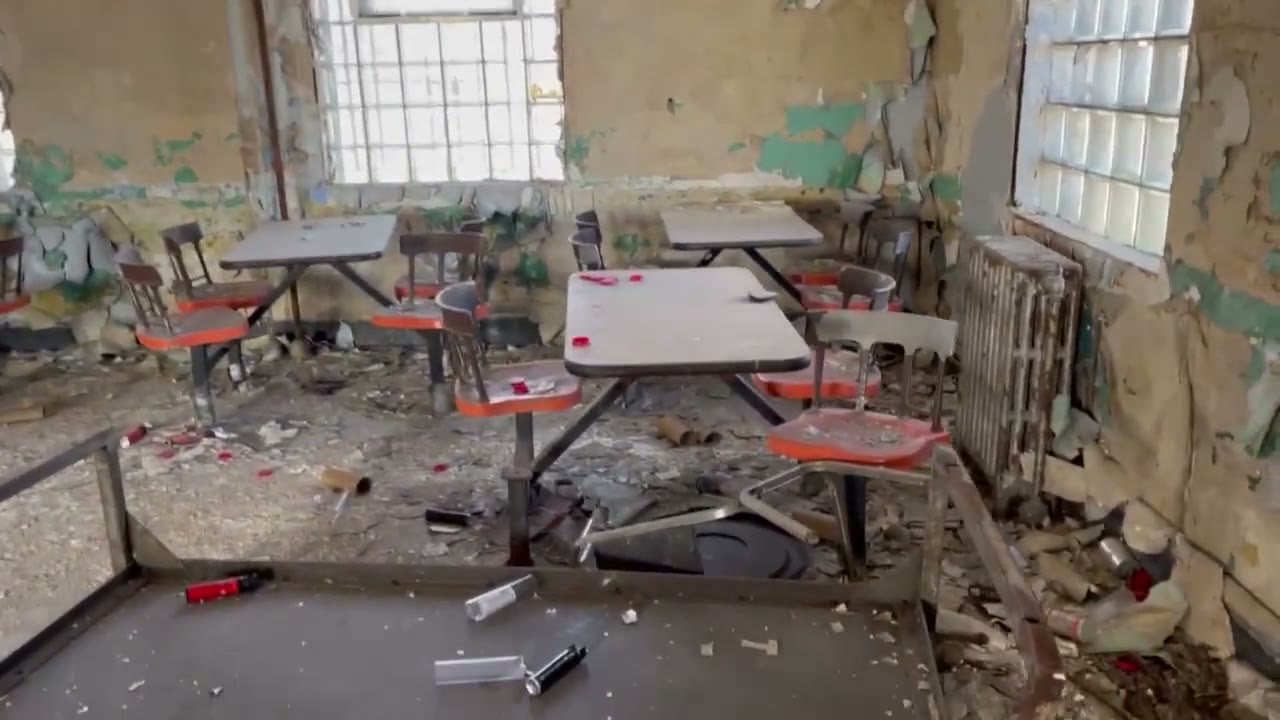
Dust is the part people forget. EPA says lead dust can form when lead based paint is scraped, sanded or heated, and that settled lead dust can get back into the air when a home is vacuumed or swept. So a floor that has been quiet for years is not safe just because nothing is moving. I’d assume anything else that stirs up a floor can do the same, but that part is my reasoning and not EPA’s.
How does lead get into your body inside a building?
Mostly through your mouth. ATSDR says lead exposure in the general population occurs primarily through ingestion, and that when lead paint deteriorates, house dust and the soil around the building can become contaminated. Lead then gets in mainly through hand to mouth activity. Touch a dusty windowsill, then eat, drink, smoke or rub your face, and you have a route.
Breathing it in is the second main route. ATSDR says inhalation may be the primary route of exposure for some workers in industries that involve lead, and it names adults doing home renovation among the people exposed that way.
I’m not saying a quick walk through a room gives anyone lead poisoning. The agencies don’t say that, and I’m not going to make up a number. What they do say is that the pathway exists and that it runs through dust and chips.
What does lead do to adults?
EPA’s booklet lists what lead exposure can cause in adults, and it is not a short list. It names an increased risk of miscarriage, babies born too early or too small, fertility problems, high blood pressure, digestive problems, nerve disorders, memory and concentration problems, and muscle and joint pain.
Children are the group CDC worries about most. It says young children face the greatest risk from lead paint and lead contaminated dust, and it says pregnant women should stay away from housing that is being renovated. If you live with kids or you are pregnant, that is a good reason to think harder about what comes home with you.
CDC says the best way to know whether someone has been exposed is a blood lead test, and that a healthcare provider can decide whether one is needed. That is a conversation for a doctor, not a blog.
How do professionals handle lead paint?
With rules, which is a useful comparison. OSHA’s lead standard for construction applies to demolition or salvage of structures where lead or materials containing lead are present, and it sets a limit of 50 micrograms of lead per cubic meter of air, averaged over eight hours. Its action level is 30. The standard also lists manual demolition, manual scraping and manual sanding among the tasks it covers where lead coatings are present.
EPA adds that contractors working in older homes must avoid methods that make lots of lead dust. It says open flame burning and dry sanding with power tools that lack a shroud and a HEPA attachment are among the prohibited methods, and CDC says peeling or chipping lead paint should be removed by qualified professionals.
Put those together. The people paid to remove this stuff work under an exposure limit and rules about methods. Someone filming in a room where the paint is coming off the walls has none of that. I’m not saying that to scare anyone. It is simply the gap between how the pros treat the material and how an explorer meets it.
What does this look like on a real explore?
It looks like most of my videos. At the prison I said “the peeling paint oh my god” in the dish room, and later in a food prep room I said it was insane in there. The frame above is the lunch hall from the same video.
The funeral home was the same story. The funeral home video opens with me saying there was a ton of peeling paint, some mold, and a floor that creaked a lot. In the historic church I pointed out the peeling paint in the sanctuary and again up by the organ loft. At the 2018 farmhouse I called it “really cool peeling paint.”
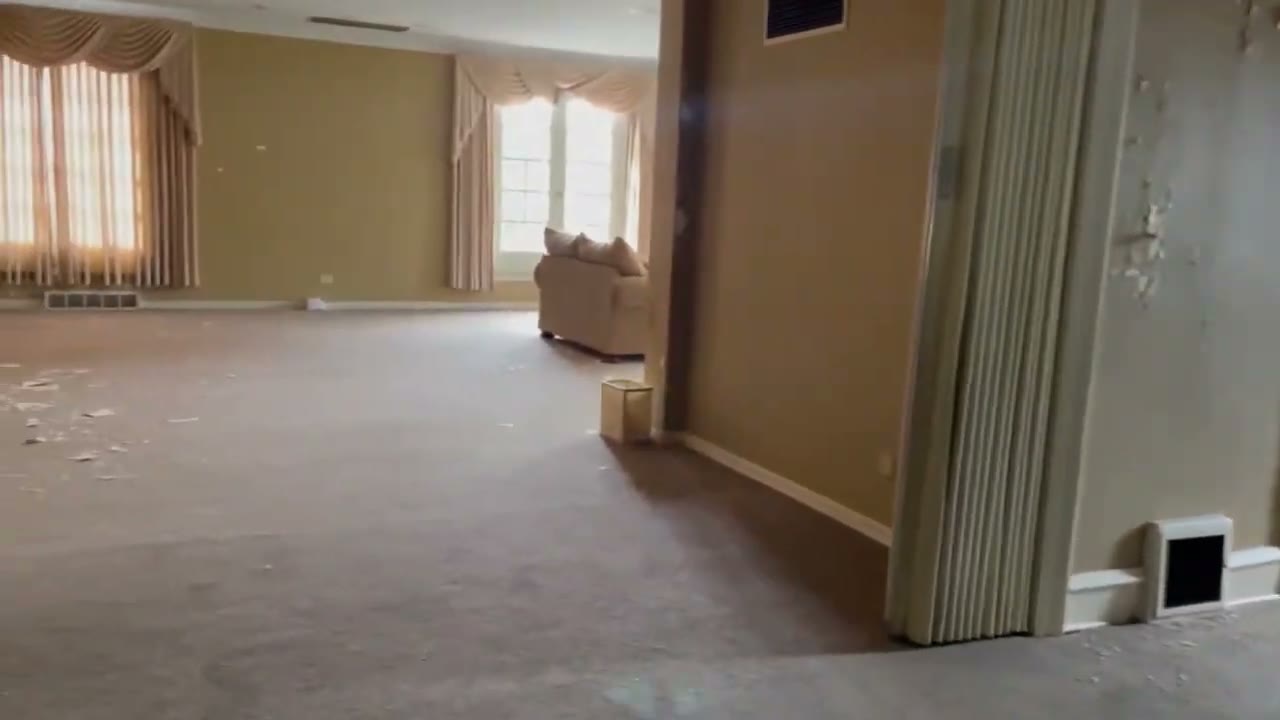
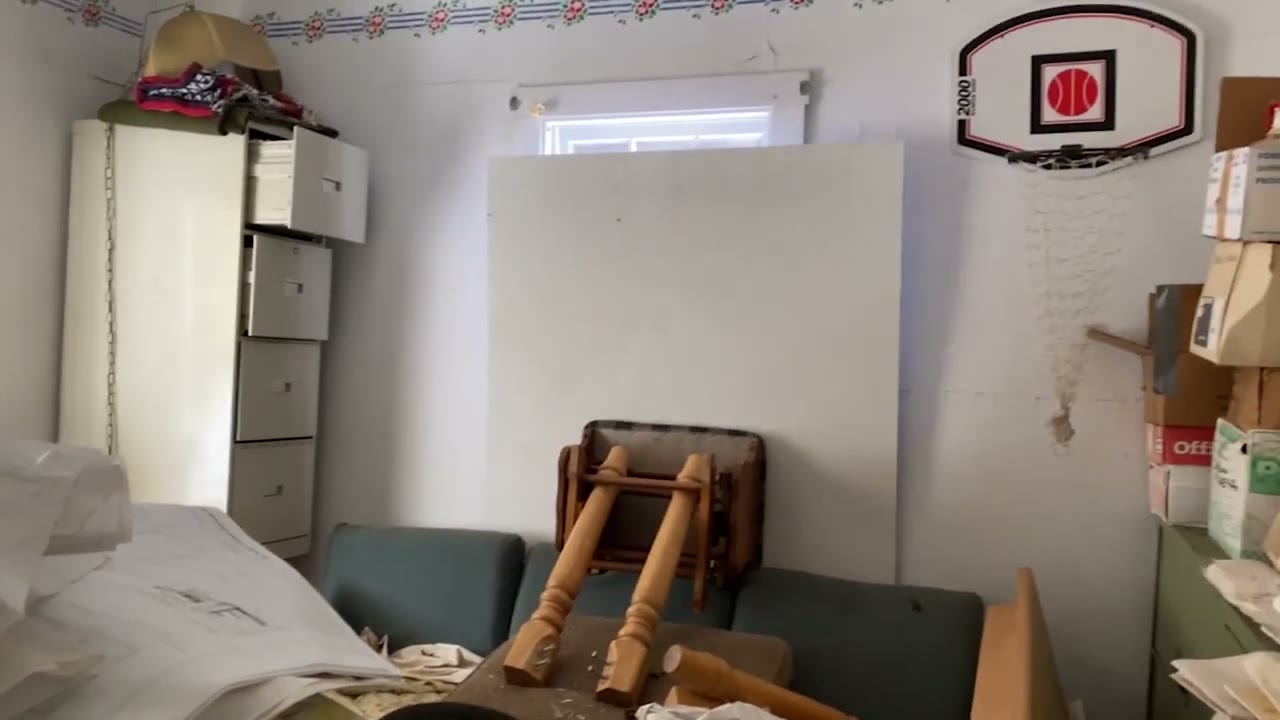
I called that paint cool on camera. The agencies call it a hazard, and they are the ones with the data. Those two things can both be true, and the second one is why I’m writing this post.
What can you do about it?
Not much, which is the honest answer. You can’t test the paint from where you stand, and you can’t tell old coatings from new ones. The respirator I carry is the 3M 6200 half face respirator on my list, and I won’t claim it makes a room safe. It does nothing about the dust on your hands. For lead paint, CDC’s advice is to leave it to qualified professionals.
My code covers the rest. Leave everything exactly as you found it, and that includes the paint. A flake off a wall is not a souvenir, and it is the exact material the health agencies are worried about. If you want the full picture of how I stay safe on explores, it is in my guide, How to Find Abandoned Places. For the other big hazard that lives in old walls, see asbestos in abandoned buildings, and the wider list is in what’s actually dangerous inside abandoned buildings.
Paint that is peeling has already started turning into chips and dust, and the people the agencies trust with it are trained professionals.
What I carried in
Same list as every video description.
Sources
More like this


The footage that never goes public lives on Patreon. It's paid, and it's where the rough cuts, the security run-ins and the early releases go.