, exact location withheld
Asbestos in Abandoned Buildings: Where It Is and Why It Matters
Which old building materials contain asbestos, when US use was restricted, why disturbed material matters, and what a P100 respirator is rated to do.
Asbestos is a group of naturally occurring mineral fibers that was used for decades in building materials like pipe insulation, floor tile and roofing because it is strong and resists heat. In an old building it is a material you can’t identify by sight, and it matters when it is disturbed and the fibers get into the air. This page is entertainment and general information, not medical advice.
Which building materials contain asbestos?
EPA says asbestos was used in construction materials “for insulation and as a fire-retardant” because of its fiber strength and heat resistance, and lists roofing shingles, ceiling and floor tiles, paper products and asbestos cement products. Its asbestos overview adds vinyl floor tiles, the backing on vinyl sheet flooring and adhesives, roofing and siding shingles, textured paint and patching compounds, and hot water and steam pipes coated with asbestos material or covered with an asbestos blanket or tape.
The Consumer Product Safety Commission names steam pipes, boilers and furnace ducts insulated with an asbestos blanket or paper tape, and soundproofing or decorative material sprayed on walls and ceilings. Oregon’s environmental agency, in its list of materials that may contain asbestos, includes acoustical ceiling tiles, spray applied insulation, soundproofing and fireproofing, and brittle roofing felt.
Flooring was a big share of the market. A USGS report puts flooring at an average of 21 percent of US asbestos consumption from 1965 through 2003, ahead of asbestos cement pipe at 18 percent and roofing products at 12 percent.
When was asbestos common, and when was it restricted?
The ATSDR says asbestos was widely used in construction until the 1970s and that many construction materials produced before 1975 contained it. According to USGS, US consumption peaked at 803,000 metric tons in 1973 and fell rapidly afterward. By 2000 it was about 15,000 tons, or 1.9 percent of the 1973 level.
EPA’s timeline of actions lists the dates:
- In 1973, EPA banned spray applied surfacing asbestos material for fireproofing and insulating.
- In 1975, EPA banned installing asbestos pipe insulation and block insulation.
- In 1977, the CPSC banned asbestos in artificial fireplace embers and wall patching compounds.
- In 1978, EPA banned other spray applied surfacing materials.
- From 1989 to 1991, EPA tried to ban most asbestos products, and a court overturned most of that rule in 1991.
- In 2024, EPA announced a ban on ongoing uses of chrysotile asbestos.
None of that removed what was already inside walls. OSHA’s construction standard treats thermal system insulation and surfacing material in buildings constructed no later than 1980 as presumed asbestos containing, and says the same of asphalt and vinyl flooring installed no later than 1980. A presumption is a rule for workers. It is not a test result.
Why does intact material matter less than disturbed material?
The CPSC’s advice is that usually the best thing is to leave asbestos material in good condition alone, because material in good condition will generally not release fibers. EPA says exposure may occur only when the material is disturbed or damaged, and that airborne levels can rise after cutting, sanding or other remodeling. The ATSDR’s fact sheet says material that is not disturbed or deteriorated does not, in general, pose a health risk.
The ATSDR separates friable material, which is easily pulverized or crumbled, from material embedded in something solid like wallboard. Oregon’s list shows the same split. Whole 9 inch and 12 inch floor tiles are nonfriable, but tiles that have been shattered or fragmented are friable, and so are dry, brittle adhesives.
An abandoned building is a place where materials get disturbed without anyone deciding to. Roof leaks, collapsed ceilings, scrappers and weather all do it, and walking through the debris does too.
It matters because the health sections of EPA’s page list lung cancer, mesothelioma and asbestosis. The CPSC says symptoms do not usually appear until about 20 to 30 years after the first exposure. OSHA’s limit for workers is 0.1 fiber per cubic centimeter of air as an eight hour average.
What does asbestos look like in a decaying building?
Oregon’s list describes pipe insulation as white with a chalk like appearance, or looking like corrugated cardboard, and often called air cell. Boiler and tank insulation gets the same description. On a floor, the old school size is the 9 inch by 9 inch tile, which the Oregon list names alongside 12 inch tile. The adhesive under old tile is a mastic, and the list flags mastic that is dry and brittle as friable. It also marks spray applied textured and acoustical ceilings as friable, and brittle built up roofing felt, while cement siding and roofing in whole, unbroken pieces is listed as nonfriable. The ATSDR adds that each fiber is too small to see with the naked eye, so what you see is the material, never the fibers.
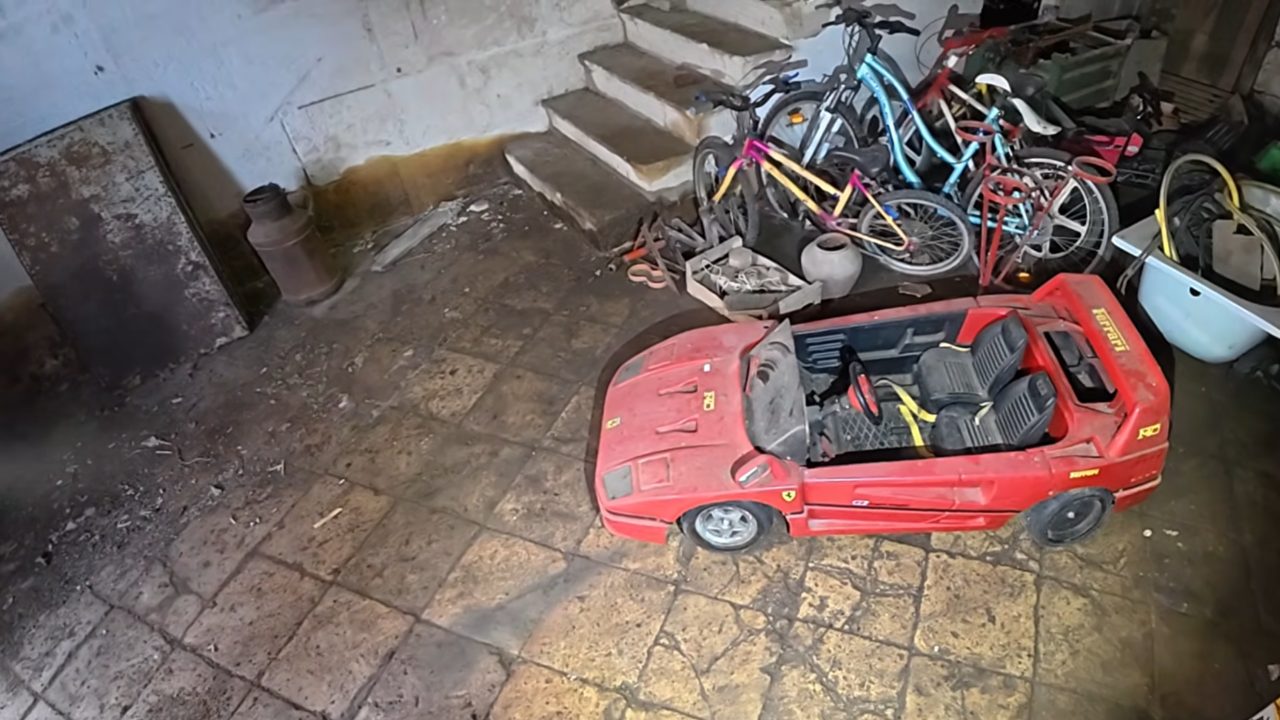
So the signs worth noticing are the ones that mean a material has been damaged, like wrap hanging off a pipe, broken tile with chunks missing, ceiling panels on the floor and roofing felt flaking in sheets. Those describe the shape a material is in, and say nothing about what it’s made of. A pipe wrap can look identical whether it is asbestos or something else.
Which respirator rating matters?
P100. NIOSH’s respirator guide says P-series filters are strongly resistant to oil and the 100 rating filters at least 99.97 percent of airborne particles. OSHA’s 1996 letter says N100, R100 and P100 respirators are certified at the 99.97 percent level and are identified as HEPA respirators, with P100 the most universal.
Three details change what that means:
- A filtering facepiece, the disposable kind, is not what OSHA wants for this. Its asbestos standard says employers must not select or use filtering facepiece respirators against asbestos fibers.
- A reusable half facepiece respirator has to form a tight seal against the face, and NIOSH says fit testing is required.
- A surgical mask is not a respirator. The FDA describes it as loose fitting, with edges not designed to form a seal and no filtering of very small particles.
A P100 is the minimum rating, not permission. For any detectable asbestos, NIOSH’s pocket guide recommends positive pressure supplied air or self contained breathing apparatus, and lists an air purifying full facepiece respirator with a P100 filter for escape only.
What can’t you tell by looking, and what does that mean on an explore?
Almost everything. The CPSC says you can’t tell whether a material contains asbestos simply by looking at it, unless it is labeled, and that if in doubt you should treat it as if it does or have it sampled by a qualified professional. The ATSDR says each fiber is too small to see with the naked eye, and NIOSH describes asbestos as odorless. There is no smell to follow and no dust cloud to notice. The CPSC also says taking samples yourself is not recommended, because a professional knows what to look for, and OSHA’s 1980 presumption exists for the same reason. For workers, the default answer when nobody has tested is yes.
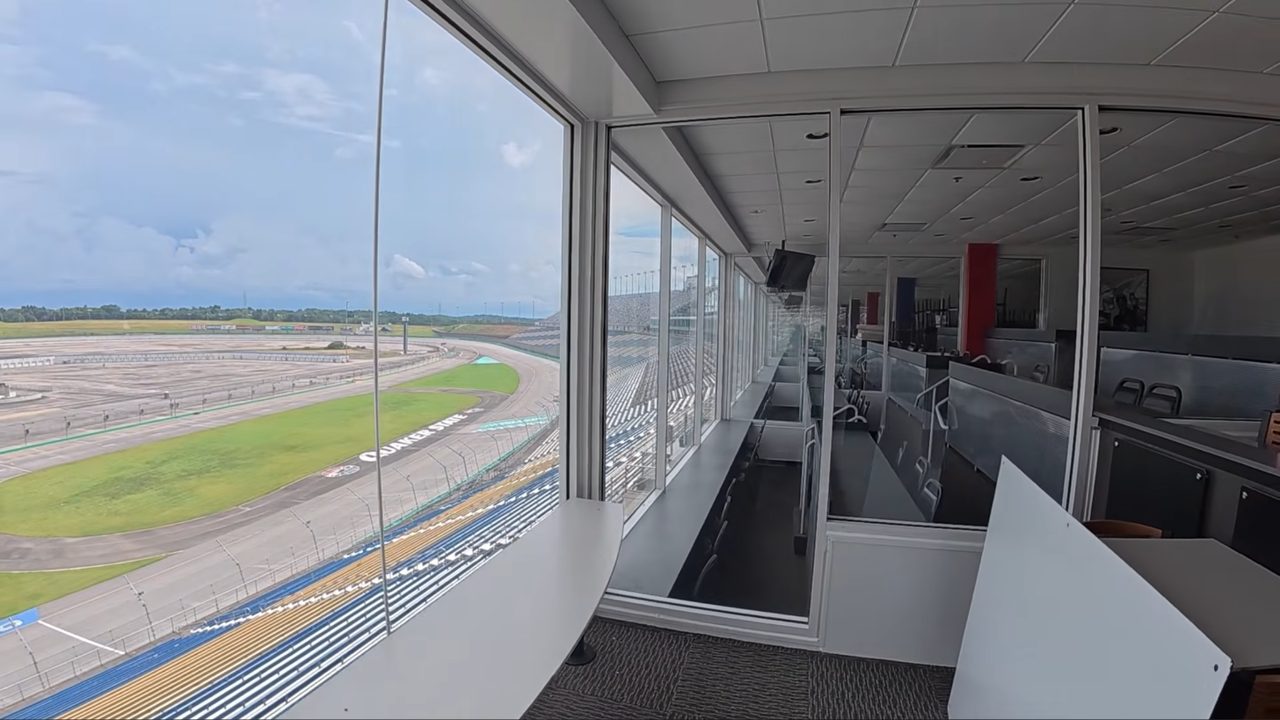
In practice, that means the footage from the speedway and the French manor house shows materials from these lists, like suspended ceilings, floors, plaster and pipes. A video frame can’t tell you what any of them are made of, and neither can standing in the room.
The rest of how I stay safe is in my guide, How to Find Abandoned Places.
If you can’t tell what a material is, treat it as if it contains asbestos.
What I carried in
Same list as every video description.
Sources
- Learn About Asbestos, US EPA, updated Jul 13, 2026
- Asbestos' Impact on Indoor Air Quality, US EPA, updated Jan 13, 2026
- EPA Actions to Protect the Public from Exposure to Asbestos, US EPA, updated Jan 21, 2026
- Asbestos In The Home, US Consumer Product Safety Commission
- Asbestos Toxicity: Where Is Asbestos Found?, ATSDR, reviewed May 19, 2023
- Asbestos and Your Health, ATSDR
- ToxFAQs for Asbestos, ATSDR, Sep 2001
- Worldwide Asbestos Supply and Consumption Trends from 1900 through 2003, USGS Circular 1298, 2006
- 29 CFR 1926.1101, Asbestos, OSHA
- Particulate Respirators Certified under 42 CFR Part 84, OSHA letter of interpretation, Sep 3, 1996
- A Guide to Air-Purifying Respirators, NIOSH Publication 2018-176, Aug 2018
- NIOSH Pocket Guide to Chemical Hazards: Asbestos, CDC/NIOSH, Oct 30, 2019
- N95 Respirators, Surgical Masks, Face Masks, and Barrier Face Coverings, US FDA, Oct 21, 2024
- Materials that may contain asbestos, Oregon Department of Environmental Quality, Dec 24, 2018
More like this



The footage that never goes public lives on Patreon. It's paid, and it's where the rough cuts, the security run-ins and the early releases go.