, exact location withheld
Black Mold in Abandoned Buildings: What the Smell Is Telling You
What black mold means, why wet abandoned buildings grow it, what the musty smell is, what the CDC says it does to health, and when a mask is not enough.
“Black mold” is a nickname, not a species. The term gets used for molds that may produce mycotoxins and for one specific mold, Stachybotrys chartarum, and the CDC says the color of a mold does not necessarily make it more or less dangerous. Abandoned buildings grow a lot of it because water gets in and nobody dries it out. This page is entertainment and general information, not medical advice.
What does “black mold” actually mean?
EPA says plainly that “black mold” is not a species or a specific kind of mold, and neither is “toxic mold.” The news media use the terms for molds that may produce mycotoxins, or for a specific mold, Stachybotrys chartarum. EPA adds that molds come in many colors, including white, and that no one can tell whether a mold is producing mycotoxins just by looking at it.
The CDC describes Stachybotrys chartarum as a greenish black mold that grows on material with a lot of cellulose, such as fiberboard, gypsum board and paper, when there is constant moisture. CDC’s NIOSH says there are many mold species in many colors, that the color “does not necessarily indicate that it is more or less dangerous,” and that molds that make mycotoxins should be considered the same as other molds that grow in a building. The molds themselves are not toxic or poisonous, it says. Some are toxigenic, meaning they can produce toxins.
The practical conclusion is the CDC’s. It is not necessary to determine what type of mold you have, and all molds should be treated the same for health risk and removal.
Why do abandoned buildings grow so much of it?
Moisture. EPA calls it the most important factor influencing mold growth indoors, and the CDC says mold grows where there is moisture, such as around leaks in roofs, windows or pipes, or where there has been a flood. EPA’s guidance is to dry water damaged areas and items within 24 to 48 hours, and to keep indoor humidity below 60 percent, ideally between 30 and 50 percent. The CDC says no higher than 50 percent.
An abandoned building fails all of that at once. Nobody patches the roof, so water keeps getting in. Nobody dries a flooded basement. With the heating and cooling off, nothing pulls humidity down. EPA’s moisture guidance lists dehumidifiers, air conditioners and exhaust fans as the tools for that, and a vacant building usually has none of them running. That last part is my inference, not EPA’s, but it follows from what the agency lists. Some buildings do keep their systems on, for reasons covered in why abandoned buildings still have power.
What is the smell, and what is it telling you?
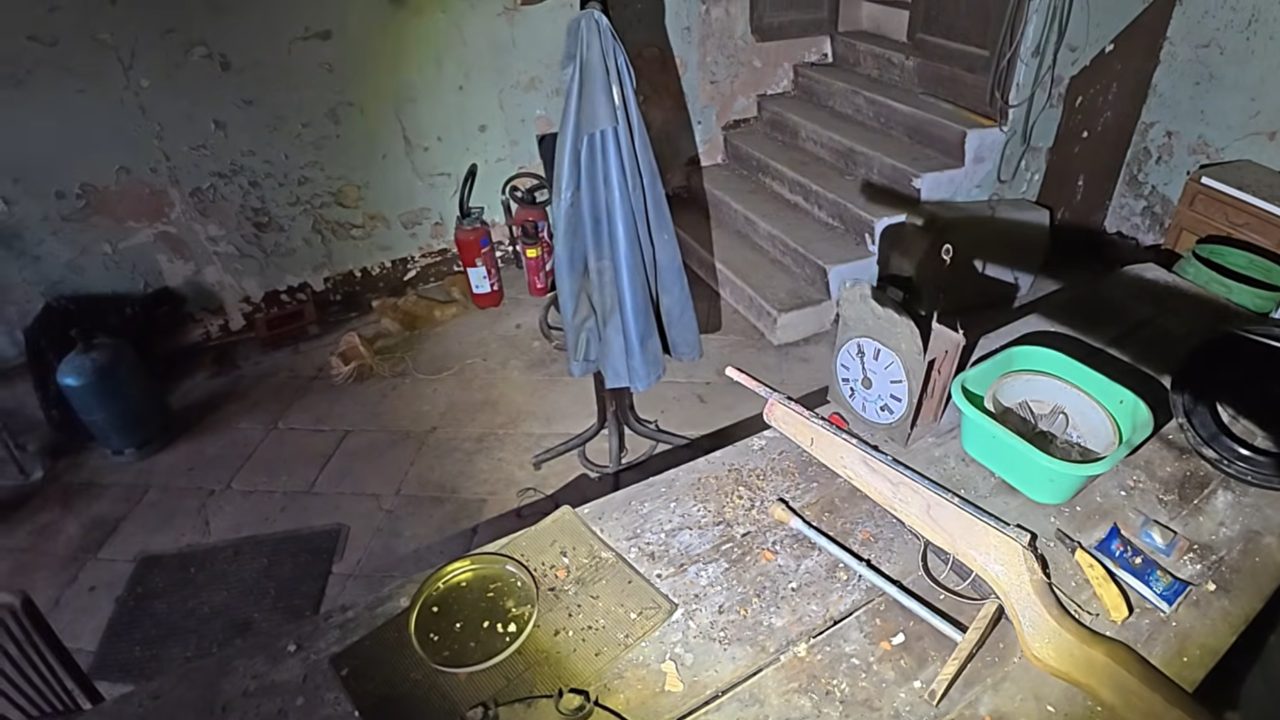
The musty smell is chemistry. EPA explains that some compounds produced by molds have strong smells and are released quickly into the air. They are called microbial volatile organic compounds, or mVOCs, and they can be the source of the “moldy odor” people associate with mold growth. The CDC puts it more simply, saying mold can look like spots of many different colors, and it can smell musty.
EPA’s own reading of the smell is that a moldy odor suggests mold is growing in the building and should be investigated. In other words, the smell points to water. It says where moisture has been, and nothing about how much mold there is or what kind. That is why the headline on this page is about the smell. It is the one warning sign that arrives before you see anything.
The health effects of inhaling mVOCs are largely unknown, EPA says, although exposure has been linked to headaches, nasal irritation, dizziness, fatigue and nausea.
What does the CDC say it does to your health?
Less than the nickname suggests. The CDC says that for some people, mold can cause a stuffy nose, sore throat, coughing or wheezing, burning eyes or a skin rash. People with asthma or mold allergies may have severe reactions, and immune compromised people and people with chronic lung disease may get lung infections from mold.
On Stachybotrys specifically, the CDC says a possible association with acute idiopathic pulmonary hemorrhage in infants has not been proven, that no test exists that proves an association between the mold and particular health symptoms, and that it and other molds may cause nonspecific symptoms. EPA adds that symptoms like these may be caused by other exposures or conditions unrelated to mold.
NIOSH adds that no indoor space is completely free from mold spores, so some exposure is unavoidable. An old building is not unusual for having mold. What it has is more of it, in places you can’t see. OSHA notes that allergic reactions can be immediate or delayed.
Where does mold hide in an old building?
EPA lists places it may be hidden. They include the back side of drywall, wallpaper or paneling, the top side of ceiling tiles, and the underside of carpets and pads. It also names areas inside walls around leaking or condensing pipes, the surface of walls behind furniture, inside ductwork, and in roof materials above ceiling tiles. Absorbent or porous materials like ceiling tiles and carpet may have to be thrown away if they become moldy. The visible stain is the smaller part of the picture, which is an inference from that list, not a quote. The CDC’s position is that Stachybotrys or other molds found in a building should be removed, and NIOSH says any mold growing in a building indicates a water or moisture problem that should be addressed.
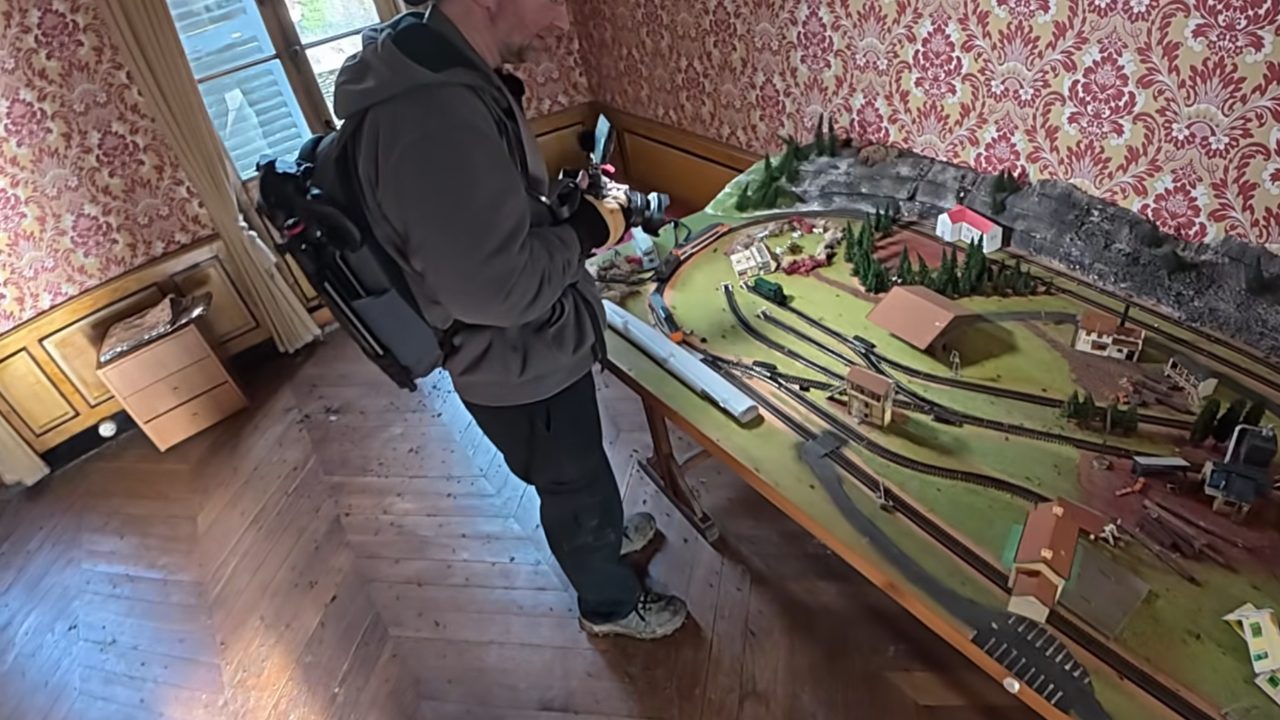
That matches what the CDC says Stachybotrys eats, which is paper and gypsum board. Drywall is a paper faced material, and a ceiling that has been wet for years is a good place to look for the smell before you walk under it.
When is a mask not enough?
A mask is a loose barrier. The FDA says a surgical mask is loose fitting, its edges are not designed to form a seal, and it does not filter very small particles. An N95 respirator is designed for a very close facial fit and very efficient filtration.
OSHA’s mold bulletin is written for people cleaning up mold at work. It recommends respiratory protection such as a disposable N95 for smaller jobs, says either a half mask or a full face air purifying respirator can be used at a middle tier, and calls for full face respirators with HEPA cartridges for extensive contamination, defined as more than 100 contiguous square feet. It also says safety glasses or goggles with open vent holes are not appropriate. A half facepiece respirator only works if it seals, and NIOSH says fit testing is required.
My read is that most explorers underprotect, and a loose mask in a building with a wet ceiling and a strong smell is the usual version of that.
What does this look like in practice?
The room full of dead bees in the French manor house shows that an old building has more than one thing to smell, and the camera carries none of them. The smell is the thing it can’t carry, as I wrote in that post. I am not saying anything about mold in that house.
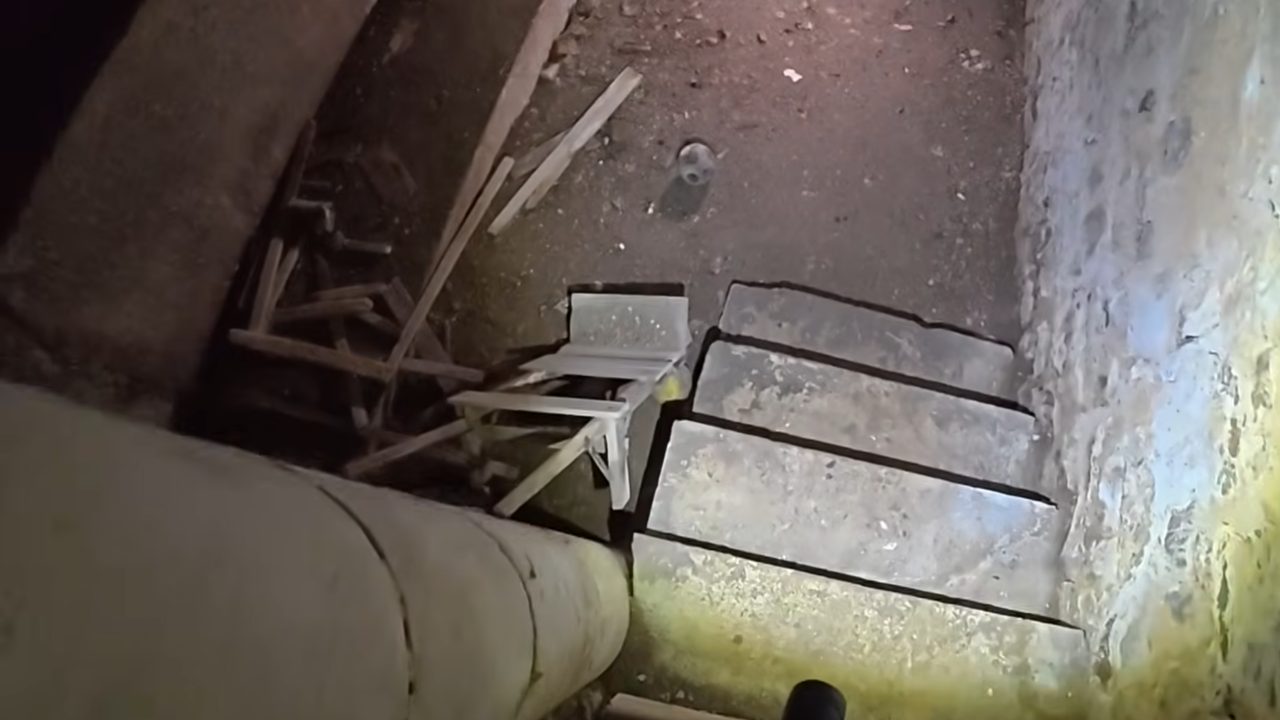
The speedway is the other end of it. It’s a track whose power and air conditioning are still running, the kind of building where moisture is being managed. The tunnel under the track is lit and sits at what feels like 50 degrees no matter what it’s doing outside. The buildings to worry about are the ones where nothing is managing water at all, with stained ceilings, sagging tiles and wet carpet. How I scout a place before I go in is in my guide, How to Find Abandoned Places.
What I carried in
Same list as every video description.
Sources
- Mold Course Chapter 1, US EPA, updated Feb 18, 2026
- Mold, Testing, and Remediation, CDC/NIOSH, Feb 25, 2025
- Facts About Stachybotrys chartarum, CDC, May 29, 2024
- Mold, CDC, Sep 26, 2024
- A Brief Guide to Mold, Moisture and Your Home, US EPA, updated Feb 18, 2026
- What are the main ways to control moisture in your home?, US EPA, updated Feb 18, 2026
- What does mold smell like?, US EPA, updated Sep 8, 2026
- A Brief Guide to Mold in the Workplace, SHIB 03-10-10, OSHA, Nov 8, 2013
- N95 Respirators, Surgical Masks, Face Masks, and Barrier Face Coverings, US FDA, Oct 21, 2024
- A Guide to Air-Purifying Respirators, NIOSH Publication 2018-176, Aug 2018
More like this


The footage that never goes public lives on Patreon. It's paid, and it's where the rough cuts, the security run-ins and the early releases go.