, exact location withheld
Why Do Abandoned Buildings Still Have Power?
Insurance, sprinklers, sump pumps, frozen pipes and cameras: why vacant buildings keep the power on, what's only a battery, and why you never touch a panel.
Abandoned buildings still have power because a building can look abandoned and still have an owner, and owners have reasons to keep some of the power on, such as insurance, sprinklers, pumps, heat and cameras. Some buildings are stuck in estates or court cases, and some of what looks like power is only a battery, or isn’t electric at all.
Entertainment, not legal advice. Live power in an empty building is a hazard, not a bonus, and this post explains why it’s there, not how to use it.
Who is still paying the electric bill?
Somebody has to be. ComEd’s landlord agreement says, “Continuous service will be provided to the Landlord once a tenant cancels their service.” The landlord is responsible for the charges while the premises are vacant, and if a property comes off the agreement, service is disconnected until someone puts their name on it. That form is for landlords, but it shows the logic. When the tenant leaves, the account doesn’t have to close. It can move to the owner.
Owners also keep paying while they try to sell. Chalkbeat reported that Chicago Public Schools spends between $100,000 and $150,000 a year to maintain and secure each vacant school, and that Von Humboldt, sold in 2015 for $3.1 million, still sits vacant.
Some buildings even have a person checking on them. Chicago’s vacant building FAQ says it plainly. “The presence of a guard or watchman does not mean a building is occupied.” A building can have someone looking after it and still be, on paper, empty.
Do insurance and city rules make owners keep systems on?
They push owners that way.
Insurance first. IRMI walks through the standard commercial property form (ISO CP 00 10). Once a building has been vacant for more than 60 consecutive days, the policy stops paying for vandalism, sprinkler leakage unless the system was protected against freezing, glass breakage, water damage, theft and attempted theft, and it cuts payment on other covered losses by 15 percent. Adjusters International adds that other forms may word this differently, that the standard homeowners form (HO-3) excludes freezing damage to plumbing unless heat is maintained or the water supply is shut off, and that under a protective safeguards endorsement an insurer can deny a fire loss if the owner knew a sprinkler or alarm was impaired and didn’t say so, or didn’t keep it in complete working order.
Insurers’ own vacant building guides read like a case for leaving things on. AmTrust recommends an exterior camera system, exterior lighting, and a fire alarm that monitors water flow and is watched by a company that alerts the fire department. Marsh recommends a monitored intrusion alarm and says to consider cameras. Sompo says to shut off “unnecessary utilities” but also to retain a central station to monitor water flow and test alarm systems, and to install security cameras.
Then cities. Chicago’s code for vacant buildings requires continuous exterior lighting at exits from dusk to dawn, which can be battery or solar powered, and says water pipes must be “either completely drained or heated to resist being frozen.” Owners must also carry liability insurance of at least $300,000 per occurrence for residential buildings and $1,000,000 for others. In Wheaton, Illinois, the city’s vacant building page says vacant commercial buildings’ fire alarm, sprinkler and standpipe systems “shall be maintained in operable condition at all times,” and adds, “Exit signs shall be lit.” The exceptions need city approval and assume an emptied building, meaning premises cleared of combustible materials and debris, or an unheated building with “no contents or storage.” A building with everything left inside fits neither.
What do heat, sprinklers and pumps actually protect?
Water, mostly. Frozen pipes split. In January 2014, News 9 reported that a sprinkler line burst in an abandoned building in Oklahoma City, with cold weather believed responsible, and water poured into the street, where it froze. Marsh recommends keeping heat above 5°C (41°F) in a vacant building, and AmTrust says a minimum of 40°F in cold climates.
Sump pumps are the quiet one. FEMA’s basement flooding guide says a basement can flood when the power goes out, and calls a battery backup pump an inexpensive safeguard. A basement with a pump needs power or a battery, or it can flood. Air conditioning shows up in the guides too. AmTrust suggests setting it around 85°F in warm climates to limit humidity and mold.
Fire is the other reason, and it cuts both ways. Marsh says working fire alarms and sprinklers matter in a vacant building because they are usually the only fire protection or notification there is. The U.S. Fire Administration counted about 23,800 vacant residential building fires a year from 2013 to 2015, 6 percent of all residential building fires. Intentional fires were the leading cause, at 34 percent. Electrical malfunction accounted for 8 percent. Power protects a vacant building, and it can also burn one.
What about estates, bankruptcies and court cases?
Some buildings are stuck, not abandoned. In France, when heirs inherit a house together, the estate can stay in “indivision” until it is finally divided, and in the meantime the property generally can’t be sold or rented, The Connexion reported in 2025. French MPs said bitter standoffs like that can last 20, 30 or 40 years. The French mansion post has the longer version.
In the United States, a bankruptcy filing usually triggers an automatic stay that, according to the federal courts, stops actions such as lawsuits, foreclosures, garnishments and most collection activities. In a receivership, a court appoints a neutral third party to take possession of, manage or preserve property that is the subject of litigation, which Cornell’s Legal Information Institute says is meant to protect it from neglect and waste. None of that stops a building needing heat, insurance and a working pump. In a receivership, the receiver’s job is to preserve it while the lawyers work.
Is that glow actually power?
Not always. Emergency lights and exit signs are built to switch to a battery when the building loses power. Brighton, NY’s emergency lighting guidance says most are designed to run 90 minutes on battery, which it describes as the code’s required minimum, and that the fixture is connected to the building’s power, which keeps the battery charged. So a lit sign in a closed building can mean the building still has power, from the grid or a generator, that the power failed recently, or that the sign isn’t electric.
Some signs aren’t. EPA says tritium exit signs will glow without electricity or batteries for more than 10 years, that an intact sign emits no radiation, and that if one is broken you should never tamper with it, leave the area immediately and call for help. That’s one more reason for the code, which is to leave every place exactly as you found it. A glowing exit sign is not a souvenir.
A building’s lights are not a plan. Most flashlights, including brand ones, aren’t bright enough, which is why I carry one good light.
Why do you never touch a panel?
Because you can’t know what you’re touching. A construction electrical safety workbook that OSHA hosts, using NIOSH figures, lists 50 to 150 milliamps as the range where a person cannot let go of the current and death is possible. Its first option for protecting workers is to turn off the power to the hazard, and it describes a fatality in which a worker had not shut off the power at the breaker panel or tested the wires to see whether they were live. Neither is a job for a visitor.
Wheaton treats exposed wiring in a vacant building as a problem. Its page asks that electrical systems be “free of any open electric boxes or exposed conductors” and that panels have their covers in place. In 2012, CBS Chicago reported that a man apparently trying to take copper wiring out of a building in Brighton Park didn’t know the wires were live. He died of electrocution, and the medical examiner ruled it an accident.
A panel can also feed the things an owner relies on, like an alarm, a pump, a sprinkler monitor and a camera. Flip the wrong breaker and you could shut off whatever keeps the building dry or tells the fire department something is wrong. How I stay safe on explores is part of my $9.99 PDF, How to Find Abandoned Places.
What this looked like in France and Kentucky
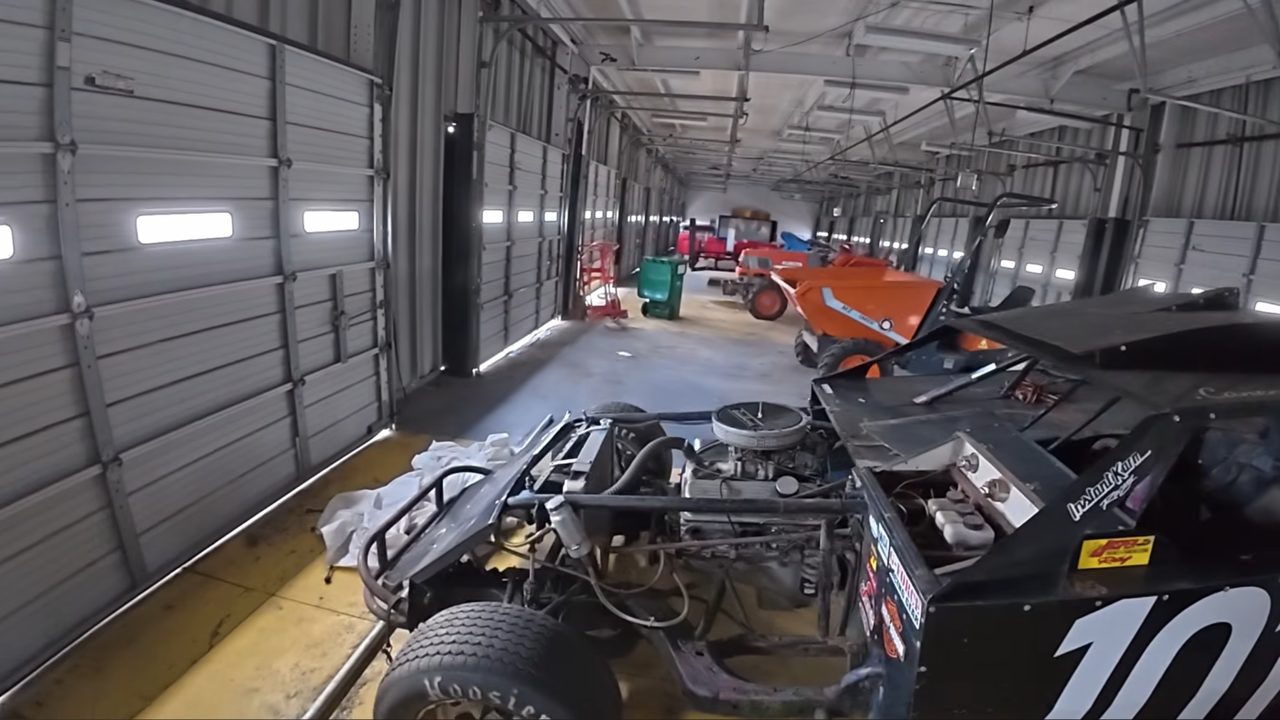
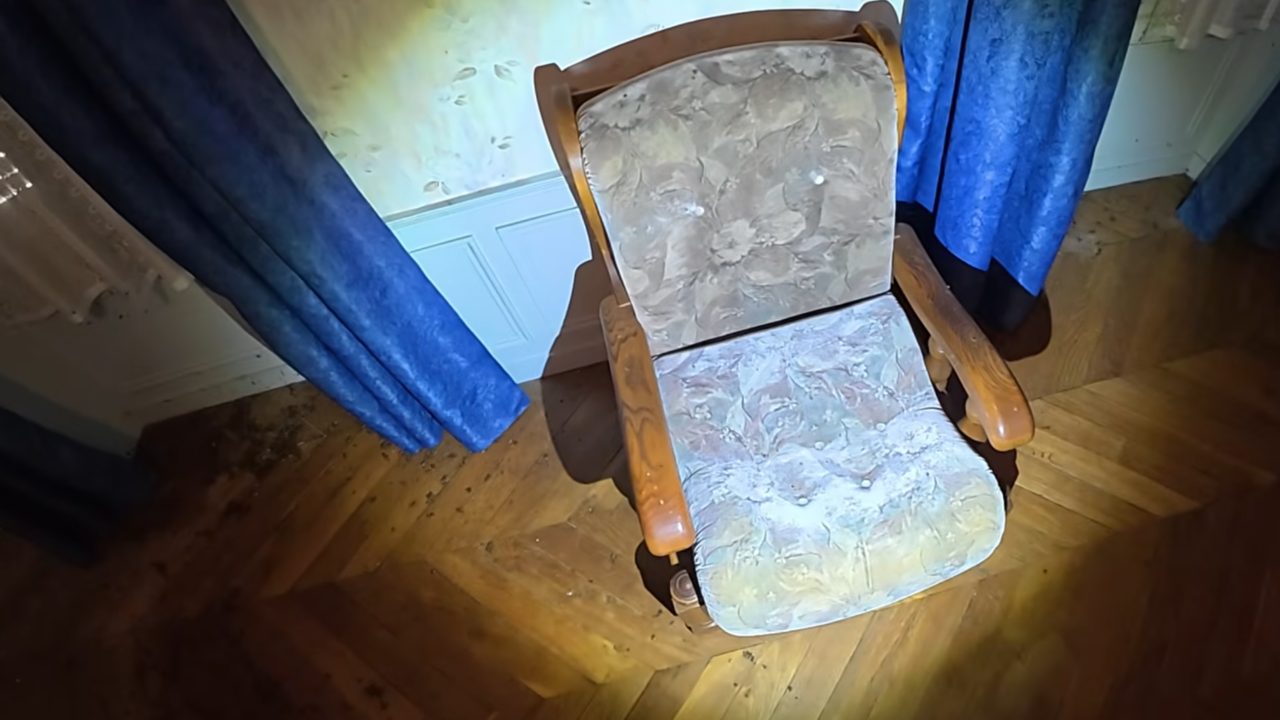
In the French mansion, the lights worked in about half the rooms, which I didn’t expect from a place with trees growing through the cars. One bathroom had been remodeled and was the bluest room I’ve ever stood in. As we headed back to the gate, the owner had parked and was walking in to work on the place, with a dog, and one barn had a new roof and fresh lumber. I can’t tell you which of the reasons above applies to that house. Someone was still responsible for it.
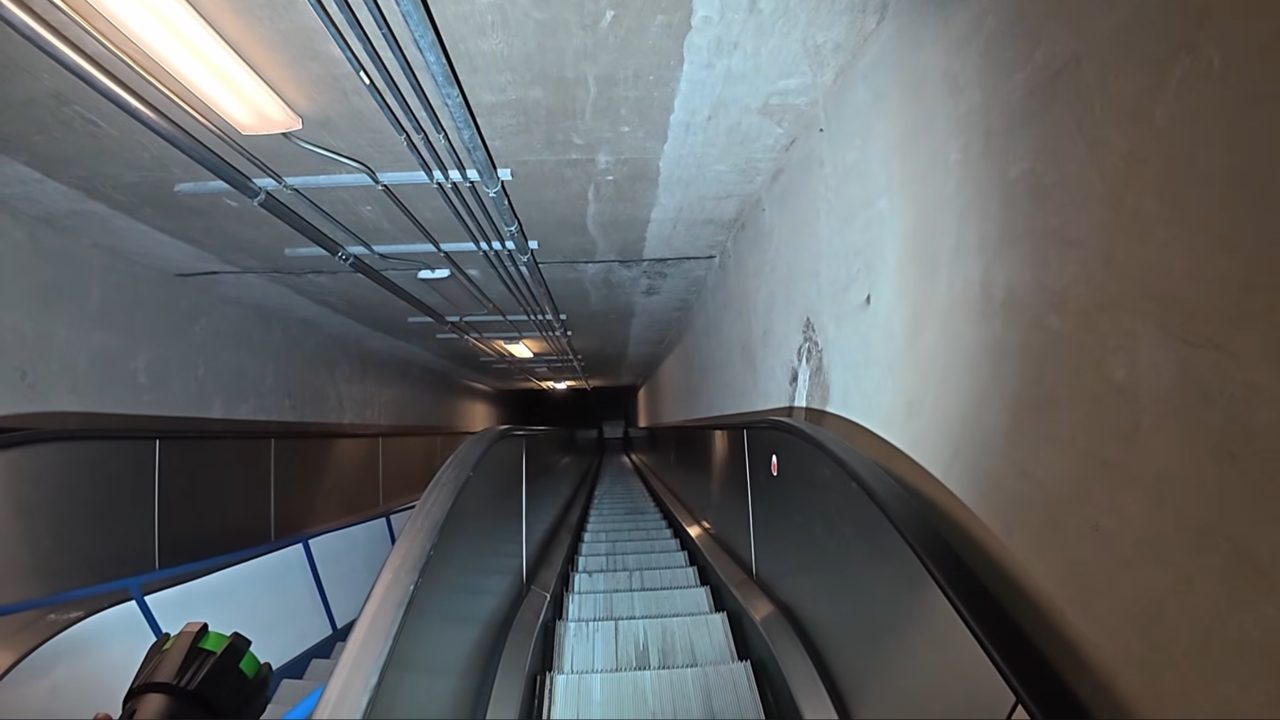
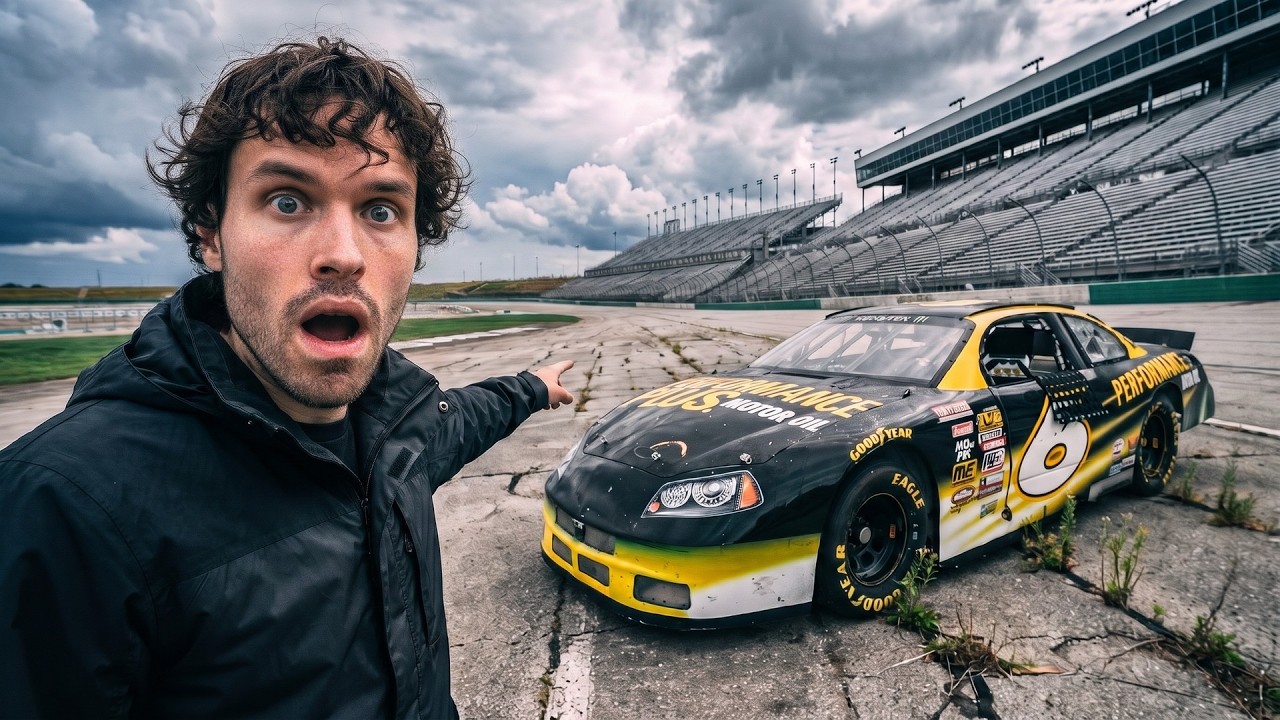
At Kentucky Speedway, the air conditioning was running, and there were at least 20 security cameras across the property, more than I’ve seen at any single location. The pedestrian tunnel under the track was lit and felt like 50 degrees. In January 2026, Spectrum News described the gates locked and the lights off. In August 2025, WHIO reported the sheriff’s response, “Kentucky Speedway is NOT abandoned!”, and that driving schools still use the track while other parts of the property are rented to other companies. Renters and driving schools are one possible reason for the power and the cameras. That’s a guess.
What I carried in
Same list as every video description.
Sources
- Landlord/Property Manager Master Agreement, ComEd
- For sale: 20 old Chicago school properties, Chalkbeat Chicago, May 12, 2025
- Vacant Buildings FAQ, City of Chicago Department of Buildings
- Vacancy, What Does It Mean for Commercial Property Coverage?, IRMI, Jan 30, 2026
- Vacancy/Occupancy Clauses; Protective Safeguards Endorsements, Adjusters International (Adjusting Today), 2014
- Protecting Vacant Commercial Property, AmTrust Financial, Apr 2020
- Managing Vacant Buildings, Marsh, Mar 17, 2022
- Risk A/T Work: Vacant Buildings, Sompo International
- Minimum requirements for vacant buildings, Municipal Code of Chicago §13-12-135, American Legal Publishing
- Vacant buildings, Municipal Code of Chicago §13-12-125, American Legal Publishing
- Vacant Building - Maintenance, City of Wheaton, IL, revised Mar 5, 2020
- Sprinkler Line Burst In OKC Abandoned Building, News 9, Jan 7, 2014
- Mitigation and Basement Flooding, FEMA
- Vacant Residential Building Fires (2013-2015), Topical Fire Report Series Vol. 18 Issue 9, U.S. Fire Administration, Jan 2018
- Inheritance law change would put more homes on market in France, The Connexion, Mar 31, 2025
- Automatic stay, glossary of legal terms, U.S. Courts
- Receivership, Cornell Legal Information Institute
- Emergency Lighting / EXIT Signage, Brighton, NY
- Tritium in Exit Signs, EPA RadTown, updated Sept 29, 2026
- Electrical Hazards in Construction Student Workbook, Construction Safety Council, hosted by OSHA, 2017
- Man Electrocuted While Taking Down Copper Wire In Brighton Park, CBS Chicago, Aug 23, 2012
- Once roaring, Kentucky Speedway stands still and silent, Spectrum News 1, Jan 21, 2026
- Dozens charged for breaking into racetrack that used to host NASCAR races, WHIO, Aug 21, 2025
More like this


The footage that never goes public lives on Patreon. It's paid, and it's where the rough cuts, the security run-ins and the early releases go.