, exact location withheld
Best Headlamp for Urbex
What to look for in a headlamp for dark abandoned buildings, from FL 1 numbers to run time, batteries and your own eyes, with no product claims.
The best headlamp for urbex is one that leaves both hands free, puts plenty of light on the floor, and runs longer than you will. I’m not naming a model here, because I haven’t tested headlamps for this guide and I won’t invent specs, so this page covers what to check and where the numbers come from.
This is entertainment, not safety or legal advice, and none of it is a reason to go inside anything.
Why wear a light on your head at all?
Because your hands have jobs. They hold a railing, a doorframe or a camera, and they should stay out of places you can’t see into. NIOSH’s needlestick guide for officers tells them to use tactical mirrors and flashlights to search in crevices or under furniture. A light on your head points where you look and leaves the hands free to stay out of those places.
Miners solved this a century ago. NIOSH’s history of mine lighting says early open flame lamps often caused deadly explosions, and that in 1914 two Bureau of Mines engineers founded a company and started work with Thomas Edison on an electric cap lamp, which the Bureau approved in 1915. The authors say miners depend on proper illumination to work safely and spot hazards. An abandoned building is not a mine, but the logic of carrying your own light on your own head is the same.
The U.S. Fire Administration’s list of gear for people evaluating vacant buildings includes a flashlight next to boots, gloves and a hard hat. Light is on the list because it is a safety tool and not a camera accessory.
How much light is enough?
There is no number for abandoned buildings, but OSHA’s tables show what work spaces are expected to have. Its construction illumination rule asks for at least 5 foot candles indoors in warehouses, corridors, hallways and exitways, 3 foot candles in general construction areas and access ways, and 10 in places like mechanical and electrical equipment rooms and shops. Tunnels and shafts get 5, with 10 at the heading during drilling and similar work. First aid stations and offices get 30.
A building with the power off has none of that. Your light is the only light, so it needs to do what the building’s own lighting would have done, which is show you the floor, the stairs and the edges. NIOSH says slip and fall hazards can be harder to detect in low light, and that is where I’d spend the light first.
Most flashlights, including brand ones, aren’t bright enough, so I carry one good light. It’s the flashlight on the gear list below, and it’s a flashlight and not a headlamp. The comparison of ten flashlights is in the best flashlight guide, and a headlamp should clear the same bar.
What do the numbers on the box mean?
Look for the FL 1 standard. NEMA’s FL 1 covers hand held and portable flashlights, spotlights and headlamps that provide directional lighting. The current edition, ANSI/PLATO FL 1-2025, measures light output, beam distance, peak beam intensity, run time, impact resistance, and water and dust penetration protection.
Those are separate numbers for a reason. Light output tells you how much light the lamp makes, beam distance tells you how far it throws, and run time tells you how long it lasts. A single large number on the front of a package can describe only one of them. Compare a lamp’s light output, beam distance and run time side by side and don’t buy on any one.
The standard has a catch. Occupational Health and Safety magazine reported in 2010 that manufacturers measure these features under the standard’s guidelines, and that each one runs its own tests. That means the numbers on the box come from the company that sells the lamp. They are a better starting point than nothing, and they’re not the same as a lab that has no stake in the result.
What about run time and batteries?
Run time is the number I’d weigh most, because a light that dies halfway through is a different problem than one that is merely dim. In the Catholic school video I said I was trying to get to the gym before my flashlight died.
Battery safety is its own topic. The U.S. Fire Administration says to stop using lithium ion batteries if you notice an odor, a change in color or too much heat, and not to charge them below 32 degrees or above 105 degrees Fahrenheit. It also says to keep them out of direct sunlight and hot cars and to store spares away from anything that can burn. The same applies to a headlamp’s rechargeable pack.
Cold is hard on them. A SLAC National Accelerator Laboratory article says lithium ion batteries are famous for poor cold weather performance, and that in early tests cathodes stored below zero degrees Celsius lost up to 5 percent more capacity after 100 charges. For winter, the winter exploring guide covers the rest, and the power bank guide covers keeping a spare.
Does it need to survive water and drops?
Assume it will meet both. Abandoned buildings leak, floors hold standing water and a light on your head gets knocked on doorframes and ceiling beams. The FL 1 standard includes impact resistance and water and dust penetration protection among the things a maker reports, so a lamp that skips those lines on its box is telling you something.
Treat the ratings as a comparison tool and not a promise. A rating describes a test, and the test is not a building. I haven’t verified the ratings of any headlamp for this guide, which is the other reason I’m not naming one. Read the numbers yourself, look for the same test conditions across the lamps you compare, and carry a backup light in your bag that doesn’t share a battery with the first one. The gear list covers what else goes in the bag.
What will a headlamp do to your eyes?
More than you’d think. The Webvision textbook on light and dark adaptation says that after 5 to 8 minutes in the dark a second mechanism of vision comes into play, and that sensitivity reaches its limit after about forty minutes. It also says brighter light beforehand makes the process longer.
In practice that means a lamp with a lower setting for close work, like reading a sign or checking a door, is worth more than another peak number, because a blast of light ahead of a dark stretch slows your eyes down. NIOSH redesigned its own miner’s LED cap lamp so that its second version shifts the light distribution toward floor and machinery hazards, which is the same instinct. Point the light at the thing that can hurt you.
What does this look like in practice?
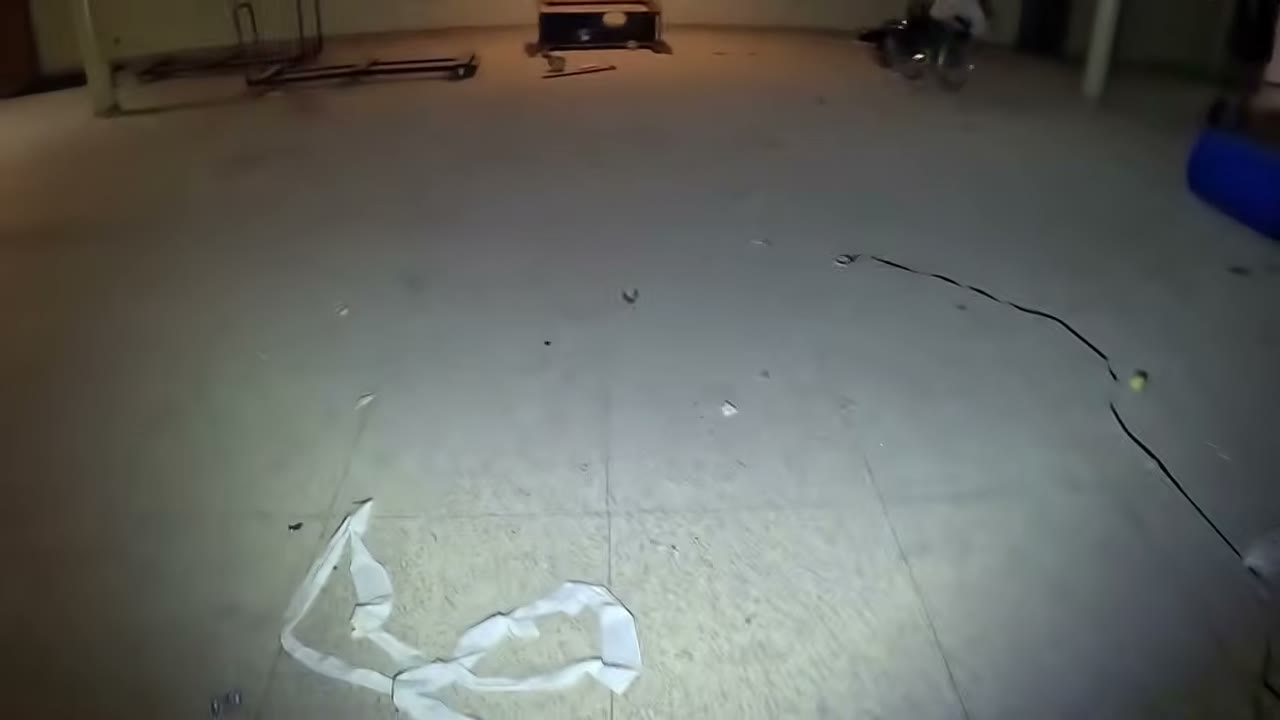
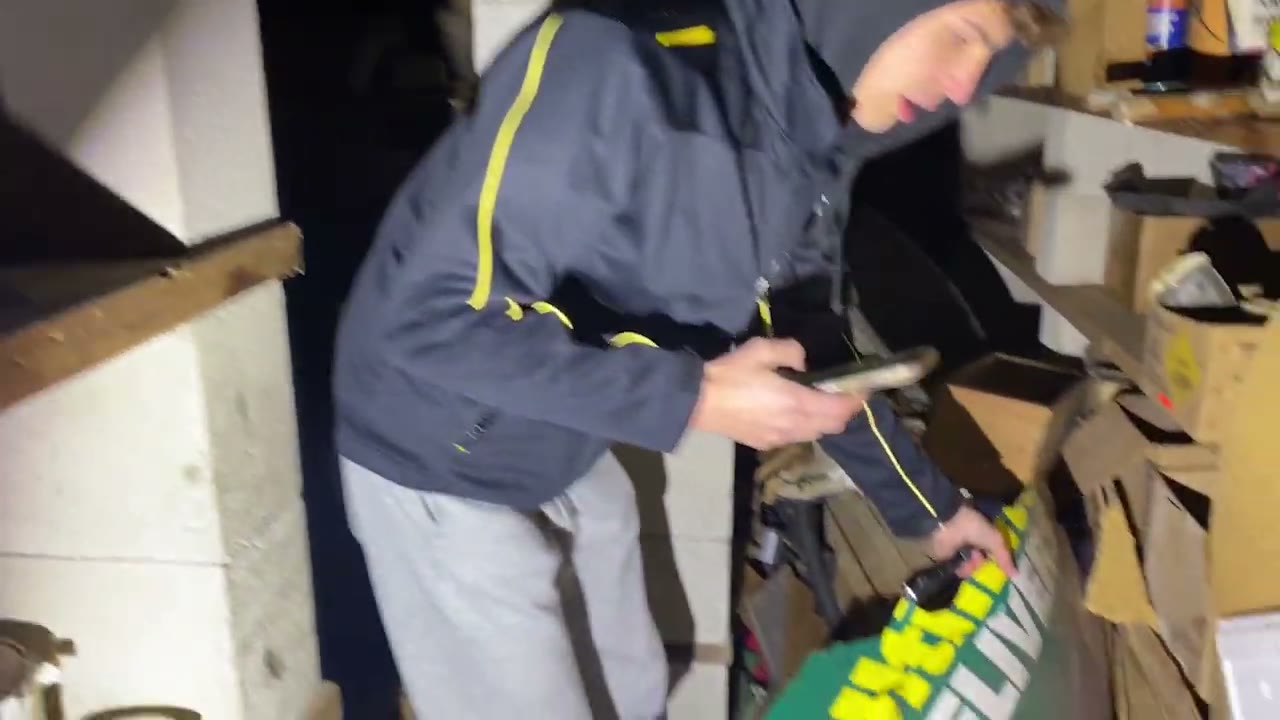
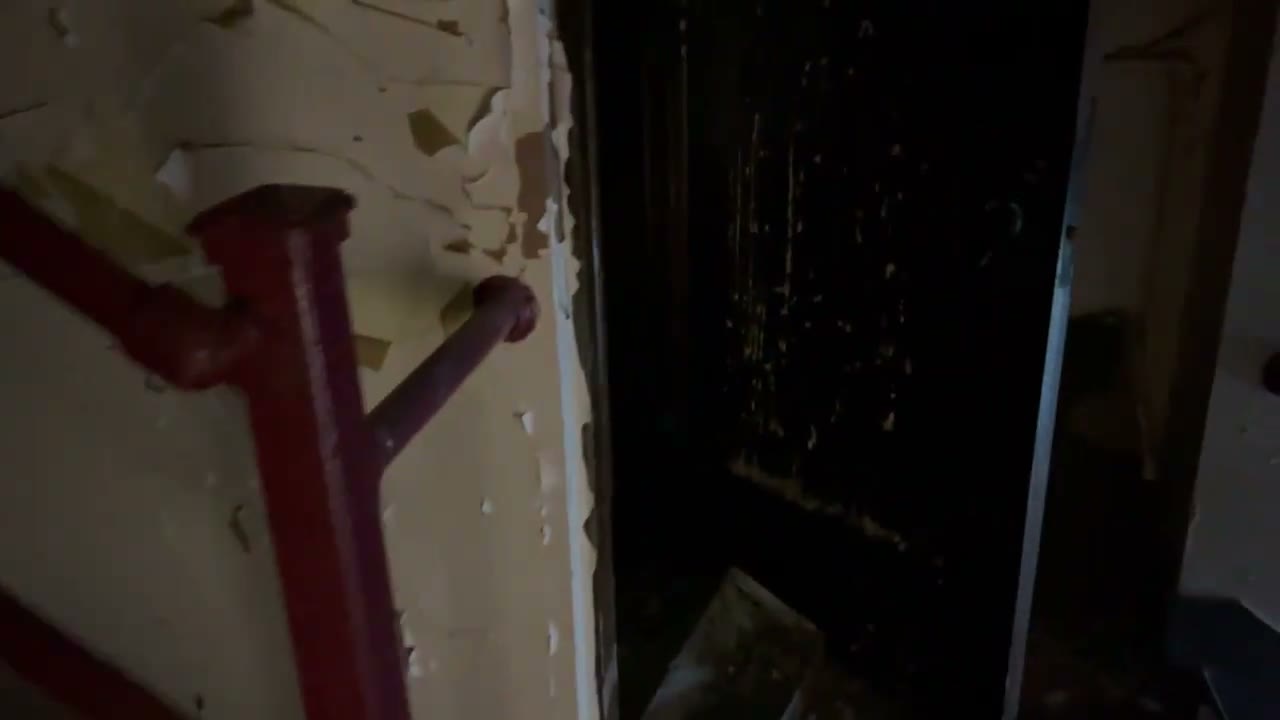
In the gym of the Catholic school the beam picks out a long crack in the floor and a loop of tape and nothing else, and the rest of the room is black. In the gun club owner’s house the frame shows how little a single beam covers in a cramped storage space. In the bank video the stairs go up into the dark past a red railing.
None of that is a reason to go anywhere. How I find places, stay safe and film without burning locations is in my guide, How to Find Abandoned Places, and the safety checklist puts the light next to everything else on the list. For the drops a light is meant to show you, read elevator shafts, stairwells and open drops.
Whatever light you buy, test it in a dark room at home before it has to matter.
What I carried in
Same list as every video description.
Sources
- ANSI/PLATO FL 1-2025 Flashlight Basic Performance Standard, ANSI Webstore, accessed Nov 4, 2026
- ANSI/NEMA FL 1 Flashlight Basic Performance Standard, NEMA, 2009
- New Standards Guide Flashlight Selection, Occupational Health and Safety, Sep 1, 2010
- 1926.56 Illumination, OSHA, accessed Nov 4, 2026
- Illumination, NIOSH Mining, accessed Nov 4, 2026
- Mine Illumination, A Historical and Technological Perspective, Carr and Sammarco, NIOSH, Mar 2, 2010
- Basic Evaluation Procedures for Abandoned and Vacant Buildings, U.S. Fire Administration, Apr 2018
- Officers, Stay Safe from Needlesticks, NIOSH, Dec 2024
- Battery Fire Safety, U.S. Fire Administration, accessed Nov 4, 2026
- How extreme cold can crack lithium ion battery materials, degrading performance, SLAC National Accelerator Laboratory, Aug 26, 2021
- Light and Dark Adaptation, Kalloniatis and Luu, Webvision, University of Utah, accessed Nov 4, 2026
More like this


The footage that never goes public lives on Patreon. It's paid, and it's where the rough cuts, the security run-ins and the early releases go.