, exact location withheld
The Best Flashlight for Exploring Abandoned Buildings (10 Compared)
Ten flashlights ranked for dark buildings on beam, turbo step-down, fallback power and water rating, with the Coast XP11R I carry at number one.
The best flashlight for exploring abandoned buildings is a bright, rechargeable light with a beam you can widen for rooms and narrow for hallways, plus a plan for when the battery dies. I carry the Coast XP11R, and this post ranks it against nine other lights using the makers’ own spec pages.
Disclosure. The Coast XP11R is the light I carry and link to, and I link to the other nine below for comparison. My Amazon links are affiliate links, so they earn me a commission if you buy through them, at no extra cost to you.
This is gear talk, not a guide to getting into anywhere. Abandoned buildings are dangerous, and a bright light doesn’t tell you whether a floor will hold.
What makes a flashlight good inside an abandoned building?
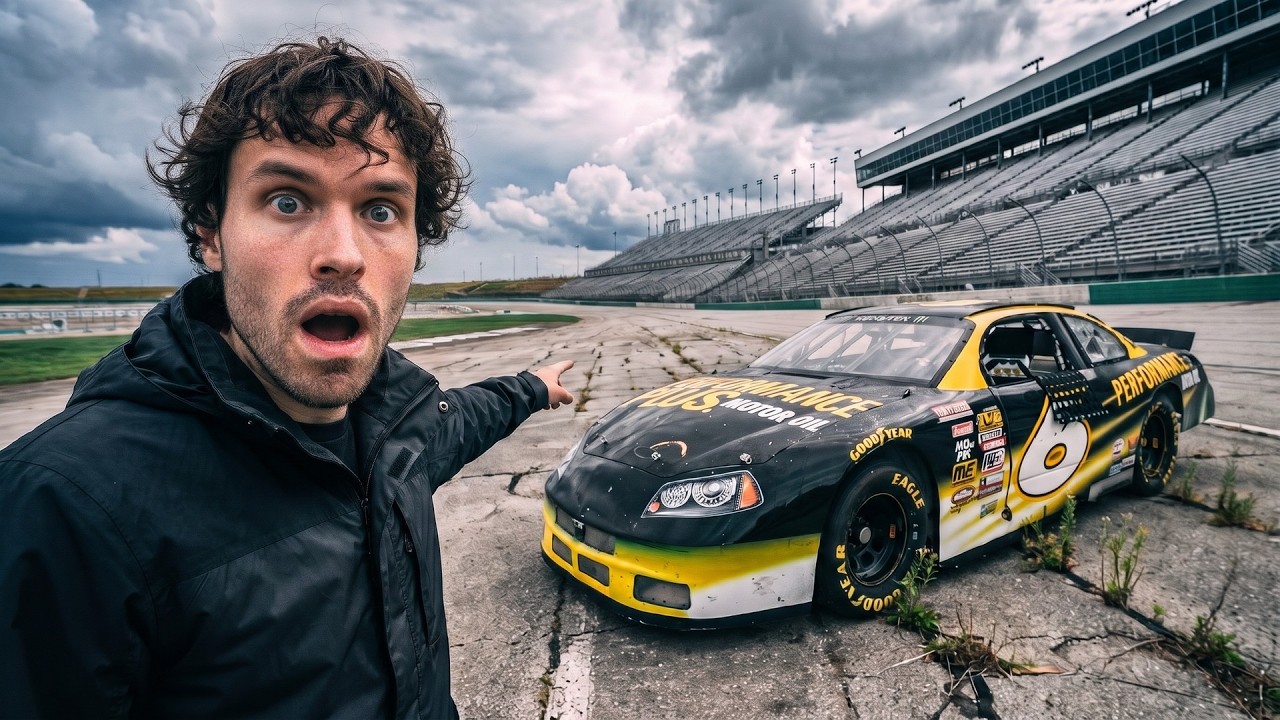
The building won’t help you. Power is hit or miss. The pedestrian tunnel under Kentucky Speedway was lit, and about half the rooms in the French mansion had working lights. There’s a whole post on why vacant buildings keep the power on. Plan on none, and judge a light on five things.
- Flood or throw. Peak intensity in candela is the tell. Wurkkos lists 9,150 cd at 4,500 lumens, Sofirn 26,750 cd at 5,200, and Fenix 36,600 cd at 2,800. The first is a room light. The last is a hallway light.
- How fast turbo steps down. Olight says the Seeker 4 Pro holds 4,600 lumens for about 2.5 minutes, then drops to 1,200. Nitecore’s 30 minute turbo figure was tested without temperature regulation. Judge a light by its High mode and High runtime, not the number on the box.
- Charging. A USB-C light can share a power bank with the camera and the mic. I carry a 35,000mAh power bank with built in cables.
- When the cell dies. Three of the ten list a disposable cell fallback. They are the XP11R (three AAAs), the Nitecore P20iX (two CR123) and the Streamlight ProTac HL-X (two CR123A). The rest need a charged spare or a power bank.
- Dust, water and weight. It all goes in one bag, and buildings aren’t dry.
How do the ten compare?
The table is alphabetical by brand. Every figure is the maker’s own claim from the pages linked below, as of Nov 1, 2026, not something measured here.
| Light | High (lm) | Turbo (lm) | Beam (m) | High runtime | Battery, charging | Water | Weight | Price |
|---|---|---|---|---|---|---|---|---|
| Acebeam L19 2.0 | 1,200 | 2,200, then 1,600 | 1,083 | 1 h 38 min | 21700 included, USB-C | IP68 | 284 g | $100 to $150 |
| Coast XP11R | 1,100 | 3,000 | 280 | 4 h 15 min | ZX1000 pack or 3 AAA, USB-C | IP54 | 234 g | $50 to $100 |
| Fenix PD36R Pro | 1,000 | 2,800 | 380 | 3 h 55 min | 21700 included, USB-C | IP68 | 169 g | $100 to $150 |
| Nitecore P20iX | 850 | 4,000 | 221 | 2 h 30 min | 21700i included or 2 CR123, USB-C | IP68 | 116 g | $100 to $150 |
| Olight Seeker 4 Pro | n/l | 4,600, then 1,200 | 260 | n/l | 21700, USB-C or magnetic cable | IPX8 | 205 g | $100 to $150 |
| Olight Warrior 3S | 800 | 2,300, then 800 | 300 | n/l | 21700, magnetic cable | IPX8 | 176 g | $100 to $150 |
| Sofirn SC33 | 1,800 | 5,200 | 327 | 1 h 51 min | 21700 included, USB-C | IP68 | 110 g | under $50 |
| Streamlight ProTac HL-X | 1,300 (1,000 on CR123A) | none | 374 | 1 h 30 min | SL-B26 USB pack or 2 CR123A | IP68 | 176 g | $100 to $150 |
| ThruNite TC15 V3 | n/l | 2,403 | 223 | n/l | 18650 included, USB-C | n/l | 74 g | $50 to $100 |
| Wurkkos TS22 | 1,800 | 4,500 | 191 | 1 h 48 min | 21700 included, USB-C | IP68 | 95 g | under $50 |
n/l means not listed on the maker’s pages. High and Turbo are the makers’ own mode names, and beam is each maker’s maximum claim. Weights are as listed, with the cell for Acebeam, Fenix, Olight Warrior 3S and Streamlight (the 176 g is with the USB pack), without it for Sofirn and Wurkkos, and unstated for Coast, Nitecore, Olight Seeker 4 Pro and ThruNite. Price tiers come from the maker’s page where it shows a price, otherwise a retailer listing, and sales move them.
The ten lights, ranked 10 to 1
This ranking is for one job, walking a dark building with everything in one bag. A different job gets a different list.
10. Acebeam L19 2.0
Acebeam’s L19 2.0 is a spotlight. 1,083 m at 293,222 cd is a lot of beam to waste on a hallway. Turbo drops from 2,200 to 1,600 lumens after 1 minute 50 seconds, and at 284 g with its cell it’s the heaviest light here. It’s IP68 and comes with a USB-C 21700, so buy it for distance outdoors, not for rooms. Amazon search
9. Streamlight ProTac HL-X
Streamlight’s ProTac HL-X is built like a tool, with IP68, 2 m impact resistance, and two CR123A cells if the USB pack dies. The cost is output. Its top mode is 1,300 lumens on the pack and 1,000 on CR123A, less than half the XP11R’s turbo. Amazon search
8. ThruNite TC15 V3
ThruNite’s TC15 V3 is the lightest light here at 74 g, with USB-C built in, an 18650 in the box and 2,403 lumens claimed. Its page lists no water rating, no High mode and no runtimes, so you’re buying on the headline number. That’s thin for the one light you rely on. Amazon search
7. Olight Warrior 3S
Olight’s Warrior 3S is a dual switch tactical light with IPX8, a 1.5 m drop rating, 300 m of throw and 176 g with its cell. Olight’s table steps Turbo from 2,300 to 800 to 250 lumens, with the first step listed at 2.5 minutes. It charges by magnetic cable, and Olight lists no disposable cell fallback. Amazon search
6. Sofirn SC33
Sofirn’s SC33 lists 5,200 lumens on turbo and 1,800 on High for 1 hour 51 minutes, with IP68, USB-C and a 21700 in the box, all in the under-$50 tier. The catch is the beam. 26,750 cd at 327 m is more spotlight than flood. Amazon search
5. Olight Seeker 4 Pro
Olight’s Seeker 4 Pro has the biggest turbo in the $100 to $150 tier at 4,600 lumens, though Olight’s output profile has it lasting about 2.5 minutes before dropping to 1,200 for roughly two hours. It’s IPX8 and charges over USB-C through the holster or by magnetic cable. Olight’s pages list no High mode and no fallback cell. Amazon search
4. Fenix PD36R Pro
Fenix’s PD36R Pro is best on High, not turbo. It does 1,000 lumens for 3 hours 55 minutes, a runtime only the Coast beats in this table. It’s IP68, 169 g with its 21700, and charges over USB-C. At 36,600 cd it’s a thrower, and Fenix lists no disposable cell fallback. Amazon search
3. Nitecore P20iX
Nitecore’s P20iX uses four emitters and lists 12,200 cd, a wider beam than the Fenix’s, with 850 lumens on High for 2 hours 30 minutes and a 1,700 lumen Higher mode for 2 hours. Its 4,000 lumen turbo lasts 30 minutes in a test Nitecore says ran without temperature regulation, so expect less. It’s IP68, and two CR123 cells keep it going without turbo if the cell dies, but it only takes Nitecore’s i-series 21700s. Amazon search
2. Wurkkos TS22
Wurkkos’s TS22 lists 4,500 lumens at 9,150 cd, the lowest peak intensity listed in the table, and an 80° flood angle. Per its manual, High is 1,800 lumens for 1 hour 48 minutes. It’s IP68 with a magnetic tail, a 21700 in the box and a USB-C port that also charges a phone, all in the under-$50 tier. It has no fallback cell. Amazon search
1. Coast XP11R
The Coast XP11R is the only light of the ten whose maker describes an adjustable beam. Per Coast, you push or pull the slide focus to go from flood to spot with one hand, and a beam lock holds any angle in between. It charges over USB-C through a port under the tail cap and takes three AAAs if the pack dies. It isn’t the brightest, lightest or best sealed light in the table. It’s the one with a beam for the big room and the long hallway, and a plan B in the bag.
What are the downsides of the Coast XP11R?
It doesn’t win every line, and a few of its numbers lose to lights that cost less.
- IP54. Coast rates it dust and water resistant, not waterproof. Eight of the other nine pages list IP68 or IPX8. ThruNite lists nothing.
- Heat and turbo. Coast lists runtimes for High, Medium, Low and Moon Glow, but none for Turbo. Per user reports on Coast’s product page, it heats up on turbo and turbo steps down quickly.
- Weight. 8.25 oz, and Coast doesn’t say whether that includes the cell. Only the Acebeam is heavier here.
- High mode. 1,100 lumens, where the Sofirn and the Wurkkos list 1,800 for less money.
- Two spec sheets. Coast’s main XP11R page lists a 3,000 lumen turbo. Its page for the blue version lists 2,600 and no Moon Glow mode. Check which one a listing is selling.
- The AAA fallback. Coast’s page doesn’t say how bright it runs on three AAAs, and alkaline cells aren’t included.
- Warranty. Coast’s warranty page covers its LED flashlights for the life of the original purchaser in the USA and Canada. It excludes batteries and charging accessories.
Why does one good light beat three cheap ones?
Lumens don’t stack. Three weak lights are three weak beams, and you can aim one. Most flashlights, including brand ones, aren’t bright enough, which is why I carry one good light.
Three lights are also three cells to charge before you leave and three things to go dead in the dark. The better answer to “what if it dies” is a light with its own plan B, like three AAAs in the XP11R or two CR123 cells in the P20iX.
Two lights in the under-$50 tier list more High lumens than the XP11R. The difference is the system around the light, meaning one charging routine, one fallback and a rating you can look up. What the light does for the footage is in the camera comparison.
A light only matters once you have somewhere to point it. Finding the places is what my PDF, How to Find Abandoned Places, covers.
The rest of what goes in the bag is in the gear list.
What I carried in
Same list as every video description.
Sources
- XP11R product page, Coast Products
- XP11R Blue product page, Coast Products
- Warranty, Coast Products
- L19 2.0 Long Range Flashlight, Acebeam
- PD36R Pro Rechargeable Flashlight, Fenix Lighting
- Everything to know about the Fenix PD36R Pro, output table, Fenix Lighting
- P20iX 21700 Tactical Flashlight, Nitecore
- P20iX specification sheet (PDF), Nitecore
- Seeker 4 Pro High Power Flashlight, Olight
- Seeker 4 Pro output and specs, Olight blog
- Warrior 3S Tactical Flashlight, Olight
- Warrior 3S review, output table, Olight blog
- SC33 Powerful EDC Flashlight, Sofirn
- ProTac HL-X, Streamlight
- TC15 V3, ThruNite
- TS22 XHP70.3 LED Flashlight, Wurkkos
- TS22 user manual (PDF), Wurkkos
More like this


The footage that never goes public lives on Patreon. It's paid, and it's where the rough cuts, the security run-ins and the early releases go.