, exact location withheld
What to Bring Exploring Abandoned Buildings: The Gear List
The gear list from my video descriptions, what each piece is for, which respirator rating matters, and what goes wrong without it.
Bring a light that can show you a whole room, a respirator instead of a cloth mask, boots that protect your feet, and a way to back up your footage. This is the gear list from my video descriptions, with what each piece is for and what goes wrong without it.
This is entertainment, not safety or legal advice. Abandoned buildings are dangerous and can carry legal consequences, and nothing here is a reason to go inside one.
How bright does the flashlight need to be?
Brighter than most flashlights manage. Most, including brand name ones, aren’t bright enough, so I carry one good light, the Coast XP11R flashlight on my list.
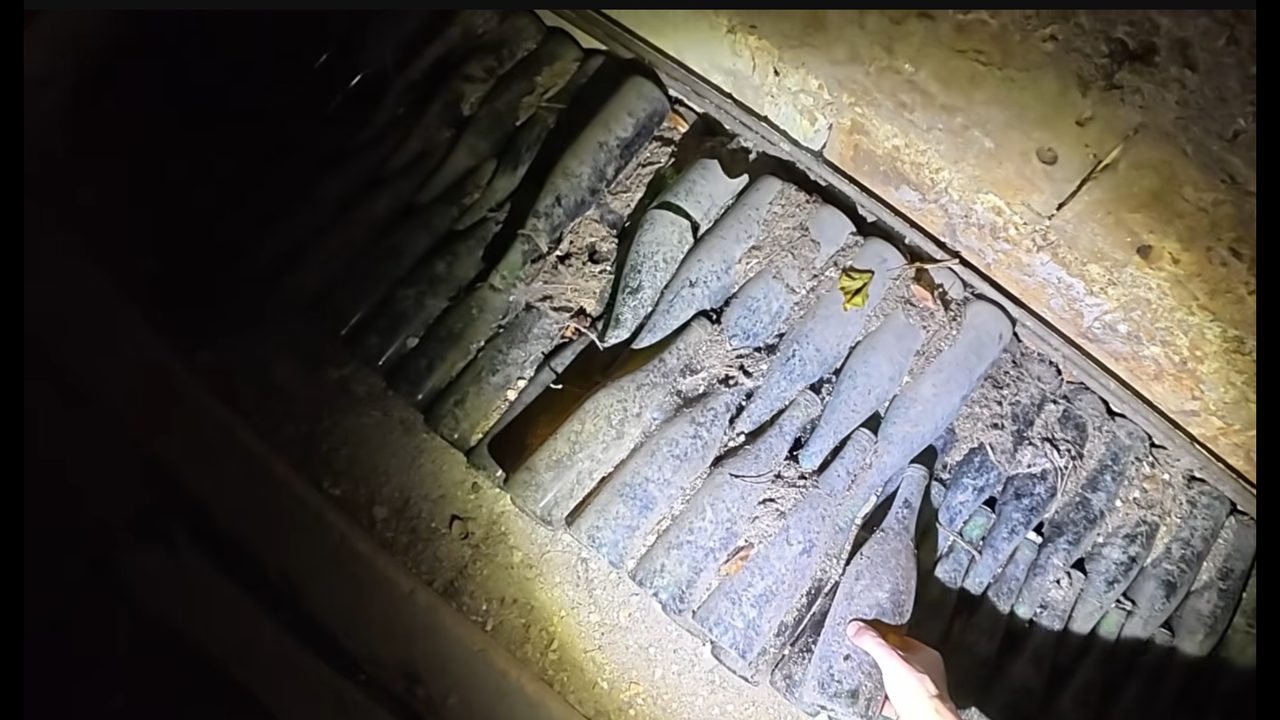
Nobody is lighting the place for you. OSHA’s construction rule sets a minimum of 5 foot-candles in indoor corridors, hallways and exitways, and nothing guarantees that in an abandoned building. In the French mansion the lights worked in about half the rooms. Everywhere else you see what your beam picks up, and the cellar has a well that goes down farther than the light reaches.
Do you need a respirator, or is a mask enough?
A mask isn’t a respirator, and the two on my list show the difference. The Balaclava face mask (Achiou) is fabric. The 3M 6200 half face respirator is a respirator.
NIOSH says cloth masks may not protect against small particles and have no standards or regulations behind them. A respirator is certified, and approved disposable ones should state “NIOSH” and the protection level, like N95. In that code, the letter is oil resistance and the number is filter efficiency: 95 means at least 95 percent of particles, 100 means at least 99.97 percent. A half face respirator is reusable, takes exchangeable cartridges or filters, and requires fit testing, so what it protects against depends on what’s on it.
For mold, the floor is an N95. CDC says to wear at least a NIOSH Approved N95 respirator when cleaning it up, and EPA’s minimum for a small area is an N-95. Those are cleanup guides, so treat N95 as the floor.
For asbestos the bar is higher. EPA says not to use single use, disposable paper dust masks around it. OSHA’s asbestos standard says employers must not select or use filtering facepiece respirators against asbestos fibers, and for several kinds of work it calls for an air purifying half mask with HEPA filters. HEPA means at least 99.97 percent, the same figure as a NIOSH 100 class, which is why a P100 beats an N95 here. NIOSH’s pocket guide goes further: for any detectable concentration it lists supplied air or a self-contained breathing apparatus, with a full facepiece P100 respirator only for escape. The better answer is not stirring it up.
Two limits cover everything. A respirator only works if it seals. And NIOSH says filtering facepieces “do not provide protection against gases or vapors”, which matters for the gases in the dangers post. Check the NIOSH marking and class on whatever filters you buy.
What camera, audio and drone gear do you need?
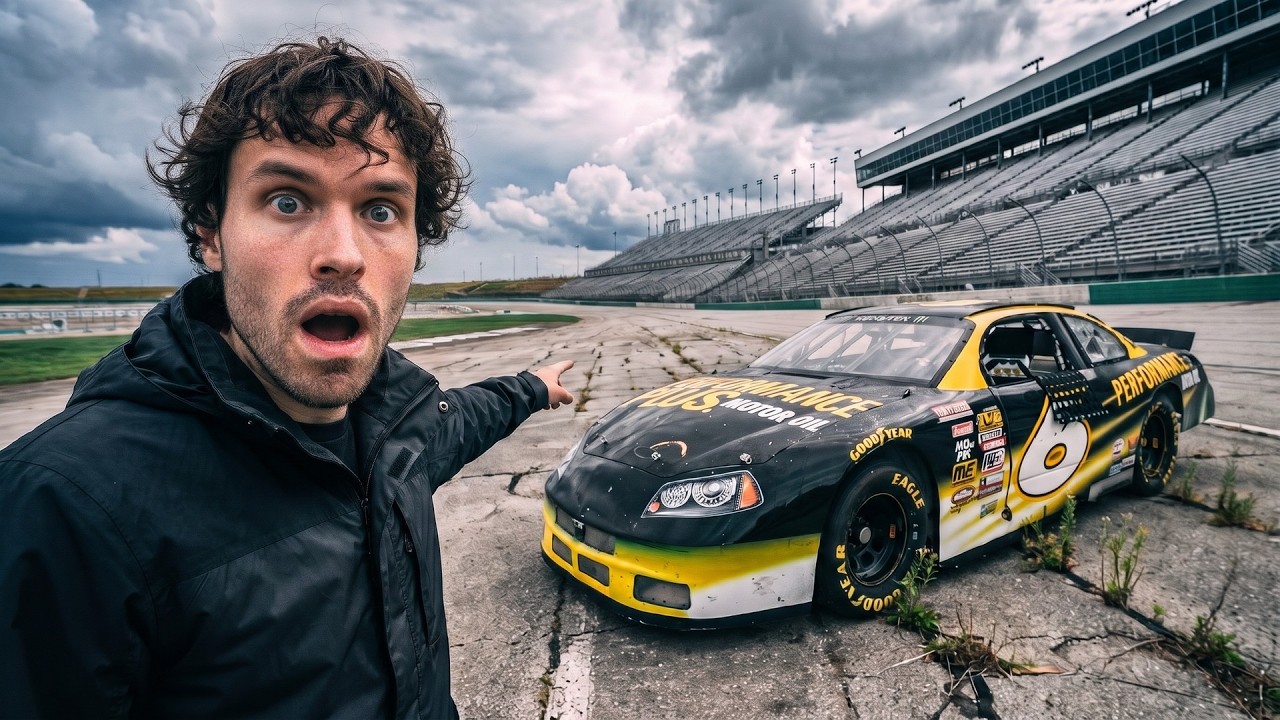
I’m a professional photographer, and the video kit is the DJI Osmo Action 5 Pro (Adventure Combo) and the DJI Mic 3 wireless mic, the same pair listed on the Kentucky Speedway and French mansion posts. The iPhone 17 Pro Max is for filming and photos too. Without the mic you get whatever the camera’s own microphone catches, and without a second camera you have one thing that can fail.
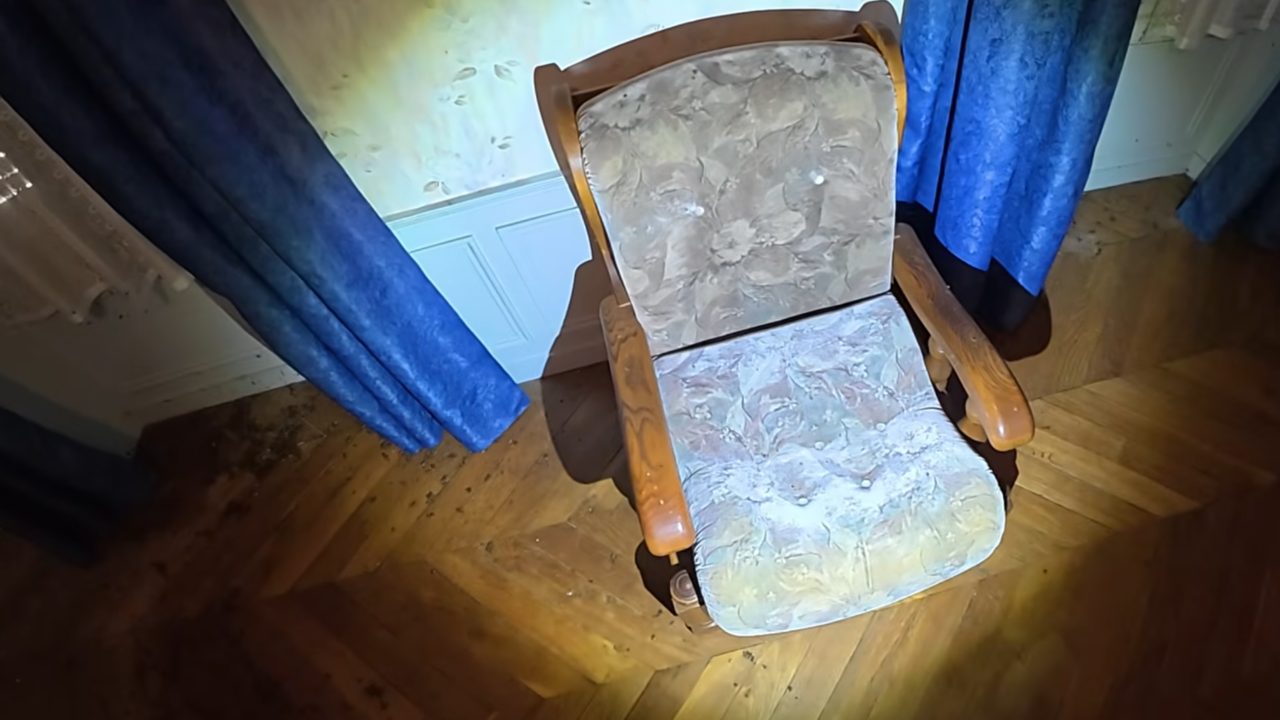
Cameras leave things out. The smell is the thing the camera can’t carry.
The drones cover what you can’t see from the ground. That’s the DJI Mini 5 Pro drone and the DJI Mavic 3 Cine drone. They show you a roof and the outside of a building without standing on either. The rules are the FAA’s. Recreational flyers need to pass the TRUST test and carry proof of it, and a drone weighing 250 grams (0.55 pounds) or more has to be registered. Flying for work or business falls under Part 107, and the FAA says “compensation, or the lack of it, is not what determines if a flight was recreational or not.” Its advice if you’re unsure is “When in doubt, assume Part 107.”
How do you keep the footage and the batteries alive?
Long explores make long files. The Speedway video runs past 50 minutes, and the French mansion video’s last chapter, “The owner shows up,” starts at 54:36. One copy on one card is one dropped bag from gone, and the Library of Congress advises at least two copies of digital video, on separate media, kept “as physically far apart as practical”. On my list, the SanDisk Extreme PRO 256GB microSD is the first copy, the WD 5TB My Passport Ultra is the second, and the MacBook Pro 14” (M5 Pro) is where the editing happens.
The 35,000mAh power bank with built in cables keeps the phone alive, and a dead phone is also a dead way to call for help. If you fly with one, the FAA says spare lithium batteries and power banks must go in carry-on baggage only, at 100 watt-hours or less per battery, and larger ones, up to 160, need airline approval. The FAA’s math is voltage times amp-hours. 35,000mAh is 35 amp-hours, so anything above 2.9 volts puts it over 100 watt-hours. Check the rating printed on yours before you fly.
Why door stoppers, a high visibility vest and a Geiger counter?
The Rubber door stoppers (4-pack) keep your way out open. A door that swings shut can latch behind you, and OSHA lists limited or restricted means for entry or exit among the features of a confined space. Whatever you prop goes back exactly as you found it.
The JKSafety Class 2 hi vis vest is built to be seen. Class 2 is a rating from the ANSI/ISEA 107 standard, and the federal work zone manual says workers exposed to traffic must wear high visibility apparel meeting Class 2 or 3. People also wear one as a general practice for a second reason. In a high visibility vest you look like someone with a job to do. A 1974 study of uniforms found people complied more with a guard than with a civilian or a milkman. A vest isn’t a guard’s uniform, and it isn’t permission.
The GQ GMC-800 Geiger counter is for a hazard your senses miss: radiation can’t be seen, heard, smelled, tasted or felt. The NRC says handheld survey meters detect it, though most only detect beta and gamma. One thing you can run into is a tritium exit sign, which EPA says glows without electricity or batteries for more than 10 years. If one is broken, never tamper with it.
What do you wear, and what do you carry it in?
The LHI 45L tactical backpack keeps your hands free. OSHA’s ladder rule says to face the ladder, keep at least one hand on it, and never carry any object or load “that could cause the employee to lose balance and fall”. The same logic applies on a damaged staircase.
OSHA says shoes or boots with puncture protection are for places where sharp objects such as nails, wire and tacks could be stepped on, and CDC says tetanus spores are common in soil, dust and manure and enter through broken skin, including puncture wounds from a nail or needle. Ask a doctor whether your tetanus shot is current. Gloves help with cuts and abrasions, but OSHA is unaware of any gloves that protect against all potential hand hazards, so match them to the job.
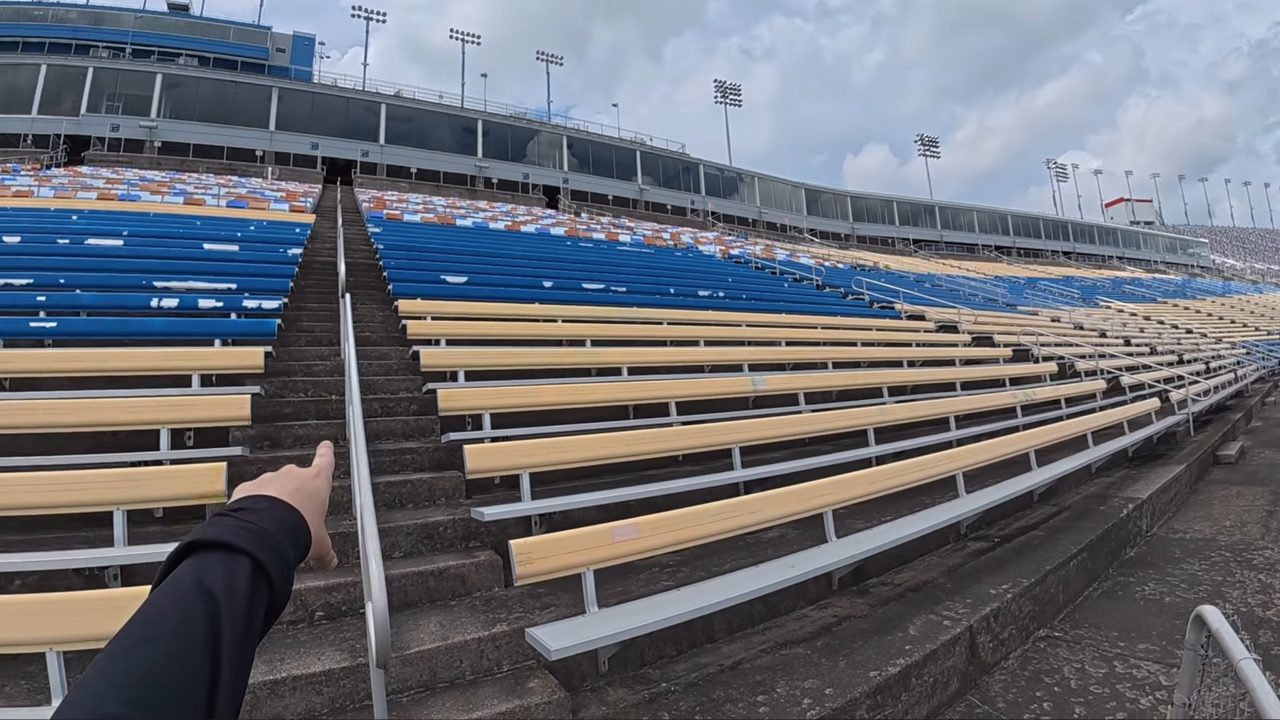
Dress for the building, not the weather. The Speedway’s pedestrian tunnel sits at what feels like 50 degrees no matter what it’s doing outside, and CDC says hypothermia can happen above 40°F if rain, sweat or cold water chills you. CDC’s advice is several layers of loose fitting clothing.
What does the list look like on a real explore?
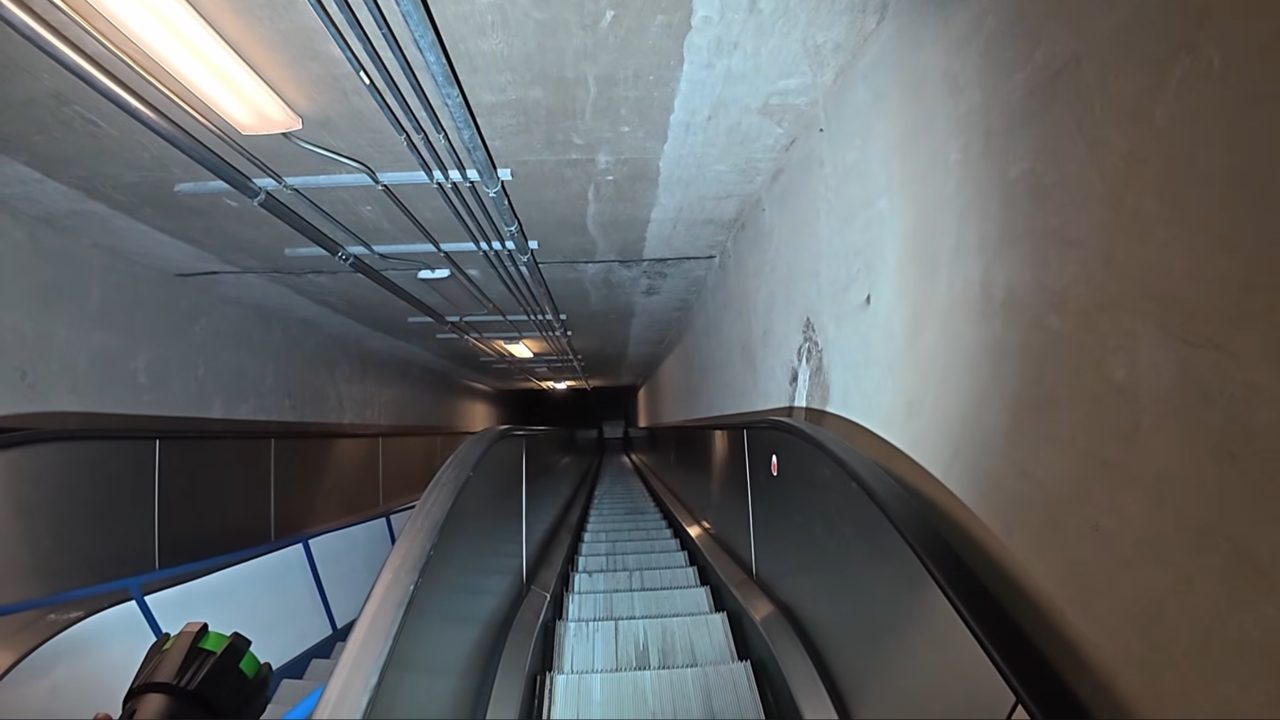
The French mansion is most of this list in one building, with lights in about half the rooms, a well deeper than the light reaches, a room of dead bees you can’t smell on camera, bats close enough that one went past my ear, and a video that runs past the 54 minute mark.
How I find places, stay safe and film without burning locations is in my guide, How to Find Abandoned Places.
Light, lungs, footage and feet. Nearly everything else on this list supports one of those four.
What I carried in
- Coast XP11R flashlight
- Balaclava face mask (Achiou)
- 3M 6200 half face respirator
- DJI Osmo Action 5 Pro (Adventure Combo)
- DJI Mic 3 wireless mic
- iPhone 17 Pro Max
- DJI Mini 5 Pro drone
- DJI Mavic 3 Cine drone
- SanDisk Extreme PRO 256GB microSD
- WD 5TB My Passport Ultra
- MacBook Pro 14" (M5 Pro)
- 35,000mAh power bank with built in cables
- Rubber door stoppers (4 pack)
- JKSafety Class 2 high visibility vest
- GQ GMC-800 Geiger counter
- LHI 45L tactical backpack
Same list as every video description.
Sources
- 1926.56 Illumination, OSHA, accessed Nov 1, 2026
- Respirators and Mask Types and Performance, NIOSH, Oct 28, 2026
- Filtering Facepiece Respirators, NIOSH, Oct 28, 2026
- N95 Day 2018: Getting Down to the Particulars about Filter Class, NIOSH Science Bulletin, Sep 5, 2018
- Elastomeric Respirators, NIOSH, Feb 3, 2025
- Mold Clean Up, CDC, Feb 16, 2024
- Mold Remediation in Schools and Commercial Buildings Guide, Chapter 3, U.S. EPA, Apr 29, 2026
- Safe Work Practices (asbestos), U.S. EPA, Jan 21, 2026
- 1926.1101 Asbestos, OSHA, accessed Nov 1, 2026
- NIOSH Pocket Guide to Chemical Hazards: Asbestos, NIOSH, Oct 30, 2019
- Recreational Flyers & Community-Based Organizations, FAA, Oct 29, 2026
- Video: Personal Archiving, Library of Congress, accessed Nov 1, 2026
- PackSafe: Lithium Batteries, FAA, Aug 11, 2026
- Confined Spaces, OSHA, accessed Nov 1, 2026
- Chapter 6D, Pedestrian and Worker Safety (MUTCD 2009 Edition), FHWA, accessed Nov 1, 2026
- The Social Power of a Uniform, Journal of Applied Social Psychology, 1974
- Detecting Radiation, U.S. NRC, Sep 14, 2026
- Tritium in Exit Signs, U.S. EPA, Sep 29, 2026
- 1926.1053 Ladders, OSHA, accessed Nov 1, 2026
- Hazard Assessment and PPE Selection Guidelines, 1910 Subpart I Appendix B, OSHA, accessed Nov 1, 2026
- Tetanus Causes, CDC, Sep 10, 2026
- Preventing Hypothermia, CDC, Aug 25, 2026
More like this


The footage that never goes public lives on Patreon. It's paid, and it's where the rough cuts, the security run-ins and the early releases go.