, exact location withheld
Best Boots for Urbex
What to look for in boots for abandoned buildings, covering puncture protection, toe caps, tread, fit and wet feet, based on OSHA, NIOSH and CDC guidance.
The best boots for urbex are boots built for what is on the floor. That means a sole with puncture protection, a protective toe, a tread that grips, and a fit that doesn’t change how you walk. I’m not naming a pair, because I haven’t tested boots for this guide and I won’t invent specs or prices, so this page covers what OSHA, NIOSH and CDC say to look for.
This is entertainment, not medical, safety or legal advice, and none of it is a reason to go inside anything.
What is on the floor that a boot has to handle?
Nails come first. OSHA’s guidance on picking protective gear says safety shoes or boots with puncture protection are needed where sharp objects such as nails, wire, tacks, screws, large staples and scrap metal could be stepped on. Its footwear rule, 29 CFR 1910.136, says protective footwear is required where there is a danger of foot injuries from falling or rolling objects, or from objects piercing the sole. Both of those describe an abandoned building.
I’ve run into the first one on camera. In the Gothic church in Detroit I said I thought something was keys, and then that they were actually nails. The same video has a weathered post with a nail head showing in the dark, along with open ceilings and fresh lumber going in, so there is hardware around.
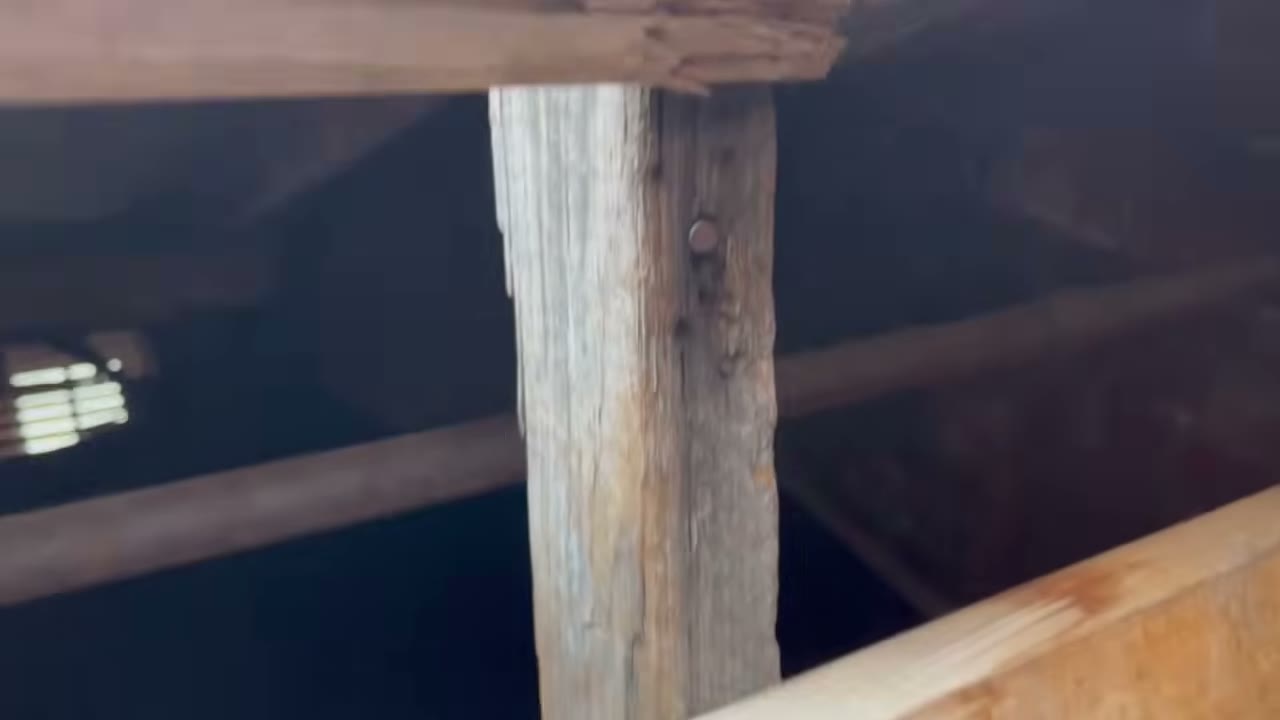
The U.S. Fire Administration’s list of gear for people evaluating vacant buildings includes work boots among what personnel should wear. Sneakers aren’t on the list.
What does puncture protection actually mean?
It means a layer in the sole that a nail can’t pass through, and you have to check the label to find out whether your boots have one. OSHA’s PPE booklet says the metal insoles of some safety shoes protect against puncture wounds, and that footwear protects in different ways, so labeling should be checked. It also says that all of the footwear it describes as ANSI approved has a protective toe, which guards against impact and compression, and that metatarsal guards protect the instep.
OSHA’s footwear rule names a consensus standard, ASTM F2413, titled Standard Specification for Performance Requirements for Protective Footwear, along with its companion test method standard, F2412. The rule cites the 2005 edition, so look for the current ASTM F2413 marking on the boot you buy and ask the seller what the marking covers. A boot that says “work boot” on the tongue and nothing about puncture on the label is a work boot and nothing more.
A steel toe does not protect the bottom of your foot, and a puncture plate does not protect your toes. They are separate parts. Read the label for both.
What happens if you step on a nail anyway?
You deal with tetanus, which is a vaccine question and not a boot question. CDC’s Pink Book says tetanus bacteria usually enter the body through a wound, that the spores are widely distributed in soil, and that deep puncture wounds and crush wounds are among the injuries it follows. It recommends a Td or Tdap booster every 10 years, and says a person with a wound that is other than clean and minor should get a booster if more than 5 years have passed since the last dose.
CDC’s current recommendations say the same thing about timing. A tetanus containing vaccine is indicated for wound management when more than 5 years have passed since the last dose. I can’t tell you when yours was. A doctor or pharmacy can look it up, and a puncture wound is worth a call whatever the date. The full rundown is in tetanus and rusty metal.
A puncture plate in a boot lowers the odds of the wound. It doesn’t replace the vaccine.
Does tread matter?
It matters, because a boot only helps if it stays under you. NIOSH’s feature on slip resistant shoes says they have rubber soles and tread patterns that can better grip wet or greasy floors. In a NIOSH study of school district food service workers, those given highly rated slip resistant shoes saw a 67 percent reduction in claims for slip injuries, from 3.54 to 1.18 per 10,000 months worked. Workers who bought their own slip resistant shoes saw no reduction.
That was kitchens, not abandoned buildings, and the study doesn’t explain its star rating scale in the page I read. What it does show is that the grip rating is real and that a shoe sold as slip resistant isn’t automatically the same as one with a high rating. OSHA’s booklet lists working on or around hot, wet or slippery surfaces as a situation that calls for foot protection. Wet floors and still water show up in plenty of abandoned buildings.
What about wet feet, cold feet and electricity?
Wet boots are a safety problem as well as a comfort one. CDC says hypothermia can happen at cool temperatures above 40°F if rain, sweat or cold water chills you, and for cold weather it recommends several loose layers and water resistant boots.
Water matters for another reason. OSHA’s PPE booklet says electrical hazard rated safety toe shoes may be compromised if the shoes become wet. I’m not saying any boot makes it safe to be near live wires, and the live wires guide covers why. The point is that a rating on the label doesn’t survive a puddle. For the cold side, see exploring in winter.
What should you check when you get home?
Look at the soles. OSHA’s PPE booklet says embedded items in the sole should be checked, since they can create hazards. A nail tip that stopped short of your foot is still in the rubber, and so is a sliver of glass. Pick them out before the next trip, and replace a boot whose puncture layer has been compromised.
It is also worth thinking about what the boots carry. CDC says homes built before 1978 are likely to have some lead based paint, and that exposure comes when people eat paint chips or breathe in lead dust. That page is about children, and I’m not claiming a number for dust on a boot. The cautious move is to treat the soles as dirty and keep them away from anywhere children spend time. The lead paint guide has the longer version.
How should boots fit?
Like boots you can walk a long way in. OSHA’s booklet says fit and comfort should be taken into account when choosing protective equipment, and that poor fit may not provide the level of protection desired. A boot that rubs gives you a reason to step carelessly or stop checking the floor, which is the one thing you can’t afford.
What does this look like in practice?
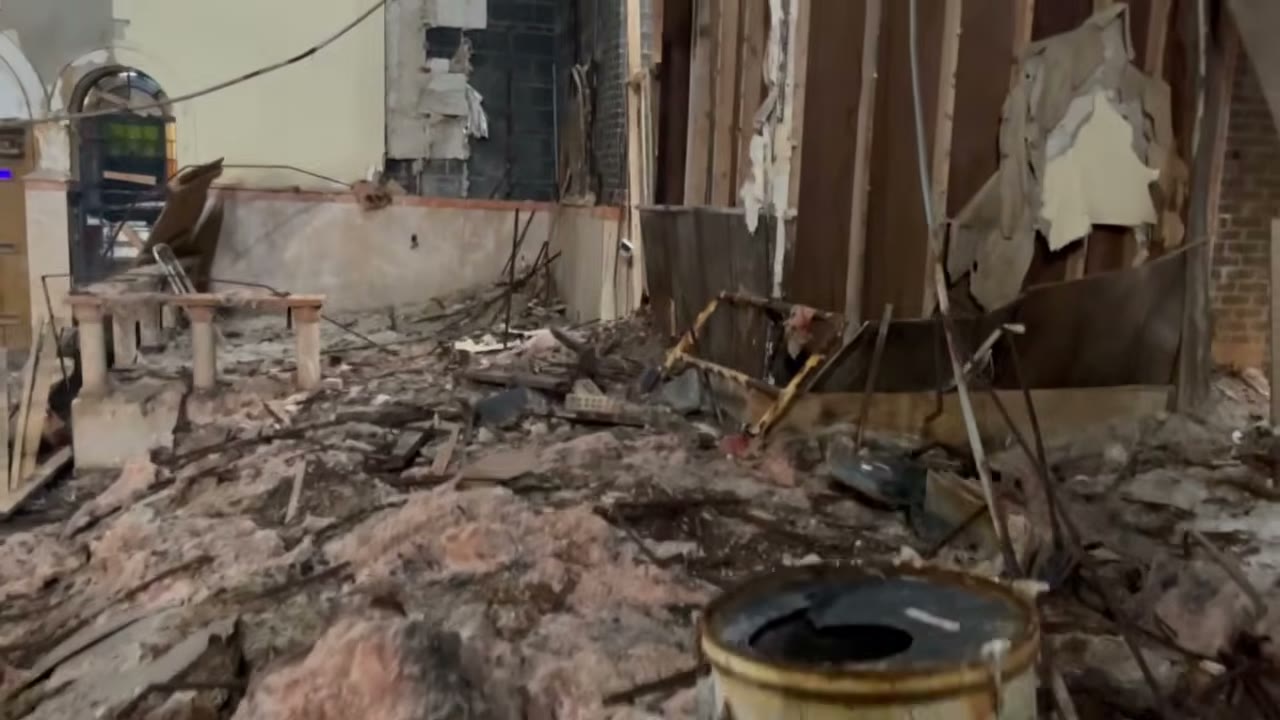
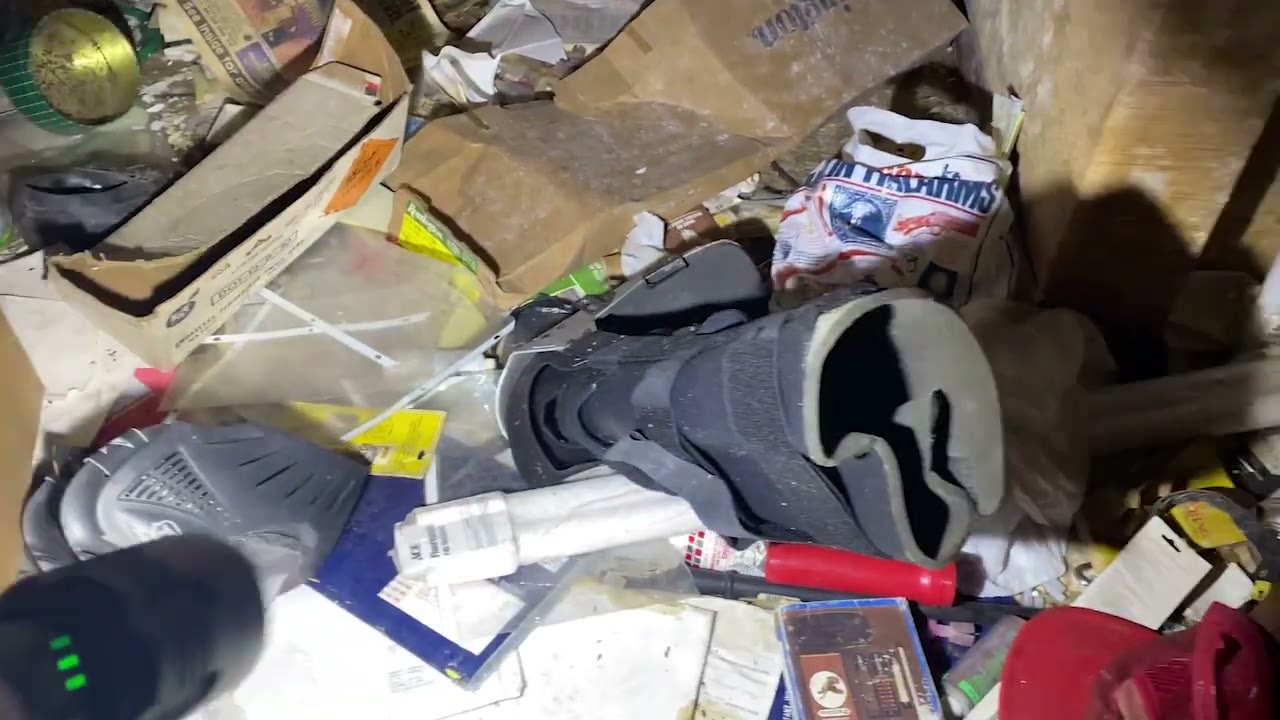
It looks like a floor you can’t fully see. In the church the hazards were nails and loose lumber in the dark. In the Greek Orthodox church video the floor was a pile of insulation, wood and plaster, and in the gun club owner’s house the last frame is a medical walking boot lying in a heap of paper and boxes. Nobody picks the moment they need a boot, so the boots have to already be on.
How I find places, stay safe and film without burning locations is in my guide, How to Find Abandoned Places. The safety checklist puts boots next to everything else, and signs a floor could collapse covers the surface under them.
Whatever you choose, the sole is what stands between your foot and the nail, so read the label for it.
Sources
- 29 CFR 1910.136 Foot protection, Cornell Legal Information Institute, accessed Nov 4, 2026
- OSHA 3151 Personal Protective Equipment, OSHA, 2023
- Nonmandatory Compliance Guidelines for Hazard Assessment and Personal Protective Equipment Selection, OSHA, accessed Nov 4, 2026
- Basic Evaluation Procedures for Abandoned and Vacant Buildings, U.S. Fire Administration, Apr 2018
- Chapter 21 Tetanus, Epidemiology and Prevention of Vaccine Preventable Diseases, CDC, accessed Nov 4, 2026
- Use of Tetanus Toxoid, Reduced Diphtheria Toxoid, and Acellular Pertussis Vaccines, Updated Recommendations of the Advisory Committee on Immunization Practices, United States, 2019, MMWR, accessed Nov 4, 2026
- Does Slip Resistant Footwear Reduce Slips, Trips, and Falls in Food Service, NIOSH, 2019
- Slip Resistant Shoes, NIOSH, accessed Nov 4, 2026
- Preventing Hypothermia, CDC, accessed Nov 4, 2026
- About Lead in Paint, CDC, accessed Nov 4, 2026
More like this


The footage that never goes public lives on Patreon. It's paid, and it's where the rough cuts, the security run-ins and the early releases go.