, exact location withheld
Signs a Floor in an Abandoned Building Could Collapse
Water damage, rot, holes and bad stairs are the warning signs for a floor collapse, but the sources say wood can look sound and collapses often come without warning.
The warning signs are water damage, wood that has gone brown, cracked or powdery, holes, missing boards, deformed walls and stairs that are coming apart. The catch is that the sources I read say rotten wood can still look hard and firm, and that collapses often come with little or no warning, so a floor that looks fine is not a floor that is fine.
This is entertainment, not safety or legal advice. Every claim here links to the agency it came from, and none of it is a reason to go inside anything.
Why does water matter so much?
Because wood doesn’t rot without it. Penn State Extension says most decay fungi do not do well if the moisture content of the wood is below 30 percent, and the University of Minnesota’s forest pathology lab makes the same point about the old phrase dry rot, which it calls misleading because moisture must be present for the decay to occur.
An abandoned building is a place where nobody is keeping water out. A National Research Council Canada digest on wood decay says extensive rotting of wood floors and roofs has happened in as little as two or three years. The U.S. Fire Administration’s guide for evaluating vacant buildings lists exposure to the elements as a cause of deterioration, and it lists standing water in basements as a hazard.
So the place to start is where the water comes in. At the animal hospital I said the roof had completely collapsed and the sun was shining through, and later that the floor was falling in. In the horse farmer’s house I pointed out a hole through the roof. A roof that lets the sun in also lets the rain in.
What does rotten wood look like?
The sources describe it, and the descriptions are less helpful than you’d hope. Penn State says advanced brown rot makes wood turn brownish or reddish, and that fractures form across and along the grain until it readily breaks into cube shaped pieces. In the late stage it looks dry and powdery. The fungus also leaves the wood weaker and lighter.
The National Research Council digest adds changes in color and smell, and says advanced decay can leave wood soft, spongy or crumbly. Then it gives the warning that matters most. Decayed wood may still appear hard and firm to the touch, and even slight decay can reduce toughness so the wood breaks easily under a blow.
The University of Minnesota says the same from another angle. It says considerable losses in wood strength occur very early in the decay process, often before the decay is visible. That is the problem in one sentence. By the time a floor looks bad, it has been getting weaker for a long time. By the time it looks fine, that tells you very little.
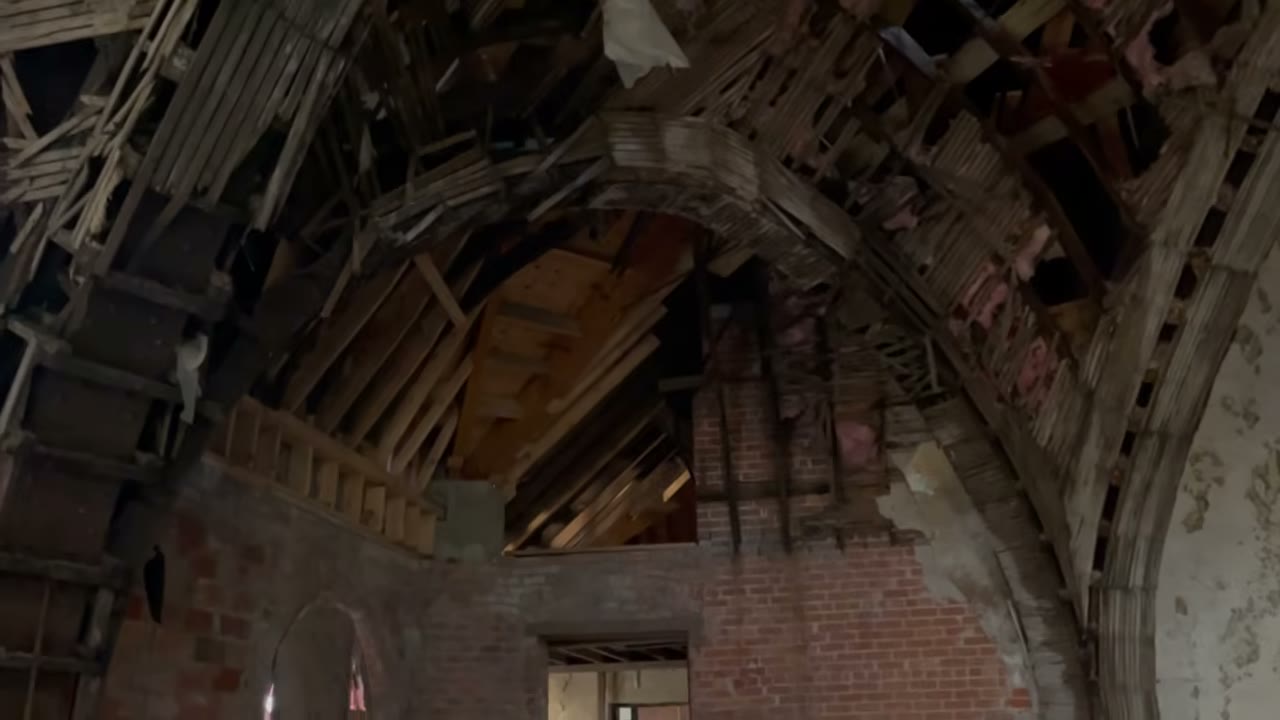
What about holes, missing boards and bowed walls?
Those are the signs you can see, and the fire service treats them as serious. The U.S. Fire Administration’s evaluation guide tells crews to look for holes in floors, missing stairs, and open shafts and pits. It also tells them to look for deformed walls and obvious deterioration of structural members, and it points out that vandals and unauthorized occupants sometimes cut holes in floors and walls.
That last item is worth a minute. A hole in an abandoned floor isn’t always rot. Sometimes somebody made it. Either way the result is a floor you can’t judge from the next room.
OSHA gives the other half of this. It says that falls are the leading cause of fatalities in the construction industry, that protection is needed when a worker is exposed to a fall of 6 feet or more, and that floor holes need to be covered or guarded as soon as they are created during construction. On a work site somebody covers the hole. In an abandoned building nobody has.
In the elementary school video I said the floor was missing on one level. The gun club owner’s house has a huge hole down to the basement in the video, and later someone says at least the basement stairs are intact.
What about the stairs?
Stairs fail too, and they fail with people on them. A NIOSH report on a fire in a two story vacant building in Illinois describes crews finding the stairs to the second floor partly unsound, then bridging them with a roof ladder. A firefighter’s foot broke through a stair tread just before the stairs collapsed, and the report describes a building more than 100 years old that needed repair.
That was a fire, and I’m not saying the stairs in an empty building fail the same way. I’m saying the people whose job it is to go into dangerous buildings looked at those stairs, saw they were unsound, and still had a collapse.
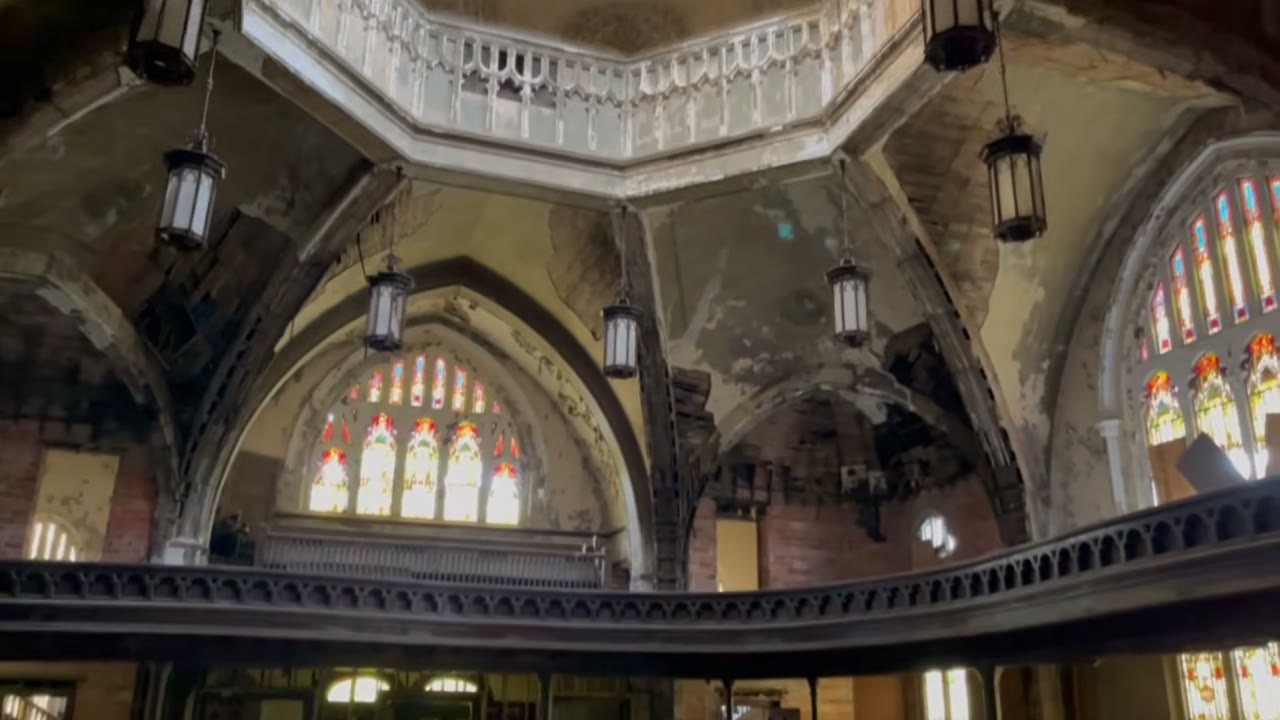
Do the professionals get any warning?
Not reliably, and that is the part to take seriously. NIOSH’s guide on collapse zones says collapses often happen with little or no warning, and that structural collapse caused 142 of the 1,230 firefighter deaths from 2000 to 2012, which is 11.5 percent. Those crews have training and an incident commander watching the building.
Abandoned buildings have a record of their own. NIOSH investigated a roof collapse at an abandoned commercial building in Illinois, an 84 year old former laundry that had been abandoned for over 5 years after city officials cited the owners for its condition. Two firefighters died and 19 were hurt, and the report lists the dilapidated condition of the structure as a contributing factor.
A more recent report involved a floor collapse in an abandoned house in Kansas. That one was driven by fire in the basement, and NIOSH notes the floor used joists that were undersized and inconsistently spaced, likely from earlier modifications. It also says abandoned buildings pose significant life safety risks because of neglect, unstable components and unknown contents. You can’t see what changes were made to a floor from above it.
What does this look like on a real explore?
It looks like a lot of videos where I’m commenting on the floor. At the animal hospital I looked at an upstairs room and said that’s not very safe, and then that the floor was definitely not safe enough to walk across, not for my comfort anyway. The funeral home video opens with me saying the floor creaked a lot. No agency page I read treats creaking as a measure of anything, so I don’t read it as a guide to which boards are safe.
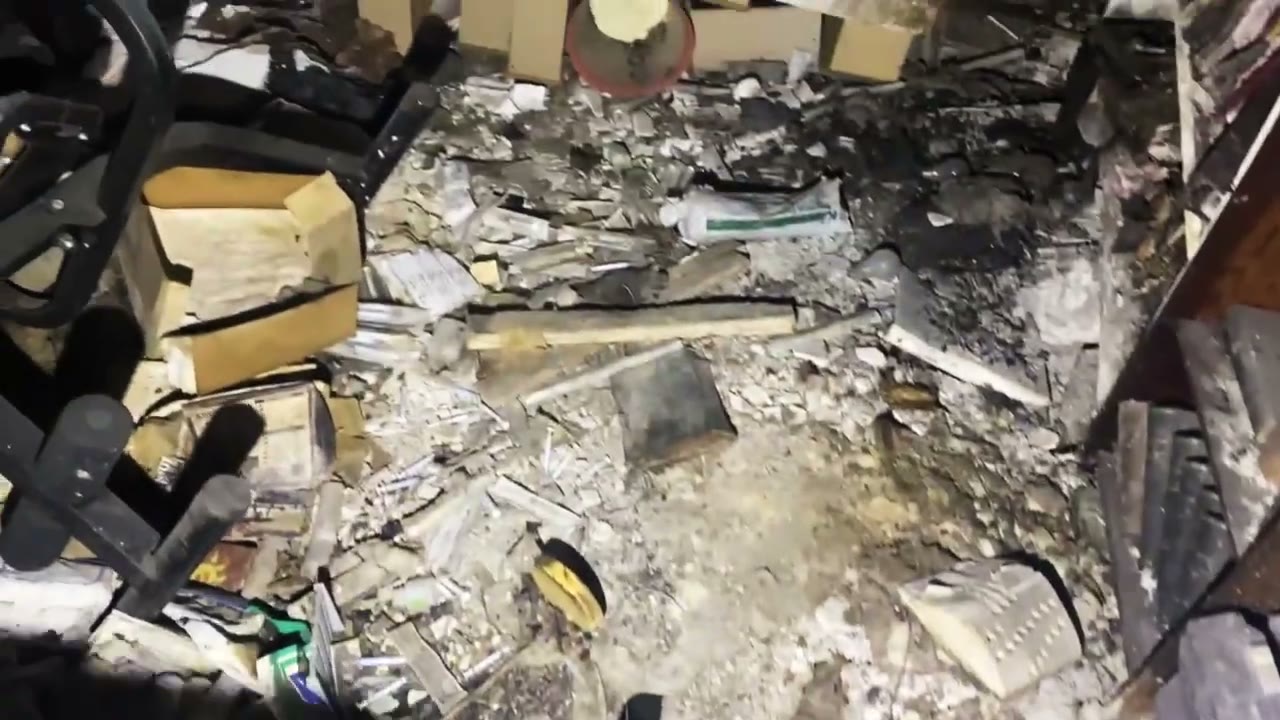
I carry one good light, the Coast XP11R flashlight on my list, because most flashlights aren’t bright enough. A light shows you what’s on the floor. It doesn’t tell you what the wood underneath it is doing.
What do the agencies say to do?
The U.S. Fire Administration’s rule is the simplest in this whole post. It tells its own evaluators that if the stability of a structure is questionable, they should not enter it, and that they should avoid any area that appears unstable. It also says that if a building is too dangerous to enter, gather what you can from the outside.
Nothing here is a guide to getting in anywhere. My guide, How to Find Abandoned Places, covers how I stay safe on explores. For the other things hiding in these buildings, see what’s actually dangerous inside abandoned buildings.
A floor that has been rained on for years doesn’t announce itself, so the only reliable sign is the one the agencies already gave. If you can’t tell, don’t test it.
What I carried in
Same list as every video description.
Sources
- Basic Evaluation Procedures for Abandoned and Vacant Buildings, U.S. Fire Administration, Apr 2018
- Construction Falls, OSHA, accessed Nov 4, 2026
- Brown Rot in Wood, Penn State Extension, Aug 20, 2026
- Decay of Wood, CBD 111, National Research Council Canada, Mar 1969
- Microorganisms Causing Decay in Trees and Wood, University of Minnesota, accessed Nov 4, 2026
- Paid On Call Fire Fighter Becomes Disorientated and Dies Following Stairway Collapse in Two Story Vacant Structure Fire, Illinois, NIOSH, Jun 30, 2022
- Two Career Fire Fighters Die and 19 Injured in Roof Collapse at an Abandoned Commercial Structure, Illinois, NIOSH, Jul 6, 2011
- Four Career Firefighters Injured from a Floor Collapse in an Abandoned Residential Structure Fire, Kansas, NIOSH, Apr 2026
- Preventing Deaths and Injuries to Fire Fighters by Establishing Collapse Zones at Structure Fires, NIOSH, Apr 2014
More like this


The footage that never goes public lives on Patreon. It's paid, and it's where the rough cuts, the security run-ins and the early releases go.