, exact location withheld
Should You Explore Abandoned Places Alone?
Why exploring an abandoned building alone raises the risk, what safety agencies say about lone work, and what a partner does and doesn't fix.
Exploring an abandoned building alone raises the risk, and every agency that writes rules for lone work says to avoid it where you can. Everything dangerous in these places gets worse when nobody is close enough to help, and the people who study lone work keep landing in the same spot.
This is entertainment, not legal or safety advice. Nothing here is a reason to go inside anything, and the law on trespass is covered near the end.
Why does being alone change the risk?
Because the hazard is the same and the rescue is gone. The University of Toronto’s working alone guideline defines the problem as a person working where assistance is not readily available should injury, illness or emergency occur, and where nobody is in visual or verbal contact with them. That describes an abandoned building well. Nobody is on shift, nobody walks past, and nobody is checking.
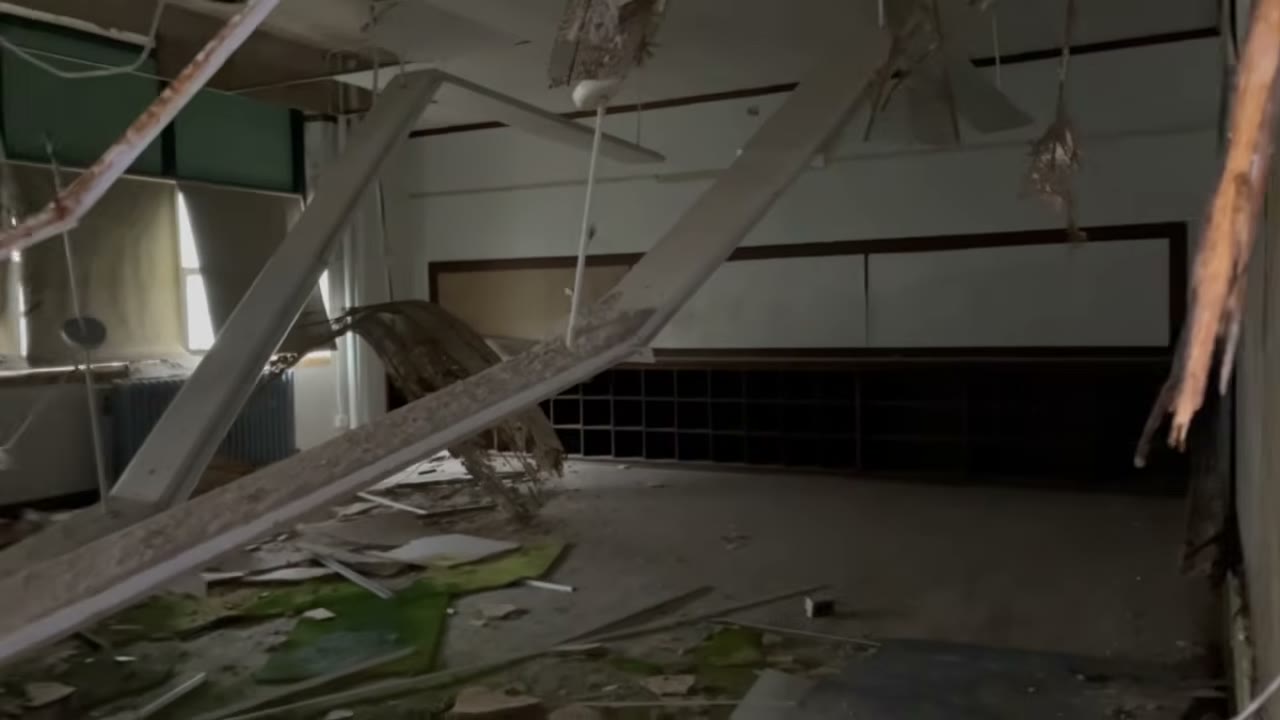
The same guideline sorts tasks by risk. It puts confined spaces, work at heights and electrical systems over 750 volts in the high risk group and says lone workers should avoid those altogether. Exposed energized electrical systems and extreme temperatures land in the moderate group. That is a university’s rulebook for lab and field staff, not for explorers, but the categories are the same ones an old building throws at you. The U.S. Fire Administration lists holes in floors, missing stairs, and open shafts and pits as hazards in vacant buildings. Basements, upper floors and old wiring are all on the list.
How fast can a small injury turn serious?
Faster than most people expect. The Department of Homeland Security says a person with severe bleeding can die from blood loss within five minutes, before trained medical responders can arrive. Its advice for bystanders is simple. Press on the wound with a t shirt, a towel or even your hands.
Think about what that means in a building with broken glass, rusted metal and torn up floors. If you are the one bleeding, you are also the only person who can press on the wound, call for help and keep yourself calm. A partner can do two of those three. Falls are the other half of the problem. A floor that gives way is a medical emergency you may not be able to walk away from, and the USFA says outright that abandoned and vacant structures lack structural integrity and are extremely treacherous to firefighters, who go in with training, gear and a team.
Will your phone save you?
Maybe, and you shouldn’t plan around it. The Toronto guideline tells lone workers to carry a working means of contact such as a cell phone, then adds that where cell service is unreliable they should use alternatives like radios, cameras or written logs. Thick masonry, basements and stairwells are where service tends to go, and those are the places people get hurt.
It also describes a check in routine, with an example of hourly contact, and asks whether a verbal or visual check is enough. For explorers the useful version is plain. Someone who isn’t with you should know roughly when you expect to be done and what to do if they hear nothing. A charged phone and a spare power bank, like the one on my gear list, keep the phone useful. A light that you trust matters just as much. In the medical center my flashlight shut off mid video because the batteries were overheating, which is a fair reminder of how much depends on one light.
What do professionals do instead?
They send teams. The USFA’s evaluation guide says vacant building evaluations should be done by teams rather than individuals, and that if the stability of a structure is doubtful, the team should not enter it at all. These are people with radios, protective gear and a dispatcher.
OSHA’s confined space rule shows the same logic. Its framework for entering a permit space includes stationing an attendant to monitor entry, and the attendant’s job includes ordering evacuation and summoning rescue. OSHA describes rescue from outside the space, without sending a second person in, as the approach that involves the least danger for rescuers. Nobody who writes safety rules for tight, dark, hazardous places thinks one person should go in with no one outside.
An abandoned cellar is not a permit space and I’m not claiming it is. The principle carries over anyway. The person outside is the one who can call for help.
What should you and a partner agree on first?
Plans matter more than the person. Toronto’s guideline says a buddy should know when and how to activate the emergency plan, which means the plan has to exist before anyone is hurt. For explorers that comes down to a few decisions made in a parking lot instead of a basement. Who calls for help if one of you is hurt. Who stays with the injured person. What the two of you do if you lose sight of each other. When you’ll be done, and who hears from you if you aren’t.
The check in is the part people skip. Toronto’s example is hourly contact, and it asks whether a verbal or visual check is enough. If you’re going somewhere with no signal, a written plan beats a hope. I keep most of my locations private on purpose, and that doesn’t change the safety math. The person you tell can know roughly where you are and when to worry without the spot ever being posted anywhere.
Does having a partner fix it?
No. It fixes some things and creates others.
Two people can fall through the same floor. Two people can inhale the same dust. A partner who doesn’t know what to do in an emergency is a witness instead of a rescuer, so the useful partner is the one who has agreed on a plan in advance. Toronto’s guideline says a buddy for moderate risk work should be within shouting distance and should know when and how to activate the emergency plan.
Law doesn’t change either. Illinois defines criminal trespass as knowingly entering or remaining in a building without lawful authority, and it is a Class B misdemeanor. Notice can be given in person or by a posted sign. Bringing a friend doesn’t change the statute.
What does this look like on a real explore?
The funeral home is the video where I was by myself. I said at the start that the floor creaked a lot and that I tried not to make much noise, and that is the whole story of exploring alone. You hear every board. You can’t ask anyone whether a sound was the building or a person. In the attic I pointed out a light fixture that looked about to fall off, and there was nobody to answer.
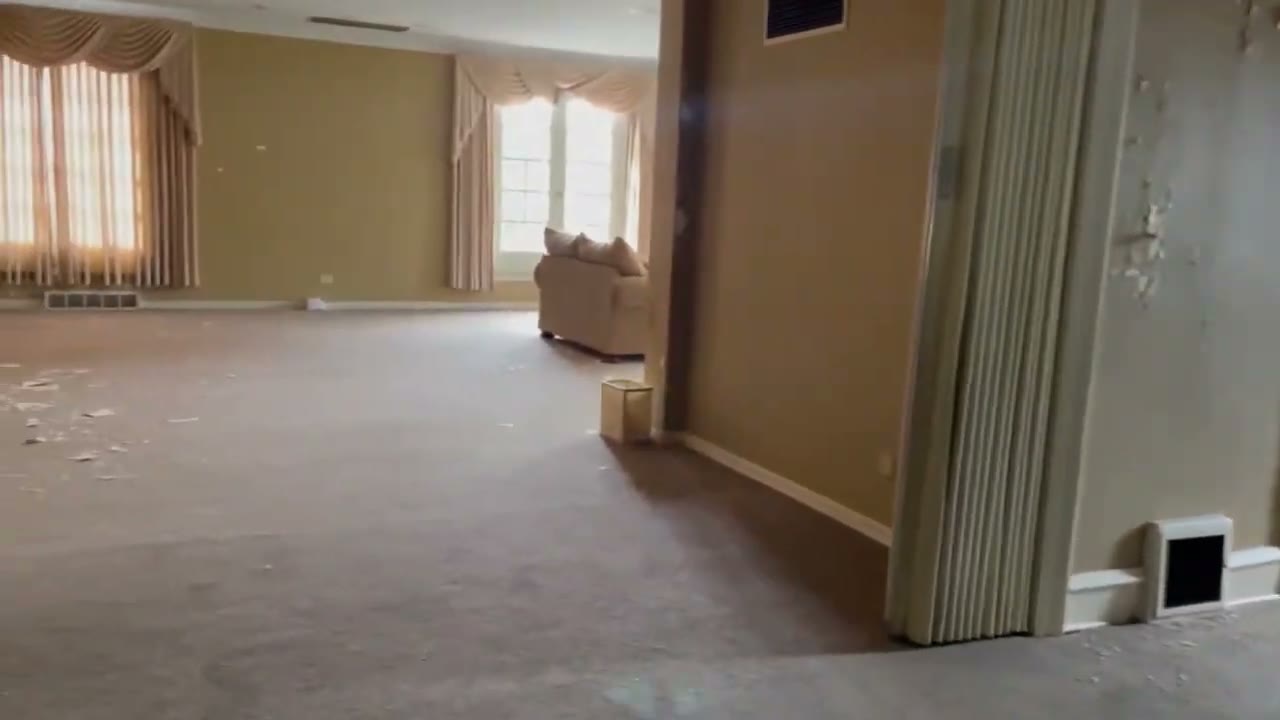
Compare the elementary school, where a friend and I heard a noise at least twice and I said “that’s not me” on camera. We talked about what it could be. I said I thought it might be a homeless person and then decided the building was just making noises, and when we got to the basement gym we told whoever might be there that we weren’t there to harm anyone. Having someone to compare notes with made that a decision instead of a spiral. It did not make the place any safer.
How I stay safe on explores, and how I plan them without burning locations, is in my guide, How to Find Abandoned Places.
If you only change one thing, tell a person who isn’t going what time you plan to be out.
What I carried in
Same list as every video description.
Sources
- Working Alone Guidelines, University of Toronto Environmental Health and Safety, Mar 2020
- National Preparedness Month, You Are the Help Until Help Arrives, U.S. Department of Homeland Security, Sep 21, 2017
- Basic Evaluation Procedures for Abandoned and Vacant Buildings, U.S. Fire Administration, Apr 2018
- Vacant and Abandoned Buildings, U.S. Fire Administration, accessed Nov 4, 2026
- Permit Required Confined Spaces, Proposed Rule, Occupational Safety and Health Administration, Nov 28, 1994
- 720 ILCS 5/21-3, Criminal Trespass to Real Property, Illinois General Assembly, accessed Nov 4, 2026
More like this


The footage that never goes public lives on Patreon. It's paid, and it's where the rough cuts, the security run-ins and the early releases go.