, exact location withheld
Best Gloves for Urbex
What to look for in gloves for abandoned buildings, from cut ratings and needle puncture to mold and fit, based on OSHA, NIOSH and CDC guidance.
The best gloves for urbex are the ones rated for the hazard in front of you, and no single glove covers all of them. OSHA says it is unaware of any gloves that provide protection against all potential hand hazards, so this page covers what to look for, and I’m not naming a pair because I haven’t tested gloves for this guide and won’t invent specs or prices.
This is entertainment, not medical, safety or legal advice, and none of it is a reason to go inside anything.
What are your hands exposed to?
More than cuts. OSHA’s hand protection rule, 29 CFR 1910.138, lists the hazards a worker’s hands face as skin absorption of harmful substances, severe cuts or lacerations, severe abrasions, punctures, chemical burns, thermal burns and harmful temperature extremes. Several of those apply to an abandoned building.
The rule also says how to choose. Selection should rest on an evaluation of the performance characteristics of the hand protection relative to the task or tasks to be performed, the conditions present, how long the gloves are used and the hazards involved. In plain words, a glove is for a job. Gloves for handling a hot pan do nothing about a razor blade.
The U.S. Fire Administration’s gear list for people evaluating vacant buildings includes gloves alongside boots, eye protection and a hard hat.
How are cut resistant gloves rated?
On a scale, and the scale is worth learning. The ANSI/ISEA 105 standard, whose 2024 edition is the sixth since the first in 1999, classifies cut resistance from A1 to A9, where higher means more protection. The ANSI page gives A1 as up to 200 grams of force and A9 as over 6,000 grams. The standard also covers puncture resistance, abrasion resistance, chemical permeation and degradation resistance, and several heat and flame properties.
Notice that cut and puncture are different tests. Cut and puncture are listed as separate properties, so a high cut rating is not a puncture rating. The standard even lists hypodermic needle puncture resistance as its own factor, separate from puncture resistance in general, and the page I read doesn’t say what that rating means, so the standard itself is the place to check.
OSHA’s booklet adds two cautions. Gloves designed for one function may not protect against a different function even if they look right, and thick chemical gloves can impair grip and dexterity, which has a negative impact on safety. A glove that makes you drop things, or lose your hold on a railing, has not made you safer.
Will gloves stop a needle?
Most of them won’t. NIOSH’s needlestick guide for officers says single use nitrile gloves are not puncture resistant, and suggests gloves that meet ASTM F2878-19 for needle puncture resistance. It adds that not all puncture resistant gloves protect against chemicals or bloodborne pathogens. That is guidance for police searching people, which is a different job, and it still tells you what a thin glove can and can’t do.
The same document says that after a needlestick you should wash the site with soap and water, seek medical treatment immediately and report it, and that post exposure medication may be recommended. It also tells officers to use tactical mirrors and flashlights to search in crevices or under furniture, which is a habit worth borrowing. The plan for needles is in needles and sharps, and the plan is to leave them alone.
What about mold, dust and droppings?
Gloves help with touch and do nothing for air. CDC’s mold guidance says to wear protective gloves, nonlatex, vinyl, nitrile or rubber, and not to touch mold or moldy items with bare hands. It pairs that with goggles that keep out dust and at least a NIOSH approved N95 respirator. EPA’s mold course recommends long gloves that extend to the middle of the forearm and says the material should suit what you are handling.
Those are cleanup instructions, and urbex isn’t cleanup, but they show what two agencies treat as the minimum around mold. Droppings and dust are a different path. CDC says histoplasmosis spores are released into the air after contaminated soil is disturbed, and a glove does nothing about a spore you breathe. That’s the job of the respirator on my gear list, the 3M 6200 half face respirator, and the longer explanation is in the respirator guide.
For bats, CDC says to avoid touching them and notes that their bites can be tiny, so a glove is not a plan. Peeling paint is another reason to watch your hands. CDC says paint that peels and cracks makes lead paint chips and dust.
What about cold hands?
In winter a glove has a second job. CDC lists the fingers among the body parts most prone to frostbite, along with the nose, ears, toes, cheeks and chin, and says to protect them with warm, dry clothing. The word that matters is dry, since a wet glove is a cold glove.
That sets up a trade. The warmest glove is often a thick one, and OSHA’s warning about thick gloves applies to winter as much as to chemicals. If you can’t feel a railing, a latch or a camera button, you will take the glove off at the worst moment, so think about carrying two pairs, a heavy one for the walk and a thinner one for work with your hands. I’m not recommending a product for either. The winter exploring guide covers the rest of cold weather.
How do gloves go wrong?
Mostly through fit and trust. OSHA’s booklet says fit and comfort should be considered when picking protective equipment, and that poor fit may not provide the level of protection desired. It says gloves should be inspected before each use, and it suggests filling them with water and rolling the cuff to look for pinhole leaks. A cut or a tear you didn’t notice is a hole in the only thing you were relying on.
The bigger error is the one where the glove becomes permission. A pair of gloves does not make a drawer safe to open or a pile safe to dig through. My own rule is the code, which is to leave every place exactly as I found it, with no stealing, no vandalism and no spray paint, and to take only pictures. Gloves are there to protect your hands from the building, and they are not there to help you take it apart.
OSHA’s guidance also says gloves are often relied upon to prevent cuts, abrasions, burns and skin contact with chemicals, and the booklet adds that sturdy metal mesh, leather or canvas gloves provide protection against cuts and burns. Ask what the glove is made of before you ask how much it costs.
What does this look like in practice?
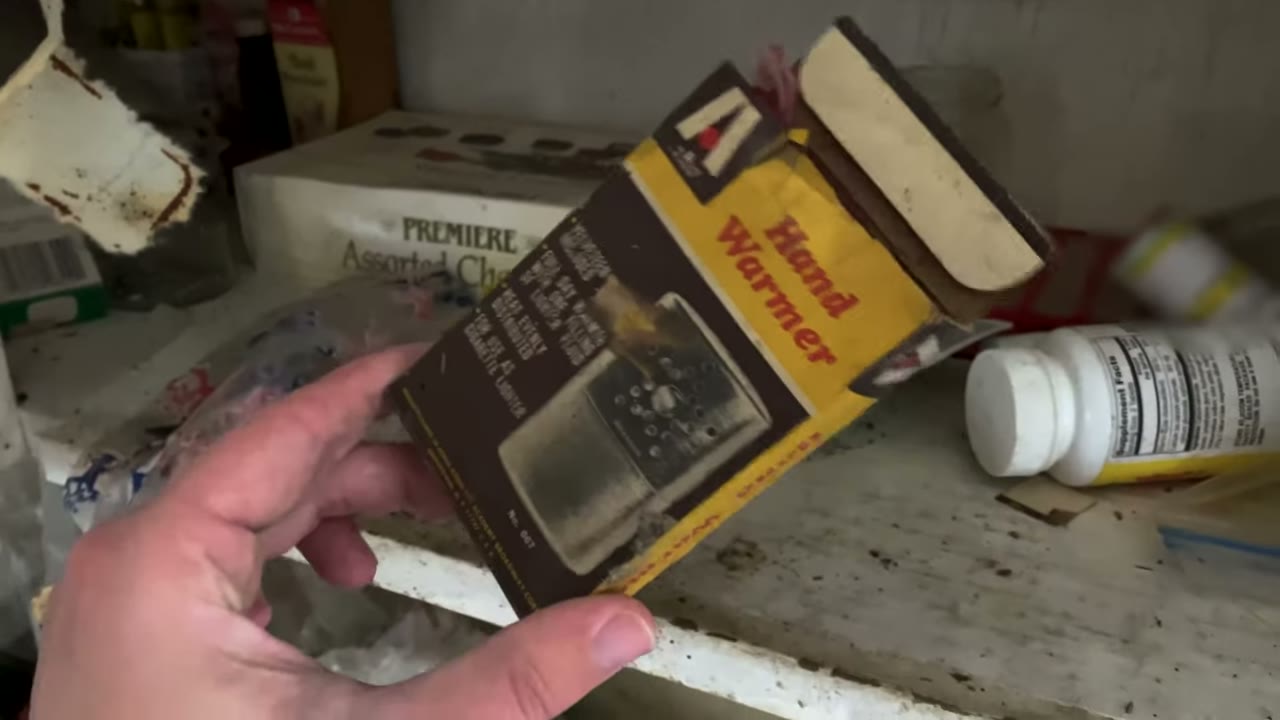
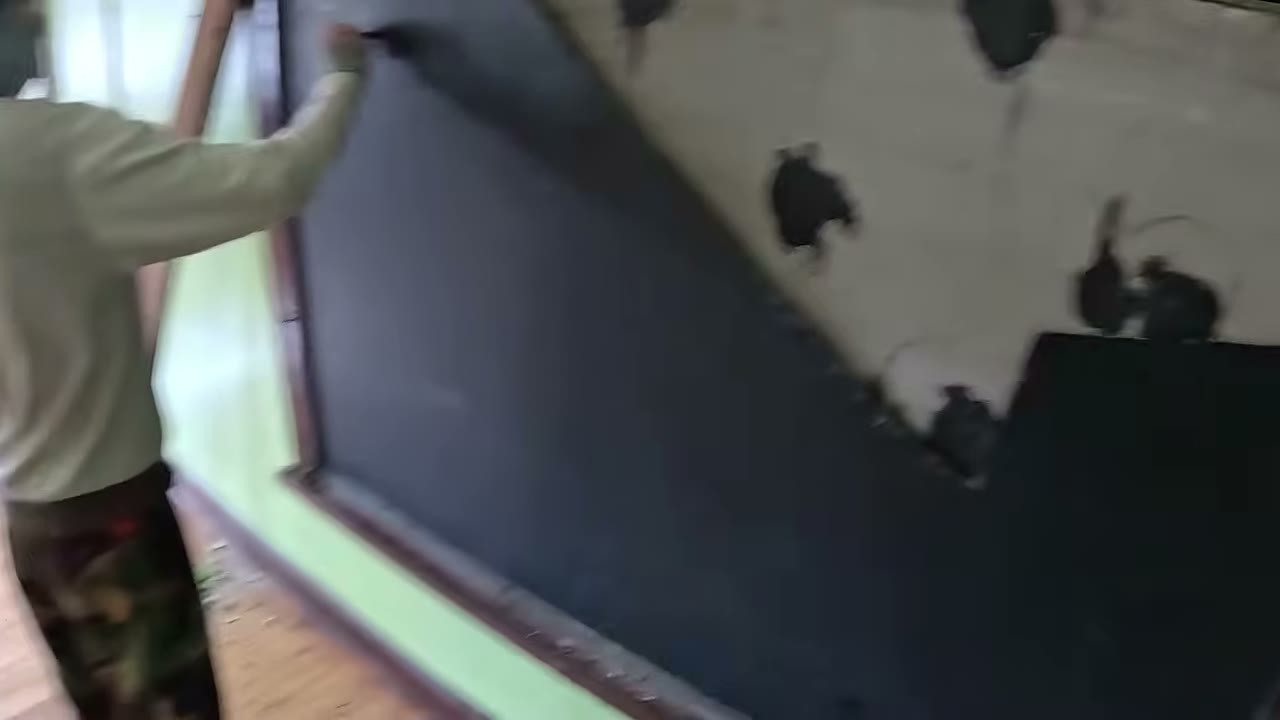
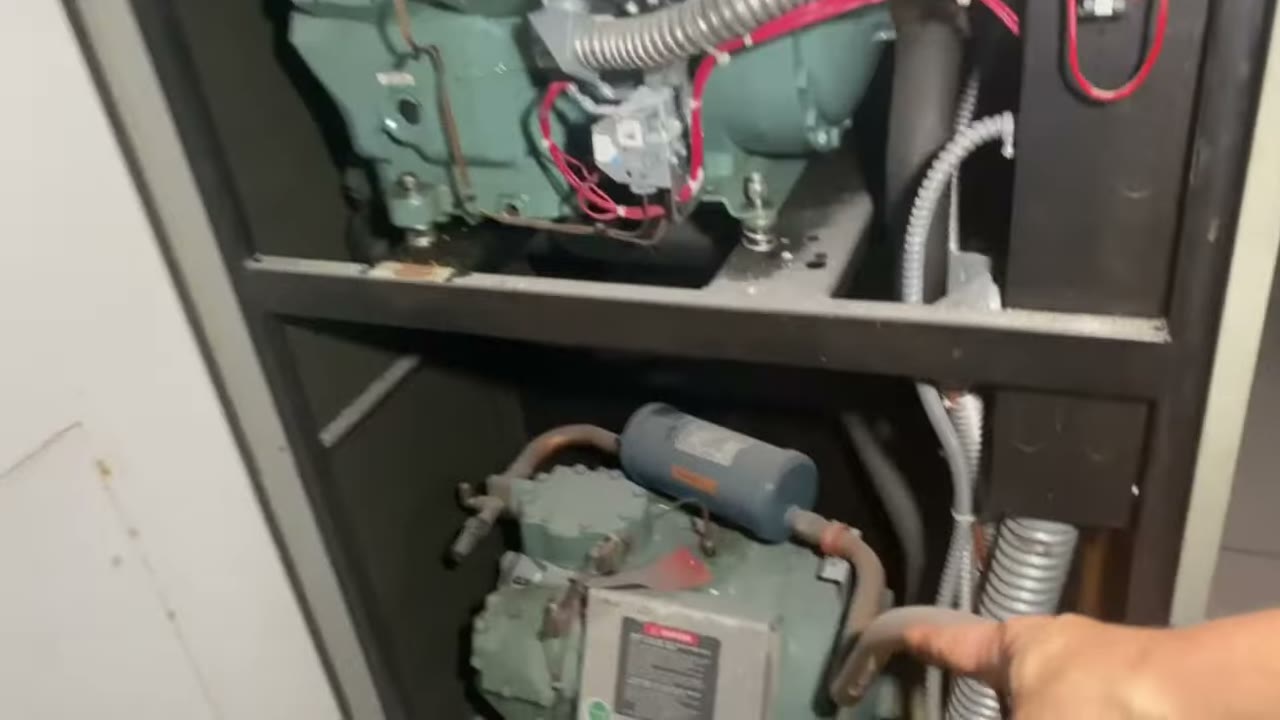
It looks like hands near things nobody has cleaned in years. In the horse farmer’s house video the frame shows a shelf coated in dust, with bottles and boxes on it. In the school it’s a chalkboard frame next to a wall that has dropped its paint. In the bank video it’s a bare hand pointing at an old compressor, with wiring and flexible conduit around it, and the live wires guide is the one to read before anything like that.
How I find places, stay safe and film without burning locations is in my guide, How to Find Abandoned Places. The safety checklist shows where gloves sit among the rest, and the best boots guide covers the other half of the kit.
Choose the glove for the hazard, check the label for the rating, and keep your hands out of anything you can’t see into.
What I carried in
Same list as every video description.
Sources
- 1910.138 Hand Protection, OSHA, copy hosted by Iowa State University InTrans, accessed Nov 4, 2026
- Nonmandatory Compliance Guidelines for Hazard Assessment and Personal Protective Equipment Selection, OSHA, accessed Nov 4, 2026
- OSHA 3151 Personal Protective Equipment, OSHA, 2023
- ANSI/ISEA 105-2024 Hand Protection Classification, ANSI Blog, accessed Nov 4, 2026
- Officers, Stay Safe from Needlesticks, NIOSH, Dec 2024
- Mold Clean Up Guidelines and Recommendations, CDC, accessed Nov 4, 2026
- Mold Course Chapter 6, U.S. EPA, accessed Nov 4, 2026
- Causes of Histoplasmosis, CDC, accessed Nov 4, 2026
- Basic Evaluation Procedures for Abandoned and Vacant Buildings, U.S. Fire Administration, Apr 2018
- Preventing Rabies from Bats, CDC, accessed Nov 4, 2026
- Preventing Hypothermia, CDC, accessed Nov 4, 2026
- About Lead in Paint, CDC, accessed Nov 4, 2026
More like this


The footage that never goes public lives on Patreon. It's paid, and it's where the rough cuts, the security run-ins and the early releases go.