, exact location withheld
Best Camera for Urbex Photography: What Matters in the Dark
What makes a camera good inside dark abandoned buildings, with the iPhone 17 Pro Max and DJI Osmo Action 5 Pro on my list compared by their makers' own specs.
The best camera for urbex photography is the one that gives you clean files in very little light and that you can hold in one hand while the other stays free. I’m a professional photographer, and the cameras on my gear list are the iPhone 17 Pro Max and the DJI Osmo Action 5 Pro, so this post compares those two and then covers what to look for if you want something else.
I’m not going to name a dedicated stills camera here. My gear list doesn’t include one, and I won’t recommend a body I haven’t put on my own list. This is gear talk, not a guide to getting into anywhere. Abandoned buildings are dangerous and can carry legal consequences.
Disclosure. The iPhone 17 Pro Max and the DJI Osmo Action 5 Pro are what I carry and link to, and my Amazon links are affiliate links that earn me a commission if you buy through them, at no extra cost to you.
Why is light the whole problem?
Because the building gives you almost none. OSHA’s construction rule sets a minimum of 5 foot candles in indoor corridors, hallways and exitways, and an empty building has no one making sure it gets even that. Where there is a window, you get a bright rectangle and a dark room around it.
Stanford’s camera pipeline lecture explains why that hurts. It says photon arrival follows a Poisson distribution, with noise equal to the square root of the number of photons, so the signal to noise ratio is N over the square root of N, and “the brighter the signal, the higher the SNR”. The slides also say plainly that we’ve all been frustrated by noise in low light photographs. In plain terms, every photo in a dark room is a photo with fewer photons in it, and the noise you see is the math.
That’s the case for a good light as much as a good camera. I carry one good flashlight, because most flashlights, including brand ones, aren’t bright enough, and the flashlight comparison covers how to pick one.
Does a bigger sensor really matter?
Yes, mostly because of pixel size. The same Stanford lecture compares an iPhone X with 1.2 micron pixels at 12 megapixels, a Nikon D7000 with 4.8 micron pixels at 16 megapixels, and a Nikon D4 with 7.3 micron pixels at 16 megapixels. Its goal for the sensor is to maximize light gathering, and it says larger pixels collect more light and improve the signal to noise ratio.
Those are older cameras used as teaching examples, and a phone from today is not an iPhone X. The lesson holds, though. A small sensor needs more help from software to look clean, and a big one starts out ahead.
The lecture adds one more point. It says read noise is largely independent of pixel size and that backside illumination gives better light sensitivity at a fixed sensor size. So size isn’t the only lever. Sensor design counts too, which is why spec sheets matter more than megapixel counts.
What does the iPhone 17 Pro Max offer?
Apple’s spec page lists a 48MP Fusion Main camera at ƒ/1.78, Night mode for photos, and ProRAW on the rear and front cameras. ProRAW matters for dark rooms because a raw file keeps more to work with when you lift the shadows. For video it lists ProRes up to 4K at 120 fps with external recording, and Apple Log 2.
Storage comes in 256GB, 512GB, 1TB and 2TB. That’s useful in a long day, since photos and video share the same pool.
The limit to know about is temperature. Apple lists an operating ambient temperature of 32 to 95 degrees Fahrenheit (0 to 35 degrees Celsius). Winter explores run colder than that, and the phone is the one thing in your pocket you can’t afford to have shut down. Keep it against your body and out of the cold between shots, and read the winter post for more on the cold.
What does the DJI Osmo Action 5 Pro offer?
It’s my video camera, and it gets a wide view into small rooms. DJI’s spec page lists a 1/1.3 inch CMOS sensor with a 155 degree field of view and an f/2.8 aperture. It records 4K up to 120 fps at up to 120 Mbps, and its operating range is minus 20 to 45 degrees Celsius, which is wider than the phone’s on the cold end.
It also carries 64 GB of built in storage with 47 GB available, plus a microSD slot that takes up to 1 TB. The SanDisk Extreme PRO microSD on my list goes in that slot. The full head to head against other action cameras is in the Osmo Action 5 Pro comparison.
A wide lens is a trade. It shows the whole room, and it stretches anything near the edges. That’s fine for walking a space and a poor choice for a clean portrait of one object.
What can historic building photographers teach you?
A lot, and the National Park Service writes it down. Its Heritage Documentation Programs photography guidelines are for large format film, so the equipment doesn’t carry over, but the thinking does. They call for a sharp rectilinear wide angle, a normal and a mildly telephoto lens, and a camera with ample movement for perspective correction, so that the vertical lines in a building stay vertical.
They say interior views should capture spatial relationships, structural evidence, a typical room, and any decorative elements. They also say a scale device must be included in specific views to show the size of the object recorded. That’s a good shot list for any explore, and none of it needs a special camera. Get the room, get the detail and get something that shows size.
The post on ruin photography covers the genre this kind of work belongs to.
What should you look for in a dedicated camera?
I’m not recommending a body, so here is the checklist. Every line comes from the sources above.
- Raw files. The iPhone’s ProRAW is the example, and any camera you buy for dark rooms should shoot raw.
- Big pixels and a good sensor. Stanford’s lecture ties light gathering to pixel size and to sensor design.
- A wide lens that stays straight. The NPS lens set starts with a sharp rectilinear wide angle.
- A temperature range that covers your season. Compare the phone’s 32 to 95 degrees Fahrenheit with the Osmo’s minus 20 to 45 degrees Celsius.
- Weight you’ll actually carry. The backpack post covers why a heavy bag is a bad bag on stairs.
What does this look like in practice?
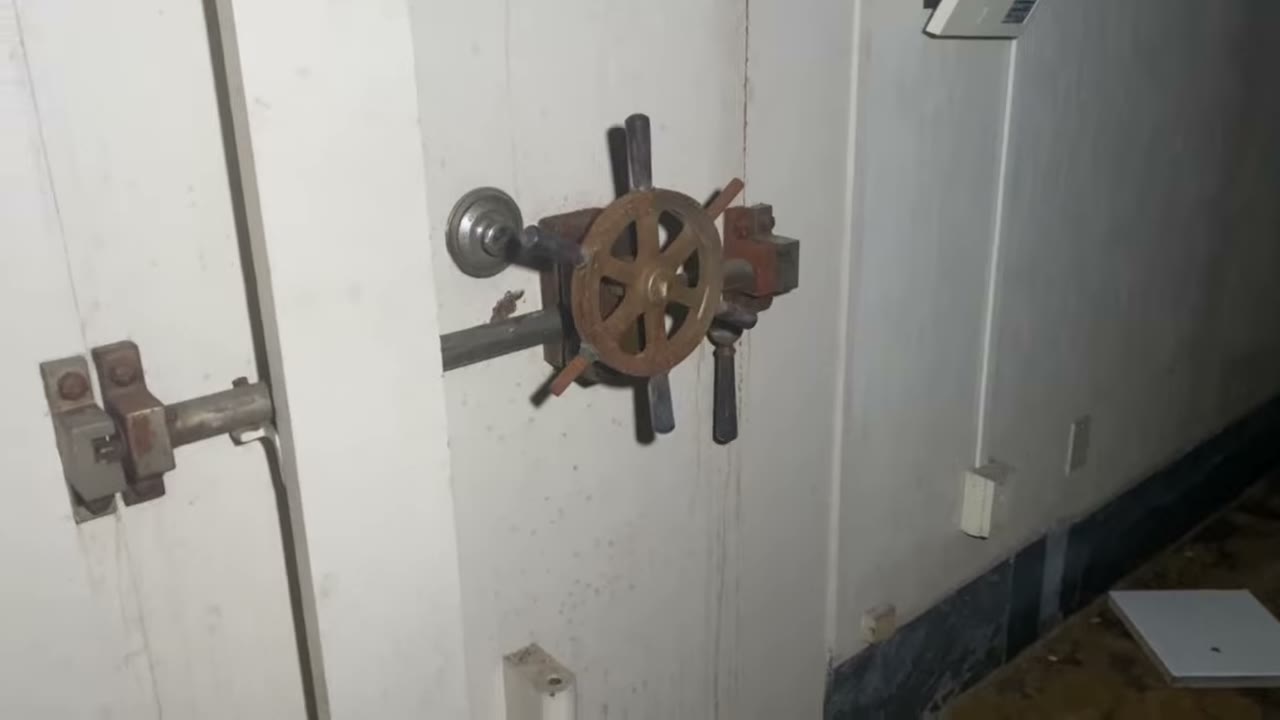
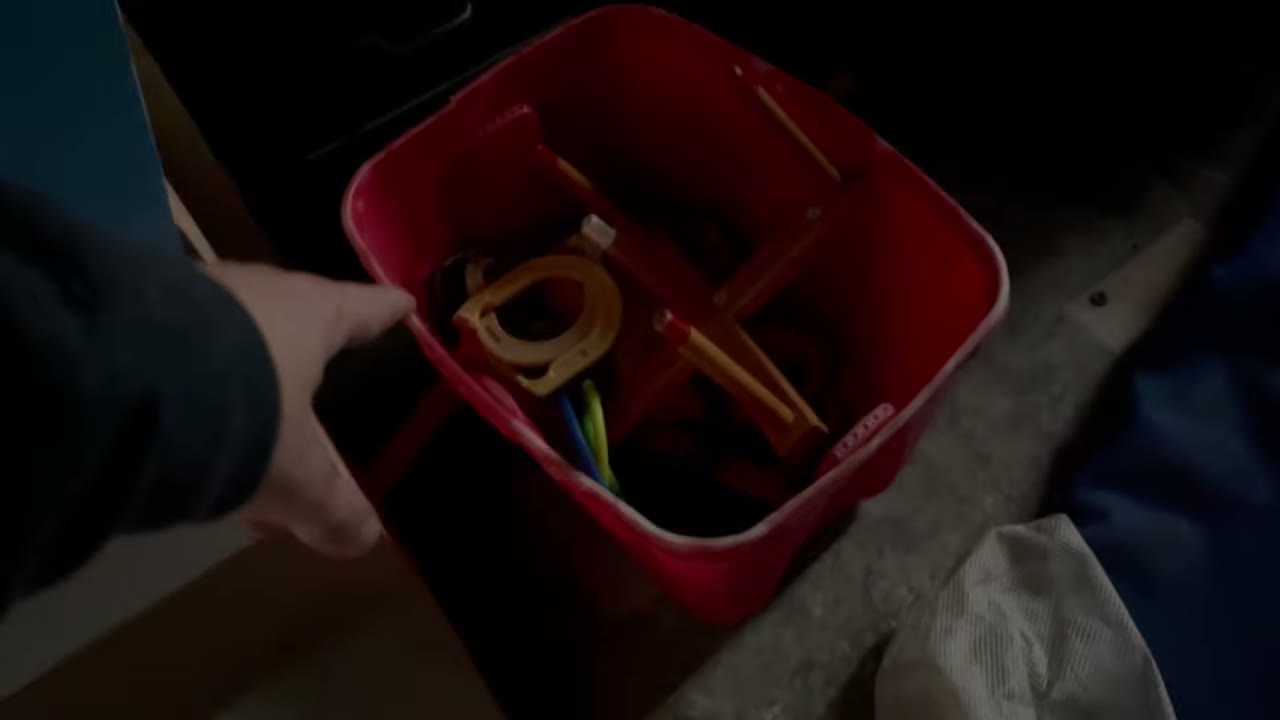
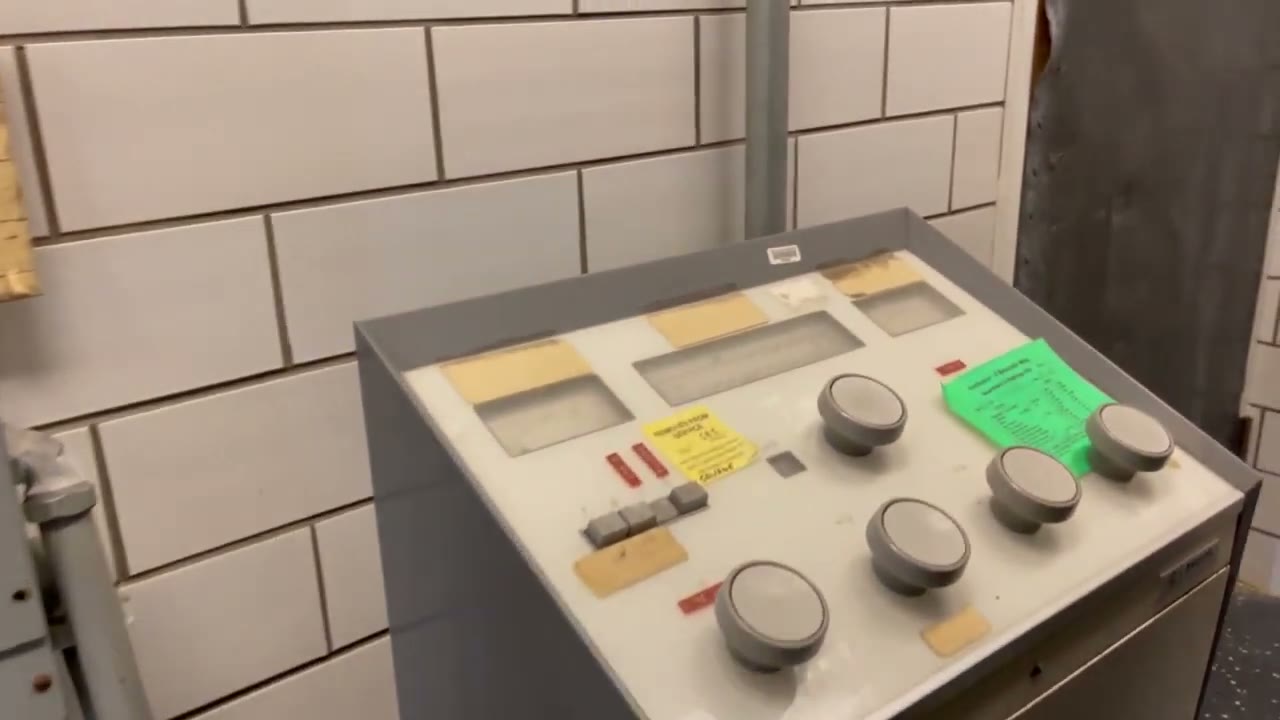
The bank vault, the Detroit school and the animal research lab are three different lighting problems. The bank video has a vault door in a dim hallway. The Detroit school video has a bucket of toys in near darkness. The lab video has a control panel with a green paper tag still on it. In each one, the light decides the shot, and the camera comes second.
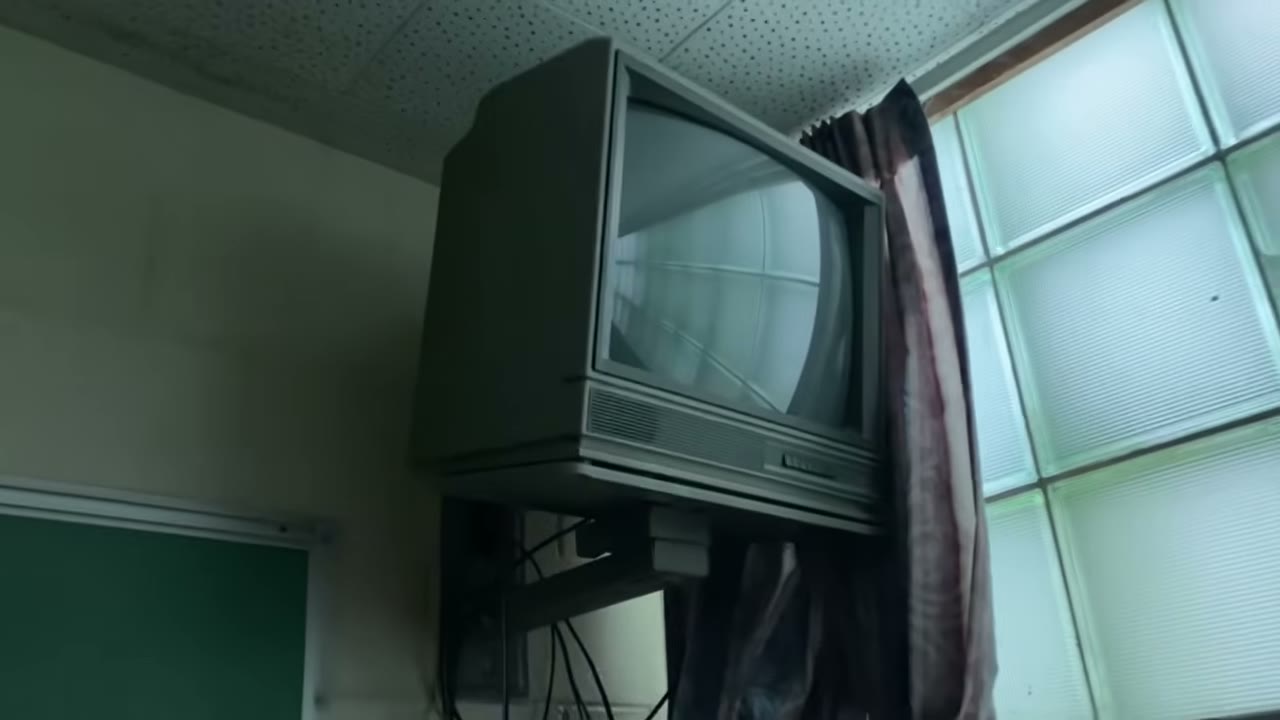
A window next to a dark corner is the hardest scene of all, since the camera has to decide which one to get right. That’s where raw files earn their place.
How I find places, stay safe and film without burning locations is in my guide, How to Find Abandoned Places.
The best camera is the one you have with you, with enough light on the subject.
What I carried in
- iPhone 17 Pro Max
- DJI Osmo Action 5 Pro (Adventure Combo)
- Coast XP11R flashlight
- SanDisk Extreme PRO 256GB microSD
Same list as every video description.
Sources
- iPhone 17 Pro Max Tech Specs, Apple Support, accessed Nov 4, 2026
- Osmo Action 5 Pro Specs, DJI, accessed Nov 4, 2026
- Lecture 2, Camera Pipeline (CS348K), Stanford University, Spring 2024
- Heritage Documentation Programs Guidelines for Large Format Photography, National Park Service
- 1926.56 Illumination, OSHA, accessed Nov 4, 2026
More like this


The footage that never goes public lives on Patreon. It's paid, and it's where the rough cuts, the security run-ins and the early releases go.