, exact location withheld
What Does 'Toyed' Mean? When a Spot Gets Trashed
A toyed spot has been trashed by toys, the explorer word for people who destroy buildings. Basically the same as burned. How a time capsule turns into a wreck.
A toyed spot is a place that has been trashed by “toys,” the explorer word for people who destroy buildings, and it means basically the same thing as burned.
Entertainment, not legal advice. The facts below are sourced at the bottom of the page.
If you need a difference between the two, burned is about the location getting out and toyed is about what’s left once it does. Toys are the people, toyed is what happens to the place, and one of them is a toy.
Toys break every line of the code of urbex. Leave every place exactly as you found it. No stealing, no vandalism, no spray paint. Take only pictures, leave only footprints.
What do toys actually do to a building?
Four things, mostly. They smash, they tag, they steal and they set fires.
A police guide to abandoned buildings from the Center for Problem-Oriented Policing says graffiti and broken windows are the common acts of vandalism plaguing them, and that offenders steal building components and sell them. Once the doors and windows are gone, the building is exposed to the weather and starts to fail faster. The guide also notes that thieves risk arrest and injury, particularly electrocution, when they dismantle electrical components, and that replacing stolen doors and windows can entice additional theft. One round of damage can invite the next.
Fire is the one you don’t come back from. In vacant residential buildings, the U.S. Fire Administration found, intentional actions were the leading cause of fires from 2013 to 2015, at 34 percent. Fifty-three percent of all those fires spread to the entire building, and they took longer to detect because nobody was there to notice. An earlier report found 41 percent of intentionally set residential fires happened in vacant buildings, against 7 percent of all other residential building fires. Those numbers are for houses and apartment buildings, not malls or factories.
What’s the difference between decay and destruction?
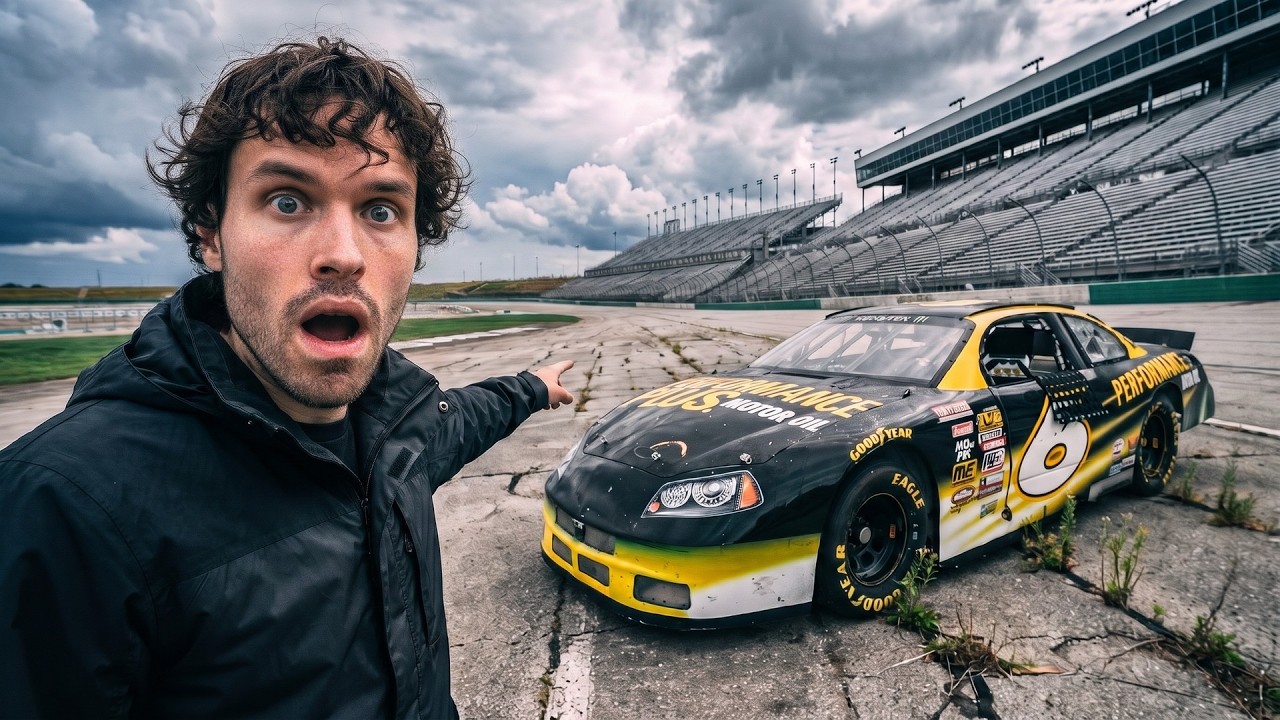
Decay is slow and nobody is doing it. Water gets in, paint lets go, plants come up through the floor. At Kentucky Speedway the paint is peeling off every bench in the grandstands. At the French mansion shrubs grew up through a Renault Clio. That’s weather and time.
Destruction is quick and has a person behind it. This site’s tagline is “Abandoned buildings, documented before they’re gone.” The action camera and the one good flashlight on the gear list are how I do the documenting, and toys are one reason “before” matters.
How can you tell a toyed building from one that’s just old?
Ask who did it. Weather leaves peeling paint, stained ceilings and plants coming up through the floor. People leave the things on the police guide’s list, like broken windows, spray paint, doors and windows gone, metal and fixtures stripped out, and fire damage.
A place that hasn’t been through that keeps its stuff where it was left, like someone meant to come back. The Speedway still has its concession menus up. The French manor has a baby stroller full of cobwebs. Whatever has happened to those rooms, it’s the slow kind of damage. A toyed place is the one where the thing you came to document is no longer there to document.
How does a time capsule building get toyed?
Often after the location spreads. A time capsule stays one while few people know where it is. When the location gets out, the visitors multiply, and so do the odds that some of them are toys.
A documented version happened in Illinois. In October 2023, police in a Chicago suburb said juveniles and young adults had been causing damage to windows, walls and doors at a closed resort that WBBM Newsradio reported had fallen victim to the social media trend of “urban exploring.” Surveillance cameras were now running at the site. By July 2025 the police were warning about a TikTok page on urban exploration, reporting trespassing arrests, and saying the site was monitored by security around the clock.
And in Salt Lake City in 2020, KSL reported teens breaking into a closed waterpark for a TikTok trend. The chain link fence had been cut in 27 places, trespassers were tagging and skating inside, and police calls in May ran at nearly eight times the monthly average, for vandalism, assault, robbery, theft and trespassing. KSL also pointed to the pandemic, which had shut schools and left kids with free time. The city ended up with security on the grounds 24 hours a day, an armed guard at night.
Nobody can say which post did it. Neither report names a single culprit. Both describe a trend. It takes a few visitors, not most of them.
Why do explorers blame location sharing?
Because it’s the same order in every case above. The location gets out, the crowd comes, the damage follows, then the guards. A 2016 paper in the International Journal of Heritage Studies, a study of urban explorers, describes a kind who prefer not to disclose exact locations and avoid attention that could lead to vandalism.
The blame isn’t proof. A location getting out doesn’t make everyone who finds it a toy. It raises the odds, and it can’t be taken back.
That’s why I hide most locations. People always ask for them and I won’t give them out. A spot labeled “Chicago” may not be in Chicago. The French mansion page says “Rural France” and nothing more. How I find my own spots is in my guide, How to Find Abandoned Places.
Weather and time will get to every one of these places eventually. Nobody needs to help.
What I carried in
Same list as every video description.
Sources
- Abandoned Buildings and Lots (Problem-Specific Guide No. 64), Center for Problem-Oriented Policing, 2012
- Vacant Residential Building Fires (2013-2015), U.S. Fire Administration, Jan 2018
- Intentionally Set Fires in Residential Buildings (2008-2010), U.S. Fire Administration, Oct 2012
- Suburban police promise crackdown on 'urban exploring,' vandalism at redevelopment site, WBBM Newsradio, Oct 2, 2023
- Bloomingdale police issue warning on trespassing amid ongoing TikTok trend, NBC Chicago, Jul 26, 2025
- Magnet for mischief: KSL investigates alarming rise in police calls to abandoned waterpark, KSL.com, Jun 19, 2020
- Heritage views through urban exploration: the case of 'Abandoned Berlin', International Journal of Heritage Studies, 2016
More like this


The footage that never goes public lives on Patreon. It's paid, and it's where the rough cuts, the security run-ins and the early releases go.