, exact location withheld
Best Backpack for Urbex: What to Look For and What I Carry
The best urbex backpack keeps your hands free and your load light. What the safety sources say about weight and fit, and the LHI 45L tactical pack on my list.
The best backpack for urbex is one that keeps both hands free, sits snug and low on your back, and stays light enough that you never lean forward to carry it. I carry the LHI 45L tactical backpack from my gear list, and this post covers what the safety sources say about weight and fit, and what goes in it.
This is gear talk, not a guide to getting into anywhere. Abandoned buildings are dangerous and can carry legal consequences, and a good bag doesn’t change that.
Disclosure. The LHI 45L tactical backpack is the one I carry and link to, and my Amazon links are affiliate links that earn me a commission if you buy through them, at no extra cost to you.
Why does a backpack matter inside an abandoned building?
Because you need your hands for everything else. Stairs, railings, doors and your light all want a free hand, and a bag in one fist takes that away. OSHA’s ladder rule is written for ladders, but the logic carries over to a bad staircase. It says an employee must use at least one hand to grasp the ladder and “shall not carry any object or load that could cause the employee to lose balance and fall”. A pack on both shoulders is how you carry gear and still keep a hand on something.
Nobody is going to light the way for you either. OSHA’s construction rule asks for a minimum of 5 foot candles in indoor corridors, hallways and exitways, and nothing guarantees that in an empty building. A light, a spare power source and a camera all need somewhere to live that isn’t your hands.
How heavy should a backpack be?
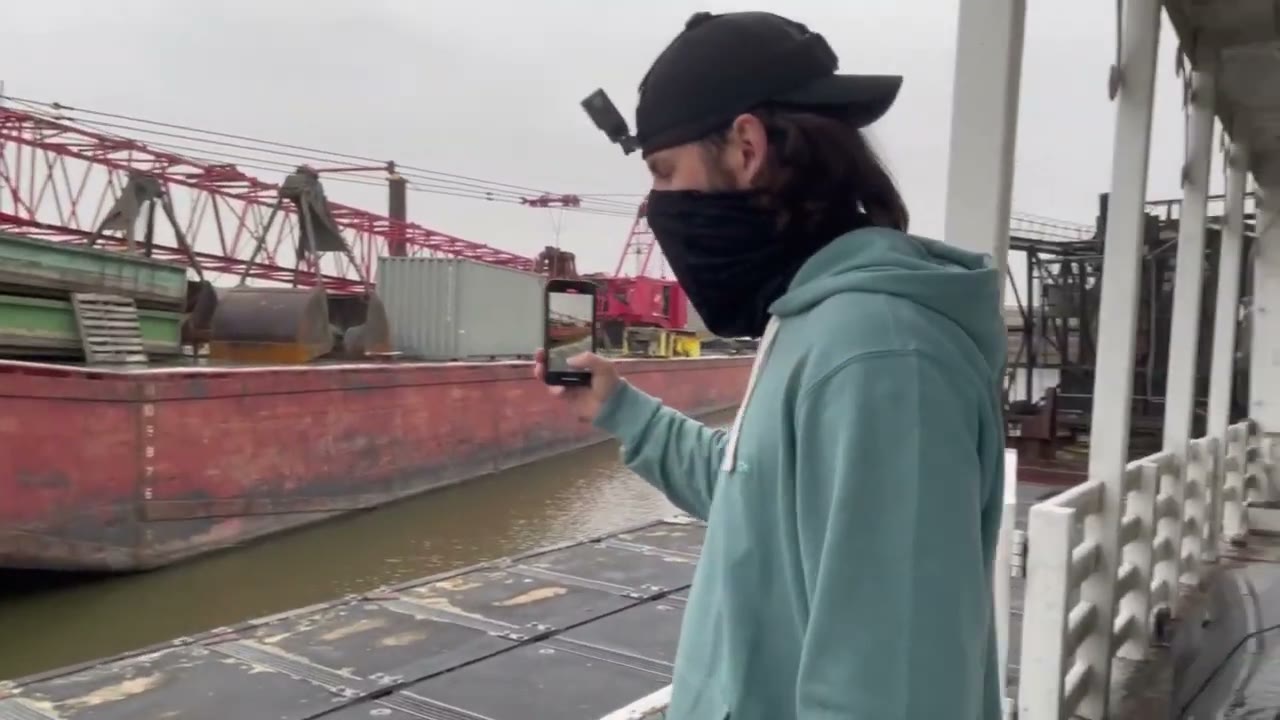
Lighter than you think. The IU School of Medicine’s safety page says a backpack should not weigh more than 10 percent of your body weight, and gives the example of a 100 pound person keeping the full pack, contents included, to 10 pounds or less. That page is written about school bags, so treat it as a conservative ceiling and not a rule for adults. A kit with a flashlight, a respirator, cameras, a power bank and water will blow past it fast.
Its test for too heavy is simple. If you have to lean forward to carry the pack, take things out. That is the signal I’d trust, because it measures what’s happening to your posture and balance. On a staircase you can’t trust, balance is the thing you can’t spare.
There is a second number worth knowing, and it’s about lifting. NIOSH’s manual handling guide says the maximum weight to be lifted with two hands under ideal conditions is 51 pounds, and that the recommended limit comes out lower once real conditions are factored in. That’s a lifting ceiling and not a carrying limit, but it tells you what a full 45 liter bag can turn into if you stuff it.
How should a backpack fit?
Snug, high on the hips and on both shoulders. The IU page says to always use both straps, pick wide padded straps, and keep them tight, because loose straps can pull you backwards and strain your muscles. It says the pack should sit low on your back, with the bottom at the curve of your lower back and no more than 4 inches below your waistline.
It also says to pack the heaviest items against your back, in the lower section near your spine, and to use the compartments to spread weight evenly. Its page mentions a weight belt or chest clip as a way to spread the load. In practice that means water, the power bank and the respirator go in against your back, and the light stuff goes outside them.
A chest clip matters more than it sounds. Stairs and tight spots mean you will twist, duck and turn sideways, and a pack that shifts when you do is a pack that pulls you off balance.
What does the LHI 45L carry for me?
It carries the gear from my list. That’s the Coast XP11R flashlight, a respirator, the DJI Osmo Action 5 Pro, and the 35,000mAh power bank with built in cables that keeps all of it running. The full gear list has the rest and what each piece is for.
I’m linking the LHI 45L tactical backpack because it’s what’s on my list, and I’m not going to invent specs for it. The 45L is in the name. For weight, material, strap padding and whether it has a hip belt, read the listing before you buy, and judge it against the fit points above.
Pack volume is a limit as much as a feature. Forty five liters is a lot of room, and the easy mistake is filling it. A bag that’s half empty and light beats a full one every time, for the reasons the IU page gives.
What about cold, rain and long days?
Pack for the building, not the weather outside it. The Catholic school video runs 36 minutes and 46 seconds, and the high school video runs 37 minutes and 53 seconds. Those are long stretches in places with no heat, and a bag that holds an extra layer is part of the plan.
The CDC says hypothermia can happen when a person becomes chilled from rain, and recommends several layers of loose fitting clothing under a water resistant coat. It also says to remove wet clothing. A dry layer in the bottom of the pack is cheap insurance, and it only works if it stays dry, so keep it away from your water bottle.
My own position on light is simple. Most flashlights, including brand ones, aren’t bright enough, so I carry one good one, and the flashlight comparison covers the choice. The pack’s job is to make sure that light, and the power behind it, are in reach when you need them.
What should never go in the bag?
Anything that belongs to the building. The code is to leave every place exactly as found, with no stealing, no vandalism and no spray paint. Take only pictures, leave only footprints. A backpack is for carrying your own gear in and out, and what goes out is what came in, plus your own trash.

Batteries need their own care. The TSA says spare lithium ion batteries, including power banks, must be carried in carry on baggage only, so if you fly with the power bank, it rides in the pack at your feet and not in a checked bag. The power bank post has the watt hour math.
Power banks can also fail. The CPSC’s recall of about 260,000 portable power banks sold by Amazon cited batteries that can overheat and catch fire, with 53 reported overheating incidents. Keep a bank in its own pocket, away from the water and the loose metal, and stop using any bank that gets hot or swells.
What does this look like in practice?
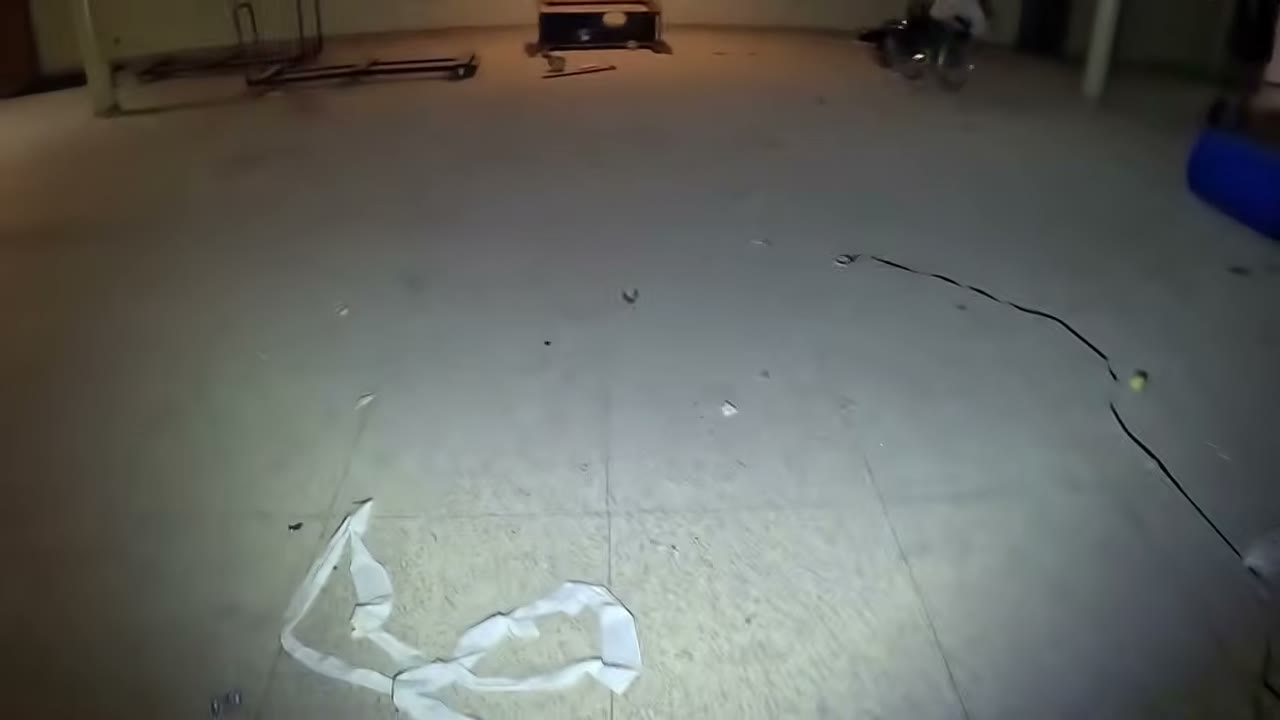
Look at what’s on the floor in those frames. The high school room above has a carpet you can’t see, and the school floor in the trophy room frame is covered in torn paper. Every step in places like these is a step on something you can’t judge, and a pack that stays put while you watch your feet is worth more than any pocket count.
How I find places, stay safe and film without burning locations is in my guide, How to Find Abandoned Places. The bag is the least interesting part of that, and the one you notice most when it’s wrong.
A pack should disappear on your back. If you’re thinking about it, it’s too heavy.
What I carried in
- LHI 45L tactical backpack
- 35,000mAh power bank with built in cables
- Coast XP11R flashlight
- DJI Osmo Action 5 Pro (Adventure Combo)
Same list as every video description.
Sources
- Backpack Safety, IUSM Safety Store, Indiana University, accessed Nov 4, 2026
- Ergonomic Guidelines for Manual Material Handling (Publication 2007-131), NIOSH, Apr 2007
- 1926.1053 Ladders, OSHA, accessed Nov 4, 2026
- Preventing Hypothermia, CDC, Aug 25, 2026
- 1926.56 Illumination, OSHA, accessed Nov 4, 2026
- Lithium Batteries 100 Watt Hours or Less (Device), TSA, accessed Nov 4, 2026
- Amazon Recalls Portable Power Banks Due to Fire and Chemical Burn Hazards, CPSC, Mar 13, 2018
More like this


The footage that never goes public lives on Patreon. It's paid, and it's where the rough cuts, the security run-ins and the early releases go.