, exact location withheld
What Is Ruin Photography?
Ruin photography is photographing abandoned and decaying places. Where it comes from, why Detroit made it controversial, and the rules I follow as a photographer.
Ruin photography is the practice of photographing abandoned, decaying or partly collapsed buildings and places, as a record, as art, or both. It’s older than the camera, it got loud and controversial around Detroit in the 2010s, and I do it for a living, so I have opinions about where the line sits.
This is general information and entertainment, not legal advice. Most of the places that get photographed this way are private property, and walking into them without permission can be a crime.
Where does ruin photography come from?
Painters were doing it first. The French artist Hubert Robert (1733 to 1808) spent eleven years in Rome, where the prints of Piranesi influenced him around 1760, according to the National Gallery of Art. The gallery ties his work to a “newly burgeoning enthusiasm for studying, recording, and restoring the ancient ruins of Italy.” The University of Missouri St. Louis explains the market. Classical ruins were admired on the Grand Tour and also reminded viewers that Rome had fallen. Artists sold paintings and engravings of them as travel souvenirs, and it was “very fashionable, especially in England, for noblemen to have paintings of ancient ruins.” Robert got the nickname “Robert of the Ruins.”
The photographers carried the habit forward. New York photographer Andrew Moore, who spent 60 days shooting abandoned Detroit buildings for his book Detroit Disassembled, told Michigan Public that his work sits in “a long artistic tradition of photographing ruin as a way of talking about man’s life.” He also said “these places are witnesses to history, and an important history.”
The subject changed from marble temples to churches, factories, schools and hospitals. The idea stayed. A building that people stopped maintaining says something about the people who built it.
Why did Detroit make it controversial?
Because a lot of outsiders came to photograph a city where people still lived. Yves Marchand and Romain Meffre’s 2011 book The Ruins of Detroit is the best known example. A review on Terrain.org says critics argue this kind of work aestheticizes decay without examining the social forces behind it, and that others value it as a record of lost industrial architecture. The reviewer noted that the book shows a city that once held about two million people and now has roughly 700,000. The reviewer sided with the photographers and praised their care and restraint.
The critics had a harsher nickname for the genre, which I won’t repeat on this site. The argument behind it deserves a real hearing.
Residents said the pictures left them out. Michigan Public talked to Detroit photographers Roman Blanquart and Brian Widdis, who were frustrated enough by visiting photographers that they started Can’t Forget the Motor City, a project about the people who live in the city. Blanquart quoted his wife’s saying, “Under the carcass lays the soul.” A 2019 study in Space and Culture by Zebracki, Doucet and De Brant handed cameras to Detroit residents and found their images and interviews went “beyond the prevailing narratives of mere neglect and abandonment.”
The other side has a point too. Dan Austin, who runs the Buildings of Detroit website, told Michigan Public that “anything that brings people to Detroit is a plus.” Moore argued that residents can get “jaded” to the decay, which makes it hard for them to make art from it. The Detroit Institute of Arts curator Nancy Barr built a 2011 show partly because of the wave of ruin photography, saying “I don’t think you can ignore it.” And a piece in The Architect’s Newspaper argued that striking images can draw public attention and push people toward action.
Is it art, documentation or something else?
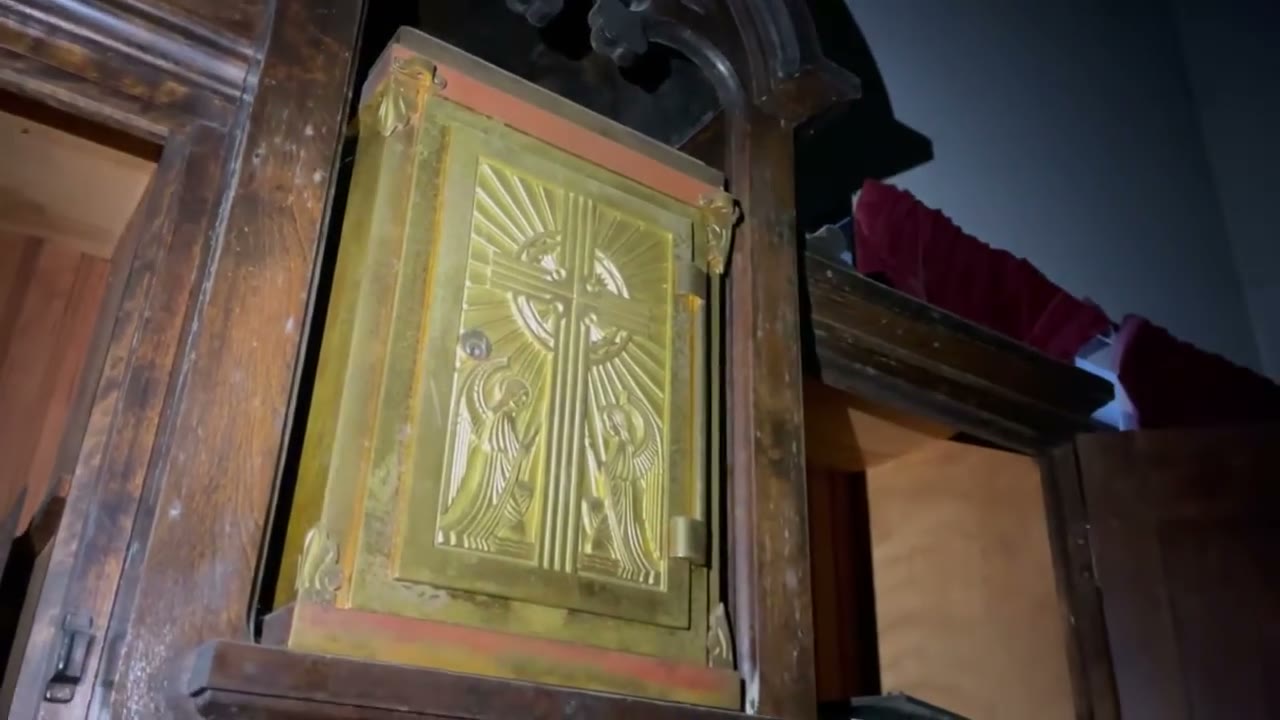
Both, and the best of it is documentation first. The Detroit Historical Society holds roughly 1,250 photographs of all areas of Detroit that College for Creative Studies students made in the 1970s and 1980s. They show churches, warehouses and hospitals, the abandonment of Poletown and the Warehouse District, and restaurants and bars that no longer exist. Photographs like those are now one of the few ways to see those places as they were.
Researchers who study explorers found the same split. A study of explorers in Berlin, published in 2016, describes a minority it calls communicative explorers who research a site’s history and current condition and make that information public. The author argues their documentation makes abandoned places visible and supports debate about preservation. The larger group, which it calls performative, cares more about the thrill and avoids attention that could bring vandalism or tourism.
A 2021 study in Library Trends based on interviews with 17 explorers, mostly in Ireland, found many described their work as preserving a record of forgotten places for future generations. The same study found explorers disagreed about staging and editing. Some valued natural, unaltered images and others preferred dramatic effects, and those choices affected their standing in the community.
What rules do I follow as a photographer?
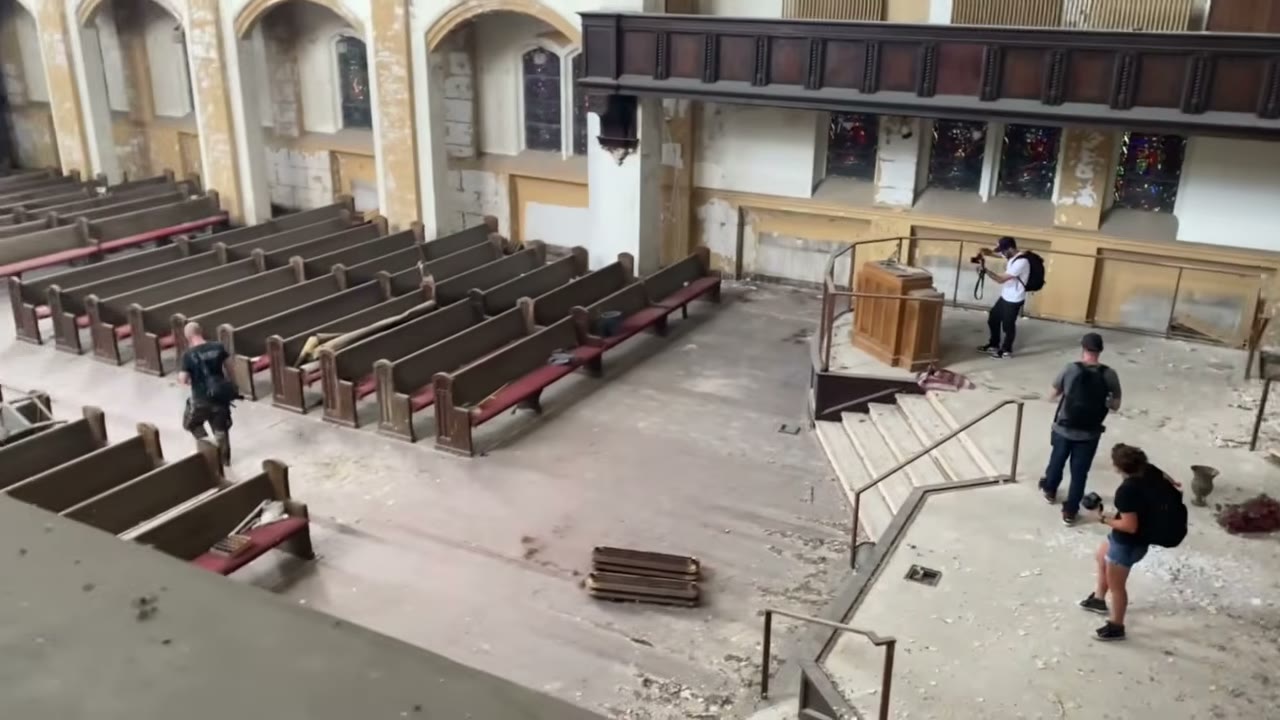
I’m a professional photographer, and the code I use on explores covers photography too. I leave every place exactly as I found it. No stealing, no vandalism, no spray paint. Take only pictures, leave only footprints. That rules out the staged version of the genre, where someone arranges objects for the shot. If a chair is in a doorway, it stays in the doorway.
Photographers who add effects can cause real damage. Rick Drew, a Chicago area explorer who leads the group Chicagoland Urbex Photography, told WTTW that he does light painting and steel wool spinning for effects. He also called steel wool in the wrong place “so stupid,” because the sparks can start fires. He says to check an area for flammable material first.
I also keep location out of it. A good photograph of a building can send strangers to its door, and I hide most locations on purpose. A video title that says Chicago doesn’t mean the building is in Chicago.
The practical side is light. Most flashlights, including brand ones, aren’t bright enough for dark interiors, so I carry one good light. I film on a DJI action camera. Both are linked at the bottom of this page.
What does ruin photography look like in practice?
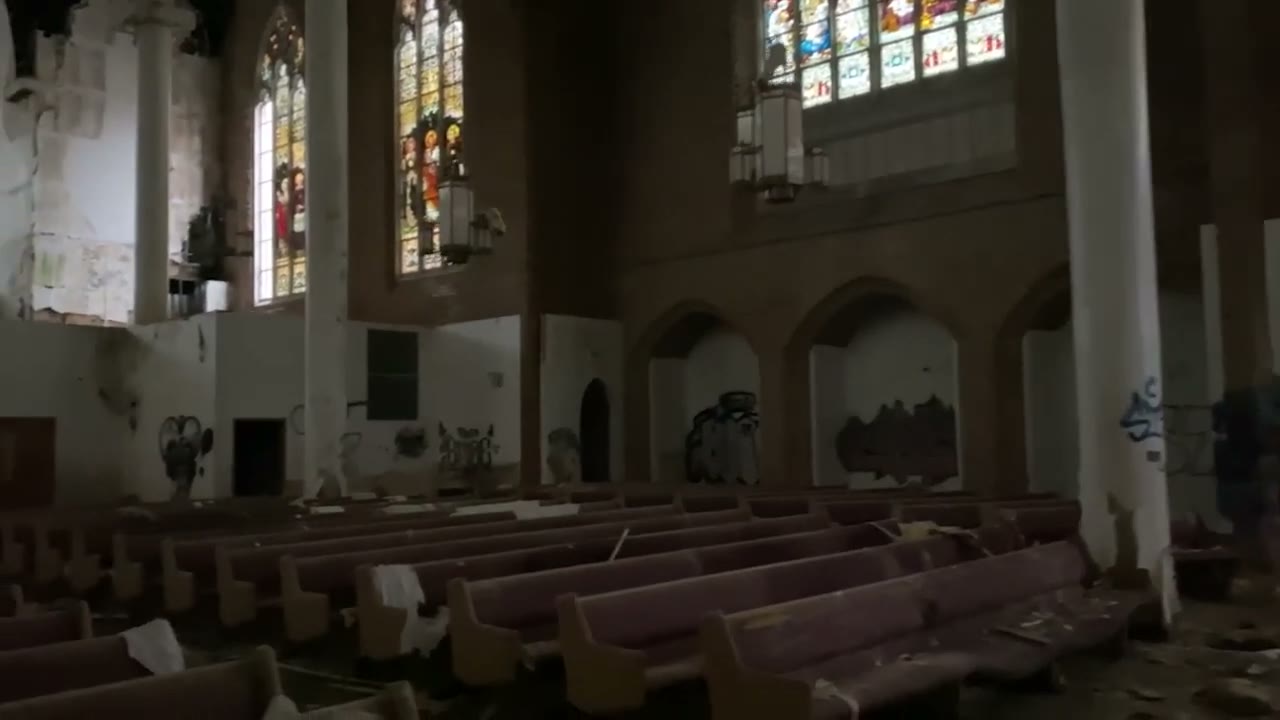
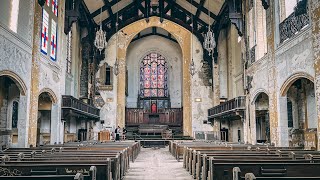
In practice it’s a lot of churches, because churches hold the best material. The Greek Catholic church video has a drum kit, pianos and pews in one building. The Gothic Lutheran church was shut down in 2012, and as I wrote in the video description, the City of Chicago sued the owners in 2015 for failing to keep the property secured and declared it hazardous to the public. The South Side church was built in 1895 and closed in 2017. Its roof started to fall apart, and the vandalism got bad.
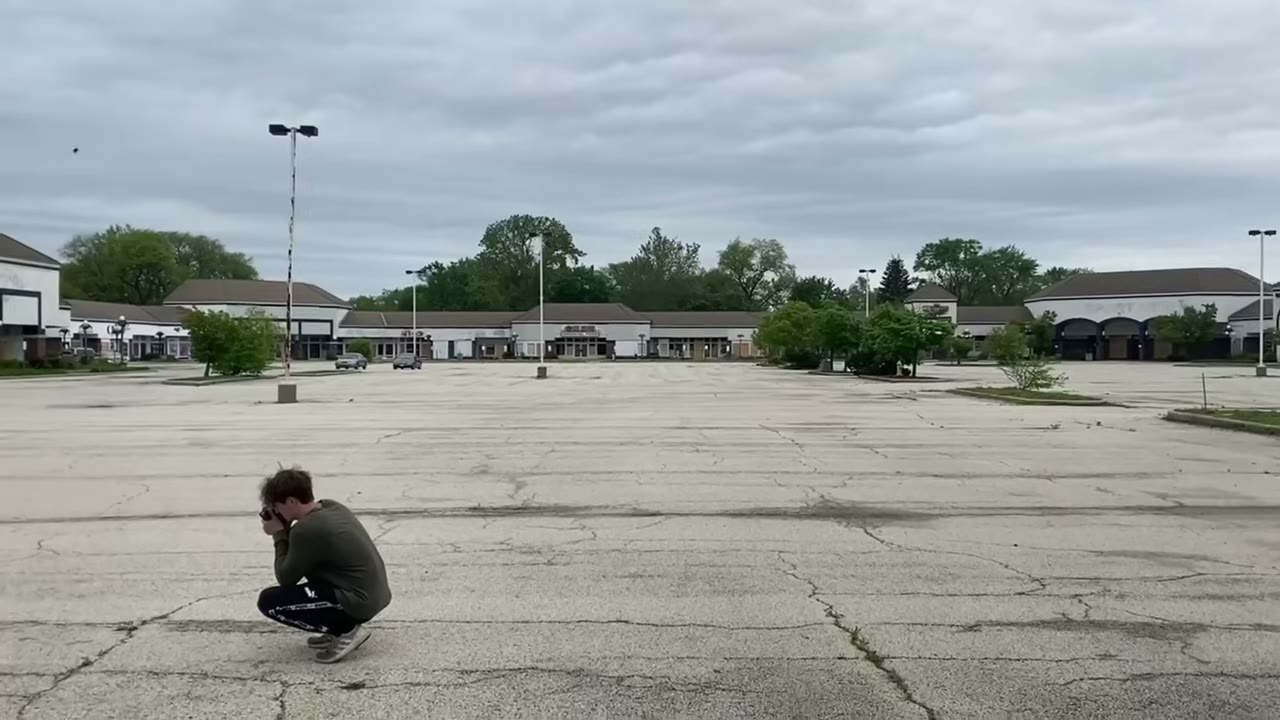
Shopping centers work the same way, only with parking lots. The Arlington Heights shopping center post covers a place that went from more than 20 stores down to five before the owner sold to a developer.
Photographers have been charged for this. The Columbia Chronicle reported that Cleveland photographer Seph Lawless was indicted for criminal trespassing after his 2014 mall photobook, and that Eric Holubow, author of a book on abandoned America, has been ticketed for trespassing and escorted out by security. Having a camera doesn’t change the law.
For the bigger picture on why these buildings end up empty, read What Is Urban Decay? and What Is Industrial Archaeology?. How I find my own spots and stay safe is in a $9.99 PDF called How to Find Abandoned Places.
The photo is what lasts, and it should show the place the way the people who left it saw it last.
What I carried in
Same list as every video description.
Sources
- Detroit Revealed photo exhibit puts Detroit in the spotlight, Michigan Public, Oct 10, 2011
- Photographing the so called ruins of Detroit, Michigan Public, Jan 9, 2011
- The Ruins of Detroit (review of the Marchand and Meffre book), Terrain.org
- Beyond Picturesque Decay, Detroit and the Photographic Sites of Confrontation Between Media and Residents, Space and Culture, University of Leeds repository, 2019
- The pleasure and power of ruins, The Architect's Newspaper, Nov 2011
- Documenting Detroit, Detroit Historical Society, Jul 19, 2012
- Hubert Robert, The Ruin, 1789, University of Missouri St. Louis French Art collection
- Hubert Robert 1733 to 1808, National Gallery of Art
- Urban Exploration, Traces of the Secretly Documented, Decayed, and Disused, Library Trends, Vol. 69 No. 3, 2021
- Heritage views through urban exploration, the case of Abandoned Berlin, International Journal of Heritage Studies, University of Glasgow repository, 2016
- Urban Explorer Photographs Chicago's Abandoned Sites and Buildings, WTTW, Jun 17, 2016
- No Trespassing, The dangers and thrills of urban exploration, The Columbia Chronicle, Nov 6, 2017
More like this


The footage that never goes public lives on Patreon. It's paid, and it's where the rough cuts, the security run-ins and the early releases go.