, exact location withheld
What Is Industrial Archaeology? Factories, Mills and Why They Matter
Industrial archaeology studies the physical remains of factories, mills, mines and machines. Where it started, what it records, and the Illinois plants it applies to.
Industrial archaeology is the study of the physical remains of industry, such as factories, mills, mines, bridges and machines, to understand how things were made and how that work shaped the places around it. The Canadian Encyclopedia calls it “a type of interdisciplinary history that promotes understanding of the industrial era by focusing on physical remains.” Exploring an abandoned plant isn’t the same thing, but the two fields care about the same buildings.
This is entertainment and general information, not legal or safety advice. Old industrial sites can carry hazards like lead paint and asbestos.
Where did industrial archaeology start?
In Britain, in the late 1950s. The Canadian Encyclopedia says the field “originated in Great Britain” as a response to the loss of the country’s industrial and engineering heritage, and that the name itself is recent.
The American side took shape over the next two decades. The National Park Service says its Historic American Engineering Record, founded in 1969 “to record America’s engineering and industrial heritage,” was set up through an agreement among the park service, the Library of Congress and several engineering societies, including the American Society of Civil Engineers. The Society for Industrial Archeology says it was founded in 1971, and describes its focus as “the study, interpretation, and preservation of industrial sites, structures, artifacts, and technology.”
What do industrial archaeologists look at?
Whole systems, not only buildings. The Canadian Encyclopedia says work in Europe and the United States has emphasized sites from the Industrial Revolution, such as power systems, canals, railways, and textile and iron and steel works. The Society for Industrial Archeology lists steel mills, factories, foundries, mines, bridges, trains and canals. The park service’s engineering record covers transportation systems, industrial buildings and machinery, public utilities, mines, bridges and watercraft, and it publishes guidelines so the recording is consistent.
The goal is to record how things were made while the buildings still stand. Demolition is a real deadline. The Chicago Tribune reported that the Freedom Center faced one, and the Illinois Times describes a demolition plan for the Pillsbury site.
What is the Illinois version?
The Illinois and Michigan Canal. The park service says the 96 mile canal opened in 1848 and was “the economic engine that poised Illinois to become the most populous inland American state.” It closed to commerce in 1933. In 1984 the corridor was designated the Illinois and Michigan Canal National Heritage Area, which the service calls “America’s first National Heritage Area.” The park service adds that it was proposed to fight the “rust belt” disinvestment of the 1970s. The Canal Corridor Association, which coordinates the area, interprets the history of the corridor and its significance in the settlement and growth of the region and nation.
That is the same worry as the British one. When industry leaves, the buildings are the last record of it.
Is exploring an abandoned factory industrial archaeology?
No. An archaeologist records a site on purpose, using a method, so that others can use the record. I walk through with a camera and I don’t survey anything. What the videos do is catch a place before it’s gone, and that can be useful even if it isn’t a study.
It also carries risk that a field survey is trained for. The Illinois Times reports that the head house and 160 silos at the old Pillsbury Mills in Springfield contain lead paint and asbestos, and that demolishing the buildings and removing hazardous materials is estimated at $10 million to $12 million. That is one reason a respirator is on my gear list.
What does this look like in practice?
Three plants in my videos show three different endings.
The first is the Chicago Tribune’s Freedom Center, which I cover in the Tribune explore. The Chicago Tribune reported on May 19, 2024 that the $185 million plant was billed as the largest newspaper production facility in North America. It moved the Tribune’s printing there from Tribune Tower in 1982, and ran ten Goss Metroliner presses that printed upward of a million copies a day. The final run was on May 18, 2024. The paper gives the reasons as declining print circulation, a shrinking workforce and new ownership that found the plant expendable, and says printing was shifting to the Daily Herald plant in Schaumburg, which Tribune Publishing bought in May 2023. In the control room there were dials, and one of them sped the press up to 70,000 papers an hour.
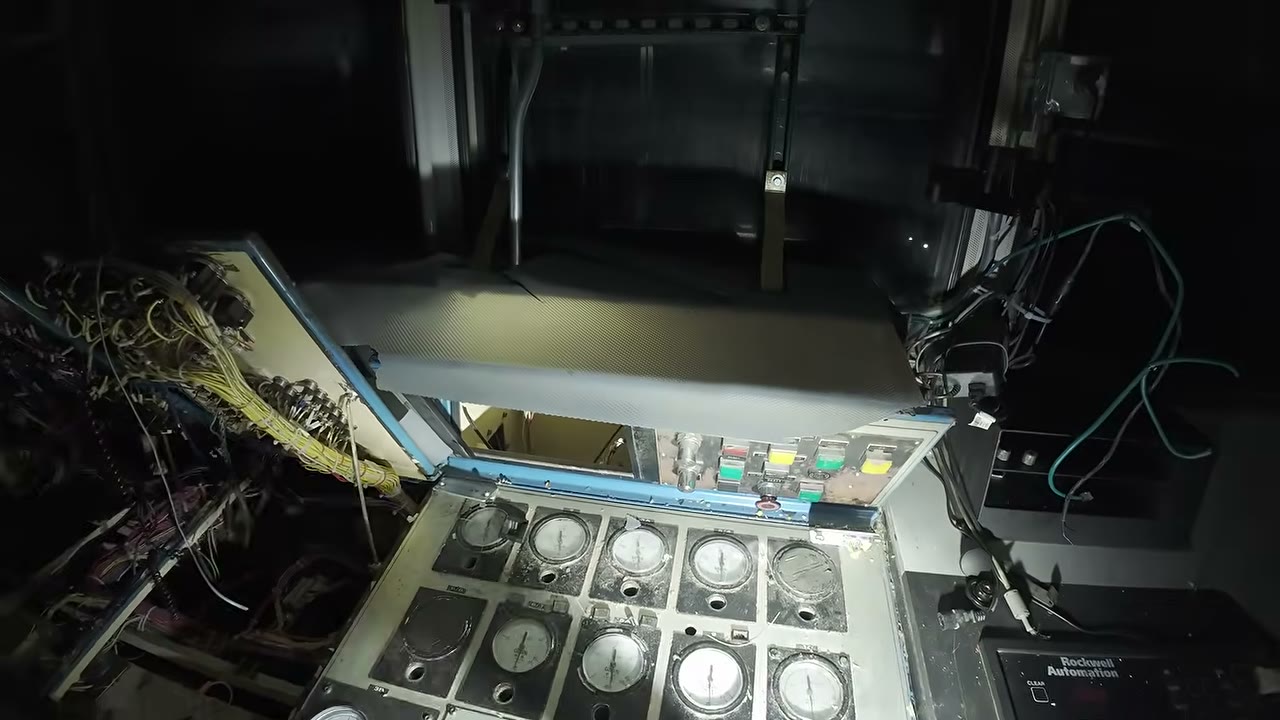
In the press room, each roller had its own color of ink. I had purple, blue and red on my hands and arms, and yellow ink was pooled on the floor. The presses are about three stories tall, four with the basement, and the paper starts at the bottom and works its way up.
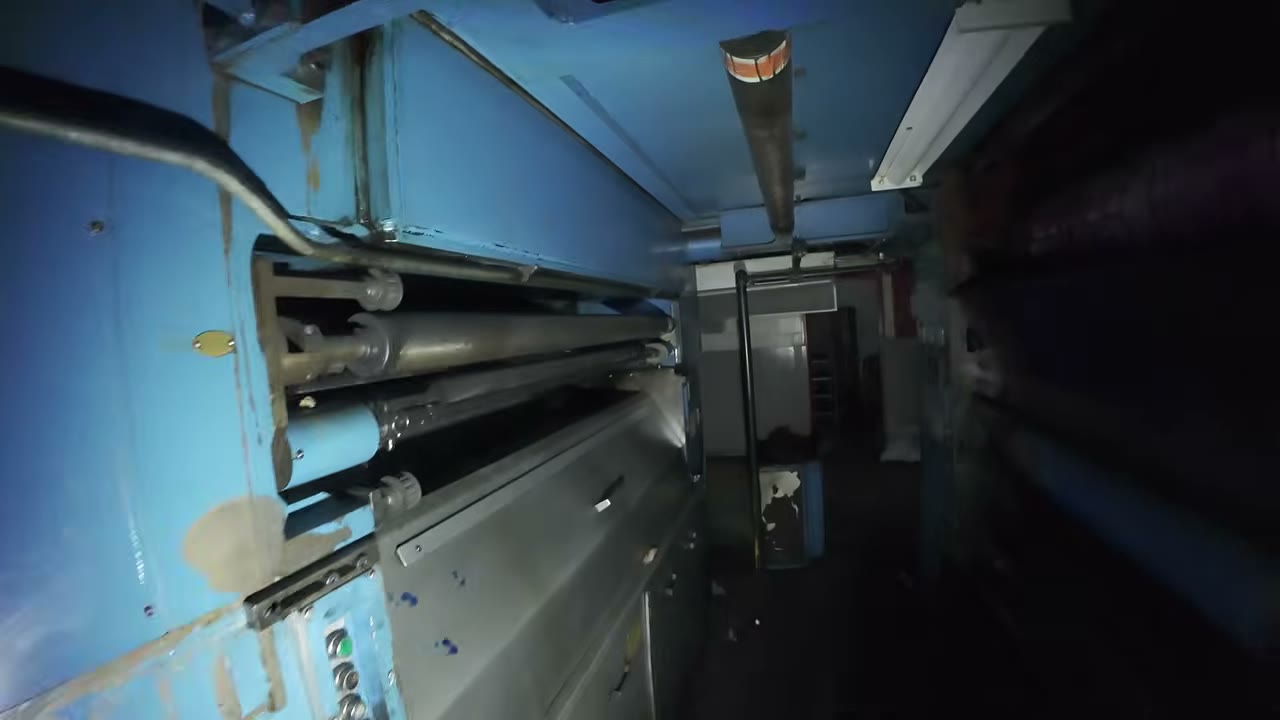
The Chicago Tribune’s story quotes the people who ran the presses. Andrew Whitaker, who started in 1979, said “You almost feel like an artist.” Franklin Ford, who spent 22 years at the plant, said “This is a dying trade.” None of those voices are in the empty rooms I filmed.
We went in with a flashlight battery that was almost dead, and it died in the last room. I carry one good flashlight, because most flashlights, including brand ones, aren’t bright enough.
The second is Pillsbury Mills in Springfield, covered in the Pillsbury explore. The county history page says the plant had its grand opening on May 3, 1930, at a final cost of $1.25 million. It employed about 1,100 people in 1950 and about 45 when Cargill closed it in 2001. The Illinois Times says the 225 foot head house is flanked by 160 bins, each 100 feet tall, that held as many as 3 million bushels of wheat.
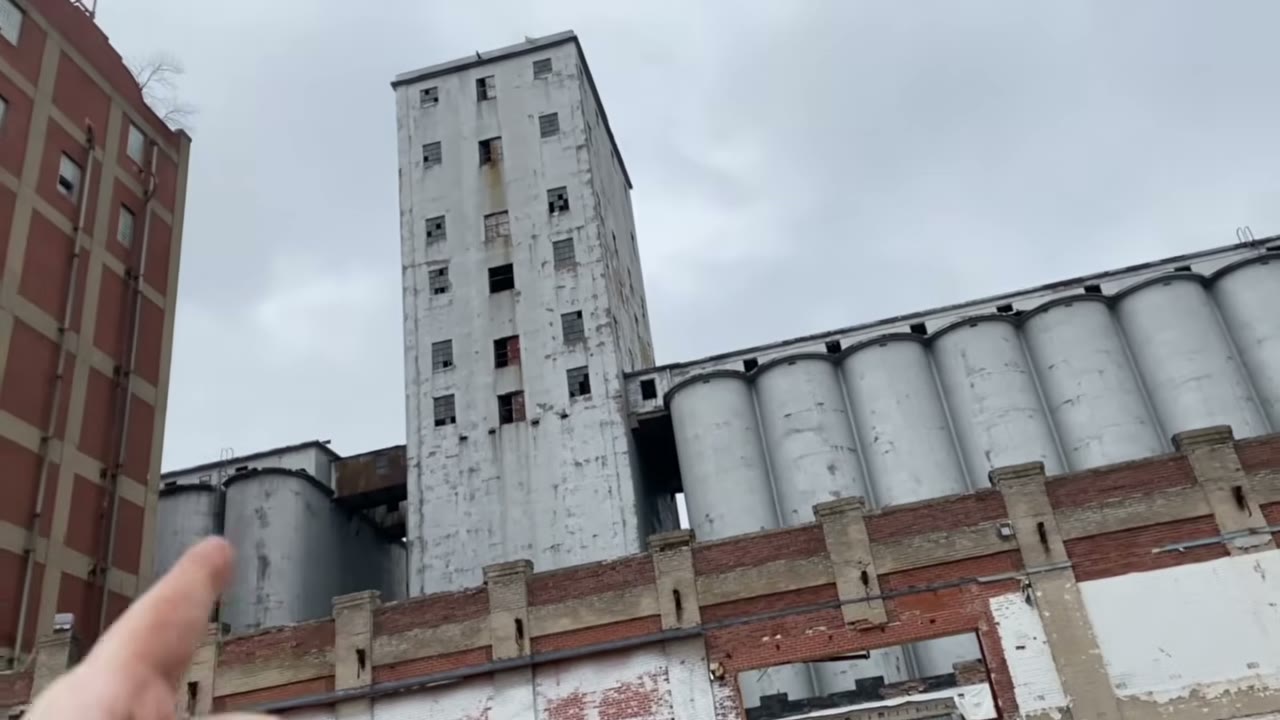
The county history adds that the plant grew in stages. A 2 million bushel wheat elevator went up in 1934, a nine story warehouse and grinding building in 1937 and a 10 story storage warehouse between 1958 and 1960. Employment fell from 550 in 1979 to fewer than 200 in 1991. The Illinois Times says Cargill used the site for grain storage for about 10 years, and that it sat vacant until 2008, when a series of owners began removing scrap metal.
Inside, signs read pancake hot compounding and hot roll compounding, and a set of bins was labeled for wheat flour, salt, phosphate, baking soda and calcium carbonate. That’s the kind of detail a written history can’t give you.
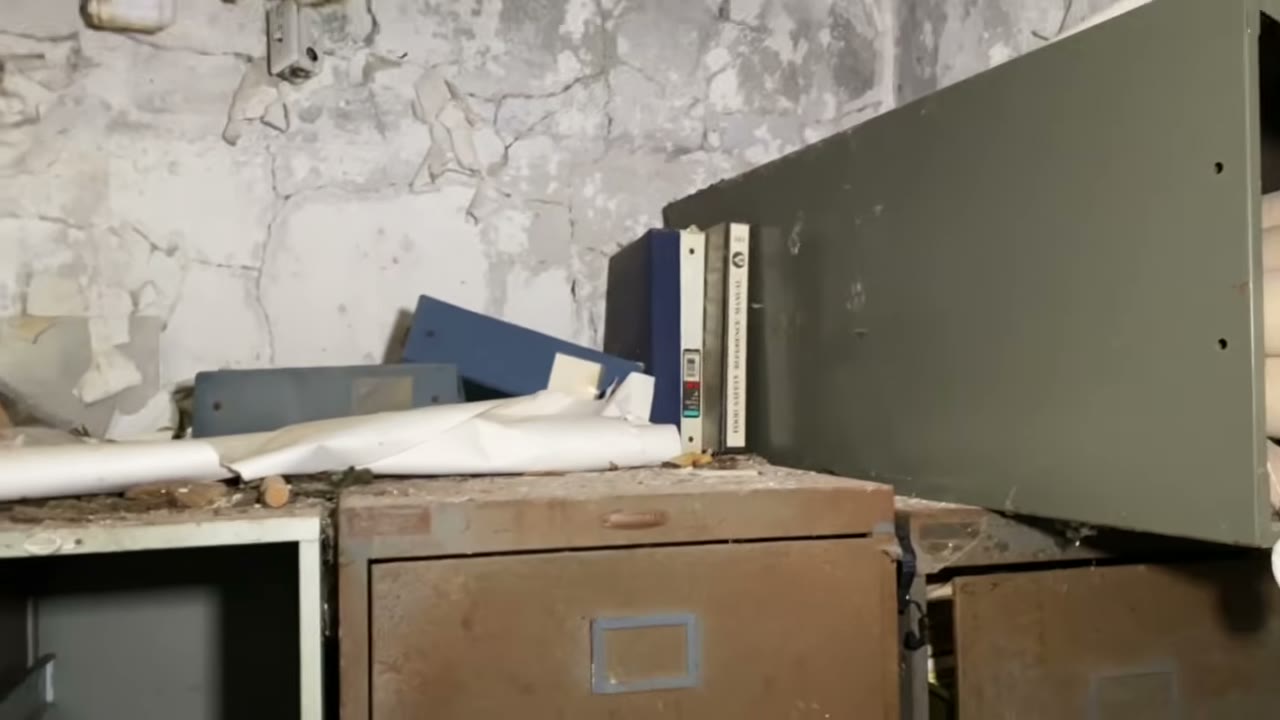
The third is the Navistar engine factory in Melrose Park. The video description says the factory made truck engines but started as an airplane engine plant, and that we found engine parts, engine bays, a soundproof room for testing engines and a whole diesel engine. It has since been demolished.
I hide most locations on purpose, and how I find places and stay safe is in a $9.99 PDF called How to Find Abandoned Places.
A factory is a record of how people worked, and it only exists until somebody pays to take it down.
What I carried in
Same list as every video description.
Sources
- Industrial Archaeology, The Canadian Encyclopedia, Nov 30, 2006, last edited Mar 4, 2015
- Introduction to the Society for Industrial Archeology, Society for Industrial Archeology
- Historic American Engineering Record, National Park Service
- Illinois and Michigan Canal National Heritage Area, National Park Service
- Tribune press operators say goodbye to an era as Freedom Center makes its final run, Chicago Tribune via Yahoo News, May 19, 2024
- Moving forward with demolition, Dean Olsen, Illinois Times, Feb 22, 2024
- Pillsbury Mills, Sangamon County History
More like this


The footage that never goes public lives on Patreon. It's paid, and it's where the rough cuts, the security run-ins and the early releases go.