, exact location withheld
How to Photograph Abandoned Buildings
A shot list, exposure trade offs and field habits for photographing abandoned buildings, built on National Park Service survey rules and Stanford notes.
To photograph an abandoned building, work from wide to tight. Start with the building in its setting, move through the rooms, then shoot the details, and expose for the light that is already there instead of fighting it. I’m a professional photographer, and the shot list below comes from people who document buildings for a living.
This is entertainment and general information, not legal or safety advice. Nothing here is a reason to go inside anything, and a camera is not a permission slip.
What should you shoot at a building?
Follow the order the National Park Service uses. Its HABS, HAER and HALS programs record historic buildings for the public record, and their photography guidelines tell photographers to start with a general or environmental view showing the setting, landscaping, adjacent buildings and roadways. After that come the front facade, perspective views of the front and one side, the rear and the opposite side, then details, including the front entrance or a typical doorway, a typical window, and exterior details that show the era or interest.
Inside, the same guidelines ask for interior views that capture spatial relationships, structural evidence, a typical room, and any decorative elements. They name hallways, stairways, framing, fireplaces and mechanicals, plus the kitchen if it is original. They also want at least one view of any barns or sheds on the property. That list works on a church, a school or a farm.
I don’t claim a survey is the same job as an explore. A survey has permission and a schedule. The shot list is still the useful part, because it stops you from coming home with forty photos of the same peeling wall.
How do you set your exposure in a dark, mixed light building?
Know what each control costs. Stanford’s exposure applet says aperture mainly changes depth of field, shutter speed changes motion blur, and raising the ISO also increases image noise. It adds that raising exposure time improves the signal to noise ratio faster than raising ISO. Its recommended order is to use as much exposure time as your blur and depth of field limits allow, avoid blowing out highlights, and raise ISO only if the picture is still too dark.
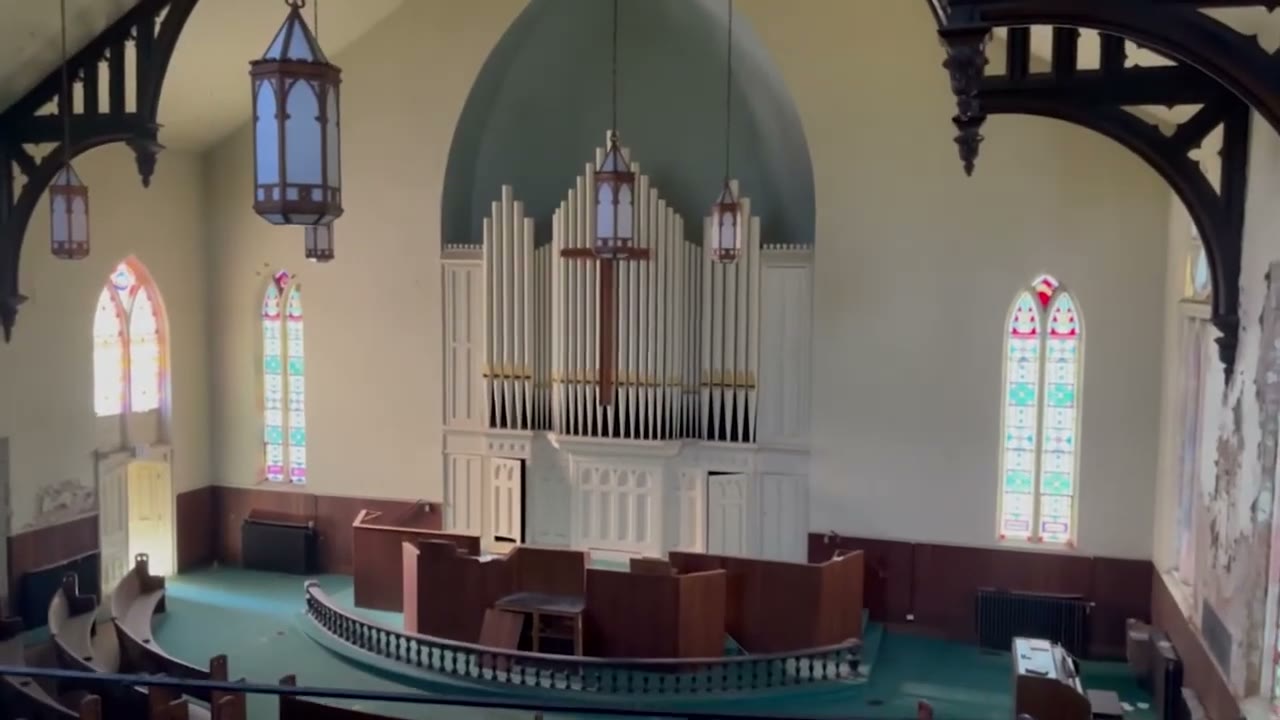
Abandoned buildings make that hard because the light is uneven. A window or a hole in the roof is far brighter than the room around it. In the Greek Orthodox church in Detroit the sunlight through the roof made a nasty glare in the sanctuary, even though the collapsed dome was still huge. You can expose for the glare and lose the room, or expose for the room and lose the glare. Pick the one your picture is about.
Weather and time of day do part of the work for you. In the Northern Illinois church upstairs gets really dark, and I said a sunny day is the best day for it. A bright day gives you light coming through windows that you can use.
The NPS guidelines also recommend yellow, orange and polarizing filters in appropriate conditions to clarify details. That is advice for black and white film, and I’m not telling you to carry a filter kit into a ruin. It is still worth thinking about glare off glass and wet floors before you press the shutter.
Why do the walls lean, and what can you do about it?
Because a camera tilted up or down makes vertical lines converge. The NPS requires that survey images be perspective corrected in the field at the time of capture, which is why it asks for a large format view camera with ample movement. It also lists a minimum lens kit of a sharp rectilinear wide angle, a normal and a mildly telephoto lens.
Most of us shoot with a fixed lens, so the practical question is whether your verticals lean. You can see that on the back of the camera before you walk away from a room. A staircase or a church window with converging edges looks wrong even to people who can’t say why.
The guidelines also require a scale device in certain views, particularly for the main facade, so the viewer can tell how big the thing is. A doorway, a pew or a chair does the same job in an urbex photo, and it costs you nothing to include one.
What do you do about the things inside?
Photograph them and leave them. The code I follow is to leave every place exactly as found, with no stealing, no vandalism and no spray paint. The National Park Service says the same thing in its seven principles under Leave What You Find. It tells visitors to examine, photograph, but not touch cultural or historic structures and artifacts. That covers moving a hymnal to a better window, and it covers rearranging a classroom for the shot.
Cemeteries are the same rule with higher stakes. New York State Parks says rubbing is a no and to take a photo instead, and it asks visitors to keep their hands off markers because they can topple or break. In my cemetery video one stone is harder to read in person than on camera, which is the whole case for taking the photo and leaving the stone alone.
Don’t point it at people either. If a place shows signs that someone lives there, it isn’t yours to explore, and I wrote more about that in What to Do If Someone Is Living in an Abandoned Building. Illinois law has specific rules about recording another person without consent in places such as restrooms, locker rooms, changing rooms, hotel bedrooms and residences. The simplest approach is not to film anybody who hasn’t agreed to it. Trespass is separate, and Illinois defines criminal trespass as knowingly entering or remaining in a building without lawful authority. Holding a camera doesn’t change that.
How do you keep track of what you shot?
Write it down. The NPS asks for an index to photographs with captions that include directional information, such as the cardinal direction the view faces, and significant details, and it encourages site plans showing where each photo was taken on complex sites. That’s the difference between an archive and a folder of images you can’t sort.
I keep most of my locations private on purpose, so notes like that stay on my own drives. People always ask for locations and I don’t give them out. The posts on geotagging and what a spot is explain why. The habit is worth having even if nobody else ever sees it.
A flashlight helps here, because you can’t caption what you can’t read. The one on my gear list is linked at the bottom of this page. A power bank keeps a camera and a phone alive on a long day, and the one I use is linked there as well.
Watch your feet while you frame the shot
Photographers walk backward to fit a room in the frame, and that is a bad habit in a place with hazards. The U.S. Fire Administration lists holes in floors, missing stairs, and open shafts and pits as the hazards in vacant buildings, and it says that if the stability of the structure is questionable, the team should not enter the building. Look at the floor first, then lift the camera. I covered the rest in What’s Actually Dangerous Inside Abandoned Buildings.
What does this look like in practice?
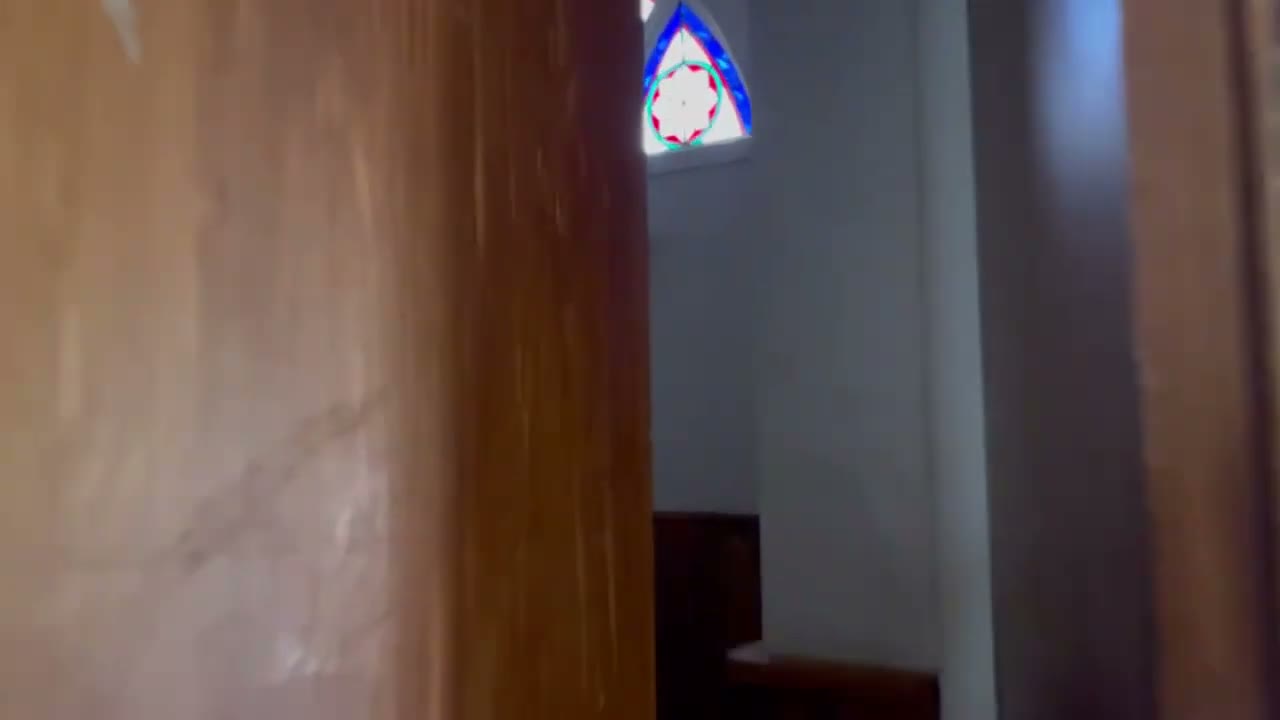
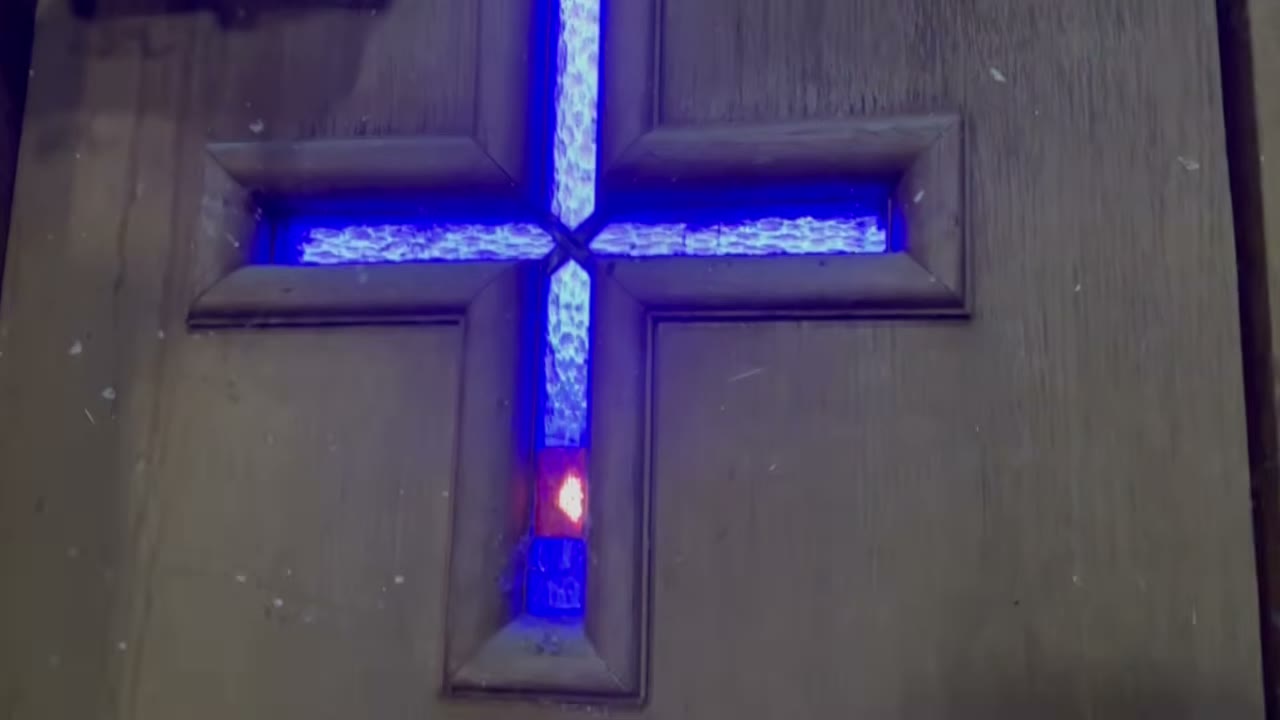
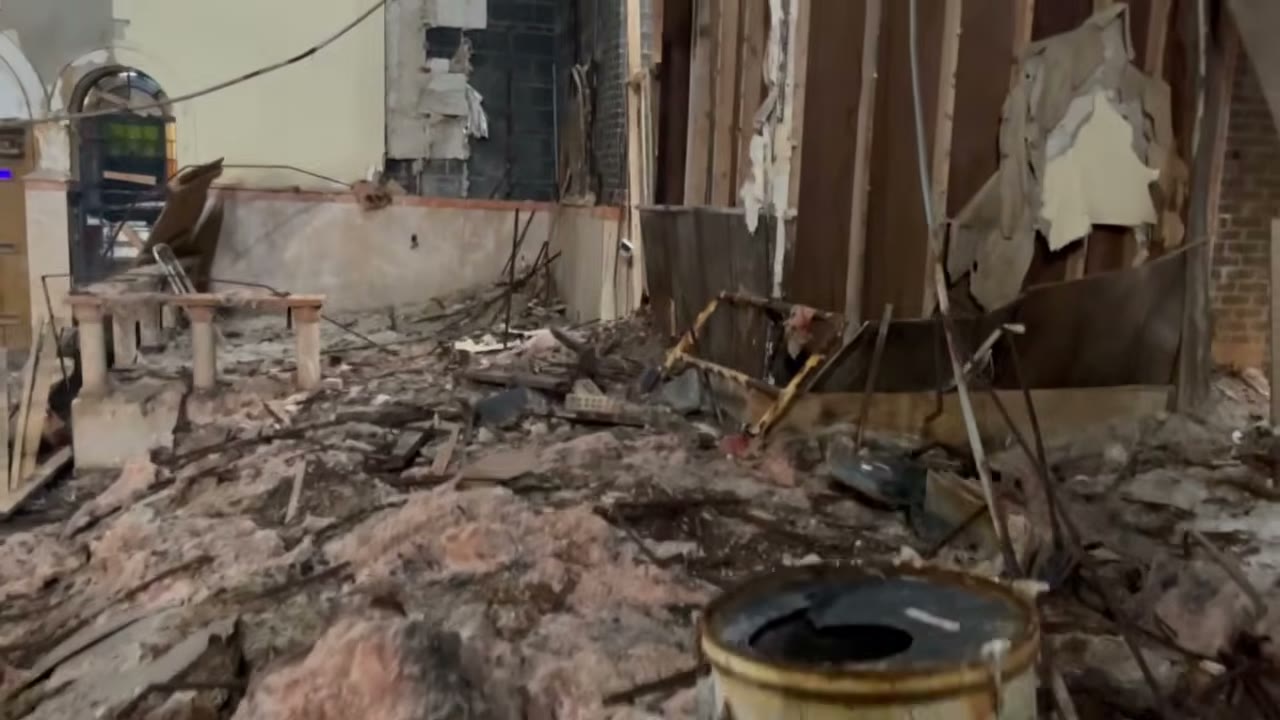
The Northern Illinois church is the one I’d use as a template. A wide frame of the sanctuary from the balcony shows the organ, the stained glass and the green carpet in one picture. A tighter frame of the chapel window shows what is high on the wall. The Greek Orthodox church added a door panel with a cross cut into it, filled with blue stained glass, and a stage covered in debris and insulation, which shows the condition of the building in one frame.
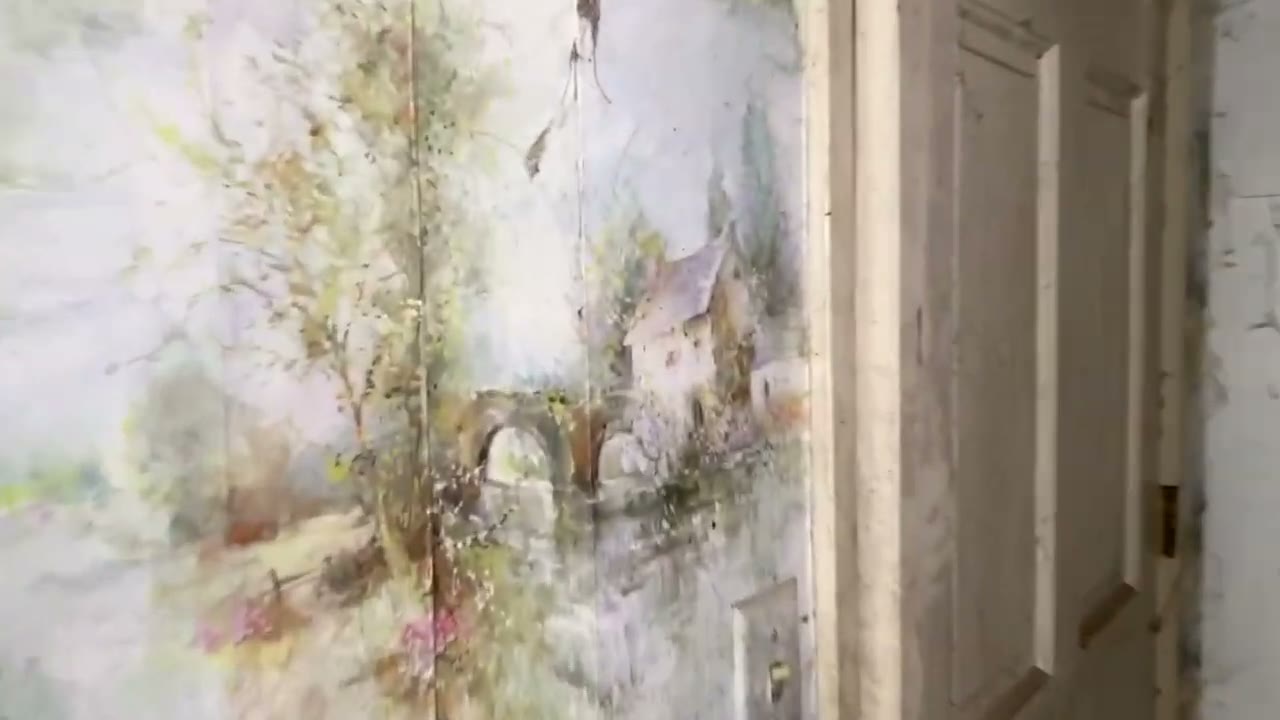
The Native American resort mansion is a different lesson. A painted countryside mural of a cottage and a stone bridge sits on a wall beside a door, and the frame includes the door beside it, so you can tell how big the wall is.
For the camera choices behind this, see Best Camera for Urbex Photography. How I find places and shoot them without burning locations is in my guide, How to Find Abandoned Places.
A good set has a wide frame, a room, a detail and a note.
What I carried in
Same list as every video description.
Sources
- HABS/HAER/HALS Photography Guidelines, National Park Service Heritage Documentation Programs, Nov 2011, updated Jun 2015
- Variables That Affect Exposure, Stanford University Computer Graphics Laboratory, updated Feb 29, 2012
- Leave No Trace Seven Principles, National Park Service, Jun 16, 2022
- Cemetery Etiquette for Spooky Season, New York State Parks, Oct 6, 2023
- Basic Evaluation Procedures for Abandoned and Vacant Buildings, U.S. Fire Administration, Apr 2018
- 720 ILCS 5/26-4 Unauthorized Video Recording and Live Video Transmission, Illinois General Assembly
- 720 ILCS 5/21-3 Criminal Trespass to Real Property, Illinois General Assembly
More like this


The footage that never goes public lives on Patreon. It's paid, and it's where the rough cuts, the security run-ins and the early releases go.