, exact location withheld
What to Do If Someone Is Living in an Abandoned Building
Signs that someone lives in an abandoned building, why fire officials treat unknown occupants as a hazard, and why the right move is to leave them alone.
If you find signs that someone is living in an abandoned building, leave them alone and leave the building. It is somebody’s home, even if it looks like a mess, and an unknown occupant is also one of the hazards fire officials list for vacant buildings.
This is entertainment, not legal or safety advice. I’m not an outreach worker, and this post isn’t about how to help a person you meet in one of these places. It’s about recognizing the signs and giving them room.
How can you tell someone lives there?
Look for what shouldn’t be there. The U.S. Fire Administration’s evaluation guide tells its teams to watch for signs of recent entry, such as trash, furnishings in an empty building, and recent heating or cooking fires. It lists unauthorized occupants as a hazard in its own right, along with ongoing criminal activity at or next to the property, and it notes that mattresses used by occupants can burn like an unusual fuel load.
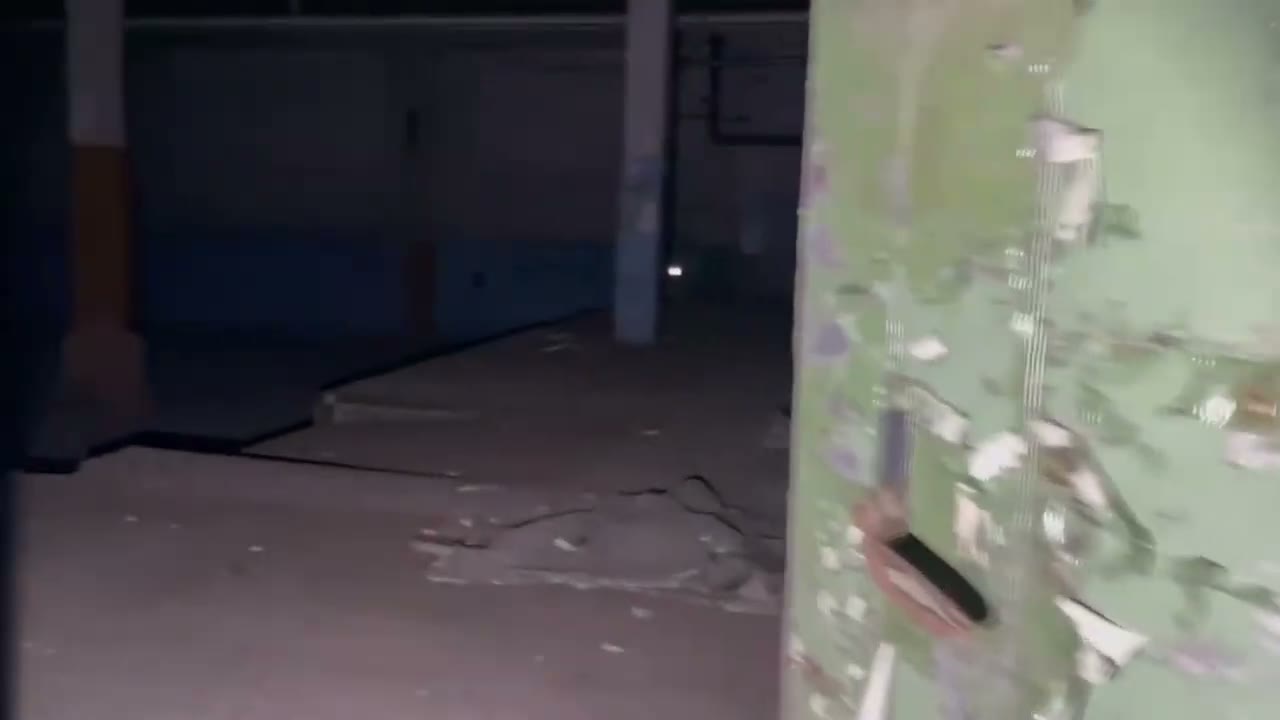
Those are the same clues I notice. In the Chicago factory video I said “there’s almost people living in here” and then “there is homeless people living in here,” and what we pointed at was a pull out couch and a lot of trash. In the elementary school, a hat in the basement gym looked fairly clean, like it had been put there recently, and we kept hearing a noise we couldn’t place. In neither case did we see a person. A sign tells you somebody uses a place. It doesn’t tell you when they’re coming back, and it doesn’t tell you if they’re in the next room.
How common is this?
Common enough to plan for. HUD reported that more than 770,000 people were experiencing homelessness on a single night in January 2024, up 18 percent from the year before. The data standard that homeless services use to record where a person was staying includes a category for a place not meant for habitation, with an abandoned building as one of its examples.
That’s not an excuse to treat every empty building as a shelter. It is a reason not to be surprised, and not to assume that a building with no owner in sight has no one in it. The fire administration says the same thing in a different way. In its report on vacant residential building fires it notes that vacant buildings are sometimes used as shelter by homeless people, and that the number of people using a building is often unknown.
Should you say something or try to talk?
Don’t go looking for a conversation. You are the one who walked into their space. A person who is sleeping in a place nobody is supposed to be has more to lose than you do from a confrontation, and you have no idea who else is in the building or what they’re dealing with.
In the elementary school I did speak. When we got to the basement gym and found the clean hat, I said, “somebody’s down here, we’re not here to harm you or anything, not trying to scare you either, just taking some pictures.” Nobody answered, and later I decided the building was probably making the noises. I’m not holding that up as a model. It’s what I said, and it’s why the rest of this post leans toward leaving.

What if you only hear something?
That was our situation at the elementary school, and it’s the hardest one. We heard the noise early, around ten seconds in, and again a few minutes later, and each time one of us said it wasn’t us. We went to the basement because that’s where it seemed to come from, found the gym and the hat, and I called out once to say we weren’t there to harm anyone. Eventually I decided the building was just making noises and we left through a door that was open.
A noise tells you nothing about who made it. Old buildings settle, drip and rattle, and I decided that’s what ours was doing, but I had no way to prove it. The fire administration’s evaluation guide makes the same point in its own way. If a team decides entry is too dangerous, it should gather as much information as possible from outside instead of pushing on. The sensible version of that for anyone else is to treat an unexplained sound in a place with signs of occupancy as a reason to stop.
Why do fire officials care about this so much?
Because occupants and fire go together, and the people who pay for it are firefighters. The USFA says vacant buildings that are not secured attract illicit activity and are intrinsically more dangerous than occupied structures. Its numbers on vacant residential fires, 2013 to 2015 on average, are 23,800 fires a year, about 6 percent of all residential building fires, with an estimated 75 deaths and 200 injuries a year. Intentional actions were the leading cause at 34 percent, open flame was 13 percent, and electrical malfunction was 8 percent.
Chicago has a case that explains why departments search these buildings even when they aren’t sure anyone is inside. In December 2010 two firefighters died and at least 17 others were hurt at an abandoned brick commercial building on the South Side. NPR reported that the roof and a wall collapsed while crews searched for possible victims, that neighbors said squatters and homeless people often sheltered there, and that the fire department said the cause was uncertain but squatters may have been burning debris to keep warm. CBS Chicago later reported on a vacant West Side building where firefighters found two people on the second floor and rescued them, again because neighbors said people often stayed there.
A more recent one is in Springfield, Massachusetts. Western Mass News reported a three alarm fire in May 2026 at a hospital that closed in 2023. Officials said it had suffered repeated vandalism, that squatters had reportedly set fires there before, and the fire commissioner had called it a “firefighter killer.”
What that means for you is practical. A building with someone living in it is a building where the fire risks the USFA describes are more likely, and the guide’s own advice for evaluators is to treat unauthorized occupants as a hazard.
What does the law say?
Illinois defines criminal trespass to real property as knowingly entering or remaining in a building without lawful authority, and a violation of that part is a Class B misdemeanor. Notice can be given in person or in writing, or by a sign posted at the entrance. The statute has exceptions, including one for people living on the land with permission and their invited guests, so what applies to a person who is staying in a building is a question for a lawyer, not a blog.
I won’t tell anyone how to get into a building. If a person ever confronts you in one, the point of everything above is that the better outcome was never being there.
What does this look like in practice?
In my videos the pattern is the same. I notice a sign, I say so out loud, and I decide what to do next. The Chicago factory had trash and a couch. The elementary school had a hat and a noise. The nursing home has a mattress in one room, and I can’t tell from my footage whether anyone ever used it.
How I plan explores so I’m not walking into somebody’s situation is in my guide, How to Find Abandoned Places.
If you see a couch, a sleeping bag or fresh trash in a place that should be empty, treat it as a home and walk away from it.
What I carried in
Same list as every video description.
Sources
- Basic Evaluation Procedures for Abandoned and Vacant Buildings, U.S. Fire Administration, Apr 2018
- Vacant Residential Building Fires (2013-2015), Topical Fire Report Series Vol. 18 Issue 9, U.S. Fire Administration, Jan 2018
- Vacant and Abandoned Buildings, U.S. Fire Administration, accessed Nov 4, 2026
- HUD Releases 2024 Annual Homelessness Assessment Report, U.S. Department of Housing and Urban Development, Dec 27, 2024
- Current Living Situation and Prior Living Situation response options, All Chicago HMIS, accessed Nov 4, 2026
- 2 Killed in Chicago Blaze That Injured 16 Firefighters, NPR, Dec 22, 2010
- 2 Squatters Rescued From West Side Fire, CBS Chicago, accessed Nov 4, 2026
- Police search for suspects after fire at vacant Springfield hospital, Western Mass News, May 14, 2026
- 720 ILCS 5/21-3, Criminal Trespass to Real Property, Illinois General Assembly, accessed Nov 4, 2026
More like this


The footage that never goes public lives on Patreon. It's paid, and it's where the rough cuts, the security run-ins and the early releases go.