, exact location withheld
What Is Draining in Urbex?
Draining is exploring storm drains and sewers. Why it is a different and deadlier game than abandoned buildings, and what OSHA, NOAA and city officials say.
Draining is the urbex word for exploring storm drains, sewers and other underground water tunnels. It gets lumped in with exploring abandoned buildings, but the danger is different. A building can collapse. A drain can flood, fill with bad air or do both, and you don’t get a second try.
This is entertainment and general information, not legal advice or a how to. I’m not going to tell anyone how to get into a drain, and this site has no drain video.
What do people mean by draining?
The Otago Daily Times, writing about four tourists who went into a storm water drain in Dunedin, New Zealand, said drain exploring is illegal in most countries, has organized groups around the world and has caused deaths from toxic gas. The Korea Times ran a first person piece by an explorer in Seoul that describes the water side of it. He says explorers there follow the rule “When it rains, no drains.” The Otago Daily Times quotes a similar line from an Australian group, “when it rains, no-one drains.”
That rule is the shortest version of everything else here. Water is the thing that changes the situation, and it can change it in minutes.
Why is a drain worse than an abandoned building?
Because it is a confined space, and OSHA is blunt about those. Its page on hazards says “deaths in confined spaces often occur because the atmosphere is oxygen-deficient, toxic or combustible.” Spaces that could hold a serious air hazard should be treated as permit required, tested before anyone goes in and monitored the whole time.
For sewers specifically, OSHA’s fact sheet lists atmospheric hazards, meaning low oxygen and toxic or flammable gases. It also lists chemicals in piping and from roadway runoff that may harm lungs, skin or eyes, and “engulfment and drowning.” It describes a fatal incident where a worker went into a drainage pipe during a gas leak repair. The gas ignited and killed the worker.
Those are people with training and equipment, doing a job. An abandoned building makes you worry about the floor under you. A drain makes you worry about the air in front of you, which you can’t see.
What is in the air?
The one OSHA names for sewers is hydrogen sulfide, also called sewer gas. OSHA says it is heavier than air, so it can collect in manholes, sewers and underground vaults. It builds up in low, poorly ventilated spaces. At low levels it smells like rotten eggs. At high concentrations it can “quickly, almost immediately, overcome unprepared workers, including rescue workers.”
The part people miss is the smell. OSHA says smell is not a reliable warning, because after a while at low levels, or faster at high levels, a person can lose the ability to smell it. If you notice a drain smells bad, that tells you something. If you notice that it stopped smelling bad, that may tell you something worse.
The Dunedin story shows what the margin looks like. A police patrol saw three people standing by an open storm water drain. A fourth person, a woman in her 20s, was underground and couldn’t be reached for about 15 minutes. Police worried she was hurt or overcome by fumes and got ready for a search and rescue. She came back up unharmed. Gerard McCombie of the Dunedin City Council said the group could have encountered gases like hydrogen sulphide, that heavy rain can fill the drains quickly and that council staff use gas detectors, protective suits and sometimes breathing apparatus. His line was “Sewers and storm-water drains are not recreational areas. They are only for trained professionals.”
What does rain do to a drain?
It fills it, and faster than you would think. NOAA’s National Severe Storms Laboratory says flash floods can start within minutes of the rainfall that causes them. It also says storm drains can be overwhelmed or blocked by debris, and it names underpasses, underground parking garages, basements and low water crossings as potential death traps.
The Korea Times writer adds a detail worth knowing. The danger can come even when the sky is clear after the rain stops, because of flood gates opening upstream. He describes fast, murky water of unknown depth that made one concrete channel impossible to pass, and a party at the mouth of an underground river where a sudden surge washed away much of the group’s equipment.
None of that is a Chicago problem only, but Chicago is built in a way that makes it worse. The Metropolitan Water Reclamation District says “most of Chicago has a combined sewer system,” meaning sewage and stormwater share the same pipes. By the 1960s, sewers in the Chicago area overflowed into the river more than 100 days a year. The District’s answer was the Tunnel and Reservoir Plan, also called the Deep Tunnel, which is four tunnel systems totaling 110 miles, 8 to 33 feet across and 150 to 300 feet underground, feeding reservoirs that hold more than 11 billion gallons. Since the tunnels were finished in 2006, overflows have dropped from an average of 100 days a year to 50.
The system works because it is designed to fill during storms. That’s the opposite of what you want under your feet.
Is draining legal?
The Otago Daily Times says it is illegal in most countries. In Dunedin, police said no charges would be laid in that case, which is a decision about one night and not a rule you can count on. This is a general overview, so if you want to know the law where you live, ask someone qualified.
What does this look like in practice?
There is no drain video on this channel. The nearest things I have are the places in my videos where water or the underground is the hazard, and they’re a reminder of how different it is.
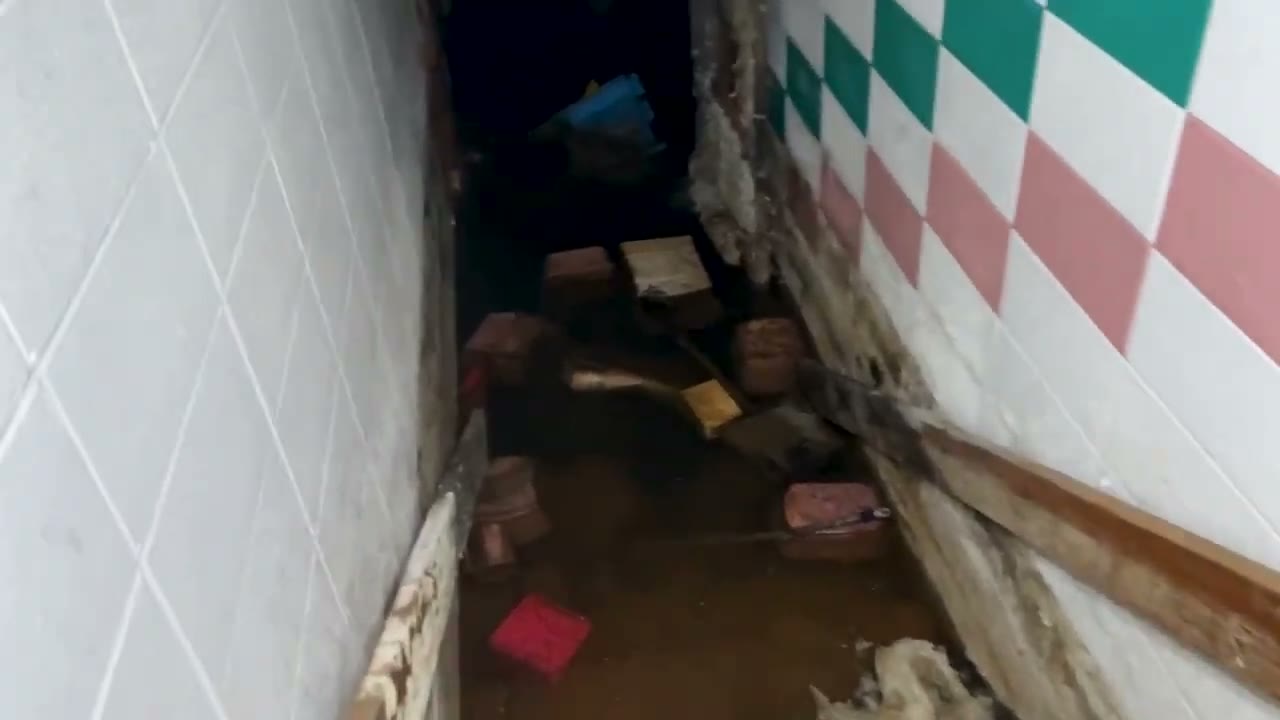
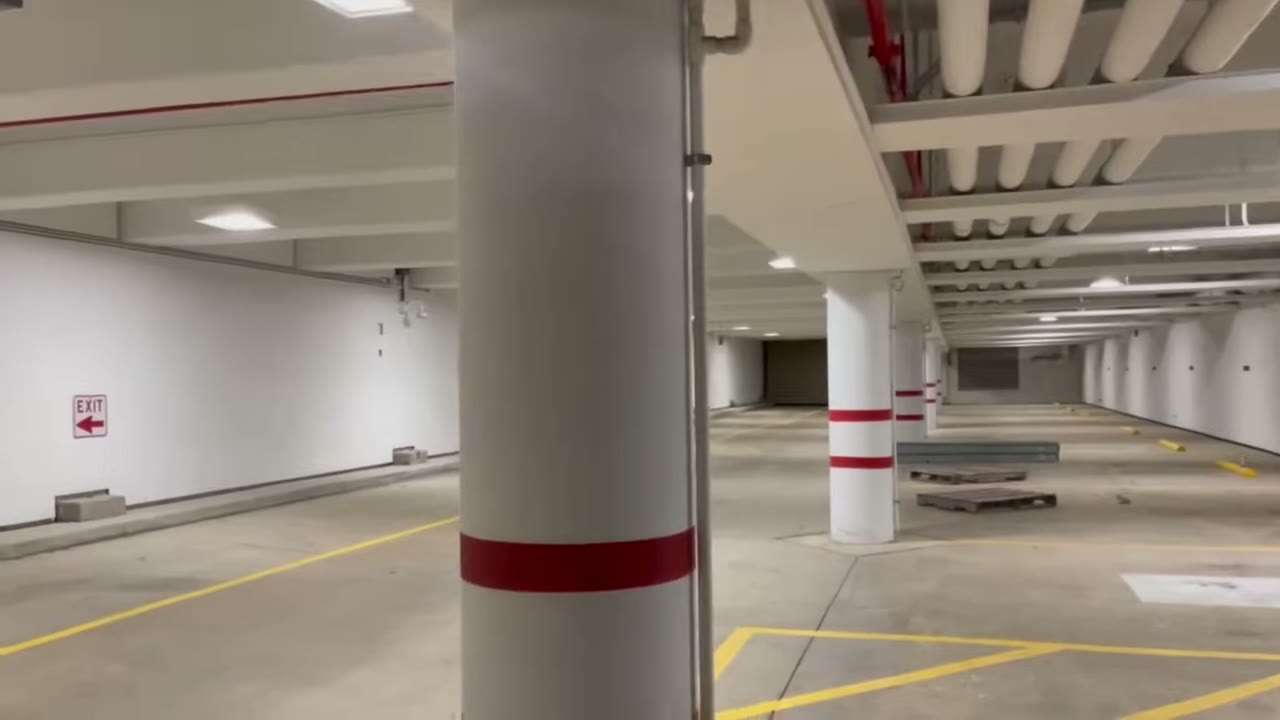
In the hospital fire video I came to a flooded basement, and my description says I almost fell through the ice in it. On camera I said “look how high the water is” and “it’s not that frozen well at least I can say I tried.” Still water in a stairwell is a smaller problem than moving water in a pipe, and it was still enough to stop me. In my Allstate headquarters video there is an underground parking level and a set of server rooms, and an underground garage is one of the spaces NOAA lists when it talks about flooding.
The Buddyville video is the other one. My description says that neighborhood was prone to flooding, was condemned and was eventually demolished. Water decided what happened to those houses, and there’s still standing water on the ground in the frame below.

I carry one good flashlight, because most flashlights, including brand ones, aren’t bright enough, and it’s linked at the bottom of this page. A light doesn’t help with gas, though. If you want my full approach to finding places and staying safe, it’s in a $9.99 PDF called How to Find Abandoned Places. There’s also a post on still water for the version of this problem that sits in a basement instead of a pipe.
OSHA’s rule for the people whose job this is comes down to one idea. Test the air before you go in, and keep testing it.
What I carried in
Same list as every video description.
Sources
- Drain-exploring death risk, Otago Daily Times, undated
- Aquatic dangers in subterranean Seoul, The Korea Times, Aug 11, 2020
- Confined Spaces in Construction, Sewer Systems (OSHA FS 3789), OSHA, May 2015
- Confined Spaces, Hazards and Solutions, OSHA, accessed Nov 2026
- Hydrogen Sulfide Overview, OSHA, accessed Nov 2026
- Severe Weather 101, Flood Basics, NOAA National Severe Storms Laboratory, accessed Nov 2026
- Tunnel and Reservoir Plan (TARP), Metropolitan Water Reclamation District of Greater Chicago, accessed Nov 2026
More like this


The footage that never goes public lives on Patreon. It's paid, and it's where the rough cuts, the security run-ins and the early releases go.