, exact location withheld
What Does Condemned Mean on a Building?
Condemned means a city official has ruled a building unsafe or unfit and ordered it closed. It doesn't mean it's coming down. What the notice says and who decides.
A condemned building is one a local government has found unsafe or unfit for people and ordered closed to use and occupancy. It doesn’t mean the building is about to be demolished, and the exact rules depend on the city.
This is entertainment and general information, not legal advice. Local codes differ, and a condemned notice is a legal document you shouldn’t test.
What does condemned actually mean?
In most city codes it means closed. The word “condemned” gets used loosely, and the paperwork usually says “placarded” or “unfit for human occupancy.”
The small city of Bangor, Maine publishes a plain explanation. Its placarding FAQ says “placarded building” and “condemned building” have the same meaning, and that placarding removes the building’s certificate of occupancy, so a new one has to be issued before anyone lives or works there again. Columbia, Illinois puts it in code. Its condemnation section says a structure found unsafe, unfit or unlawful “may be closed from human use and occupancy by the building commissioner,” and that a placarded structure “shall not be reoccupied without approval of the building commissioner.”
Those two cities aren’t Chicago, and I’m not claiming every city writes it the same way. They’re two clear examples of the same idea. Condemned means a building is off limits to people until someone fixes it and an official says it’s okay.
What makes a building unsafe or unfit?
Columbia’s code splits it into two tests. An unsafe structure is one that’s dangerous to life, health, property or public safety, including one where partial or complete collapse is likely. An unfit structure is one that’s unsanitary, infested, missing essential facilities or otherwise in disrepair. Unsafe equipment, such as boilers, wiring and elevators, can be placarded and put out of service on its own.
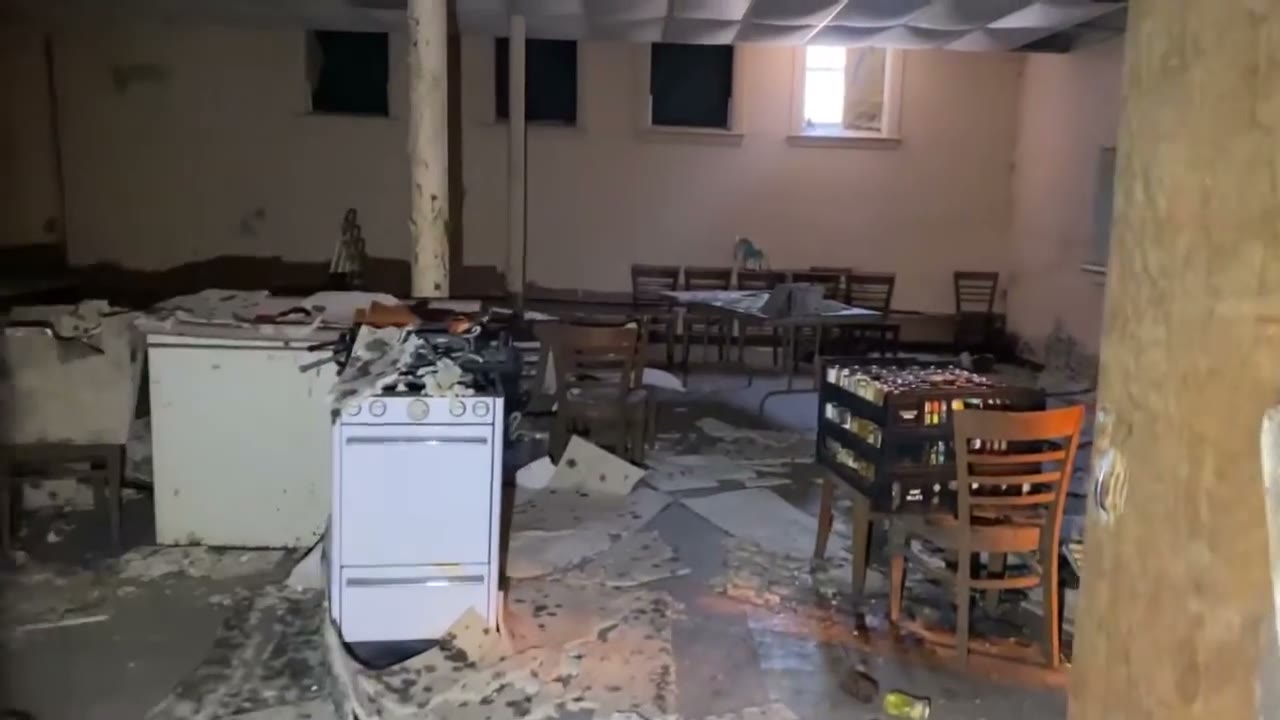
Bangor adds a few everyday examples. It lists a collapsing roof as an unsafe structure, furnaces, boilers and electrical equipment as unsafe equipment, and sanitary problems, infestation and lack of heat or ventilation as reasons a building is unfit. None of that is rare in an abandoned building.
What does a condemned notice look like?
It’s a posted notice, and in some places it’s a specific size. Columbia’s code says the commissioner must placard the premises with a notice at least nine inches high and fourteen inches wide, headed “Notice of Violation, Condemned as Unfit for Human Occupancy or Use by Order of the Building Commissioner.”
Bangor says a red “X” is something different. It’s for first responders, to warn them of dangers inside, often structural, and it says entry is “highly dangerous and is discouraged.” Placards don’t expire there. They stay until the problems that caused them are fixed, and Bangor asks realtors not to remove or tamper with one.
Chicago has its own version. Section 13-12-148 of the city’s code lets the fire commissioner put a first responder warning placard on a hazardous vacant building. It also says the placard is “informational only” and that the absence of a placard doesn’t mean a building is safe.
Does condemned mean it will be demolished?
No. Closing a building and tearing it down are separate steps. Demolition is a separate legal process, and in Illinois it runs through the courts. 65 ILCS 5/11-31-1 says a municipality can apply to a circuit court for an order to “demolish, repair, or enclose” a dangerous or unsafe building, after at least 15 days’ written notice by mail to the owners. For open and vacant buildings of three stories or less, there’s a faster process that starts with a notice posted on the front of the building.
A condemned building can sit for years if the owner fixes nothing and the city doesn’t push. That’s how some of them end up as spots people find, and why a building can be condemned and still standing.
Why do cities condemn buildings?
Because the buildings can hurt people, including the people sent to deal with them. A January 2016 CBS Chicago report covers two buildings on South Baltimore Avenue. A firefighter, Daniel Capuano, died after falling through an unprotected, open elevator shaft inside one of them, and the city ordered it demolished. It then went after the building next door. A city attorney said inspectors had found that property “is not safe and that it needs to be closed immediately.”
The report doesn’t say whether either building was condemned, and it doesn’t use the word. It does say the city doesn’t have enough inspectors to keep up with questionable buildings. That’s the practical reason the paperwork matters, and why a building that has been formally closed is one the city has already looked at.
Can you go into a condemned building?
No, and I’m not going to explain how people try. A condemned building has been closed by an official for safety reasons, and the codes have penalties for it. Columbia’s says anyone who occupies a placarded premises, or an owner who lets someone, is liable for penalties. Chicago’s says entering a placarded building is unlawful unless you notify the fire commissioner in advance, with fines of $500 to $1,000 for each offense.
Illinois criminal trespass law, 720 ILCS 5/21-3, is a separate issue. It covers entering a building “knowingly and without lawful authority,” which is a Class B misdemeanor.
What does this look like in practice?
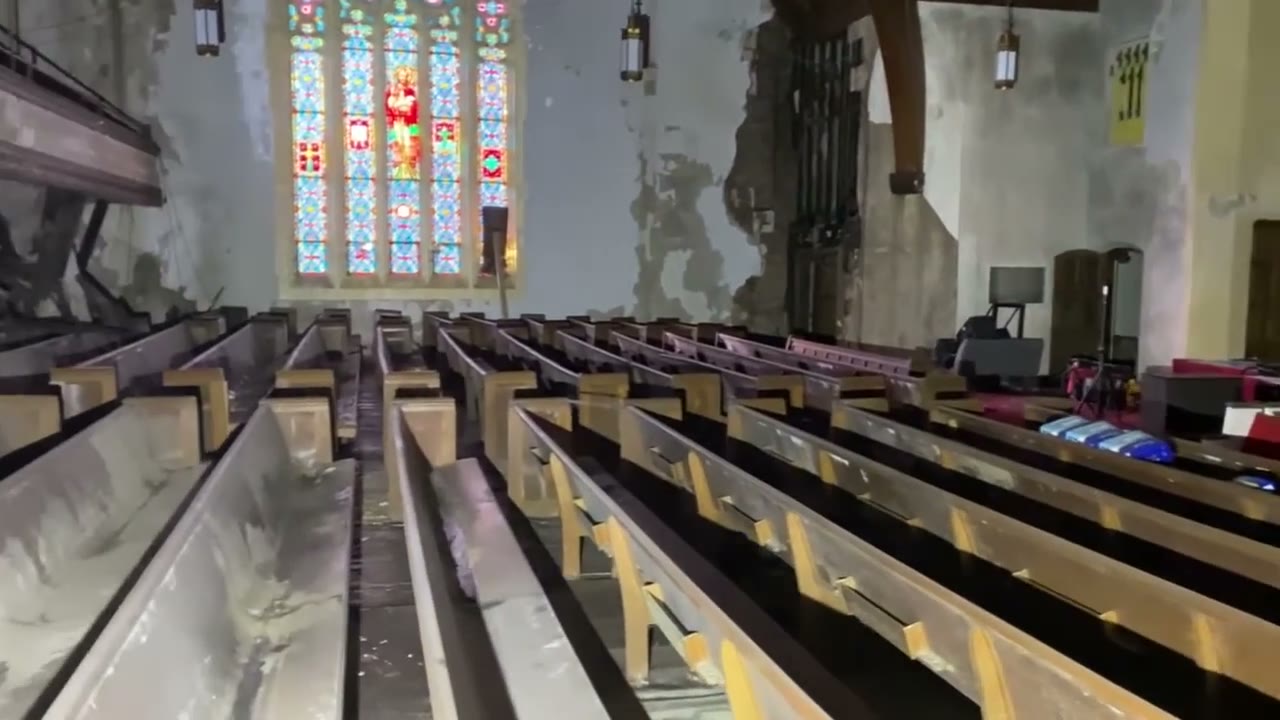
The signs don’t always match the building, and they don’t always exist. In the historic church in northern Illinois video I said I wasn’t sure why a room said do not enter, because it wasn’t that bad. That’s one sign in one room, and in that same video I also said it was pretty unsafe up there because everything was falling apart. A sign doesn’t tell you which parts are safe.
At the Gary Presbyterian church I said the floor was unsafe and that I’d figured it would be a lot safer than it was. In the Tribune plant I read a sign about demolition work in progress, and since it was a Sunday I said there was no demo work in progress.
The outside of a building can tell you something too. The demolished Naperville mansion was boarded up, fenced and had security cameras.
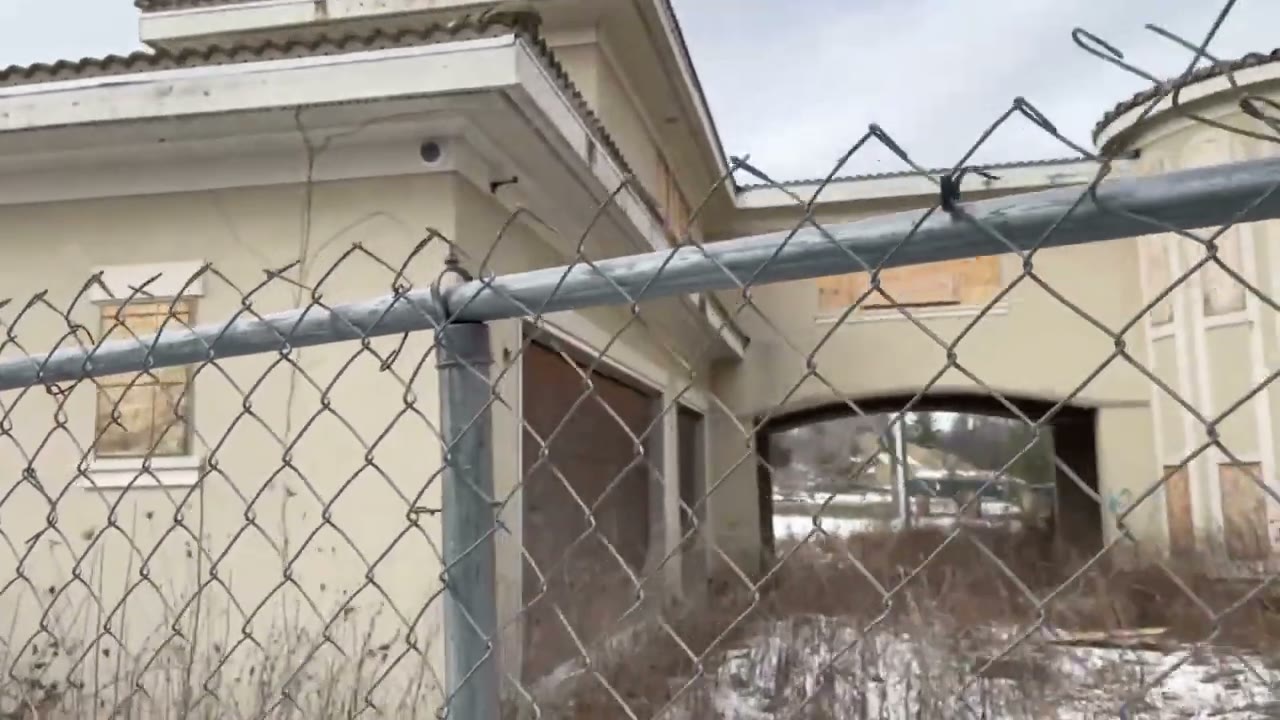
None of that is a condemned notice. It does show that somebody is responsible for the building, even when it looks forgotten. How I find my own spots, stay safe, and film without burning locations is covered in a $9.99 PDF called How to Find Abandoned Places.
If a building has been officially closed for safety, treat that as the answer.
Sources
- Condemnation Measures, Residential Property Maintenance Code 15.09.080, City of Columbia, Illinois, accessed Nov 4, 2026
- Placarding FAQs, City of Bangor, Maine, accessed Nov 4, 2026
- Hazardous Vacant Buildings (Municipal Code of Chicago 13-12-148), American Legal Publishing, accessed Nov 4, 2026
- Demolition, Repair or Enclosure of Dangerous and Unsafe Buildings (65 ILCS 5/11-31-1), Illinois General Assembly, accessed Nov 4, 2026
- City Calls For Demolition Of Building Next To Warehouse Where Firefighter Died, CBS Chicago, Jan 6, 2016
- Criminal Trespass to Real Property (720 ILCS 5/21-3), Illinois General Assembly, accessed Nov 4, 2026
More like this


The footage that never goes public lives on Patreon. It's paid, and it's where the rough cuts, the security run-ins and the early releases go.