, exact location withheld
What Is 'Dead Air' in an Abandoned Building?
Dead air is explorer slang for air bad enough to leave over: low oxygen, or heavy asbestos, insulation dust or mold. What causes it and what a mask can't fix.
Dead air is air that is extremely toxic, not just normally harmful. It can be a lack of oxygen, or air heavily loaded with asbestos fibers, insulation dust or extreme mold.
Entertainment, not medical advice. The facts below are sourced at the bottom of the page, and for your own lungs the person to ask is a doctor.
Explorers also say “bad air,” and the call is the same. The air in here is wrong, so we’re leaving. It comes in two kinds. One is a gas problem, too little oxygen. The other is a particle problem, fibers or dust or spores hanging in a room. Only the second one is something a mask can help with.
How does a building end up with too little oxygen?
Normal air is about 21 percent oxygen. OSHA’s confined space rule calls anything below 19.5 percent a hazardous atmosphere, and its respirator rule treats every oxygen deficient atmosphere as immediately dangerous to life or health.
NIOSH’s confined space guide names how the oxygen goes missing, which is rusting, fermentation, or another gas, such as carbon dioxide or nitrogen, pushing it out. It adds that decomposed material can give off hydrogen sulfide, which is toxic on its own.
All of that needs a space that stays shut. OSHA defines a confined space as one a person can get into, with limited ways in or out, that wasn’t built to be occupied. Its examples include tanks, silos, vaults, pits, manholes and tunnels. A boarded up basement or a utility tunnel can fit. A big room with the windows out doesn’t.
You can’t judge it by feel. NIOSH’s guide says never to trust your senses in a confined space, because you can’t see or smell many toxic gases and you can’t tell the oxygen level. Workers use an instrument, and OSHA’s rule is to test oxygen first. A nose can’t do that job.
What else makes the air dead in an old building?
Asbestos. EPA lists vermiculite attic and wall insulation, vinyl floor tiles and shingles among the products that can contain it, and says you can’t tell by looking unless it’s labeled. Exposure comes when the material is disturbed or damaged, and each fiber is too small to see, according to the federal Agency for Toxic Substances and Disease Registry. Breathing the fibers is linked to lung cancer, mesothelioma and asbestosis. EPA’s advice for suspect material is three words. Don’t touch it.
Insulation dust. Not all old insulation is asbestos, and the rest isn’t harmless either. OSHA names skin, eye and respiratory tract irritation as the main concerns with fiberglass and calls cellulose a respiratory irritant. NIOSH lists eye, skin, nose and throat irritation and trouble breathing for fibrous glass dust. A collapsed ceiling with a drift of old insulation under it is a lot of dust waiting for a footstep.
Mold. The CDC says mold grows where there’s moisture, on paper, cardboard, ceiling tiles and wood, and can smell musty. Exposure can mean a stuffy nose, wheezing, burning eyes or a rash, and it hits people with asthma or mold allergies harder. Black mold gets the reputation. The CDC’s page on Stachybotrys chartarum, the species usually meant by that name, calls it greenish black and says it needs constant moisture. The same page says all molds should be treated the same for health risks and removal, so the color isn’t the number to watch. The amount is. EPA’s cleanup guide sets an N-95 respirator as the minimum for a small area and a full face powered respirator for large ones.
How do you know the air is dead?
Often you don’t. What people describe is air that feels heavy or stale, a musty smell, and dust hanging in the light beam. Most flashlights, including brand ones, aren’t bright enough, so I carry one good light, and a good beam is the easiest way to see what’s floating in a room.
It still isn’t a test. The fibers that matter are too small to see, and low oxygen has no smell at all.
That leaves your body, and the FAA has a list. Its hypoxia brochure for pilots names faster breathing, headache, lightheadedness, dizziness, tingling, sweating, poor coordination, impaired judgment, tunnel vision and euphoria as effects of too little oxygen, and says the body doesn’t give reliable signals at the start. So a headache or dizziness in a closed up building isn’t something to push through. It’s the signal to leave, and with impaired judgment on that list, not one to argue with.
Will a mask help with dead air?
Not a paper one, and not at all for low oxygen.
NIOSH ranks disposable and cloth masks as the least effective at reducing exposures. They aren’t made to a standard, their protection is unknown, and they don’t seal to your face. Even a real respirator can’t fix low oxygen. NIOSH says air purifying respirators don’t supply oxygen and can’t be used in an oxygen deficient atmosphere, and OSHA requires a self-contained breathing apparatus or a supplied air respirator with its own backup air for workers there.
For particles, the rating to look for is P100, which NIOSH defines as oil proof and filtering at least 99.97 percent of airborne particles. OSHA’s asbestos rule uses the same 99.97 percent figure to define a HEPA filter, requires HEPA filters on workers’ respirators, and bars disposable filtering facepiece respirators for asbestos entirely. In practice that points to a reusable mask with replaceable P100 filters, not a disposable one.
It also has to seal. NIOSH says these respirators work by forming a tight seal against your face, and OSHA doesn’t let workers wear a tight fitting one with facial hair between the seal and the skin. Look for the word NIOSH printed on whatever you buy. The CDC says that’s the part of the label that matters. The respirator and the mask I carry are on the gear list at the bottom of this page.
What does this look like in practice?
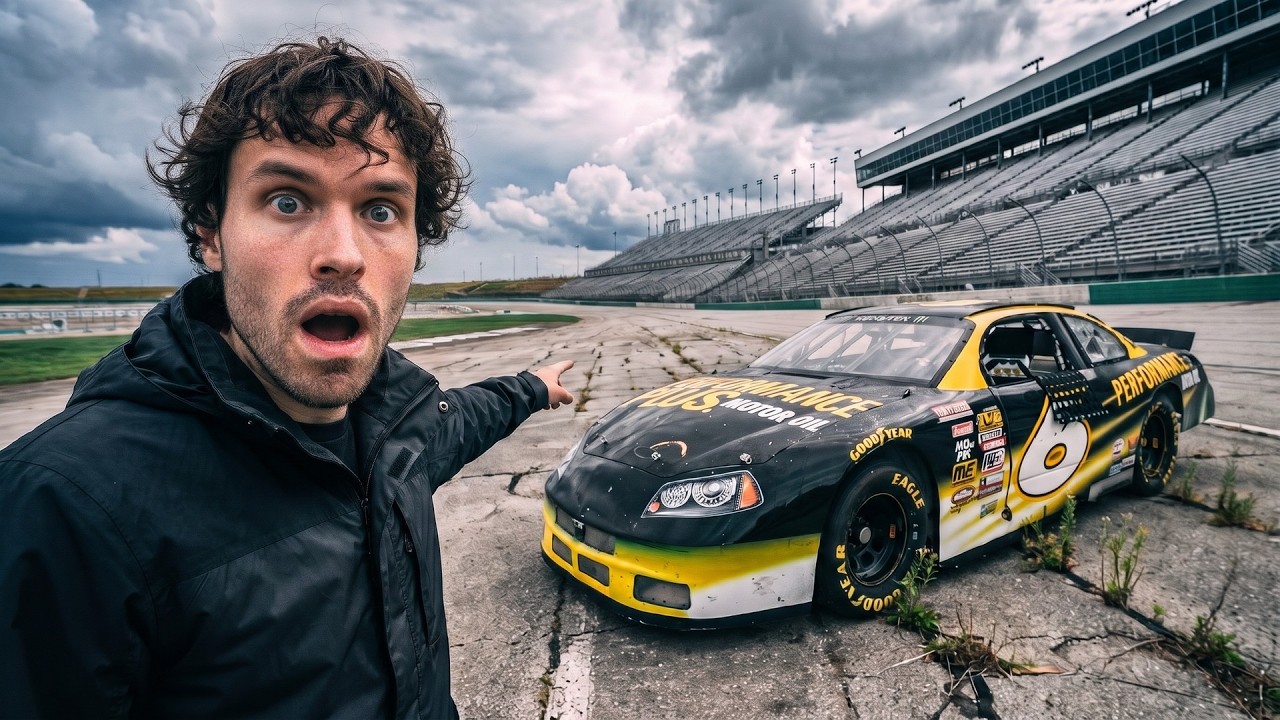
Two of my explores had spaces like the ones above. The French mansion has a wine cellar with a well that goes down farther than the light reaches, and a room carpeted with dead bees where I wrote that the smell is the thing the camera can’t carry. The Kentucky Speedway has a pedestrian tunnel under the track, lit and cool. I’m not saying the air was bad in any of them. They’re the kinds of places where the question gets asked.
What’s the rule?
OSHA’s rule for workers is that if hazardous conditions are detected during entry, employees must immediately leave the space. How I stay safe on an explore is in my guide, How to Find Abandoned Places, but the air part fits in a line. If the air feels dead, you leave.
What I carried in
Same list as every video description.
Sources
- Permit-required confined spaces (29 CFR 1910.146), OSHA
- Confined Spaces: Overview, OSHA
- Permit-Required Confined Spaces (OSHA 3138), OSHA, 2004
- A Guide to Safety in Confined Spaces, NIOSH, Jul 1987
- How to Work Safely with Hazardous Products Classified as Simple Asphyxiants, CCOHS (Government of Canada)
- Hypoxia: The Higher You Fly... The Less Air in the Sky, FAA, 2020
- Respiratory protection (29 CFR 1910.134), OSHA
- A Guide to Air-Purifying Respirators, NIOSH, Aug 2018
- 2018 NIOSH Respirator Filter Classes, NIOSH
- Community Respirators and Masks, CDC/NIOSH, Mar 25, 2025
- Breathe Easy, Part 1: How to Pick the Right Respirator for Your Emergency Kit, CDC
- Asbestos (29 CFR 1910.1001), OSHA
- Learn About Asbestos, US EPA, Jul 13, 2026
- Protect Your Family from Exposures to Asbestos, US EPA, Jun 25, 2026
- Asbestos and Your Health, ATSDR (CDC)
- Green Job Hazards: Weather Insulating/Sealing, OSHA
- Fibrous glass dust, NIOSH Pocket Guide to Chemical Hazards, CDC, Oct 30, 2019
- Mold, CDC, Sep 26, 2024
- Facts About Stachybotrys chartarum, CDC, May 29, 2024
- Mold Remediation in Schools and Commercial Buildings, Chapter 3, US EPA
More like this


The footage that never goes public lives on Patreon. It's paid, and it's where the rough cuts, the security run-ins and the early releases go.