, exact location withheld
What Is a Ghost Town?
A ghost town is a settlement that was abandoned or lost most of its people. How towns die, how Bodie and Cardiff, Illinois ended up empty, and what I film instead.
A ghost town is a settlement that has been abandoned or has lost most of its population. The classic picture is a mining camp with empty buildings, but towns die for a lot of reasons, and many of them still have a few people living there.
This is entertainment and general information. An abandoned town can sit on private land, and the simple way to see one is a place that has been set up for visitors.
What counts as a ghost town?
The University of Utah’s library, which runs a digital exhibit on them, defines a ghost town as “any settlement that has been abandoned or lost most of its population.” The definition has two halves for a reason. A town with no one in it is the extreme case, and a town that shrank until almost nothing was left also counts.
David Wishart of the University of Nebraska Lincoln, writing in the Encyclopedia of the Great Plains, uses the same idea. Ghost towns are towns that have become extinct or have shrunk so much in population and function that they are nearly gone. On the Great Plains, he writes, the typical ghost town is “the diminished rural service center.” That is a long way from a movie set. It’s a town that used to have a store, a school and a church and now has one of the three.
How does a town become a ghost town?
The Utah exhibit has the shortest answer. A town dies when “the central reason for its existence disappears.” For a mining camp that meant the easy ore running out or becoming unprofitable to mine.
Wishart lists the reasons in more detail.
- Farm machines cut the need for farm labor, and cars let farmers drive farther to larger towns.
- A railroad bypassed some towns, which lost business to the ones on the line. Later railroad consolidation after the 1930s stranded others.
- Rural areas lost population, which closed schools, stores and churches.
- Mining and oil towns emptied once the resource ran out or got too costly to pull out of the ground.
- Some towns were failed speculation, and people moved west.
His examples are specific. Omadi, Nebraska, was founded in 1856 and emptied by 1859 when residents left for the Colorado gold mines. Hundreds of mining towns in the Black Hills of South Dakota lasted only as long as the gold. Coal company towns in Crawford County, Kansas, declined in the 1930s and vanished after the mines closed. Treece, Kansas, a lead and zinc town, once had 749 residents. Three Sands, Oklahoma, was an oil town founded in 1921 that boomed briefly and then declined.
Can a town be almost a ghost town?
Yes, and Wishart’s list shows the stages. Blaine, in Pottawatomie County, Kansas, was a railroad town that was left inland after the 1930s and is now mostly deserted except for its church. Whitman, in Nelson County, North Dakota, isn’t a ghost town yet. Its businesses have closed, and its church serves only a few members.
That makes a ghost town less like a switch and more like a long slide with a lot of stops on it. The same slide shows up with buildings. A school closes, then the store, then the church, and at each step the place is a little easier to call abandoned. I wrote about the building version of that in Why Chicago Has So Many Abandoned Buildings.
Can you visit a ghost town?
You can visit the ones that someone has turned into a park. Bodie is the standard example, and California State Parks says negotiations to make it a state historic park began in the 1950s. For most other places, the answer depends on who owns the land and whether they have said yes, and I can’t answer that for you.
What does an Illinois ghost town look like?
Cardiff is the example the University of Illinois documents. Its Mythic Mississippi project says the town was founded in 1899 after the discovery of “a rich vein of coal.” The boom lasted about thirteen years, according to Jim Ridings’ illustrated history of it, and the town was abandoned in 1912 when the mine closed. Today a historical marker shows where it stood, and a town map and many photos survive.
That is the usual shape in the Midwest. A town gets built around one reason, the reason ends, and the buildings follow it out. What’s left is a marker, a few foundations or nothing at all.
Why is Bodie the one everyone knows?
Because it was kept on purpose. California State Parks says the Standard Company struck gold there in 1877, that the population exploded from about 20 to several thousand people and that the park has been “in a state of arrested decay.” A ranger on the park’s page explains that as stabilizing buildings so they don’t collapse while keeping them looking as they originally did. Bodie has been part of California State Parks since 1962.
The National Trust for Historic Preservation’s Lauren Walser adds that around 1879 Bodie had nearly 10,000 people and more than 2,000 buildings. “Arrested decay” means everything stays as it was when the state acquired the town in 1962. Nothing is restored, nothing is allowed to fall further.
That’s the opposite of what happens to most places I film. A building that nobody is looking after keeps decaying. Bodie is what it looks like when someone decides to stop the clock at one frame.
Do I film ghost towns?
Not really. I film abandoned buildings, and in the videos this site is built from, nearly every place is one building and not a whole town. I also hide most locations on purpose, so a spot labeled with one place name may not be there.
The closest I have is the Buddyville video. My description says that Illinois neighborhood was prone to flooding, so it was condemned and eventually demolished, and the houses are completely gone now. It’s a neighborhood and not a town, so I wouldn’t call it a ghost town. It’s the same story in miniature, though. A reason for the place to exist went away, and the people left.

In the Buddyville video the houses I walked through still had the stuff that a family leaves, like kids’ toys and a calendar from 2015 still on the wall.
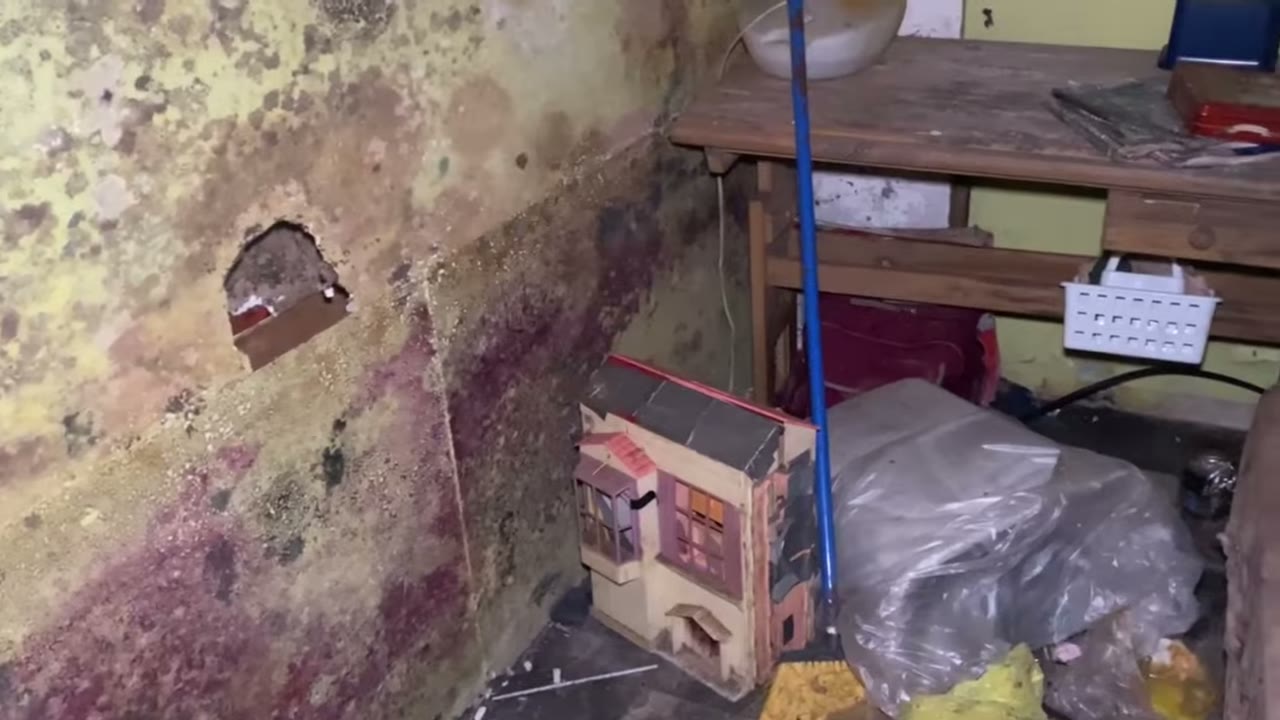
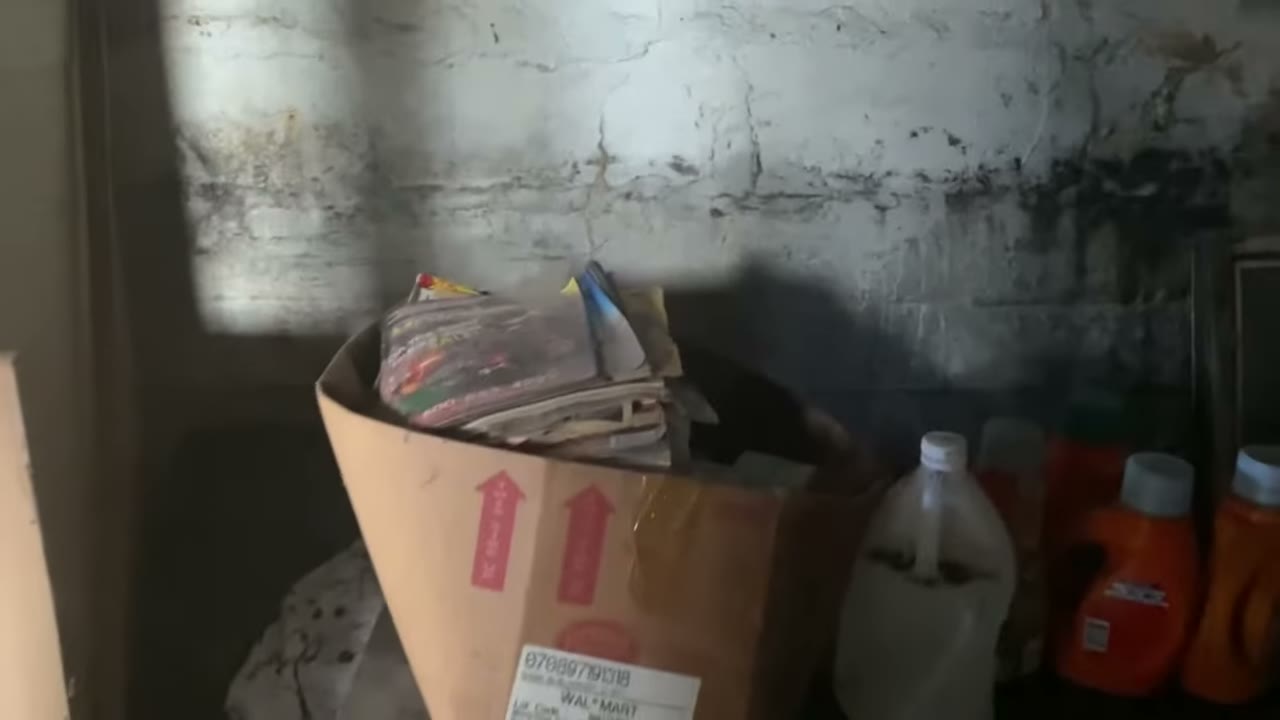
Two other videos fit the same idea at a smaller size. The Gilroy Stadium video is about a football stadium in Gary, Indiana, that my description says was built in 1956 for more than $1 million and never completed. The abandoned summer camp is a place that was left with everything inside.
I film on a DJI action camera, and it’s linked at the bottom of this page. How I find places and stay safe at them is in a $9.99 PDF called How to Find Abandoned Places.
A town doesn’t have to be empty to be a ghost town. It just has to lose the reason it was built.
What I carried in
Same list as every video description.
Sources
- Introduction, Ghost Towns, J. Willard Marriott Library Exhibits, University of Utah
- Ghost Towns, Encyclopedia of the Great Plains, University of Nebraska Lincoln, David J. Wishart
- Bodie State Historic Park, California State Parks
- Preserving Decay, Exploring the Ghost Town of Bodie, California, Lauren Walser, National Trust for Historic Preservation, Mar 24, 2015
- Cardiff disappeared, Mythic Mississippi, University of Illinois
More like this


The footage that never goes public lives on Patreon. It's paid, and it's where the rough cuts, the security run-ins and the early releases go.