, exact location withheld
The Packard Plant in Detroit
The Packard Plant in Detroit was designed by Albert Kahn, stopped making cars in the 1950s, and has been coming down since 2022 under a court order.
The Packard Plant is the huge abandoned car factory on East Grand Boulevard in Detroit, built from 1903 on a 40 acre site and designed by the architect Albert Kahn. Packard stopped building cars there in the 1950s, and after decades of rentals, tax debt and redevelopment promises that went nowhere, a judge ordered the owner to tear it down in 2022.
This is history, not a map. I haven’t explored the Packard Plant, the site is private property, and parts of it are an active demolition project. Nothing here is a reason to go anywhere near it.
Who built the Packard Plant and why does it matter?
Henry B. Joy commissioned the complex in 1903, according to Docomomo US, the preservation group that lists it on its register of modern buildings. Albert Kahn was the architect, his brother Julius Kahn and Ernest Wilby consulted as engineers, and the first nine buildings went up between 1903 and 1905. Packard formally moved its headquarters and production from Warren, Ohio to Detroit in 1905.
The reason architects still talk about it is one building. SAH Archipedia, the Society of Architectural Historians’ guide to American buildings, says the first nine buildings used standard mill construction. Then came Building Number 10 in 1905, designed by Albert and Julius Kahn with a reinforced concrete frame and interior columns. It was the first factory building in Detroit built that way, and it allowed much larger open floor space. Kahn’s Packard Forge Shop of 1911 was an early example of the single story steel and glass factory buildings he went on to design.
That open floor is the whole idea of a modern factory. Instead of a maze of small rooms, you get one huge space where a production line can run.
When did Packard stop building cars there?
Studebaker bought Packard in 1956 and closed production at the plant. In between, Packard had grown into a leading American luxury carmaker. WDIV in Detroit reports it had 36,000 employees by the 1940s, and Docomomo notes the plant supported wartime output from 1940 to 1945, including the Packard Merlin engine.
The buildings did not go quiet right away. Docomomo says the complex was divided into industrial rentals in the 1960s and 1970s, most manufacturers had left by the late 1970s, and as of 2010 only one small chemical processing tenant remained. FOX 2 Detroit puts it the same way, saying other businesses used the complex until 2010.
So the plant did not go quiet all at once. It faded over roughly half a century, from a single owner’s factory into rented space and then into almost nothing. My guide on industrial archaeology covers why leftover structures like this are worth studying.
How did the Packard Plant fall apart?
Ownership is most of the answer. According to WDIV, Fernando Palazuelo bought the property in 2013 for $405,000 at a Wayne County tax foreclosure auction and planned a mixed use commercial, residential and cultural redevelopment that never happened. FOX 2 reports that his company, Arte Express Detroit, said it planned a historic restoration. A groundbreaking was held in 2017.
Crain’s Detroit Business reports that a $23 million redevelopment plan for the administration building was scrapped after nonperformance following that groundbreaking, and the city withdrew its public funding. Palazuelo also lost more than 30 parcels and buildings over nearly $784,000 in unpaid taxes and Detroit water and sewer fees. The City of Detroit’s own account puts his unpaid taxes, water drainage costs and blight tickets at more than $1.5 million.
Weather and gravity did the rest. FOX 2 notes that the city’s demolition of the parts it owns began in 2019, after a bridge over Grand Boulevard collapsed. The Architect’s Newspaper adds that the bridge came down after an ice storm and renewed calls for quick action on the complex’s condition.
Why is the Packard Plant being demolished now?
Because a court said so. In April 2022 a Wayne County Circuit Court judge declared the owner’s parcels a public nuisance and a threat to public health, safety and welfare. FOX 2 says the order required demolition permit applications to start in April 2022 and demolition to begin by mid May, with all buildings and debris removed at the owner’s expense. If the owner missed the deadlines, the city could hire contractors and bill him. WDIV reports he missed the April 21 deadline to pull permits.
The city then started with the building that posed the most immediate danger. The City of Detroit says it is removing a 315,000 square foot portion at 6199 Concord, which was connected to and damaging an occupied neighboring building. The building safety director had declared an immediate hazard after complaints of falling masonry. The contractor, Homrich, was hired for about $1.7 million.
Crain’s says full demolition could take two years and cost $15 million to $25 million, and that the mayor hoped properties facing East Grand Boulevard could be spared. The city says it plans to preserve the northernmost wing facing East Grand Boulevard for redevelopment, and that the plant tops a list of 100 vacant commercial structures the mayor plans to address through redevelopment or demolition.
What does a factory like this look like inside?
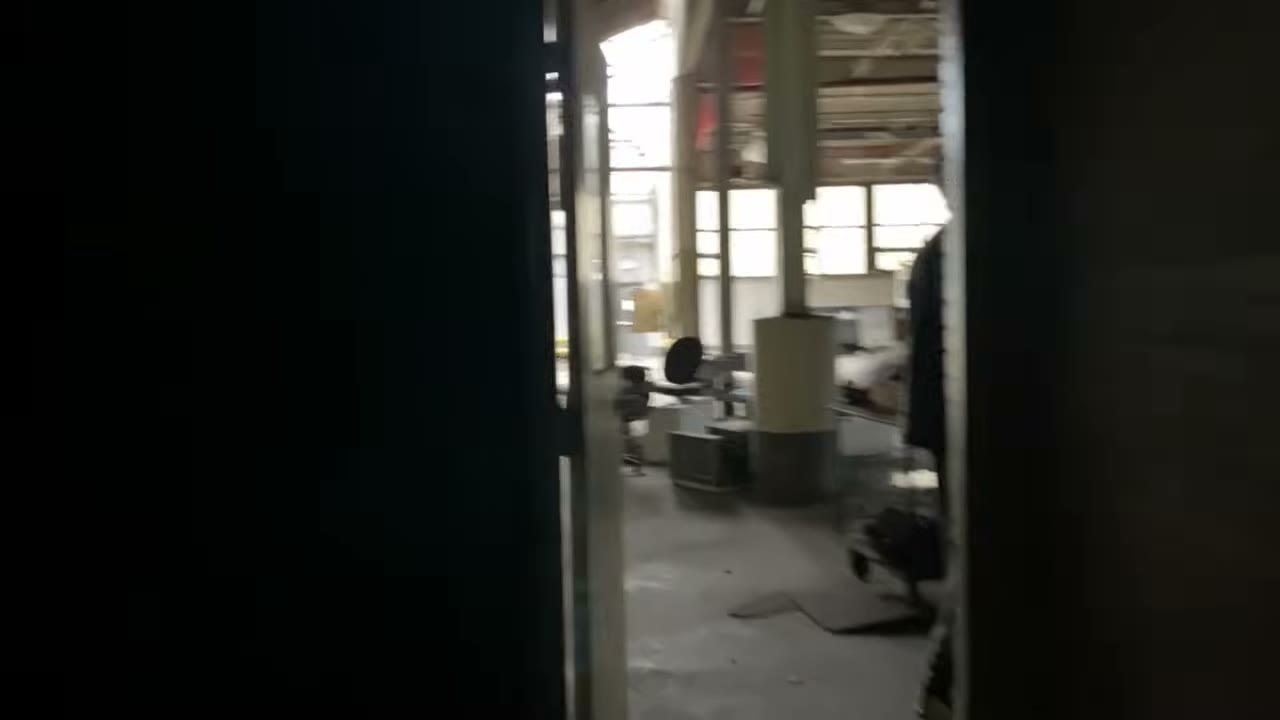
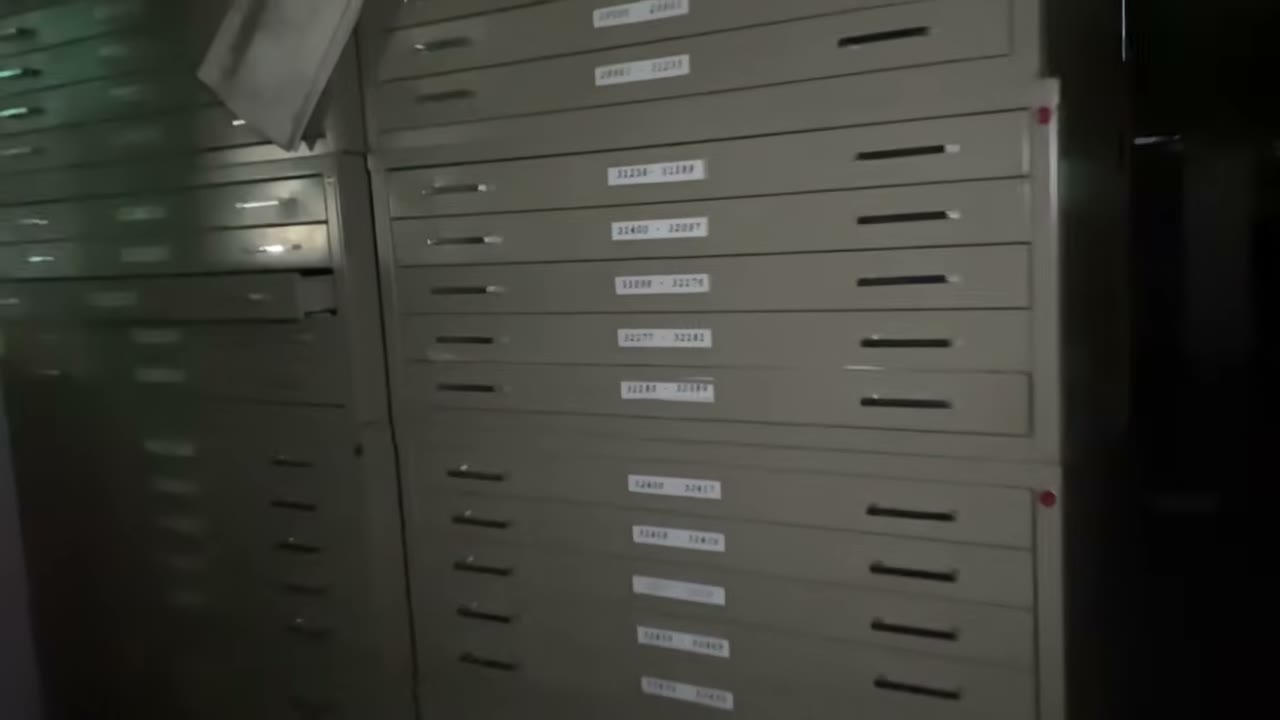
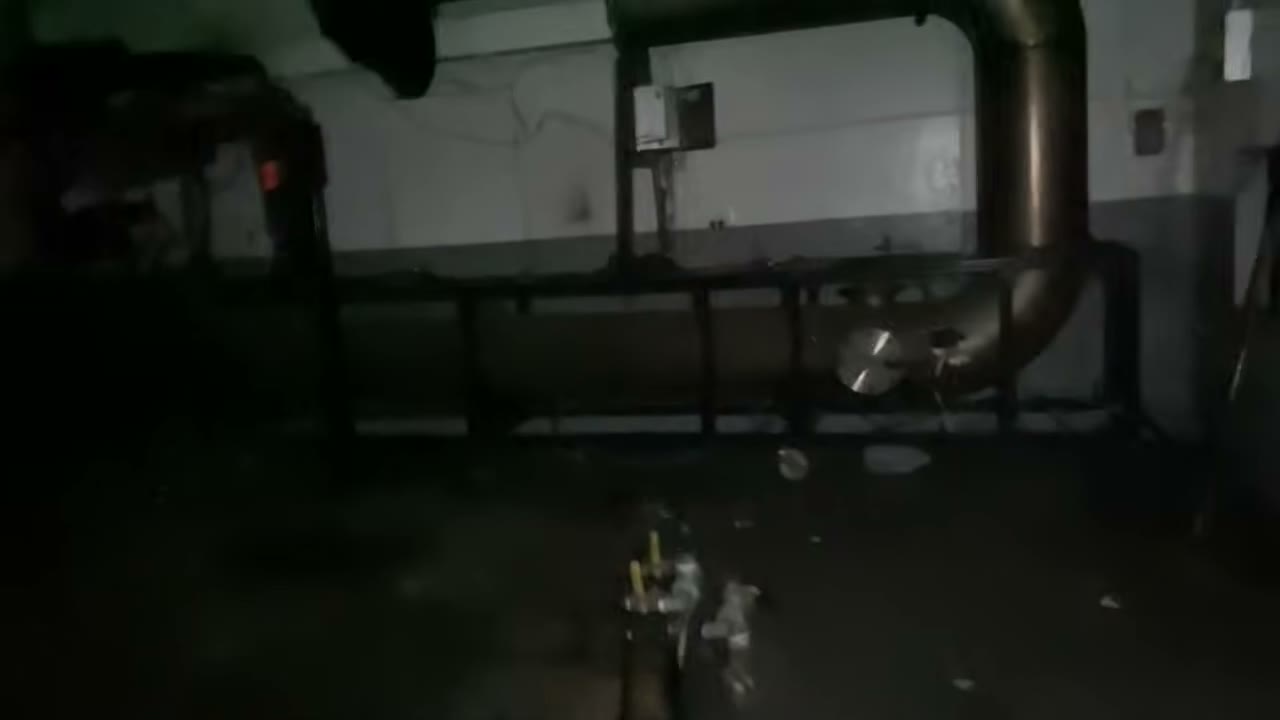
I haven’t been inside the Packard Plant, so I can’t tell you. What I can show you is a smaller cousin. In my video of the Navistar engine factory in Melrose Park, Illinois, a plant that was initially an airplane engine factory and is now demolished, we found engine parts, engine bays, an expensive soundproof room for testing engine quality and a whole diesel engine.
These frames are from that same video, and they show how much ordinary office and workshop life was left behind.

Dark interiors like that are why I carry one good light. Most flashlights, including brand name ones, aren’t bright enough, and the Coast XP11R flashlight on my gear list is the kind of light I mean. Old industrial buildings are also where my asbestos guide and the 3M 6200 half face respirator on my list matter. If you want to know how buildings like this get stripped, my guide on scrappers explains it.
What can Packard teach you about every other empty factory?
Three things. Size is no protection, because a plant on 40 acres still ended up in a courtroom. Ownership matters as much as architecture, since a plant that Kahn designed and a judge later called a public nuisance can be both. And a tax auction hands over a property without handing over a plan.
My own Detroit video from a boxing gym shows the smaller version of that, a building that was gutted before I ever saw it. How I find places like these without burning them, and how I stay safe doing it, is in my $9.99 guide, How to Find Abandoned Places. It doesn’t make trespassing legal, and nothing in it is a reason to go into a building that isn’t yours.
What’s left of the Packard Plant is coming down on a court schedule, and the northernmost wing facing East Grand Boulevard is the part the city hopes to keep.
What I carried in
Same list as every video description.
Sources
- Packard Motor Car Company Plant, SAH Archipedia, accessed Nov 4, 2026
- Packard Motor Car Company Manufacturing Complex, Docomomo US, accessed Nov 4, 2026
- Packard Plant in Detroit must be demolished, judge orders, FOX 2 Detroit, Apr 6, 2022
- Demolition of Detroit's iconic Packard plant begins, WDIV ClickOnDetroit, Sep 29, 2022
- Demolition of part of Packard Plant begins and Duggan vows Palazuelo will pay, Crain's Detroit Business, accessed Nov 4, 2026
- City begins demolition of dangerous portion of Packard Plant threatening nearby residents and neighboring business, City of Detroit, accessed Nov 4, 2026
- Demolition of Albert Kahn's Packard Plant, The Architect's Newspaper, Oct 2022
More like this


The footage that never goes public lives on Patreon. It's paid, and it's where the rough cuts, the security run-ins and the early releases go.