, exact location withheld
What to Do If Police Show Up While Exploring
Stay put, stay calm, ask if you're free to go, and say out loud that you're staying silent and not consenting to a search. What Illinois law and the courts say.
If police show up while you’re exploring, stay where you are, stay calm and stay polite, ask whether you’re free to leave, and say out loud that you’re choosing to remain silent and that you don’t consent to a search. The law gives you real protections, but several of them only work if you say them out loud.
This is entertainment and general information, not legal advice. I’m not a lawyer. Explorers have been charged, ticketed and let go in similar situations, and the outcome depends on facts a blog can’t see. If you’re charged with anything, call a criminal defense lawyer.
Why shouldn’t I run?
Because running can give police grounds to stop you. In Illinois v. Wardlow, a case that came out of Illinois and was decided January 12, 2000, the U.S. Supreme Court held that unprovoked flight can support reasonable suspicion for a stop. The Court called headlong flight “the consummate act of evasion.” It said flight isn’t proof of guilt, but it is “certainly suggestive of such,” and that unprovoked flight “is simply not a mere refusal to cooperate.”
Illinois also has a statute for people who physically get in the way. Resisting or obstructing a peace officer is a Class A misdemeanor for knowingly resisting an arrest or interfering with an authorized act by someone you know is a peace officer. The court has to add at least 48 consecutive hours in jail or at least 100 hours of community service. It becomes a Class 4 felony if an officer is injured.
The ACLU of Illinois puts the whole idea in three short sentences. If police stop you, “Stay calm. Don’t run. Don’t argue.” Trespass is usually a misdemeanor, and a bad decision in the first minute can add to it.
Do I have to give my name?
Possibly, and you should find out the rule before you need it. 725 ILCS 5/107-14 lets an identified officer stop a person in a public place for a reasonable period when the circumstances give a reasonable basis to believe the person is committing, about to commit or has committed an offense. The officer may demand the person’s name and address and an explanation of their actions. The stop and questioning has to happen near where the person was stopped.
Illinois Legal Aid Online says Illinois may require you to give your name and address in some situations. I’m not going to guess whether refusing is itself a crime in a given case, because that’s a question for a lawyer. What the statute tells me is that giving a made up name is a bad idea, since the officer is legally allowed to ask for the real one.
Do I have to answer questions about what I was doing?
You can stay silent, but you have to say so. In Salinas v. Texas, decided June 17, 2013, the Supreme Court held that a man who fell silent during a voluntary police interview hadn’t invoked his Fifth Amendment privilege because he didn’t expressly say so. The Court wrote that “a witness does not do so by simply standing mute.” Silence, it said, is “insolubly ambiguous,” because a person can be quiet for reasons that have nothing to do with the privilege.
So say it. Illinois Legal Aid suggests telling police clearly, “I am exercising my right to remain silent.” It also says that if you want a lawyer, say “I want to speak with a lawyer,” and then you shouldn’t keep answering questions about the investigation. The same page reminds you that anything you say can be used against you in court.
Explaining yourself feels natural in the moment, and anything you say can be used against you, including a harmless sounding line about taking pictures.
Can police search my bag?
Not just because they ask nicely. The ACLU of Illinois says, “You do not have to consent to search of your belongings.” The catch is that the Supreme Court doesn’t require officers to tell you that. In Schneckloth v. Bustamonte, decided May 29, 1973, the Court held that when a person isn’t in custody and the state relies on consent, it has to prove the consent was voluntary under all the circumstances. It also held that knowing about the right to refuse is a factor and not a requirement.
That’s why the words matter. If you don’t want a search, say “I don’t consent to a search” clearly and calmly, and don’t physically block anything.
If an officer frisks or searches you during a stop, the Illinois statute says officers generally have to give you a stop receipt stating the reason for the stop and the officer’s name and badge number. The exceptions are when that’s impractical, impossible or under exigent circumstances.
Your camera and phone matter too. A Minneapolis police sergeant said in August 2026 that social media posts can serve as evidence, saying “it literally records evidence of their activities.” Footage on a device is evidence of where you were.
Am I free to go?
Ask. The ACLU of Illinois lists “Ask if you are free to leave” as one of its steps. Illinois Legal Aid explains why the answer matters. Not every police interaction is an arrest, police may briefly stop and question a person without arresting them, and courts decide whether you were under arrest by asking whether a reasonable person would have felt free to leave.
If the answer is no, you aren’t free to leave, and running or resisting is exactly what the earlier sections warn about. Stay put, stay calm, and use the silence and lawyer language above. If the answer is yes, leaving calmly is what “free to go” means.
If the person who found you is an owner or their security instead of an officer, the same calm applies. The trespass statute covers staying after an owner or occupant orders you off land, so if you’re told to go, go.
What usually happens?
It varies a lot. The Columbia Chronicle reported that trespassing is usually a misdemeanor, so explorers are often asked to leave and fined rather than arrested. Rick Drew, who leads Chicagoland Urbex Photography, told WTTW that when police see explorers inside a fence they usually just ask them to leave, and that being polite and cooperative with police usually leads to being let go. He said he’d been caught a few times and never arrested.
That’s one person’s experience and it isn’t a promise. The same Columbia Chronicle story reported that a Cleveland photographer was indicted for criminal trespassing after publishing a photobook of an abandoned mall. What I take from both is that the first few minutes decide a lot, and that you’re better off calm than clever.
What does this look like in practice?
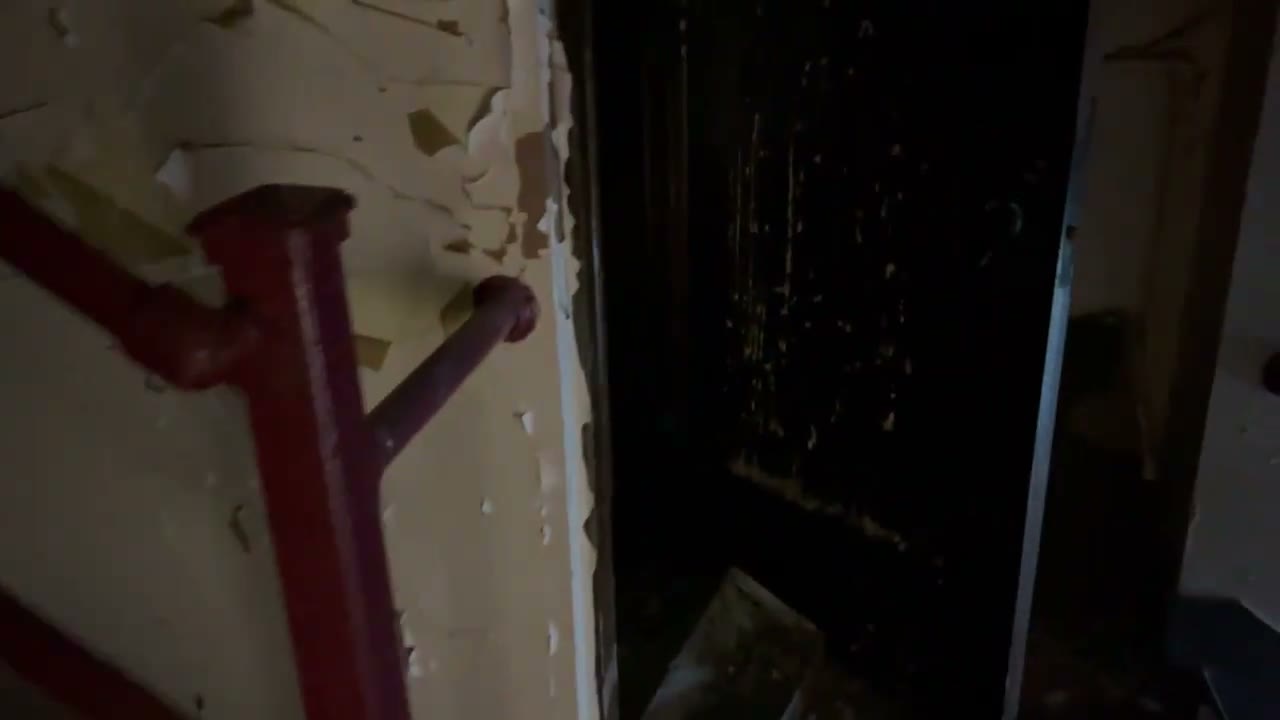
At the top of my Chicago bank video, I say my hands are a little shaky because we kind of had the cops called on us and had to hurry up. I’m not offering that as a plan.
The Detroit boxing gym video has a crash outside that drew six officers, an ambulance and fire trucks while we were inside. None of them were there for us, but it shows how fast a street fills up, and from inside a building you can’t tell which kind of sirens you’re hearing. In the elementary school video, you can hear us react to a sound that wasn’t either of us. An unknown person in a building might be police, security, an owner or someone who lives there.
The best way to avoid this whole post is to understand what you’re risking before you go anywhere. Is urban exploring illegal? covers the charges. How I find my own spots and stay safe is in a $9.99 PDF called How to Find Abandoned Places.
Calm, polite and clear is a short list, and it’s the one that holds up.
Sources
- Illinois v. Wardlow, 528 U.S. 119, Supreme Court of the United States, Jan 12, 2000
- Salinas v. Texas, 570 U.S. 178, Supreme Court of the United States, Jun 17, 2013
- Schneckloth v. Bustamonte, 412 U.S. 218, Supreme Court of the United States, May 29, 1973
- 725 ILCS 5/107-14 Temporary questioning without arrest, Illinois General Assembly
- 720 ILCS 5/31-1 Resisting or obstructing a peace officer, Illinois General Assembly
- 720 ILCS 5/21-3 Criminal trespass to real property, Illinois General Assembly
- My rights when I'm under arrest or in custody, Illinois Legal Aid Online
- Know your rights, ACLU of Illinois
- Urban Explorer Photographs Chicago's Abandoned Sites and Buildings, WTTW, Jun 17, 2016
- No Trespassing, The dangers and thrills of urban exploration, The Columbia Chronicle, Nov 6, 2017
- Urban exploring, Minneapolis police and fire warn of dangers, MPR News, Aug 5, 2026
More like this


The footage that never goes public lives on Patreon. It's paid, and it's where the rough cuts, the security run-ins and the early releases go.