, exact location withheld
Six Flags New Orleans After Katrina
Six Flags New Orleans opened as Jazzland in 2000, flooded in Katrina and never reopened. How it ended up with the city and why demolition only began in 2024.
Six Flags New Orleans was a theme park in eastern New Orleans that opened in 2000 as Jazzland, went bankrupt after two seasons, and was flooded by Hurricane Katrina in 2005. It never reopened. Demolition of the ruins finally began in late 2024, almost twenty years later.
This is a history post. The site is owned by a public agency and is an active demolition project, and nothing here is a reason to go near it. I haven’t been there.
How did Jazzland become Six Flags?
Jazzland opened in May 2000 as an economic development project for eastern New Orleans, according to the Associated Press. As of 2006 the city was still paying off most of a $25.3 million HUD loan used to build the park. Jazzland went bankrupt after two seasons.
Six Flags bought the park out of bankruptcy. The AP reported that the $135 million park was bought for $22 million, and that Six Flags installed five new rides but still failed to deliver financial results. Six Flags held it on a lease from the City of New Orleans. The AP says the lease ran 75 years.
So even before the storm, this was a park the city had borrowed to build and a company had bought at a steep discount, and it still wasn’t delivering results.
What did Katrina do to the park?
It flooded. The National Weather Service’s New Orleans office says Katrina made landfall over Plaquemines Parish on August 29, 2005, and that numerous breaks in the levee system around the metro area began that day. By August 31 at least 80 percent of the city was underwater, with remotely sensed estimates showing 16 to 20 feet of water in some parts, especially in the east near Lake Pontchartrain.
The AP reported in 2006 that the park and its rides sat for weeks in an estimated 12 feet of brackish water. It was on the side of the city that suffered the greatest wind damage, and it sat idle and overgrown. FOX Weather puts the storm’s toll at an estimated 1,833 deaths from Katrina and the flooding that followed, with wind gusts up to 100 mph and $161 billion in damage, which it says made Katrina the costliest hurricane on record.
An amusement park is a strange thing to leave under water. Rides are steel and electrical systems, and the park sat for weeks in brackish water that the AP described as an estimated 12 feet deep. I can’t tell you what condition any single ride was in, because I haven’t seen them, and the reporting I found doesn’t say.
Why didn’t Six Flags reopen it?
It no longer wanted to. In July 2006 the AP reported that Six Flags offered the city $10 million to cover rent and land it owned next to the park, plus 20 percent of insurance proceeds above $75 million, in exchange for ending the lease. Mayor Ray Nagin said he planned to hold the company to its lease. “We have a pretty solid agreement with them,” he said.
By 2009 it had become a legal fight. A Civil District judge signed a 15 day restraining order at the city attorney’s request. It barred Six Flags from removing equipment or rides, required it to secure the property against theft, and barred it from collecting hurricane related insurance proceeds. The city said Six Flags was blocking redevelopment in eastern New Orleans and that the closure cost it sales tax revenue and jobs. Six Flags, reportedly carrying $4.2 billion in debt, was considering bankruptcy and had kept making lease payments.
The two sides were stuck. Six Flags said it would not reopen the park, and the city said the closed park was holding back eastern New Orleans.
The hearing in that case was set for May 26, 2009. Six Flags later went bankrupt, and control of the property passed to a city board. The park itself had by then been closed for nearly four years.
Who owns the Six Flags site now?
A public agency. Fortune carried the AP story saying Six Flags later went bankrupt and that control passed to the Industrial Development Board of the City of New Orleans, which reached an agreement with the New Orleans Redevelopment Authority, known as NORA. NORA received title. nola.com reports that the site covers 227 acres and that NORA says it owns about 90 old roller coasters and buildings.
The developer is Bayou Phoenix, which signed a 50 year lease with NORA in October 2023. Its proposals include a youth sports complex, a water park, hotels, a movie studio, an esports arena, a warehouse and distribution center, and an educational facility run by the nonprofit STEM NOLA. FOX Weather, citing FOX 8 in New Orleans, reports the master plan calls for a resort hotel with up to 300 rooms, a franchise hotel with 100 rooms, and more than 3,000 parking spaces. The developer, Troy Henry, lives in New Orleans East and called the start of demolition “a happy day,” according to the AP. Smoot Construction, a New Orleans firm, was hired to lead the first round, and Bayou Phoenix said it had an agreement with one of three planned anchor tenants.
Why did demolition take so long once it started?
Because the paperwork was messy. According to FOX Weather, Bayou Phoenix planned to tear down 62 structures, including the Mega Zeph roller coaster, and the master plan calls for a water park, a sports complex and a family entertainment center. WWL-TV reported the first demolition was postponed because the prime contractor lacked a required specialty certification in dismantling and rigging, and the city issued a permit on November 7 and then quickly issued a stop work order.
Money caused the next delay. nola.com reported a dispute over scrap metal. Bayou Phoenix planned to pay its demolition contractor with scrap sales, NORA said that violated the lease, and the developer’s partner said about 25 percent of the demolition was finished before the stop order. The state environmental agency required asbestos inspections, and Bayou Phoenix says they are done. An inspection report showed no suspected asbestos. The city council also added $5 million to the 2025 budget for NORA to use on the site.
What does a flooded building look like on camera?
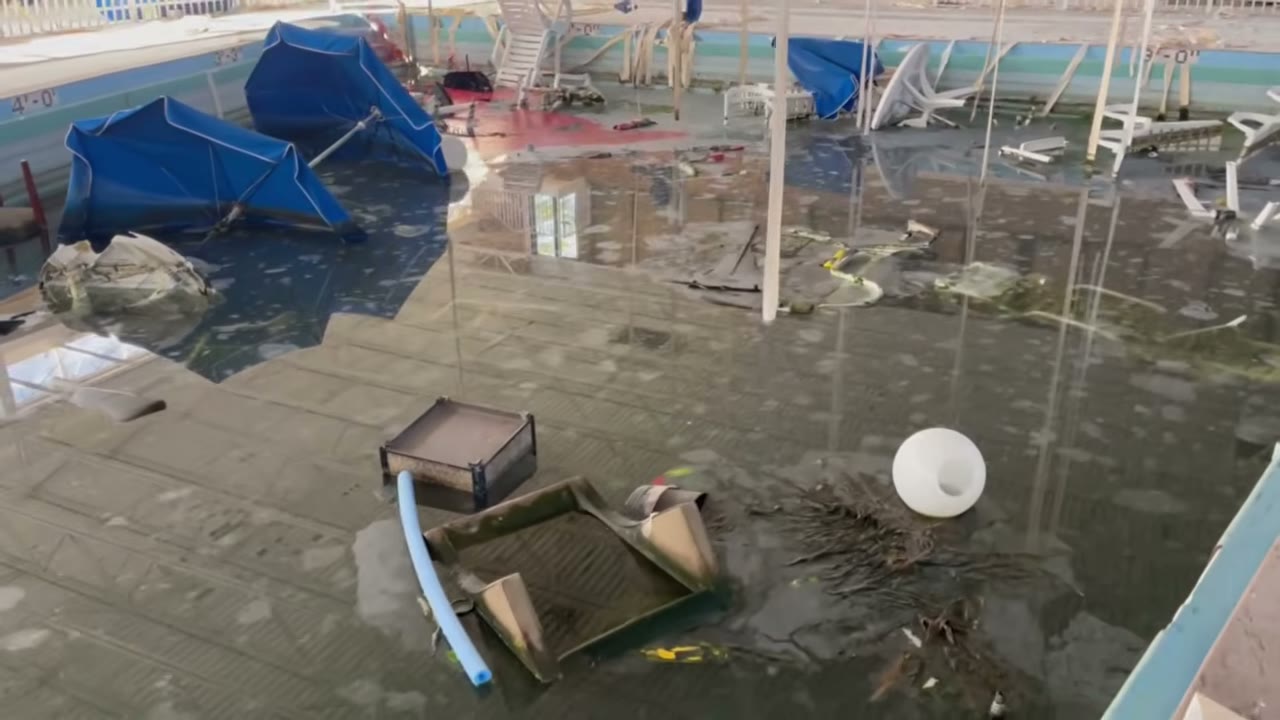
I haven’t filmed Katrina damage, so I’ll show you what a smaller flood did. In my Garden Hotel video, the description says the hotel shut down in May 2019 because of a basement flood, and the owner never fixed it. In the frames, the indoor pool still has water in it, and the surrounding furniture is wrecked.

Water is why my guides on black mold and the dangers inside abandoned buildings matter for a place like this. The 3M 6200 half face respirator on my gear list is the sort of protection mold calls for. Most flashlights, including brand name ones, aren’t bright enough, and I carry one good light, the Coast XP11R on my gear list.
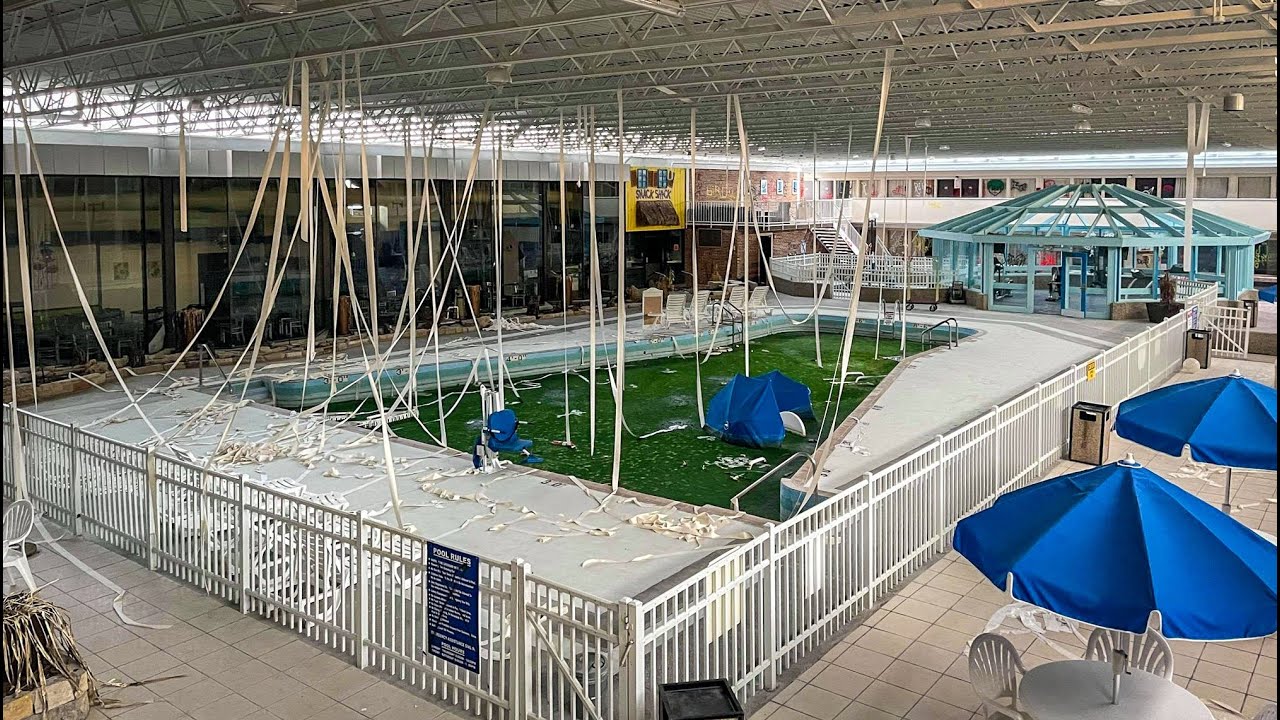
I’ve also filmed France’s largest waterpark left to rot, which is a closer comparison to Jazzland than any hotel. How I find places like this and stay safe without burning them is in my $9.99 guide, How to Find Abandoned Places. It doesn’t make trespassing legal, and I keep most of my locations private.
The park was open for about five years, and its ruins stood for almost twenty.
What I carried in
Same list as every video description.
Sources
- Six Flags Wants Out of New Orleans, Claims Journal (Associated Press), Jul 5, 2006
- New Orleans to Six Flags Don't Collect Insurance Funds, Take Equipment, Claims Journal (Associated Press), May 14, 2009
- Monthly Report of River and Flood Conditions August 2005, National Weather Service New Orleans and Baton Rouge, Sep 25, 2005
- New Orleans former Six Flags park is finally being demolished 19 years after Hurricane Katrina's devastation, Fortune (Associated Press), Nov 5, 2024
- Demolition of New Orleans old Six Flags Park delayed due to contractor issue, WWL-TV, accessed Nov 4, 2026
- Demolition to resume on New Orleans Six Flags site after scrap metal issue, nola.com, accessed Nov 4, 2026
- Demolition underway at New Orleans Six Flags amusement park abandoned after Hurricane Katrina, FOX Weather, Jan 30, 2025
More like this


The footage that never goes public lives on Patreon. It's paid, and it's where the rough cuts, the security run-ins and the early releases go.