, exact location withheld
Michael Reese Hospital in Chicago
Michael Reese Hospital closed in 2009, the city bought the campus for an Olympic Village, and most of it was demolished. What happened and what is being built.
Michael Reese Hospital was a South Side Chicago medical center that went bankrupt in 2008 and closed in 2009. The city then bought the campus to build an Olympic Village, lost the Olympic bid, and demolished almost every building anyway. The site sat empty for years before a large development was announced.
This is a history post. I haven’t been to this site, most of the campus is gone, and nothing here is a reason to enter any building that isn’t yours.
Why did Michael Reese Hospital close?
Money. In June 2008, WBEZ reported that the hospital’s owners had told the Illinois Health Facilities Planning Board they intended to close, citing financial problems. The owners’ lawyer described a 127 year old facility that was expensive to maintain and said the hospital had not been able to raise revenue enough to offset growing expenses. A merger or sale had been explored, and the lawyer called the odds “highly unlikely” because the likely candidates “did not materialize.”
The Christian Science Monitor reported in August 2009 that the hospital went bankrupt in September 2008. Block Club Chicago later gave the closing year as 2009.
Even the closing was messy. WBEZ reported in June 2009 that the hospital lacked the state permit required to close, and that the city’s attorneys were looking into it, though the city still expected to close on the property on June 30, 2009.
What was on the campus?
A lot, and some of it mattered to architects. The campus sat on the 2900 block of Ellis Avenue in Bronzeville and covered 37 acres, according to the Chicago Maroon, the University of Chicago’s student newspaper. It held 29 buildings.
The Monitor says the German architect Walter Gropius, founder of the Bauhaus, drew up a master plan to enlarge the hospital beginning in the mid 1940s, and local architects then designed the individual buildings. Research by Grahm Balkany, then a student at the Illinois Institute of Technology, found letters and drawings indicating Gropius closely supervised the design of at least eight buildings. The paper quotes the Chicago Tribune critic Blair Kamin calling them the only group of Gropius buildings in Chicago.
Landmarks Illinois also pointed to the main hospital building. WBEZ says it was more than 100 years old and one of the few examples of prairie style high rise architecture. CBS Chicago gave its age as 103 years in 2010 and its address as 2929 S. Ellis Avenue.
Why did the city buy it and then tear it down?
For the Olympics. The city bought the campus in the summer of 2009 to build an Olympic Village for Chicago’s bid for the 2016 Games, WBEZ reported. The Maroon says the purchase was in June, and CBS Chicago puts the price at $91 million. Chicago lost the bid to Rio de Janeiro, and there was no backup plan. Grahm Balkany, who led a coalition of preservationists, called the purchase a “$91 million sandbox” and warned the land could stay vacant, according to the Maroon.
The demolition went ahead. In October 2009 the city’s Department of Community Development planned to take down all but two of the 29 buildings within a week. The two it spared were the main Reese building and the last Gropius building. The department said no other building was salvageable and that it was “not economically feasible to save them.” Preservation groups blamed the city’s failure to maintain the buildings while they waited for demolition.
Lee Bey, the Chicago Sun-Times architecture critic, wrote for WBEZ in February 2010 that 26 buildings were being torn down. More than a million square feet, including the power plant, were being razed rather than reused. He wrote that the hospital, once a leading research and teaching hospital, “went on the fade, then vanished in plain sight.”
Why was the main building demolished too?
The city said it could not keep it safe. In November 2010, WBEZ reported that the city would tear down the main building despite earlier promises to preserve it. Mayor Richard Daley called it deteriorating and unsafe, and officials said the roof was starting to collapse. They also said that despite their best efforts, squatters occupied the building and stripped it for salvage.
Preservationists saw it differently. Jim Peters of Landmarks Illinois said the city was “better at demolition than preservation” and noted that vacant buildings in good condition can last a dozen years. Preservationists said salvage crews had been allowed to damage the property, including breaking windows and throwing furniture out of them.
CBS Chicago added that the Public Building Commission also planned to demolish the administration building and a parking structure, citing years of neglect, squatters, a partially collapsing roof, water leaks and mold. Kamin accused the city of “flip-flopping” and suggested the building may have been neglected on purpose. That is his argument, not a finding.
Is this a pattern in other empty Chicago buildings?
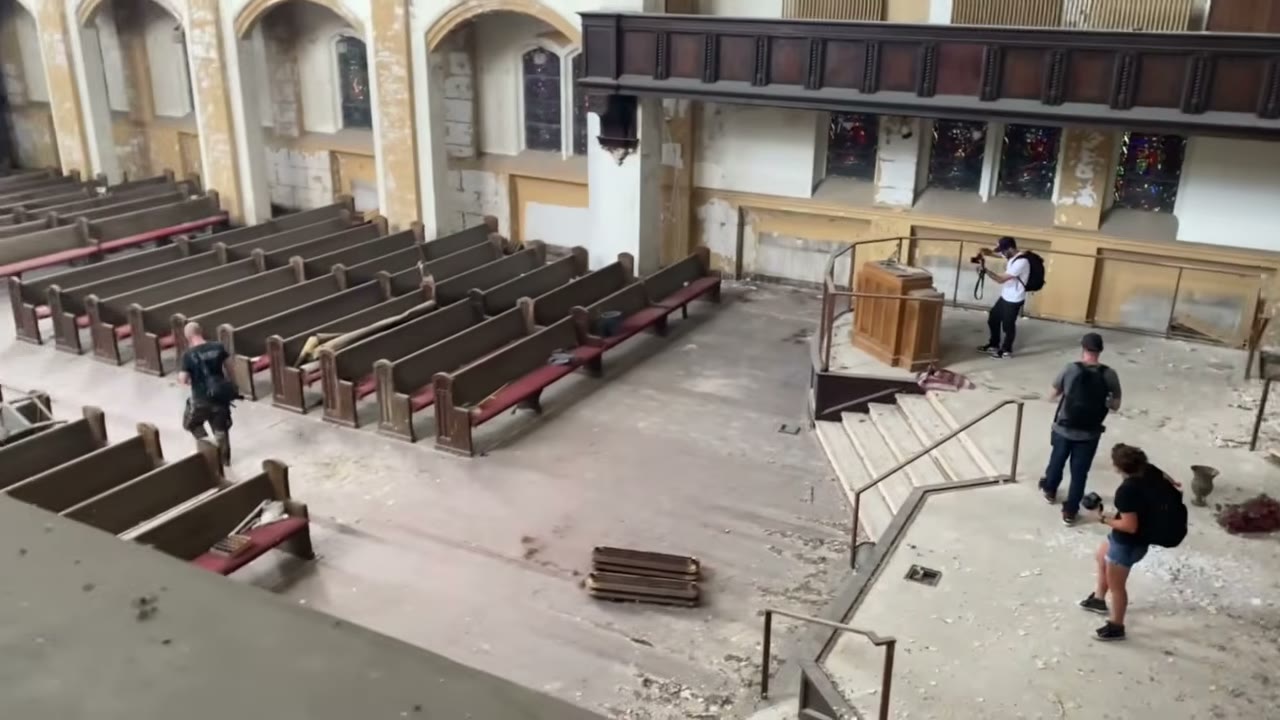
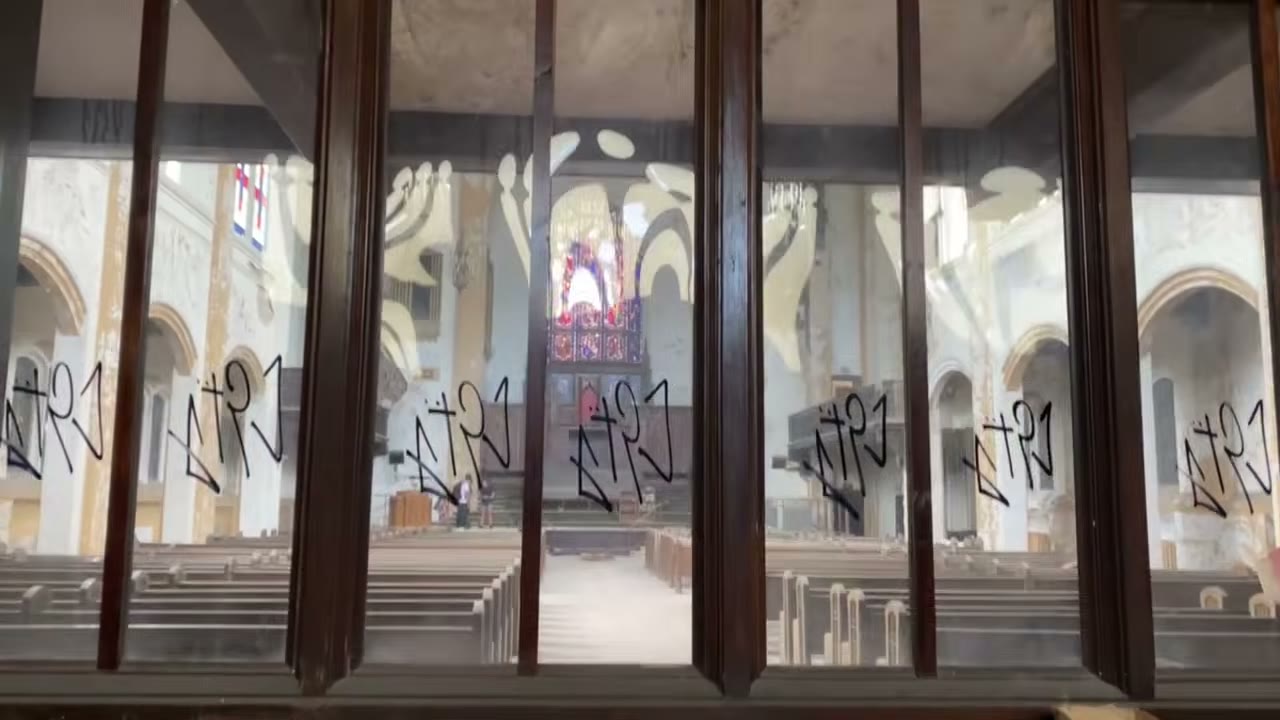
It echoes a building I’ve filmed. According to the description of my video of the Gothic Lutheran church in Chicago, the church shut down in 2012, and in 2015 the City of Chicago sued the church owners for failing to keep the property secured and declared it hazardous to the public. That is the same question the city faced at Reese, who is responsible for an empty building while everyone argues over its future. My guide on demolition by neglect explains how that works.
Hospitals add their own problems. My guide on abandoned hospitals covers what those are, and the Blue Island hospital video shows a Chicago area hospital that closed and was left. Mold is one of the hazards, and CBS Chicago listed it among the problems at the Reese administration building. The 3M 6200 half face respirator on my gear list is the kind of protection mold calls for.
What is happening on the site now?
A very large project. WTTW reported in December 2016 that the site had been empty for nearly a decade, and that the city had issued a request for proposals to sell and develop it. Block Club Chicago reported in March 2023 that the city chose GRIT Chicago, a coalition led by Farpoint Development, in 2017, and that a $3.8 billion mixed use project called Bronzeville Lakefront broke ground. It will be built in phases over 14 years.
The first phases include a 500,000 square foot life sciences center, a Bronzeville welcoming center, senior housing and a rehabilitated Singer Pavilion, a postwar building Gropius had a hand in. About $60 million in city funding supports infrastructure work, and the team projects 20,000 temporary and permanent jobs.
If you want to learn how I find places like this without burning them, and how I stay safe, it’s in my $9.99 guide, How to Find Abandoned Places. It doesn’t make trespassing legal.
The Singer Pavilion, a building Gropius had a hand in, is part of the plan for the new site.
What I carried in
Same list as every video description.
Sources
- A South Side Hospital Plans to Close, WBEZ, Jun 6, 2008
- Demolition Nears for Chicago Hospital, WBEZ, Jun 10, 2009
- Battle to save Chicago's Gropius architecture has preservationists and city at odds, The Christian Science Monitor, Aug 21, 2009
- With Olympic Village plans scrapped, Michael Reese hospital demolition proceeds, Chicago Maroon, Oct 23, 2009
- Michael Reese rests in piece(s) and what, then, is the epitaph, WBEZ, Feb 25, 2010
- Chicago to tear down historic Michael Reese building despite promise to save it, WBEZ, Nov 5, 2010
- Architecture Critics Sound Off On Reese Demolition, CBS News Chicago, Nov 5, 2010
- Long-Vacant Michael Reese Site Poised for Development, WTTW, Dec 29, 2016
- 3.8 Billion Bronzeville Lakefront Megadevelopment Breaks Ground at Former Michael Reese Hospital Site, Block Club Chicago, Mar 29, 2023
More like this


The footage that never goes public lives on Patreon. It's paid, and it's where the rough cuts, the security run-ins and the early releases go.