, exact location withheld
Are Abandoned Hospitals Dangerous?
Needles, mercury, asbestos, bad structure, water and radiation sources, and what OSHA, NIOSH, EPA and NRC say about the hazards left in abandoned hospitals.
Yes. An abandoned hospital carries every hazard an old building does, and then adds the things hospitals leave behind, like needles, medical devices, supplies and equipment nobody properly cleared out. In the ones I’ve walked through, what I flagged on camera was sharps, ceilings that had come down, water and fire damage.
This is entertainment, not medical, legal or safety advice. Nothing here is a reason to go inside a hospital or any other building.
Are there needles in abandoned hospitals?
There can be, and I’ve seen them. In the medical center in Illinois I said it early in the video. You have to be really careful because there are needles everywhere. Later in the same building I found a whole bucket of needles, and a back room stocked with supplies where I pointed out new syringes. In the hospital with the fire damage I pointed out what I said were needles and syringes.
NIOSH says needlesticks and other sharps injuries can infect you with viruses such as hepatitis B, hepatitis C and HIV. If you’re stuck, it says to wash the area with soap and water, get medical care right away, and ask about preventive treatment, which may be recommended. That is the agency’s advice for police officers, but the body doesn’t care who got stuck.
OSHA’s bloodborne pathogens page explains why a hospital is set up the way it is. Its standard says contaminated needles go immediately into puncture resistant, leak proof, labeled sharps containers, and that workers should not recap, shear or break contaminated needles. In a working hospital a needle has a place to go. In an abandoned one it has the floor, a drawer or a bucket, and nobody is following the rules anymore.
What else do hospitals leave behind?
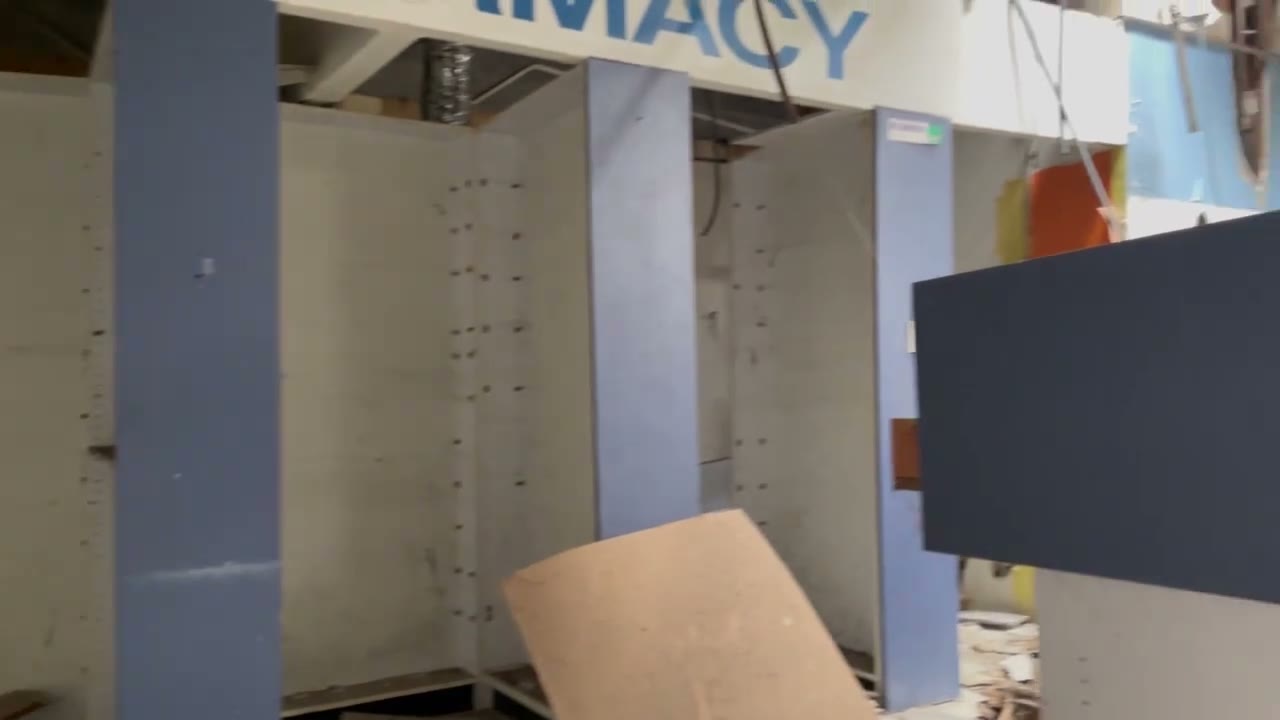
Supplies, and the pharmacy is where it shows. In the medical center I said that people had destroyed the pharmacy and that some of it was just sitting there, and I couldn’t tell you what any bottle contained. The back rooms had gowns and what I thought might be supplies for blood, and I said I wasn’t entirely sure what a couple of the items were. That’s the right instinct. A label that’s faded, a bottle that has been moved, and a box that has been rained on tell you very little.
Medical devices are the quieter part. EPA’s hospital mercury sheet describes the mercury inside ordinary hospital devices. A thermometer holds about 0.5 gram of mercury, laboratory thermometers hold 2 to 10 grams, and a blood pressure device holds 70 to 90 grams. The same sheet says broken thermometers were the most common source of mercury spills in one hospital study, and that mercury poisoning, mostly by inhalation, has been documented in workplaces. Mercury can damage the central nervous system.
I’m not claiming any place I’ve explored had mercury. I’m saying that old healthcare equipment is a category with real chemistry inside it, and a broken piece on a dusty floor is not something to pick up and look at.
Is there asbestos, mold or dust?
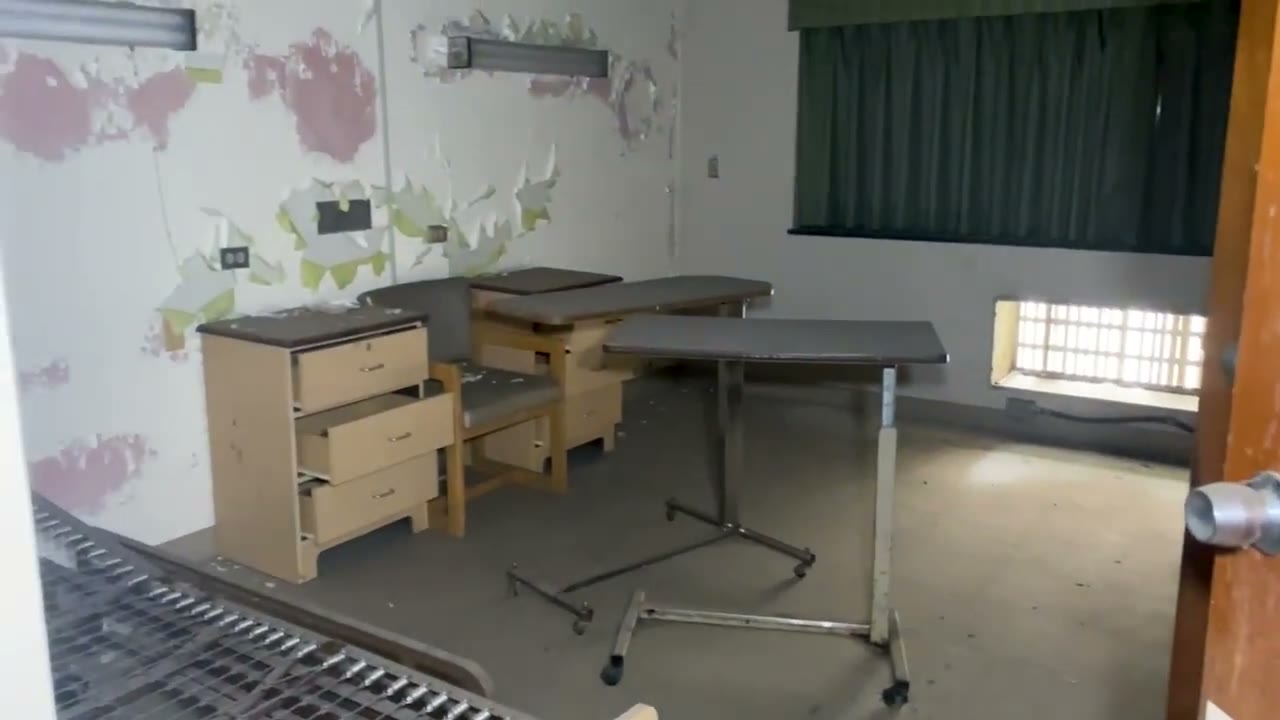
Probably dust at least, and in older buildings possibly asbestos. EPA says the risks from asbestos occur when it is damaged or disturbed, and that intact material in good condition left undisturbed is unlikely to present a health risk. A hospital with a collapsed ceiling and water damage is not left undisturbed. In the medical center the ceiling was caved in in multiple spots, and the video description lists holes in the roof.
The full picture of what’s in old walls is in the asbestos guide and the black mold guide. In the fire damaged hospital I pointed out a lot of mold near the front entrance, and I’d treat that air the way I’d treat any air I can’t test. A respirator like the 3M 6200 half face respirator on my gear list belongs in that conversation, but the best protection is still not stirring the dust.
What about the building itself?
The structure is the part that kills people. The U.S. Fire Administration says abandoned and vacant structures lack structural integrity and are extremely treacherous to firefighters, with fall and trip hazards, hazardous materials, standing water in basements and vermin. Hospitals are large, with several floors, basements and mechanical spaces, which gives all of that more room to go wrong.
Fire is its own category. In May 2026 Western Mass News reported a three alarm fire at a Springfield, Massachusetts hospital that closed in 2023. Officials said it had suffered repeated vandalism and that squatters had reportedly set fires there before, and the fire commissioner had called the building a “firefighter killer” because of its condition. That’s a recent example of a hospital sitting empty and becoming a danger to the people who have to go in for it.
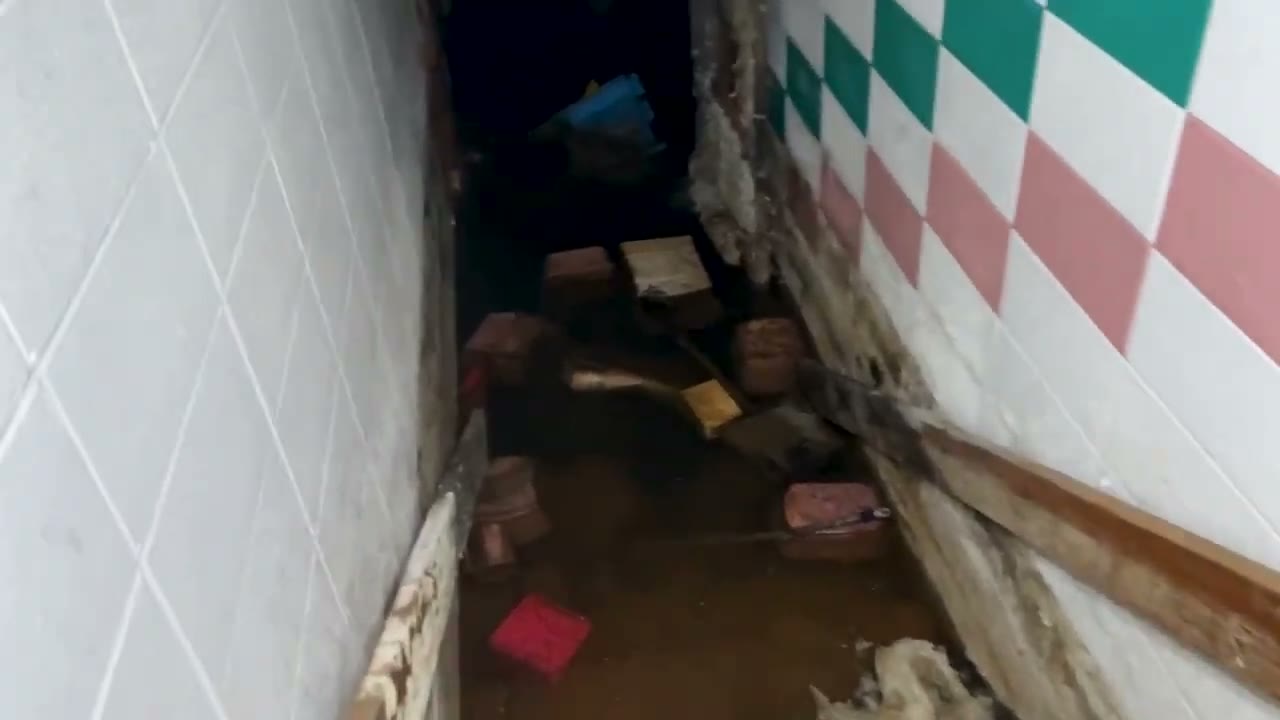
Water and ice are part of it. In the Illinois hospital I almost fell through the ice in the basement, and I said at the end that at least I could say I tried. It was snowing inside in one room. In another video my flashlight shut off because the batteries were overheating, which you don’t want to find out in a basement.
Can you get lost in a hospital?
Easily, and it adds to every other risk. The Illinois hospital wraps all the way around, on two levels plus a basement, and I said more than once that most of the rooms looked exactly the same. Patient rooms, nurse stations, storage rooms and linen closets repeat. When you’re moving fast with a light and a camera, a hallway you walked ten minutes ago looks like the hallway in front of you.
That’s part of why the question of exploring alone matters more in a big building. The Toronto working alone guideline lists being out of visual or verbal contact as one of the core problems, and a hospital is a place where two people can be out of contact while standing a few rooms apart. The USFA’s guide says to keep checking stability while inside, which is harder than it sounds when every room looks the same.
Is there radiation in an abandoned hospital?
It’s a fair question, because hospitals have X ray departments, and I can’t judge from a video what else a facility used. In the medical center I walked through the X ray department and said I didn’t find any X ray equipment. In the animal hospital the title calls an X ray machine radioactive, and I’m leaving that to the video.
The NRC has a term for the real concern. An orphan source is a sealed source of radioactive material in a small volume that is, for example, uncontrolled and must be removed to protect public health, or one where no responsible party can be readily identified. I’m not saying any hospital I’ve been in has one. There’s a Geiger counter on my gear list, and that’s all I’ll say about it.
What does this look like on a real explore?
The pattern in my hospital videos is consistent. The medical center had needles, ceilings down, water, wires and a pharmacy that had been picked over. The fire damaged hospital had burnt rooms, mold, a frozen basement and rooms that all looked alike. The nursing home had medical beds, wheelchairs, dialysis supplies and oxygen tanks.
How I stay safe on explores is in my guide, How to Find Abandoned Places.
If you find a needle, a broken device or an unlabeled bottle, leave it exactly where it is.
What I carried in
Same list as every video description.
Sources
- Officers, Stay Safe from Needlesticks, NIOSH, Dec 2024
- Bloodborne Pathogens and Needlestick Prevention, Occupational Safety and Health Administration, accessed Nov 4, 2026
- Mercury in Hospitals and Healthcare Facilities, U.S. EPA Region 9, archived
- What Are the Health Risks If I Have Asbestos in My Home, Building, Apartment or School, U.S. EPA, accessed Nov 4, 2026
- Vacant and Abandoned Buildings, U.S. Fire Administration, accessed Nov 4, 2026
- Police search for suspects after fire at vacant Springfield hospital, Western Mass News, May 14, 2026
- Unwanted Radioactive Material, Orphan Sources, U.S. Nuclear Regulatory Commission, accessed Nov 4, 2026
- Working Alone Guidelines, University of Toronto Environmental Health and Safety, Mar 2020
- Basic Evaluation Procedures for Abandoned and Vacant Buildings, U.S. Fire Administration, Apr 2018
More like this


The footage that never goes public lives on Patreon. It's paid, and it's where the rough cuts, the security run-ins and the early releases go.