, exact location withheld
How to Find Abandoned Places
Closure news, tax records, vacant building registries and permits show where abandoned places turn up on paper, and how to tell a real lead from a dead one.
Most abandoned places get found the boring way. Something closes, the news covers it, and then nothing happens to the building. Local news, county property records, city vacant building registries, permits and satellite imagery each show a different side of an empty building, and together they tell you whether it’s worth a second look.
Entertainment, not legal advice. Every building in this post has an owner, trespassing has real consequences, and this is about finding places and understanding them, not getting inside.
Why do most abandoned places start with a news story?
Because something always happens first. A school closes, a store shuts, a track runs its last race, and somebody writes it down. Then the building sits, sometimes far longer than anyone said it would.
The Chicago Board of Education closed 50 schools in 2013. In May 2025, Chalkbeat Chicago reported that the district was putting 20 old properties up for sale, mostly schools from that round of closures. “The buildings have sat empty for 12 years,” the article says. It also reported that Chicago Public Schools spends between $100,000 and $150,000 a year to maintain and secure each vacant school.
Kentucky Speedway is the same story on more than 1,000 acres. Racing stopped in 2020, and by January 2026 Spectrum News could report that “the gates are locked, the lights are off and the track has not hosted a major race in almost six years.”
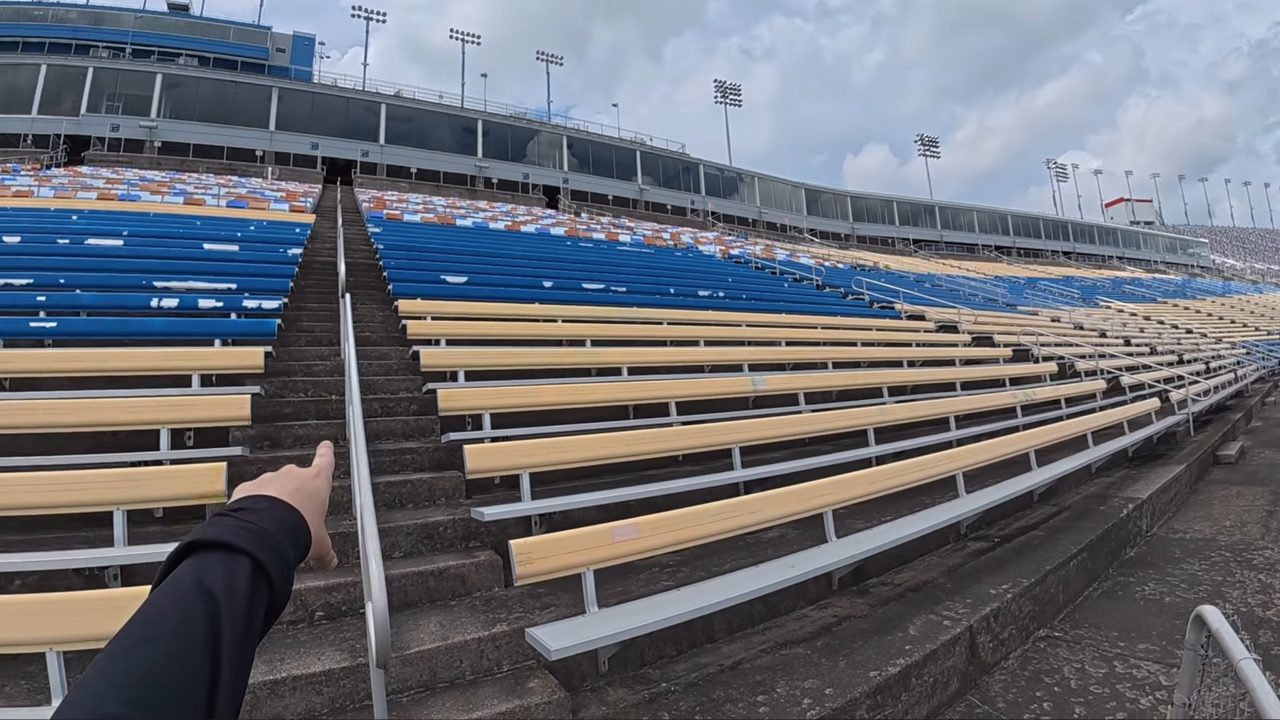
That’s why most spots get found by looking at what closed, a closure in the news and then a building with nobody in it. For older buildings, two archives are worth knowing. The University of Illinois runs the Illinois Digital Newspaper Collections, which it describes as free to search, browse and download, with 251,254 issues from 249 newspapers at the time of writing. The Library of Congress’s Chronicling America lets you search digitized newspaper pages through 1963.
What public records show an empty building?
Cook County and Chicago put a lot of this online, so they make a good example. Look for your own county’s version.
Start with the parcel. The Cook County Assessor has a lookup that takes an address or a 14 digit PIN and shows information such as the estimated market value, assessed value and property characteristics. The PIN is the thread through everything else. The Treasurer’s tax sale search runs on it, and Chicago’s permit data lists up to ten of them per permit.
Taxes are the next thing to check. In Cook County, if the previous year’s property taxes are delinquent, the full amount owed is offered at the Annual Tax Sale, and eligible parcels can be searched by PIN. Parcels with three or more delinquent years are the ones covered by the Scavenger Sale, when the County Board orders one. Unpaid taxes don’t prove a building is empty. They do mean the bill isn’t getting paid, which is worth knowing.
Then the city. Chicago requires owners to register a vacant building within 30 days, secure it, post a sign with contact details, carry liability insurance and renew every six months. For a business, the trigger is “substantially all lawful business operations” ceasing. The page adds: “The presence of a guard or watchman does not mean a building is occupied.” Anyone can search the registry by address, and the city publishes violations on vacant and abandoned buildings owned by financial institutions back to 2011.
Last, permits. The Department of Buildings’ permit dataset runs from 2006 to now and includes wrecking and demolition permits. A demolition permit is the end of a lead. A renovation permit ends it too, in a different way.
What can satellite imagery, driving and asking around add?
Imagery checks everything above. Google says the average age of aerial and satellite imagery in Google Earth is 1 to 3 years, and the clock icon steps back through older photos, which lets you compare a building across years.
It also shows use, which people miss. In 2022, Yahoo Sports reported that Ford was parking unfinished F-150s at Kentucky Speedway and that satellite images showed the trucks taking up a majority of the track’s parking spaces. A closed racetrack with a full parking lot is not what most people picture when they hear “abandoned.”
An image that can be years old only goes so far. Driving past tells you whether the grass is cut, whether the windows are boarded, whether anything has changed since the photo was taken. People nearby can tell you when something closed and whether anyone has been around since.
That’s the map of where to look. The step by step version, how I find my own spots, is a separate $9.99 PDF with the same title, How to Find Abandoned Places.
How do you tell a real lead from a dead one?
A lead is dead when the building is gone, in use, or looked after.
Gone is the easy one. Chicago’s permit data includes wrecking permits, so check. Dett Elementary, one of the schools closed in 2013, had a fire and was demolished, Chalkbeat reported.
In use is the one that catches people. WHIO reported the Gallatin County sheriff’s answer to videos calling Kentucky Speedway abandoned, which was that “Kentucky Speedway is NOT abandoned!” Driving schools still use the track, and other parts of the property are rented out to other companies. A registry listing doesn’t settle it either. It confirms a building is vacant. It also confirms somebody is legally responsible for it.
Looked after is the one I know from France. The road in had deep tractor ruts and no tire tracks. That usually means nobody comes down there. It did not mean that this time. As we headed back to the gate, the owner had parked and was walking in to work on the place, and one barn had a new roof and fresh lumber.
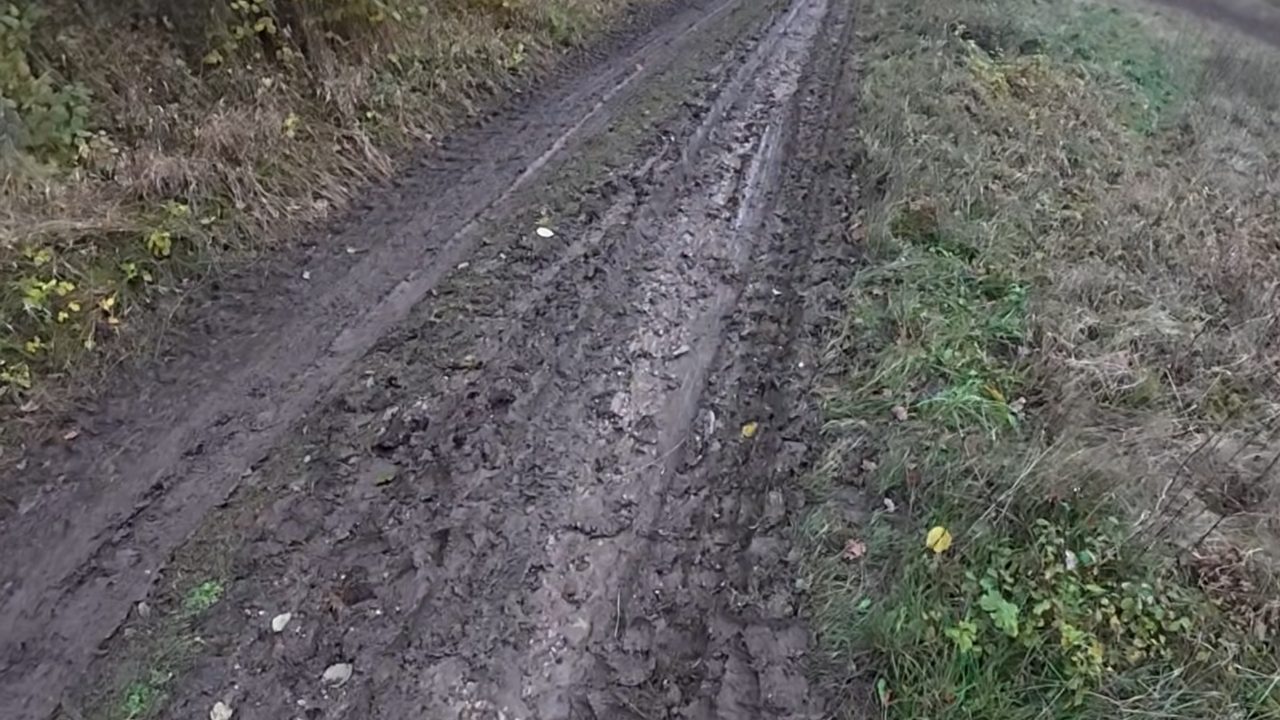
A real lead looks like the opposite of all three. It’s a closure in the news with no follow up, years of unpaid taxes, no recent permits and nobody on record buying the place. Even that can be mixed. Spectrum News reported in January 2026 that the county’s planning director stressed there were no confirmed buyers or proposals for the speedway, and the sheriff says it isn’t abandoned.
Why don’t explorers share locations?
People always ask for locations, and I don’t give them out. Most of the places I show are hidden on purpose, so a spot labeled “Chicago” may not be in Chicago.
The reasons explorers give aren’t mysterious. One quoted by The Philadelphia Inquirer in 2009 said sharing new locations would put a building at risk of graffiti and other vandalism and “draw unwanted attention from law enforcement and building owners.” He said elsewhere in the piece, “The whole point is finding stuff yourself.” The consequences are easy to find. In August 2025, WHIO reported that dozens of people were charged with trespassing and burglary after allegedly breaking into Kentucky Speedway months earlier to shoot videos for social media. The sheriff said the videos called the track abandoned.
The appeal of this channel is doing things you’re not supposed to, in a respectful way. The code of urbex is short. Leave every place exactly as you found it. No stealing, no vandalism, no spray paint. Take only pictures, leave only footprints.
When should you leave a place alone?
When the paper says someone is looking after it. A vacant building registered in Chicago has a sign on it, liability insurance behind it and an owner who has to visit regularly to keep it clean and secure. Believe that.
When the air is the problem. EPA says you generally can’t tell whether a material contains asbestos by looking at it, that material in good condition and left alone generally doesn’t release fibers, and that if you suspect it, you leave it alone. CDC lists cleaning, remodeling or tearing down old buildings among the activities that may increase histoplasmosis risk, and says large amounts of bird or bat droppings should be cleaned up by professional companies. It notes that construction workers can wear masks such as N95 respirators. A respirator is on the gear list below. It filters. It doesn’t make a bad room a good one.
When you can’t see. Most flashlights, including brand ones, aren’t bright enough, which is why I carry one good light. If your light can’t show you the floor ahead, you’re guessing.
When there’s power. Lights, wires and panels in an empty building can be live, and that has its own post.
What this looks like in practice
Kentucky Speedway has a paper trail anyone can read. Spectrum News says racing stopped in 2020 and the gates were locked by January 2026. Yahoo Sports says Ford was storing unfinished trucks on the lots in 2022. WHIO reported dozens charged in 2025 and a sheriff who says the place isn’t abandoned. Spectrum again says the county’s planning director stressed there were no confirmed buyers or proposals.
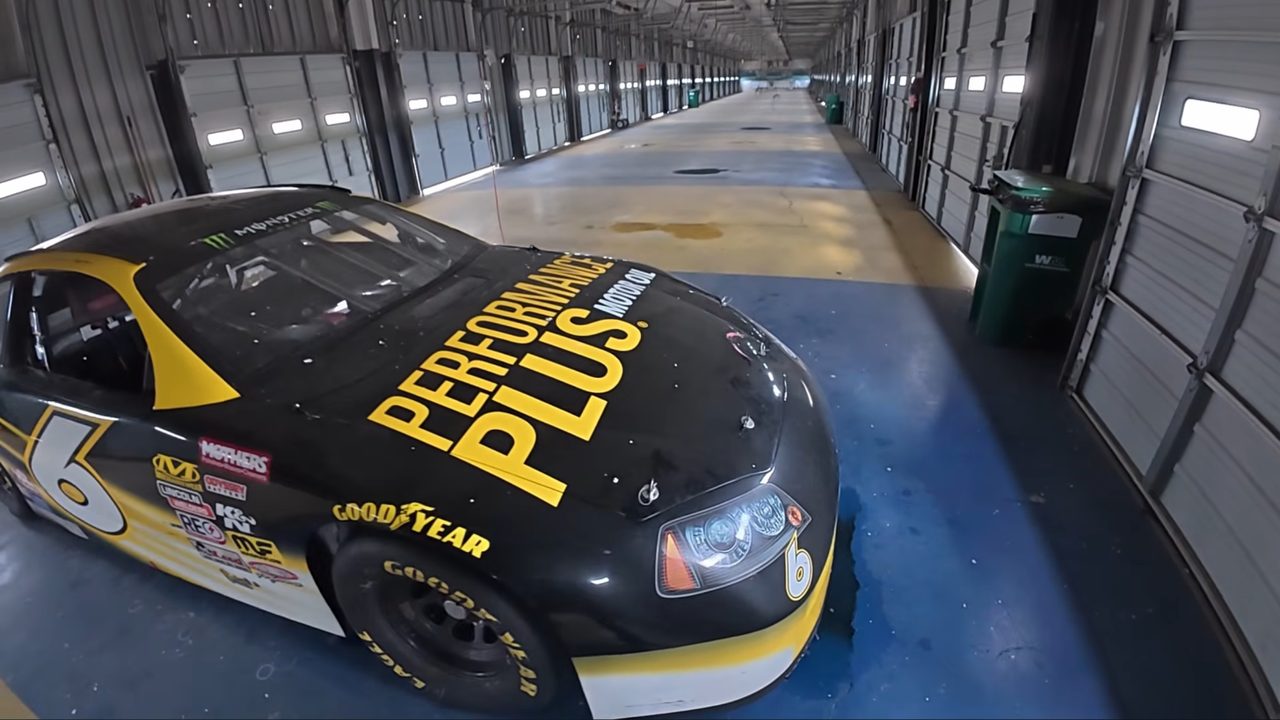
None of it says what’s inside. That’s what the Kentucky Speedway video shows, with a #6 race car in a team garage, the air conditioning still running and at least 20 security cameras across the property. The paper says closed. The air conditioning and the cameras say otherwise. Put together, the records describe a closed racetrack that isn’t empty, with locked gates, rented space, driving schools and no confirmed buyer. That doesn’t tell you whether to go anywhere. It tells you what you’re looking at.
If the records say somebody is responsible for a building, believe them over the road that looks unused.
What I carried in
Same list as every video description.
Sources
- For sale: 20 old Chicago school properties, Chalkbeat Chicago, May 12, 2025
- Once roaring, Kentucky Speedway stands still and silent, Spectrum News 1, Jan 21, 2026
- Dozens charged for breaking into racetrack that used to host NASCAR races, WHIO, Aug 21, 2025
- The inactive Kentucky Speedway is now a storage facility for a massive collection of unfinished Ford trucks visible from space, Yahoo Sports, Sept 22, 2022
- Illinois Digital Newspaper Collections, University of Illinois Urbana-Champaign Library
- Chronicling America, about this collection, Library of Congress
- Find out more information about your property, Cook County Assessor's Office
- Tax Sale General Information, Cook County Treasurer
- Annual Tax Sale, Cook County Treasurer
- Vacant Buildings FAQ, City of Chicago Department of Buildings
- Vacant Buildings and Vacant Storefronts search, City of Chicago
- Vacant and Abandoned Buildings - Violations, City of Chicago, via Data.gov
- Building Permits dataset, City of Chicago Department of Buildings
- Google Earth imagery updates and historical imagery, Google Earth Community
- Exploring abandoned industrial hulks, The Philadelphia Inquirer, Mar 1, 2009
- Protect Your Family from Exposures to Asbestos, EPA, updated Jun 25, 2026
- Reducing Risk for Histoplasmosis, CDC, Apr 24, 2024
More like this



The footage that never goes public lives on Patreon. It's paid, and it's where the rough cuts, the security run-ins and the early releases go.