, exact location withheld
Famous Abandoned Places in Chicago
Five famous Chicago buildings that sat empty, from the Old Main Post Office to the Uptown Theatre, with what the news and city records say happened to each.
The most famous abandoned places in Chicago are big public buildings that sat empty for years while the city, the owners and the neighbors argued about the money. Five of them are the Old Main Post Office, the Uptown Theatre, Michael Reese Hospital, the old Cook County Hospital and the Chicago Tribune Freedom Center, and each one has a paper trail in the news.
I only list places that are already famous and documented in newspapers or government sources, and every fact here links to where it came from. My own spots are not on this list and never will be. A spot labeled “Chicago” in one of my video titles may not even be in Chicago, and I’m not going to give out locations. This is entertainment and general information, not legal advice, and none of these buildings is a reason to go looking for a way in.
The Old Main Post Office
It was so big it straddled a highway, and it sat empty for more than 20 years. The Chicago Sun-Times reported that the building is about 2.5 million square feet, spans the Congress Parkway entrance to the Loop, and has been empty since the U.S. Postal Service moved its operations out in 1995. Liverpool real estate developer Bob Davies bought it in 2009 and pledged to restore it. In February 2016 the city began using eminent domain to take it from him.
The deal that ended the vacancy came in May 2016. The Sun-Times reported a $500 million redevelopment by 601W Companies, a New York developer that also owns Chicago’s Aon Center and Prudential Plaza. CBS Chicago covered the grand opening on October 21, 2019, after an $800 million makeover that took about three years. It said the building was constructed in the 1920s, and its leasing agency called it the largest post office ever built. Uber and Walgreens were named as future tenants, along with Ferrara Candy, which was moving about 400 employees in.
Not every building on this list gets that ending.
The Uptown Theatre
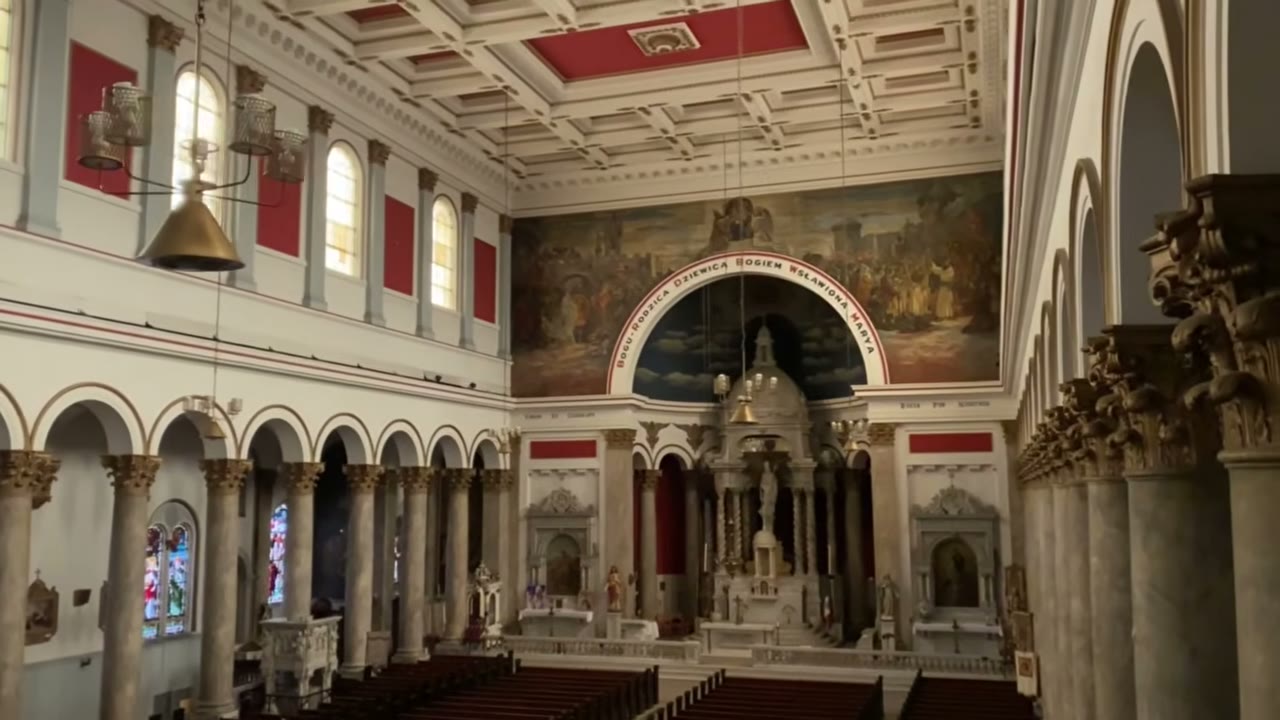
It has been dark since 1981, and people keep promising to bring it back. ABC7 reported that the Spanish Revival style building dates to 1925, was the flagship of the Balaban and Katz theater chain, and stopped hosting performances in 1981. It has a six story lobby and a massive staircase, and performers there included Bruce Springsteen, Prince and the Grateful Dead.
CBS Chicago adds that it is at 4816 N. Broadway, was designed by Cornelius and George Rapp, has more than 4,400 seats, and is described as the largest freestanding theater in North America. The last known performance was the J. Geils Band on December 27, 1981, and pipes burst that same month, causing major flood damage. It has been a Chicago landmark since 1991.
Jerry Mickelson of JAM Productions bought it at foreclosure in 2008. In June 2018 the plan was a $75 million renovation, with work expected to finish around 2020. As of April 2024 it still hadn’t happened. CBS reported that Mickelson estimated the renovation at about $140 million and was still trying to engage the city in redevelopment talks. The same piece noted that other Chicago movie palaces, the Granada and the Nortown, were torn down after closing. I couldn’t find a report that the Uptown has reopened, so treat the 2024 status as the latest I verified.
Michael Reese Hospital
It was torn down for an Olympics that never came. CBS Chicago reported in 2017 that the medical center complex was razed in 2009, after the city bought it as part of its plans for the 2016 Olympics, and that the 49 acre site just south of McCormick Place had sat largely vacant since the bid failed. Then mayor Rahm Emanuel described it as “a drain on city resources.”
The 2021 plan was bigger. CBS reported on July 21, 2021 that aldermen approved a $3.8 billion “Bronzeville Lakefront” plan led by a team that included Farpoint Development, with about 6,800 housing units and nearly 8 million square feet of mixed use space. The city agreed to sell the 48 acres for $97 million and paid $30 million to clean up a former hazardous waste plant on the site. Singer Pavilion is the only building left.
The two articles give slightly different acreage and purchase prices, so I’ve kept the numbers each one reported. The pattern is the same as the post office. A big site, a long gap, and then a developer.
The old Cook County Hospital
It was Chicago’s county hospital for more than a century and then sat empty for almost two decades. Block Club Chicago reported that Cook County Hospital first opened in 1857, that Paul Gerhardt designed the Beaux Arts building, which was rebuilt in 1914, and that it closed in 2002 after Stroger Hospital replaced it. Its terra cotta facade crumbled and water damage ruined the interior while it sat vacant.
Preservation Chicago and Landmarks Illinois lobbied county officials to save it. Landmarks Illinois CEO Bonnie McDonald called it “Chicago’s Ellis Island,” noting it had the country’s first blood bank and was an early provider of HIV and AIDS care. The renovation took more than two years, with more than $18 million spent on the facade alone, including 4,160 terra cotta pieces. Crews gutted the interior except for the old surgical theaters. A dual branded Hyatt House and Hyatt Place with 210 rooms opened at 1835 W. Harrison, and the building also holds medical offices for Cook County Health.
This one is the clearest case of what demolition by neglect can do before somebody steps in.
The Chicago Tribune Freedom Center
It’s the newest entry, and its demolition began in 2024. CBS Chicago reported that the Freedom Center was designed by Skidmore, Owings and Merrill, opened in 1981, and had 10 offset web printing presses. The Tribune, the Chicago Sun-Times, The New York Times and The Wall Street Journal all used it. The Chicago Tribune reported in May 2023 that Bally’s had bought the 30 acre River West site from Nexstar Media in November 2022 for $200 million, and that Tribune Publishing agreed to leave by July 2024.
Demolition began on August 27, 2024, at Halsted Street and Chicago Avenue. Bally’s planned a $1.7 billion casino and hotel complex there, with an opening targeted for fall 2026 in the report I opened. The Tribune is now printed in Schaumburg.
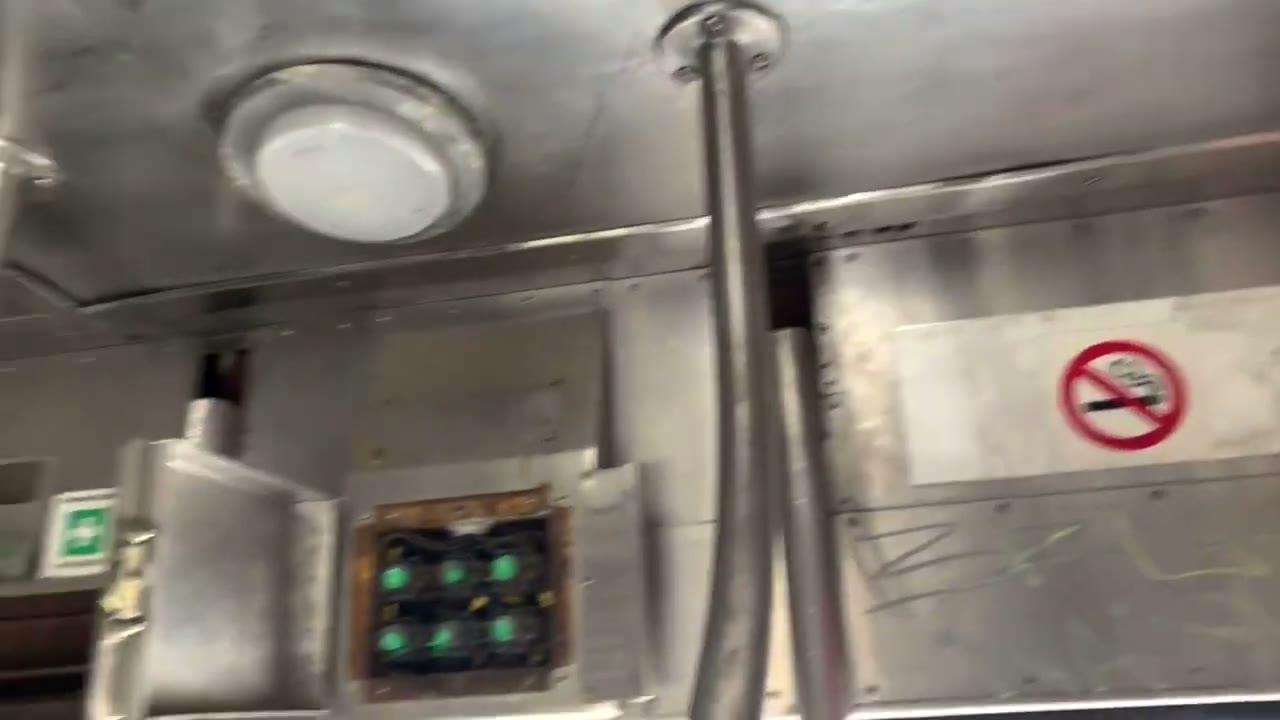
I filmed this one. My video of the abandoned Chicago Tribune newspaper factory was shot months after it shut down, with demolition ongoing, and the old front pages were still sitting inside. I’m not walking anyone through how to find a place like it, and a building under demolition is not a place to be.
Why does Chicago have so many places like these?
Big institutions, big buildings and shifting money. I wrote the longer version in why Chicago has so many abandoned buildings. The five above have the same arc. A building with one purpose loses it, the owner can’t or won’t pay to hold it, and the city, a developer or the wrecking crew eventually decides what comes next.
I’ve also filmed two corporate campuses near Chicago, the former Allstate headquarters and the former Hewitt Associates headquarters, and they follow the same arc. The titles name the companies, and neither one is on this list.
If you want to learn to look into a building’s history the way I do before documenting anything, start with how to research an abandoned building and my $9.99 PDF, How to Find Abandoned Places.
Every place on this list has a news trail, and that is the only kind I’ll name.
Sources
- City closes $500M redevelopment deal for Old Main Post Office, Chicago Sun-Times, May 12, 2016
- Old Post Office Celebrates Grand Opening Of Renovated Space After $800 Million Makeover, CBS News Chicago, Oct 21, 2019
- Historic Uptown Theatre to be restored with $75 million renovation, ABC7 Chicago, Jun 29, 2018
- Owner, caretaker hope to restore and reopen Chicago's Uptown Theatre in all its glory, CBS News Chicago, Apr 12, 2024
- Developer Chosen For Vacant Michael Reese Hospital Site, CBS News Chicago, Jun 2, 2017
- Former Michael Reese Hospital Campus To Be Transformed Under $3.8 Billion Bronzeville Lakefront Redevelopment Plan, CBS News Chicago, Jul 21, 2021
- Vacant for decades, old Cook County Hospital transforms into Hyatt hotel, Block Club Chicago, Jul 29, 2020
- Tribune Publishing to exit Freedom Center printing plant to make way for Bally's Chicago Casino, Chicago Tribune, May 5, 2023
- Demolition begins for Bally's casino at former Tribune publishing site, CBS News Chicago, Aug 27, 2024
More like this


The footage that never goes public lives on Patreon. It's paid, and it's where the rough cuts, the security run-ins and the early releases go.