, exact location withheld
City Methodist Church in Gary, Indiana
City Methodist Church in Gary, Indiana opened in 1926, closed in 1975, lost its roof and is now set for demolition. The history and the reporting.
City Methodist Church is a Gothic cathedral style church at 577 Washington Street in Gary, Indiana that opened in 1926, closed in 1975, lost its interior to a fire and part of its roof to a collapse, and is now scheduled to be demolished. It was once the largest Methodist church in the Midwest.
I haven’t explored it, and this post isn’t a story about me being there. It’s a history post, built from news reports, and each fact links to the source. It’s entertainment and general information, not legal or safety advice. Reporters say the building is dropping pieces of itself, and the site is blocked off.
What was City Methodist Church?
It was a church built to show off a steel town. The Post-Tribune reported that it was built in 1926 as a nine story English Gothic cathedral, took 21 months and $800,000 to complete, and held its first service on October 3, 1926. The Chicago Sun-Times describes the style as Gothic Revival and says the complex included a gym, a theater, a music studio, a cafeteria and commercial space.
U.S. Steel paid for a big share. The Post-Tribune put the company’s contribution at $385,000, nearly half the total. The Sun-Times gave $350,000 and FOX 32 gave about $400,000, so the reporting differs on the exact number. All three agree the steel company paid for a large part of the building. PBS says Gary was founded in 1906, which makes the city about 20 years old when the church opened.
Membership grew quickly. The Post-Tribune said it reached 1,700 a year after completion and peaked at 3,000 in the 1950s.
Why did City Methodist Church close?
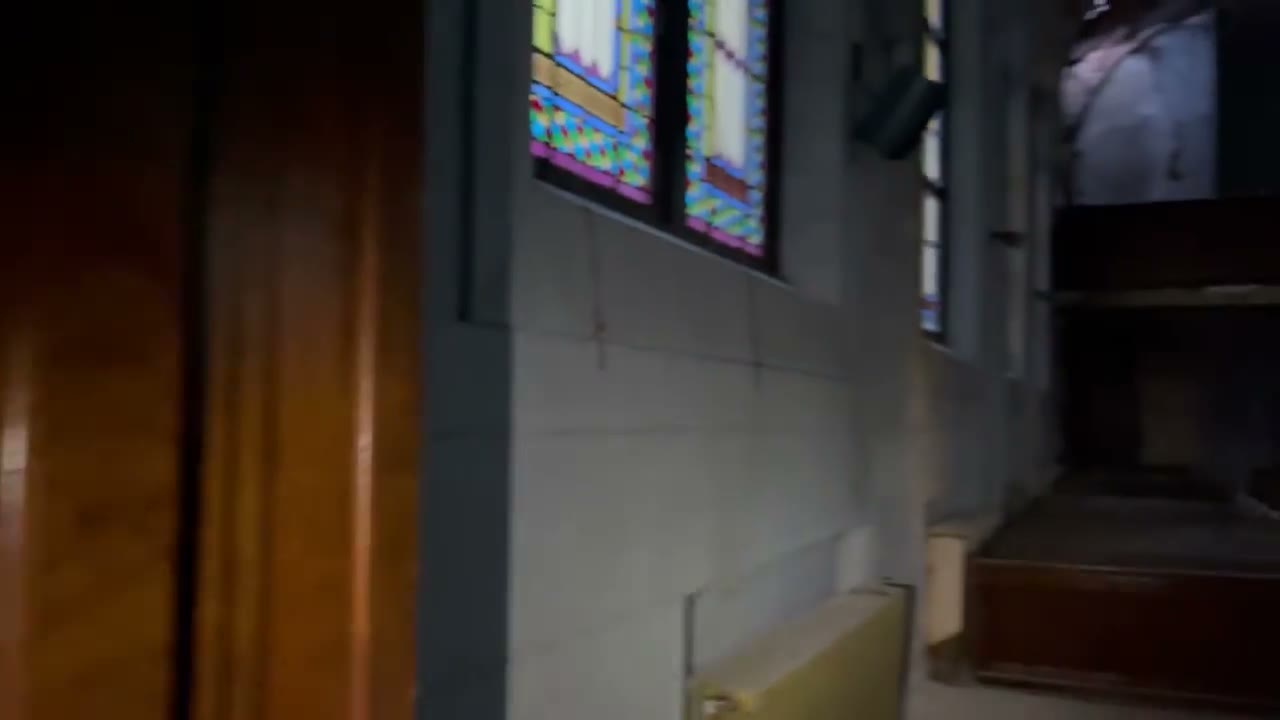
The people it was built for left, and the church hadn’t been open to all of them. The Sun-Times, FOX 32 and PBS NewsHour all report that the congregation was segregated, though the church offered programs to Black residents and immigrants. PBS calls it a whites only congregation for decades. The Sun-Times adds that in the 1950s some leaders tried to integrate the church, but much of the white congregation opposed it, and membership declined through the 1960s. It also says leaders considered merging with a Black church, but community interviews showed minority groups did not trust the church.
The numbers tell the rest. The Post-Tribune said the congregation had fallen to 320 by 1973, and that the church closed permanently on October 5, 1975. PBS puts that in the larger picture, saying Gary has lost more than half its population since the 1960s, which it attributes to fewer steel jobs and white flight.
What happened to the building after 1975?
It sat, and then it burned. According to the Post-Tribune, the interior was destroyed by arson in 1997 and part of the roof collapsed in 2011. By 2018 the Associated Press, via Lakeshore Public Media, reported that most of the roof had collapsed.
Water was a problem underneath. The Post-Tribune said the cleanup would include pumping water out of the flooded lower levels, and Karla McDonald of Metrics Environmental said a system would be needed to keep water from getting back into the basement. That’s the same cycle I describe in what is demolition by neglect. Once the roof goes, the water does the rest, and nobody is paying to stop it.
An artist and Landmark Illinois board member, Lauren Pacheco, told the Sun-Times that the building was “taken by the elements” over the years.
Why wasn’t City Methodist Church saved?
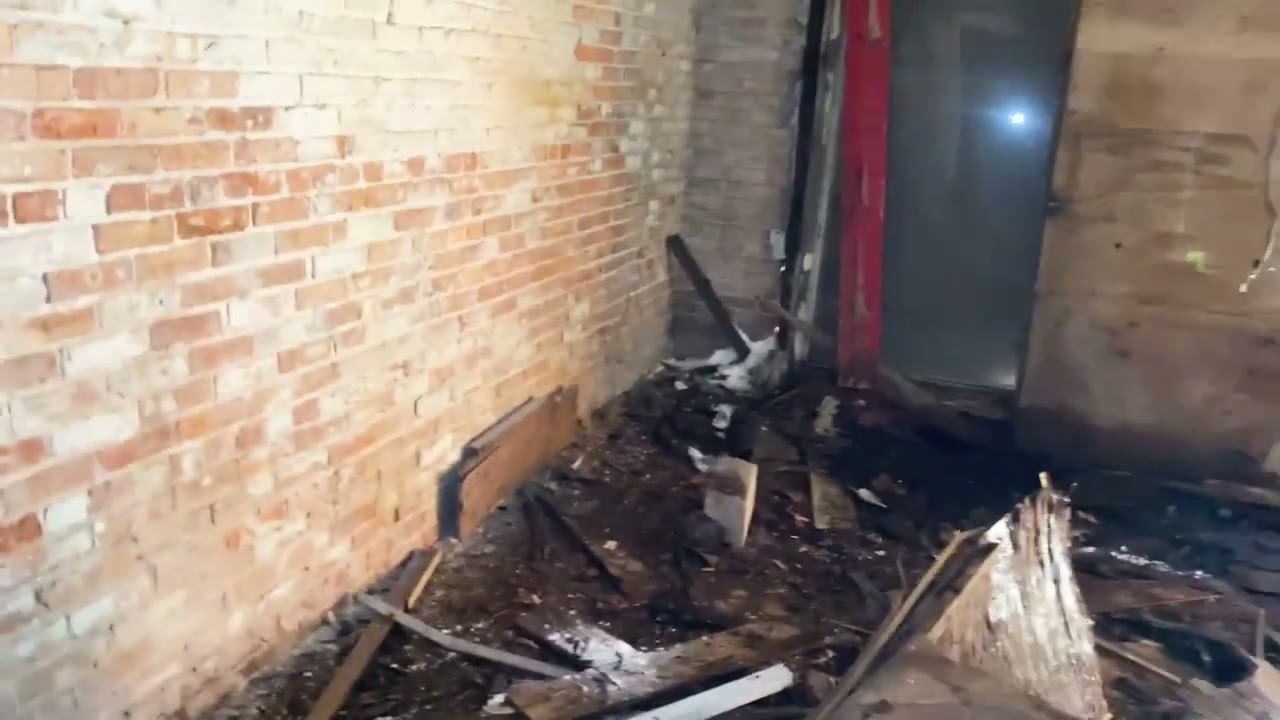
People tried for years, and the money never showed up. In 2018, the city’s plan was a European style ruins garden. WFYI reported that Gary officials wanted to turn the site into a tourist attraction, and that it couldn’t go forward until asbestos and other hazards were removed. Gary received a loan of about $46,000 from the EPA for asbestos abatement, according to the AP report. In 2019 the Northwest Indiana Regional Development Authority oversaw a $100,000 asbestos removal at the site, funded by the EPA, the Post-Tribune said.
Cleanup kept coming up short. In late 2022 Gary was applying for a $400,000 Brownfields Cleanup grant to pump out the water, abate asbestos and partly demolish the water damaged ruins. The Sun-Times says the city worked with the Chicago firm Bailey Edward on a plan in 2018 that included an open air ruins concept, and that in 2025 Gary and the University of Notre Dame’s Housing and Community Regeneration Initiative proposed using the bell tower in a City Renaissance Park. In January 2026 the redevelopment commission approved $112,500 for Bailey Edward to plan stabilization of the bell tower and cathedral.
The stabilization would have cost $4.2 million. The Sun-Times reported that it never found a funding partner, and the city chose demolition.
Pacheco suggested salvaging materials for a sculpture or using the site for open air painting or photography. The Sun-Times says the city did not respond when asked whether it plans to consult local groups about the site’s future. Put the two numbers the paper printed side by side and the demolition estimate of $5.3 million is higher than the $4.2 million stabilization plan that never found funding.
When will City Methodist Church be torn down?
Soon, if the reports are right. Inside INdiana Business reported on August 10, 2026 that the church will be torn down due to deterioration that has created safety issues. The Sun-Times reported that the Northwest Indiana Regional Development Authority awarded the contract to Homrich Wrecking, which estimated the cost at $5.3 million, and that demolition begins once the contract is finalized. Gary’s chief communications officer Steve Segura said the church was deemed unsafe and unrecoverable, and that Mayor Eddie Melton acted on safety concerns for nearby residents and the 21st Century Academy charter school.
FOX 32 reported on September 21, 2026 that demolition would cost more than $5 million and was expected to begin in the coming months. Blake Swihart of Indiana Landmarks’ Northwest Field Office said the church “really does right now present a safety hazard,” with pieces falling from it, and that he expected it to start coming down within the next year, if not sooner. I couldn’t find a report saying demolition has started, so check local Gary and Northwest Indiana news for the latest.
It isn’t the only loss in the city. The Sun-Times says the Genesis Convention Center is also slated for demolition, and that the Gary Water Tower and Gary Memorial Auditorium were demolished in 2020. PBS counted some 10,000 abandoned buildings in Gary, Union Station among them.
What does this look like in practice?
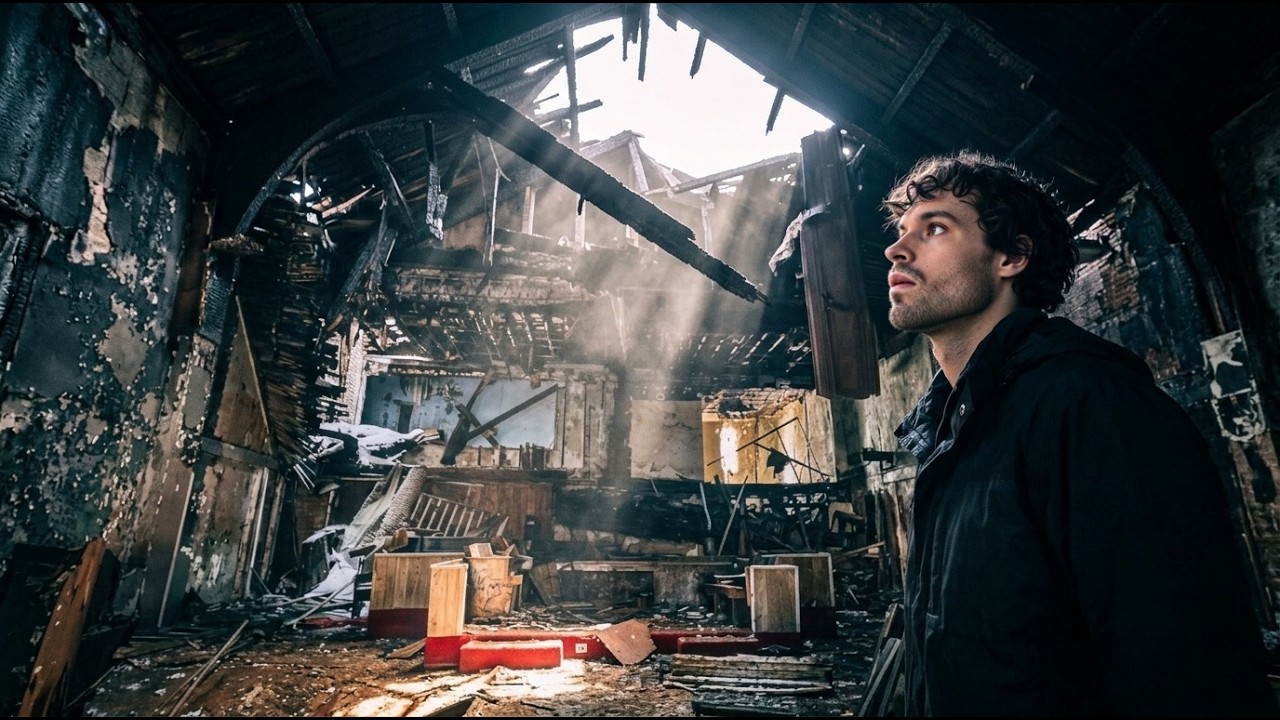
I have filmed in Gary too, including an abandoned football stadium in Gary and an abandoned sinkhole church in Gary, and the church frame above is from that video. I’ve filmed other churches in Chicago too, including a former Greek Catholic church and a church on Chicago’s South Side. A church that closed after its congregation left doesn’t have an owner who can pay for a roof, and once the roof goes the building starts a clock. City Methodist is what that clock looks like after 50 years.
The asbestos is why the cleanup grants exist, and the 3M 6200 half face respirator on my gear list does nothing about pieces falling off a building. I don’t give out locations of my own spots, and how I research a building before I decide whether it’s worth documenting is in how to research an abandoned building and my $9.99 PDF, How to Find Abandoned Places.
Steel money built the church, and by 2026 nobody had found the $4.2 million to keep it standing.
What I carried in
Same list as every video description.
Sources
- Once the largest Methodist church in the Midwest is slated for demolition, Chicago Sun-Times, Sep 5, 2026
- Century-old City Methodist Church in Gary slated for demolition, FOX 32 Chicago, Sep 21, 2026
- Historic City Methodist Church in Gary to be demolished, Inside INdiana Business, Aug 10, 2026
- Federal grant could help clean up ruins of church, Post-Tribune, Nov 19, 2022
- Gary gets $46K loan to help turn ruined church into gardens, Lakeshore Public Media, Oct 16, 2018
- Indiana Officials Weigh Cleanup Options For Church Project, WFYI, Dec 10, 2018
- Urban explorers find beauty in the decay of Gary, Indiana's abandoned buildings, PBS NewsHour, Sep 12, 2024
More like this


The footage that never goes public lives on Patreon. It's paid, and it's where the rough cuts, the security run-ins and the early releases go.