Canada, exact location withheld
Row of Abandoned Brick Farmhouses on a Gravel Lane in Canada
Several abandoned brick farmhouses and a ranch house in rural Canada, boarded up outside with collapsed ceilings and torn insulation inside.
By Decay
Part of Inside Seven Houses in Canada With Cuckoo Clocks and a Model Train Layout
The houses
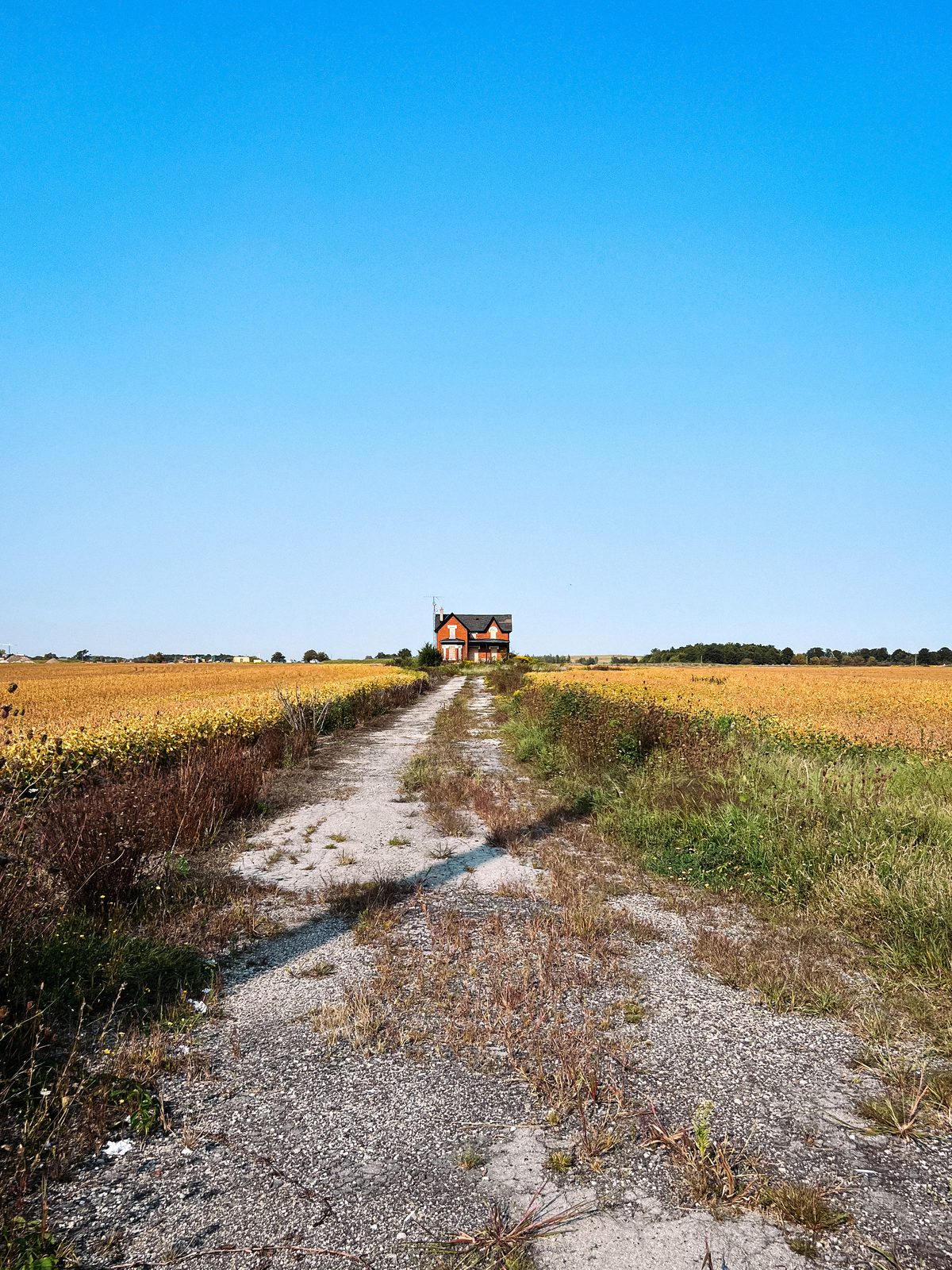
This is not a single house. It is a whole neighborhood of old brick homes in rural Canada, spread out along a gravel lane through the fields. The pavement is broken and the weeds have taken over, but the houses are still standing.
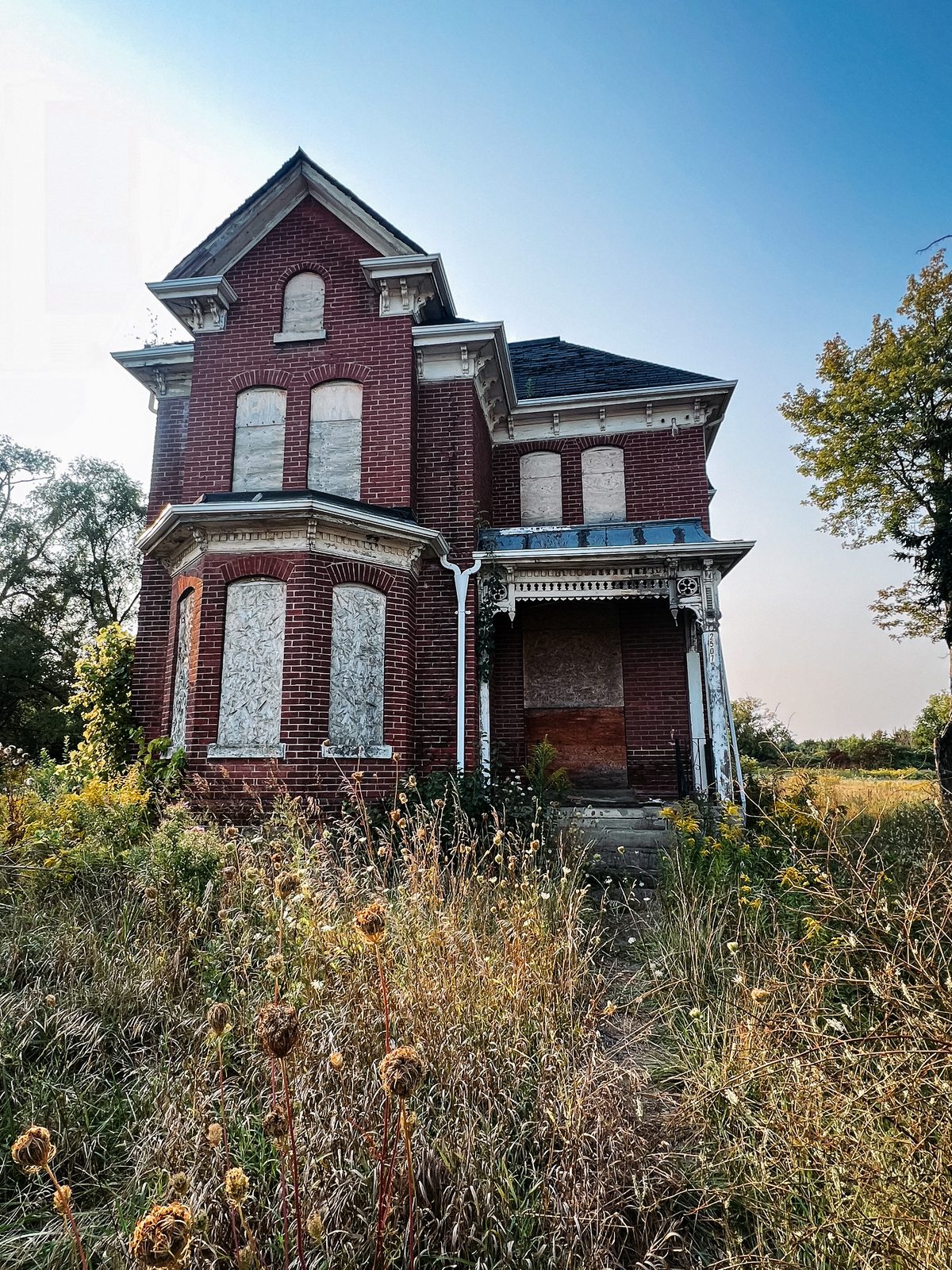
The largest one is a tall red brick Victorian with a steep roof and a front porch. Every window and door on the front is covered with plywood, and the yard grass is tall and dry.
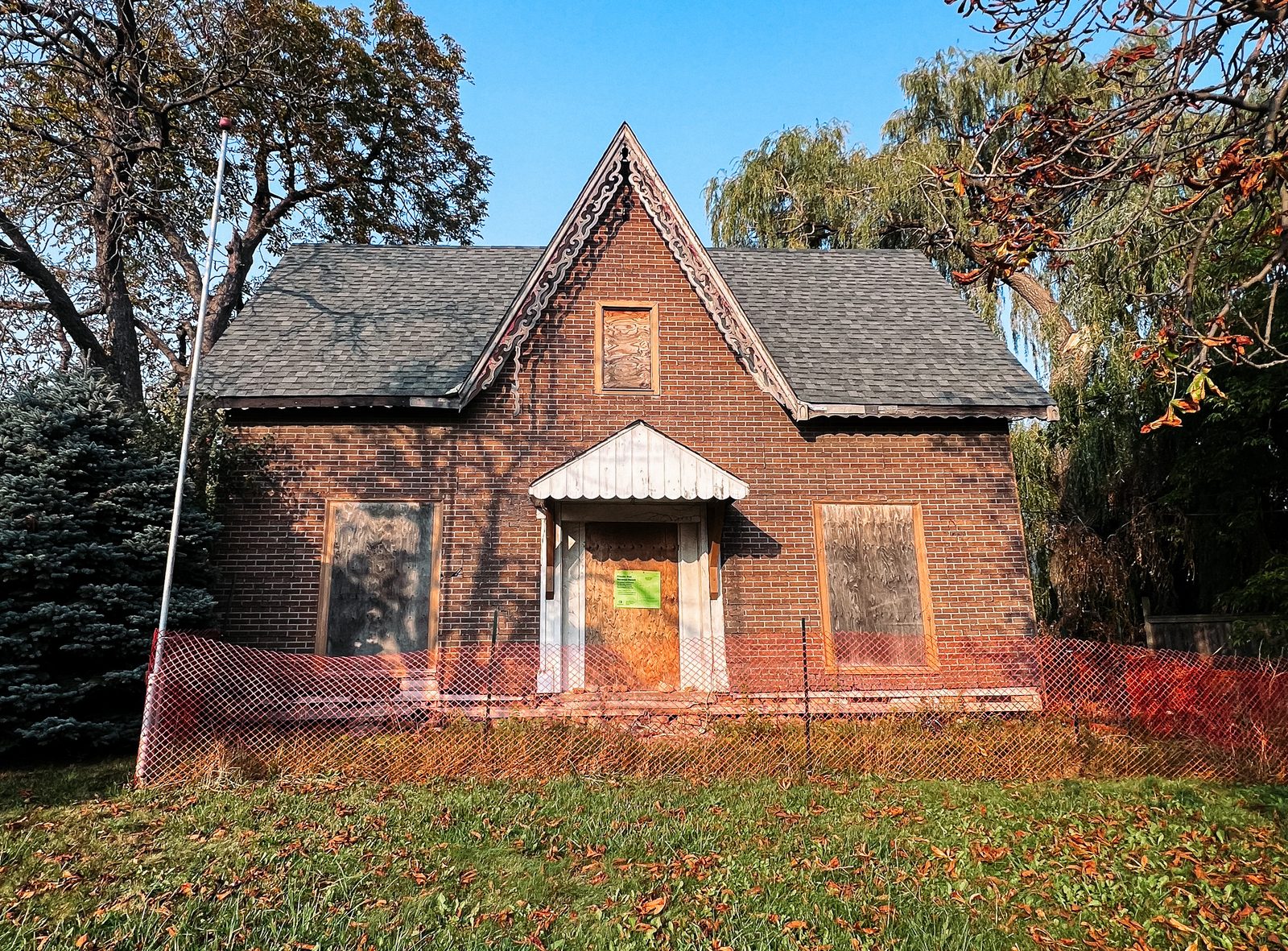
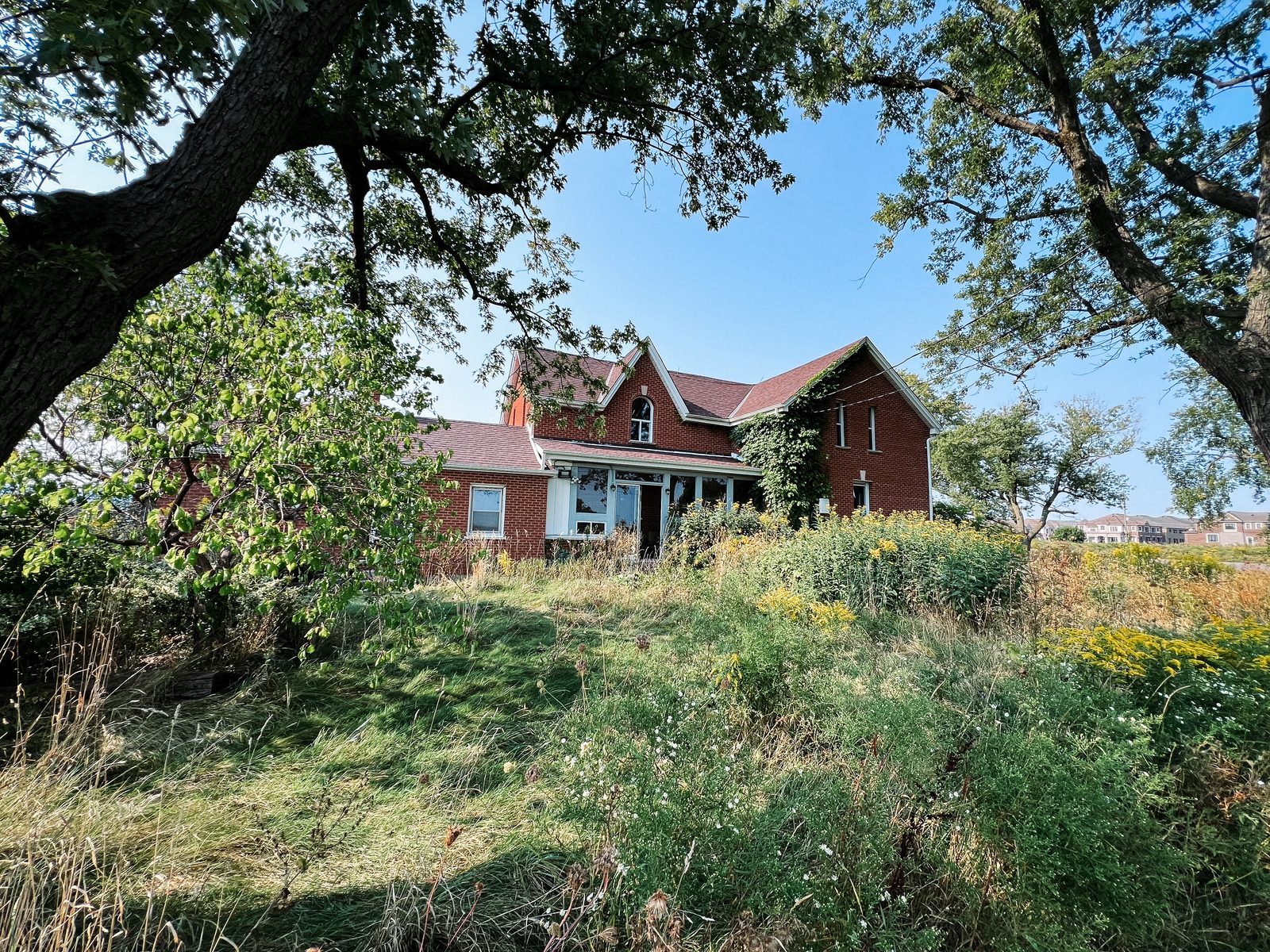
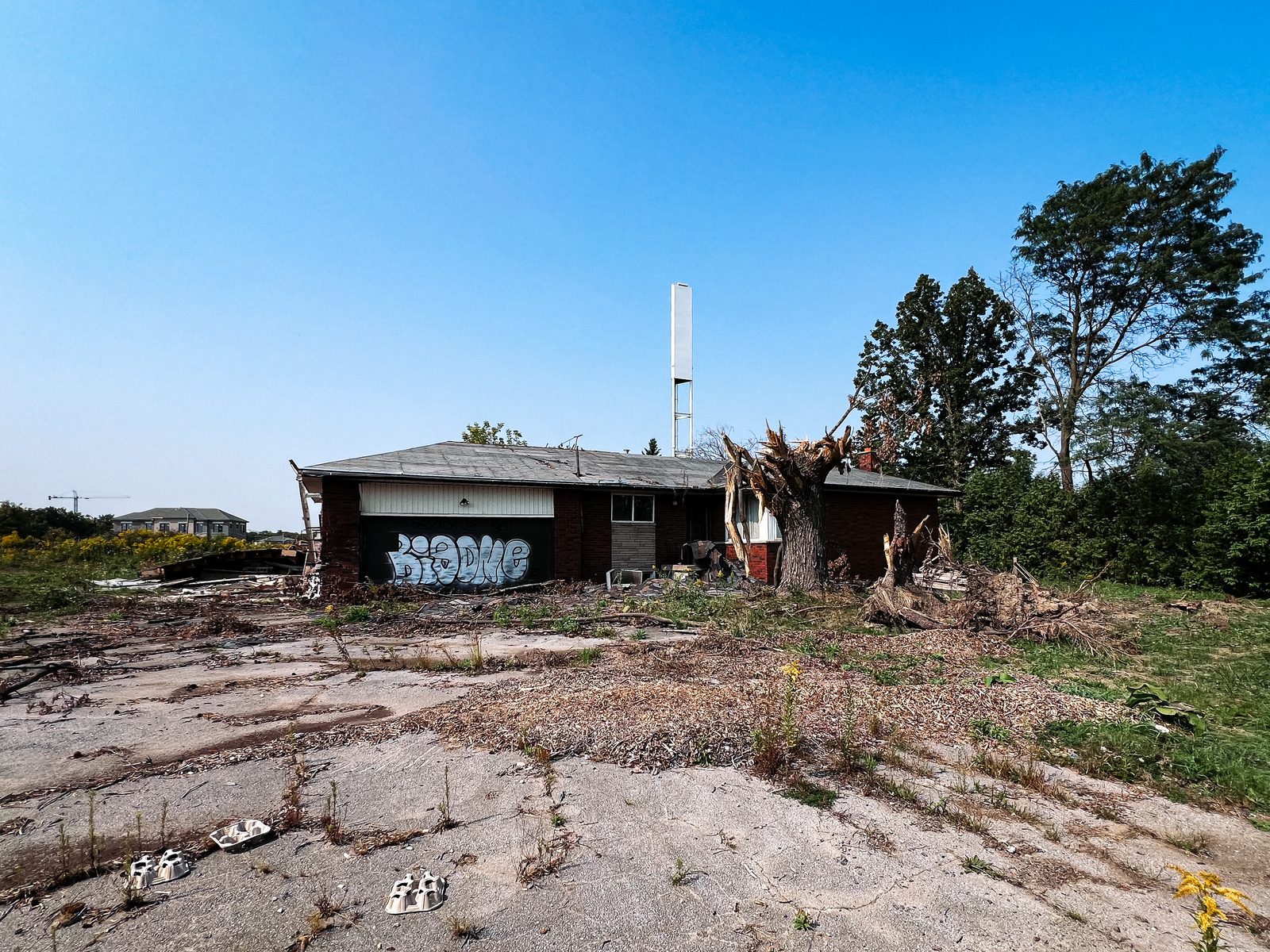
Others are smaller. One brick house with a pointed gable has orange safety fencing strung around the lawn. Another is a plain two story farmhouse with dark boarded windows, sitting in a stand of cattails. At the end of the lane a low brick bungalow has been hit hardest. A broken tree trunk stands beside it, its front wall is covered in graffiti, and the driveway is cracked concrete.
Inside
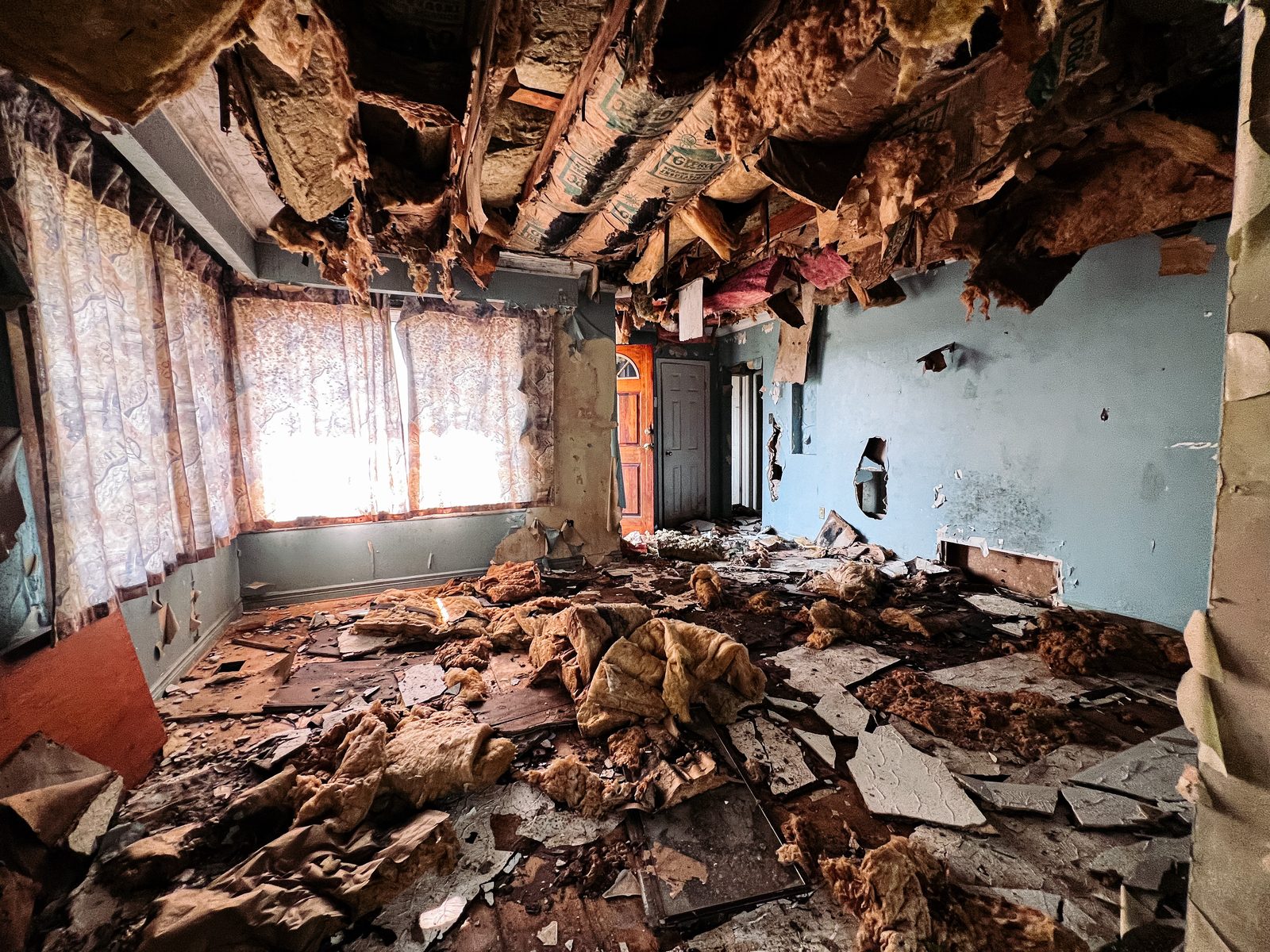
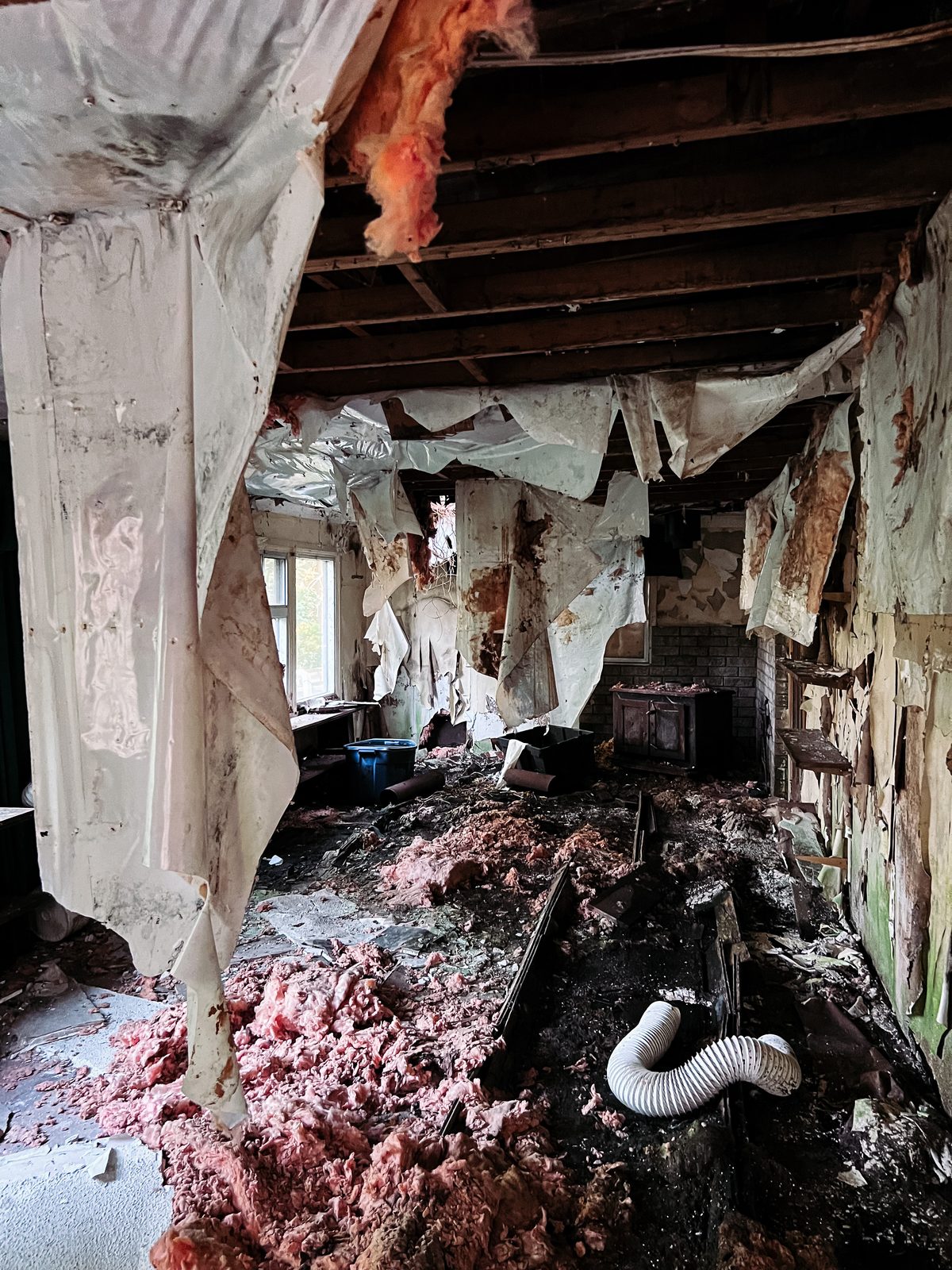
The insides tell the same story, only worse. In the sunroom, the ceiling has come down in heavy sheets of insulation and board, and it lies in a pile across the floor. Light comes through lace curtains in the big windows, and the pale blue walls still look bright.
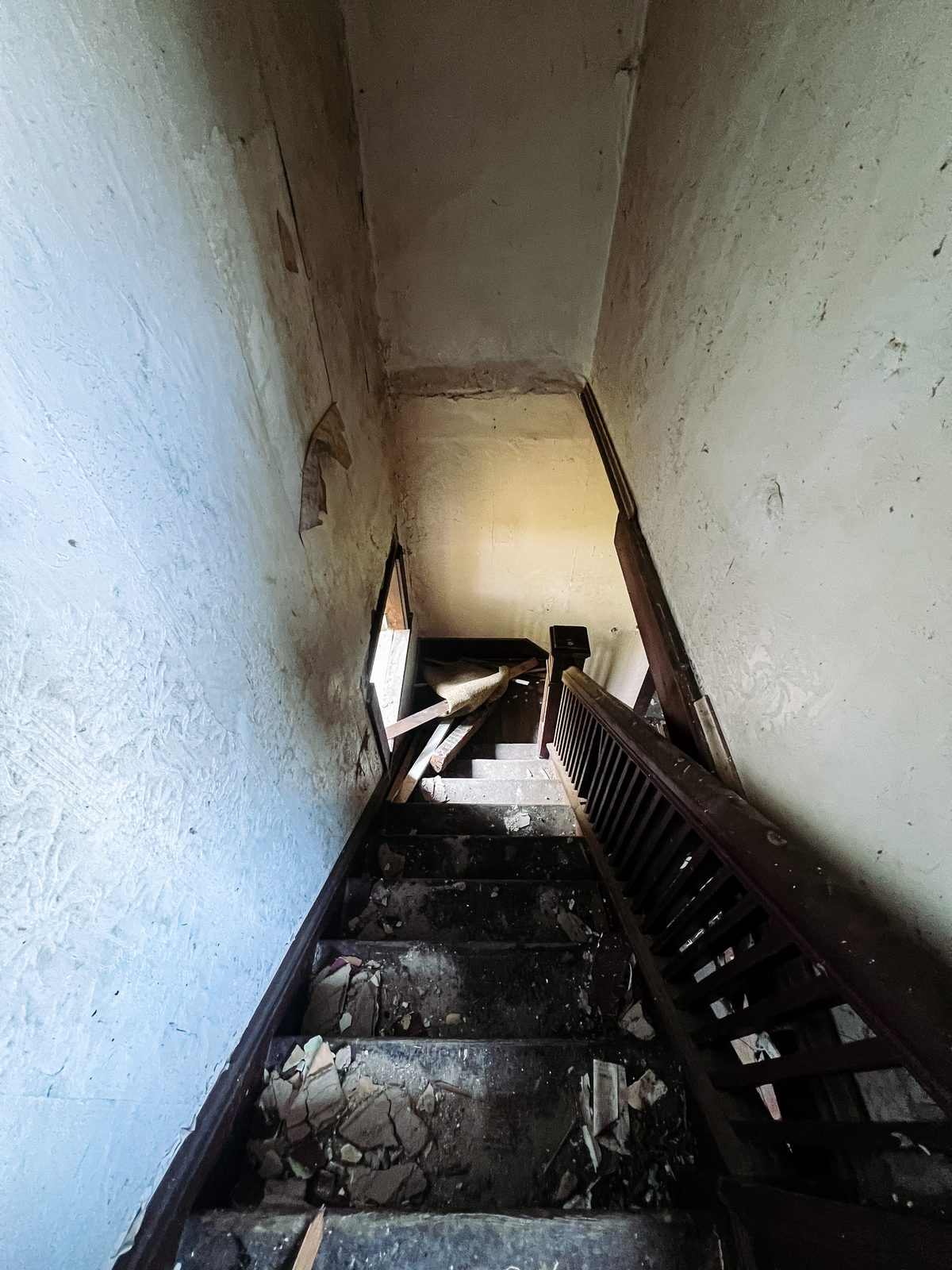
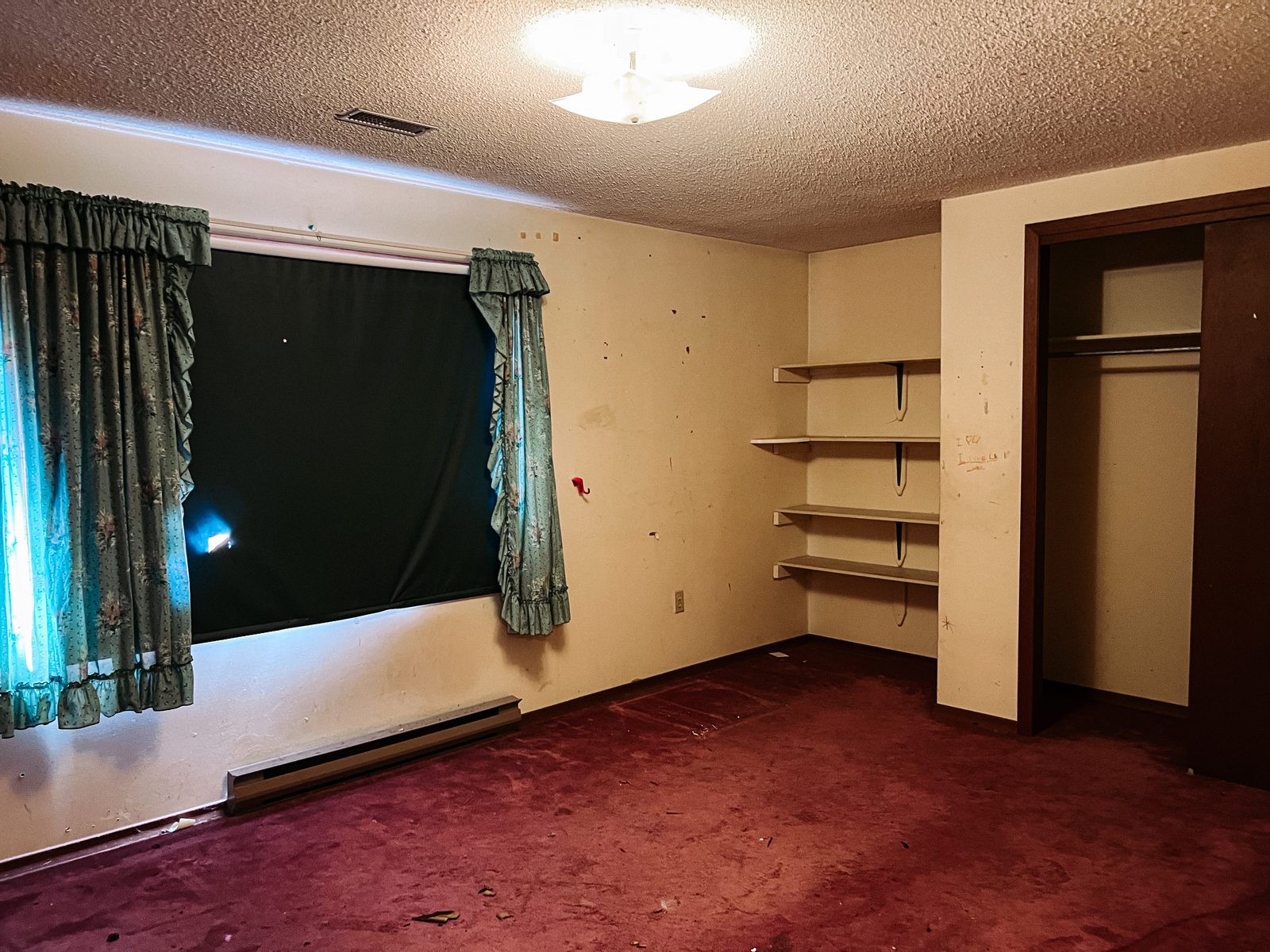
In another house, a narrow staircase runs up between plain plaster walls, with a dark wood railing and steps that are littered with debris. Not every room has fallen apart, though. One bedroom is still intact, with cream walls, a deep red carpet, built in shelves and green curtains.
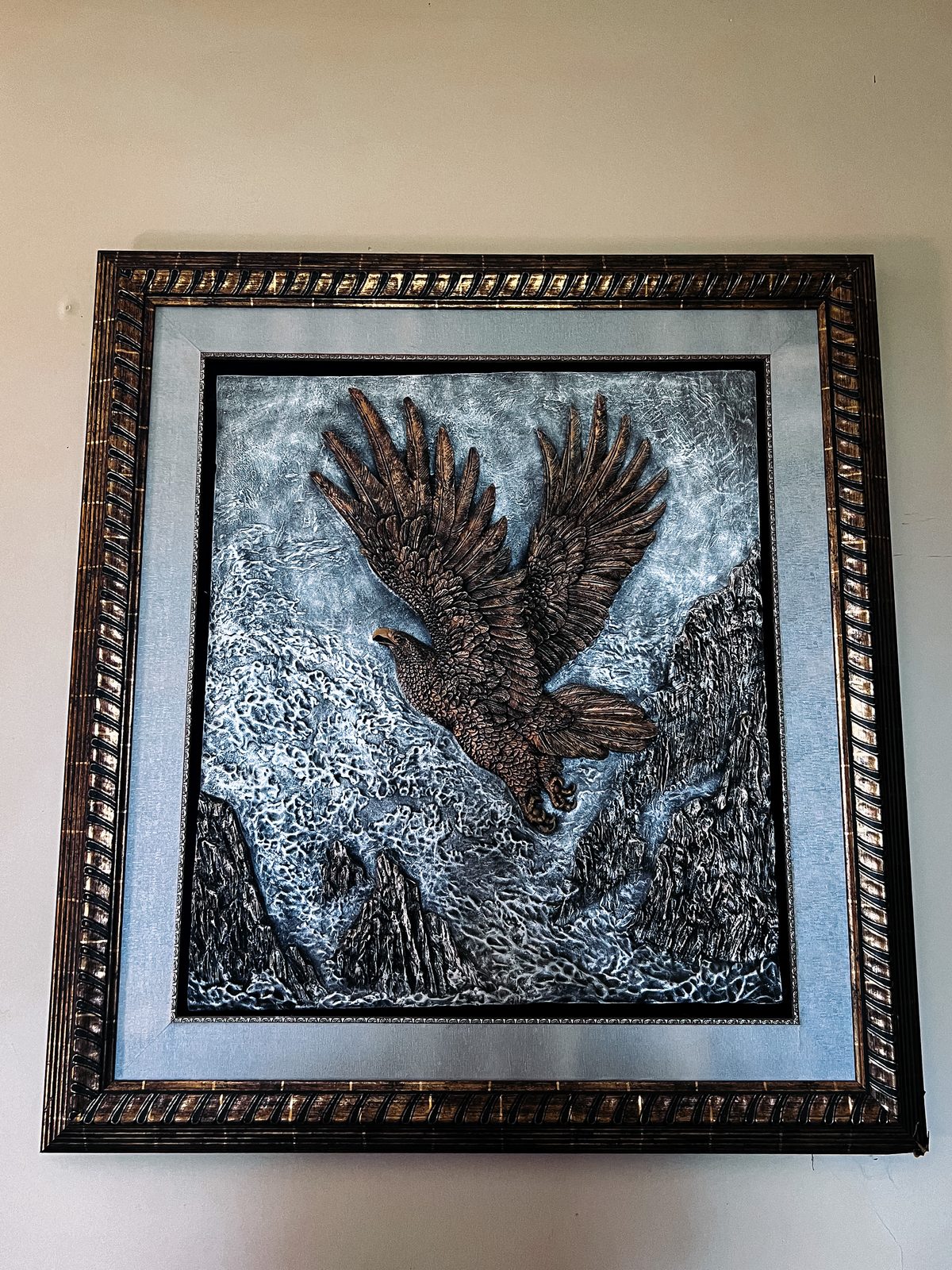
A framed relief of an eagle hangs on a plain wall in one of the houses, and it is still in good condition.
Why whole neighborhoods go empty in Canada
Sometimes the cause is a government plan. Global News reported that in 1969 the Canadian government bought around 39,000 hectares to build Mirabel airport, and about 3,000 families were affected. Not all of that land was cleared. The airport itself needed only about 6,000 acres, according to a Government of Canada statement, and the rest was kept by the government.
The same federal statement says the government refused to return the surplus land at first, because it might need it some day. About 80 percent of the land was returned within a year under a later Prime Minister, and in 2006 the government said farmers could buy the land they had been leasing.
That is only one example. Whenever a plan for a road, an airport or a development stalls, the houses on the land can end up empty and boarded up for years, with nobody responsible for fixing the roofs.
Sources
Get new posts by email
One email when new posts go up. No spam, unsubscribe any time.
Or follow along on
Subscribe on YouTubeMore like this

The footage that never goes public lives on Patreon. It's paid, and it's where the rough cuts, the security run-ins and the early releases go.
There is also merch. It is not a crowbar.
Comments