, exact location withheld
Why Schools Close and Sit Empty
Fewer children than seats, deficits and slow sales. Why schools close and sit empty, with Chicago's 50 closings in 2013 and a Detroit school.
Schools close when there are fewer students than seats and the money doesn’t stretch to keep half empty buildings open. The buildings then sit because selling a school takes votes, public notices and a buyer, and a district can keep paying to heat and mow a vacant one for years.
This is entertainment and general information. A closed school is still someone’s property, often with real hazards inside, and none of this is a reason to go in. I’m explaining what the numbers say about why the buildings in my videos are empty.
Are there really fewer students?
Yes, especially in the lower grades. The National Center for Education Statistics reports that public school enrollment was 49.5 million in fall 2023, down about 2.5 percent from fall 2019. Enrollment from pre kindergarten through eighth grade fell about 4.5 percent over that time, while high school enrollment rose about 2 percent.
Illinois shows the same shape. Chalkbeat Chicago reported that preliminary state data for 2022 and 2023 showed enrollment down about 31,000 students, or 1.7 percent, with Chicago Public Schools responsible for at least a quarter of that. The pandemic year of 2020 to 2021 had been much sharper, with about 69,000 students, roughly 3.5 percent, leaving public schools.
Chicago’s long decline is easier to see. The Chicago Sun-Times reported on September 24, 2026 that CPS enrollment was about 304,700, the lowest in more than two decades, after peaking near 439,000 in the 2002 and 2003 school year. Chicago had about 45,000 births in 2005 and about 27,000 in 2023, a drop of more than 40 percent. Fewer babies in one decade means fewer kindergartners in the next.
What happened when Chicago closed 50 schools?
The aftermath is still unresolved. According to WBEZ and the Sun-Times, the Board of Education voted on May 22, 2013 to close 50 public schools, nearly all serving elementary age students, which the report described as more closures at one time than any previous American action. The criteria were underenrollment, low performance and deteriorating buildings. CPS argued it had room for more than 500,000 students but enrolled just over 400,000, with “too many schools and too few children.”
Officials projected savings of nearly $1 billion over 10 years. The WBEZ and Sun-Times analysis estimated actual savings of roughly $25 million a year from staffing cuts, and said CPS can’t calculate its avoided building costs. The report also found that majority Black census tracts with a closed school lost 9.2 percent of their residents from 2013 to 2018, compared with 3.2 percent in tracts without one. That number is about neighborhoods and not about what’s inside the buildings, but it explains why the empty schools are a sore point.
Why are Catholic schools closing too?
The same arithmetic, with smaller margins. The Chicago Catholic reported in January 2020 that five Archdiocese schools would close on June 30 because of low enrollment and financial difficulties. St. Colette in Rolling Meadows had lost 97 students over three years and faced a $500,000 deficit. St. Joseph in Round Lake had lost 70 students over four years and faced a $575,000 deficit when outside donors didn’t step forward.
FOX 32 reported a year later that four more schools would close, citing “low and steadily declining enrollment levels and large financial deficits.” The archdiocese said they had a combined enrollment drop of 31 percent over four years and a combined deficit of $1.12 million that year.
Some of my videos show the earlier version of this. My Detroit Catholic school video description says the school was built in 1922 for grades kindergarten through 12, and that by the 1950s it had almost 2,000 students. By 1995, it says, the graduating class had dropped to only a few hundred and the school closed, with protests from staff, parents, students and residents ignored. The church that owns it is still active and only the school is abandoned.
Why do closed schools sit empty?
Because selling a public building takes steps, and the market for a school is thin. The state School Code section on selling school property, 105 ILCS 5/5-22, says a school board can sell property it deems unneeded only by a resolution approved by at least two thirds of its members. Then it has to sell at public auction or by sealed bids within 60 days, after publishing notice once a week for three successive weeks in a local newspaper. If a minimum price isn’t met or no bids come in, the board may hire a broker. Proceeds go first to any outstanding bonds on the property.
Chicago’s closed buildings show how long it can run. NBC Chicago reported in May 2025 that 21 of the 50 schools closed in 2013 were still vacant, though the board had aimed to sell or demolish them by 2017. CPS records showed taxpayers spent $7,282,456.20 over roughly 12 years on heat, light, landscaping and maintenance for the remaining buildings, which works out to about $607,000 a year by my math. CPS put the 21 buildings up for bid with a May 30, 2025 deadline. In 2023, WBEZ and the Sun-Times counted 26 still vacant and said a sale of Dett Elementary to a women’s wellness center never closed.
NBC also reported that bonds issued to help the receiving schools take in displaced students cost $25 million a year, potentially for up to 20 years, which it said basically cancels out the original projected savings. A closed building still costs money, and so does the debt behind the closing. I cover the wider pattern in Why Chicago Has So Many Abandoned Buildings.
What does a closed school look like in practice?
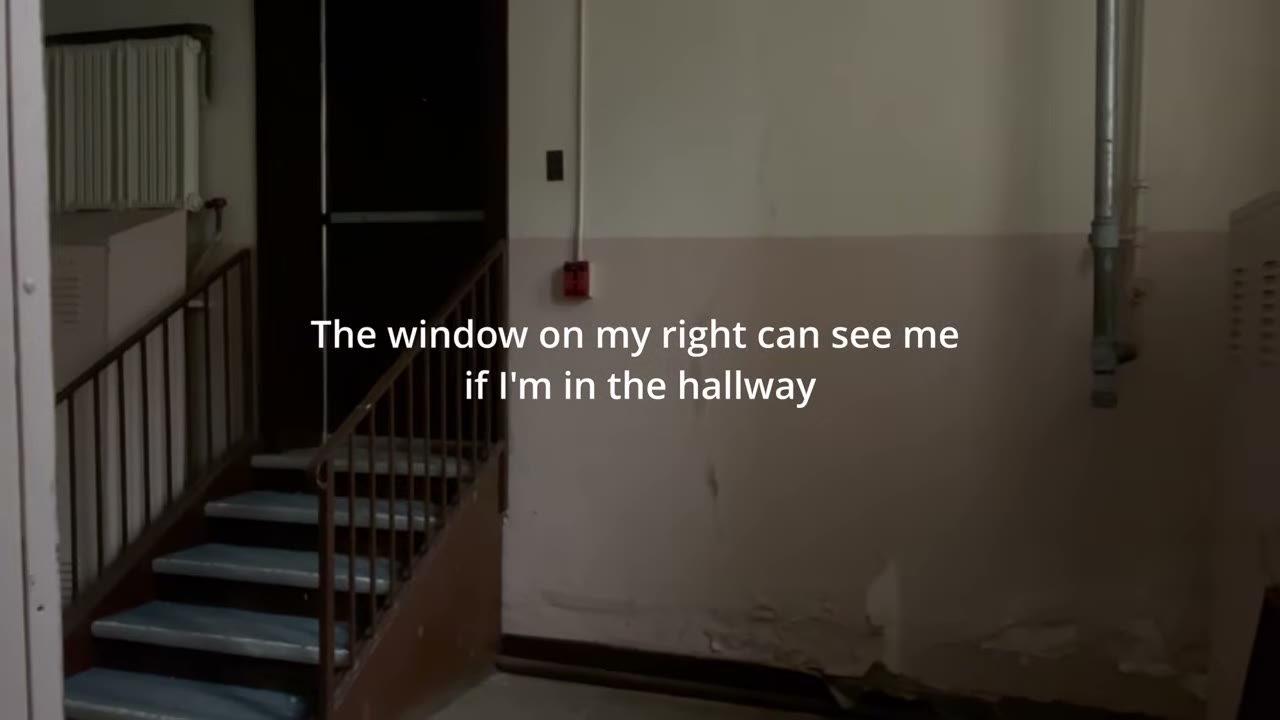
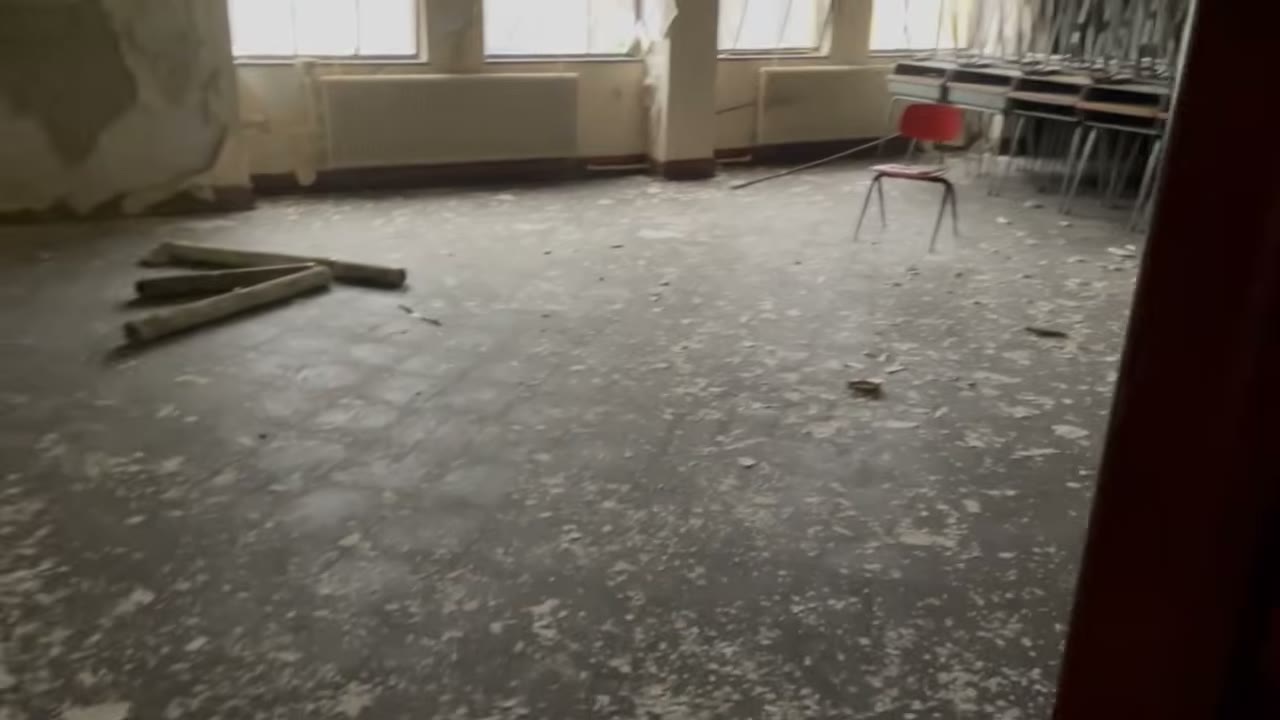
The Detroit school is the clearest one I’ve filmed. The description says a lot of the school’s stuff was left behind after it closed. I found a full library, lots of desks, gym equipment and all the trophies.
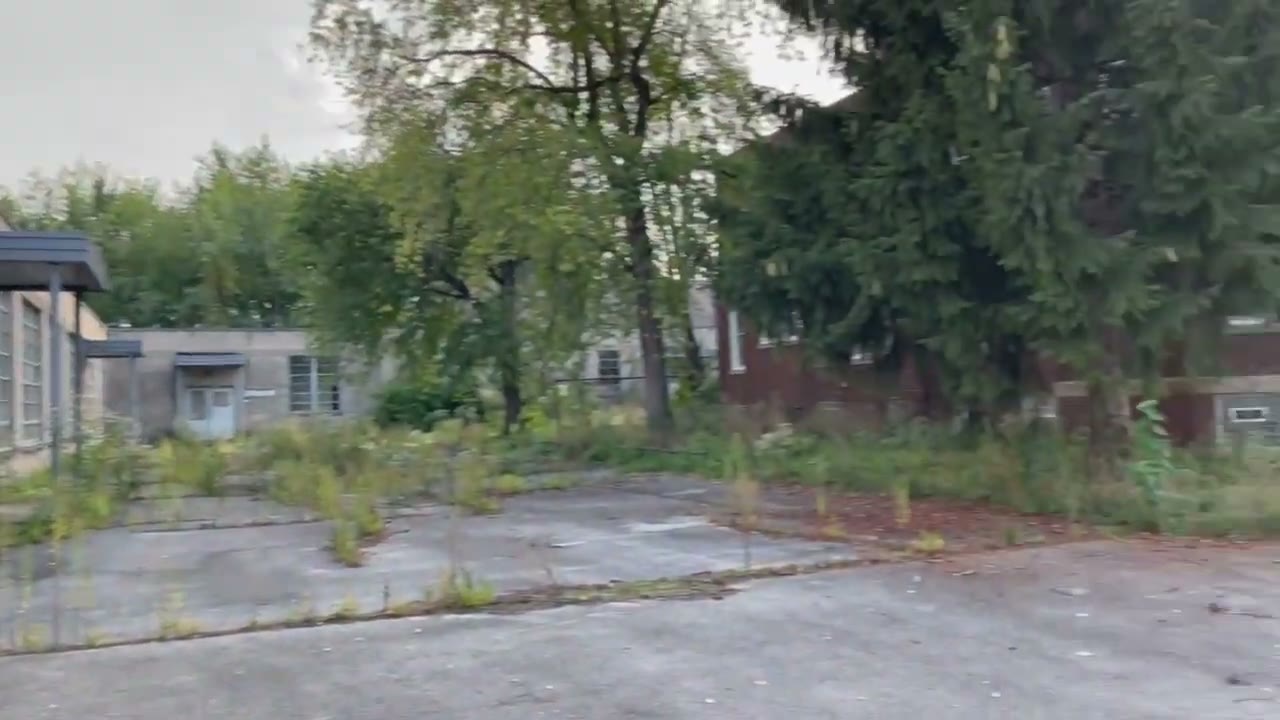
The massive Catholic church, school and rectory in Chicago shows the other half of the problem, a campus where the school is only one of three buildings that have to be dealt with at once. I’m not saying which parish it is. By the time I filmed, weeds were growing through the pavement beside the school buildings.
I’ve also filmed an elementary school where someone else was inside and a Catholic school with everything left since 2020, and the same questions apply. Who owns the building, and what would it cost them to do anything with it? I don’t give out locations, and I explain why in Why Urban Explorers Don’t Share Locations. How I find places and stay safe is in a $9.99 PDF called How to Find Abandoned Places.
A school closes in one vote, and the building can wait years for a second one.
Sources
- NCES data show public school enrollment held steady overall from fall 2022 to fall 2023, National Center for Education Statistics, accessed Nov 4, 2026
- Illinois public school enrollment continues to drop, preliminary numbers show, Chalkbeat Chicago, Jan 23, 2023
- CPS enrollment drops again amid low birth rates and immigrant fears, Chicago Sun-Times, Sep 24, 2026
- After 10 years, Chicago school closings have left big holes, and promises unkept, WBEZ and Chicago Sun-Times, Jun 1, 2023
- NBC 5 Investigates, Why 21 empty school buildings are costing Chicagoans millions, NBC Chicago, May 5, 2025
- Five Archdiocese of Chicago Catholic schools will close, Chicago Catholic, Jan 22, 2020
- Archdiocese of Chicago to close 4 schools, consolidate several South Side and suburban parishes, FOX 32 Chicago, Jan 2021
- 105 ILCS 5/5-22, Illinois General Assembly, accessed Nov 4, 2026
More like this


The footage that never goes public lives on Patreon. It's paid, and it's where the rough cuts, the security run-ins and the early releases go.