, exact location withheld
Why Malls Die
Anchor stores leave, smaller tenants follow, and split ownership keeps the building standing. Why malls die, with Sears, Lincoln Mall and one Illinois plaza.
Malls die when the department stores that anchor them leave, the smaller tenants follow, and the way the property is owned makes it slow and expensive to fix. Online shopping is part of the story but not all of it, and the building usually stays standing for years after the last good store is gone.
This is entertainment and general information, not legal or financial advice, and none of it is a reason to go inside a closed building. I explain the term itself in What Is a Dead Mall?. This post is about how they get that way.
What was a mall built to be?
A climate controlled town square. The Minnesota Star Tribune reports that Southdale, in Edina, opened on October 8, 1956 as the first fully enclosed shopping mall in the world, and more than 75,000 people came on the first day. Donald Dayton, president of Dayton’s department store, hired the Vienna born architect Victor Gruen. Gruen wanted an indoor square where it was always 75 degrees, and he modeled the garden court on St. Mark’s Square in Venice.
Thousands of suburban malls followed. By 2022 the number of traditional enclosed malls in the country had fallen to about 700 from a peak of about 2,500 in the 1980s, according to the retail firm SiteWorks as cited by the Star Tribune. Gruen came to hate what he started. He criticized the commercialism and the “land-wasting seas of parking” around malls, which is worth remembering when you see a mall’s empty lot from the road.
Do anchor stores decide whether a mall survives?
More than anything else does. The anchors are the big department stores at the ends of the hallways, and they draw the foot traffic everyone else lives on. Urbanism Next, a University of Oregon project, summed up a 2017 count of about 1,300 indoor malls in the country, 310 of them at high risk of closing. The author names the main driver as the loss of anchor tenants, meaning Macy’s, JCPenney and Sears.
A University of Michigan economics journal describes the chain reaction. When a big store closes, nearby tenants may break their leases or renegotiate rent, which weakens the whole center. Its example is San Francisco Centre, where nearly every retailer left after Nordstrom and Bloomingdale’s closed, a pattern the author calls a “death spiral.” The journal also notes that anchors usually pay lower rent because of the traffic they bring. The mall needs them more than they need the mall.
Not every mall is in trouble. Northeastern University’s business school reported in 2017 that Fung Global Retail and Technology estimated 20 percent of malls generate about 75 percent of mall revenue, while Green Street Advisors had flagged 300 lower grade malls as at risk of closing within a few years. Strong malls and weak malls are on different paths.
Is it all because of the internet?
No. Census Bureau data shows online retail sales at $340.2 billion in the second quarter of 2026, seasonally adjusted, or 17.1 percent of total retail sales. That’s a big slice, and it came out of somebody’s store. But Bruce Clark, the Northeastern professor quoted in the university’s 2017 piece, makes the case that it isn’t the whole explanation. “If this were simply about e-commerce, all physical retailers should be suffering equally,” he says. He lists other causes, including a weak value proposition against competitors, a shrinking American middle class, poor management at Sears and JCPenney, older locations in struggling communities and being in the wrong mall. The stores in the middle of the market lost customers while Nordstrom at the high end and Walmart at the low end did better.
What did Sears have to do with it?
Sears was the anchor that stayed too long. WBEZ reported on October 15, 2018 that Sears, which is based in Hoffman Estates, had filed for Chapter 11 bankruptcy and would close 142 more stores by the end of the year. James Schrager of the University of Chicago Booth School said the strategy of sitting in regional malls was right for a time “but not forever,” and that Sears didn’t believe discount rivals were a big enough threat to ever catch it.
The Chicago Sun-Times list from the same day had four Illinois stores on it. They were Kmarts in Quincy, Norridge and Moline and a Sears in Joliet, and the company said it had 687 stores left.
Why do dead malls sit instead of getting torn down?
Because nobody can act alone. When the mall was built, the landlord signed agreements with the anchors, called reciprocal easement agreements. The Real Deal reported in 2017 that these give anchors power over parking, signage and which kinds of businesses can lease space, including gyms, bowling alleys and medical offices that landlords often want. One investor told the paper, “The anchors own the outside of your mall.” Many landlords budget a multimillion dollar payment to an anchor just to get past those terms.
Money is the other lock. Retail Dive reported in 2017, citing the Wall Street Journal, that 314 loans backed by retail property, totaling about $3.5 billion, were liquidated in the first 11 months of 2016 and that CoStar Group said nearly 1 billion square feet of store space in the country had to go.
Lincoln Mall in Matteson shows how slow it gets. NBC Chicago reported it closed on January 7, 2015, after 41 years. A Cook County judge issued an order in November 2014 to take over operations after the holiday season, and a village press release said the owner’s upkeep funds had run out. The village also cited long standing building violations. It was demolished in 2018, and The Real Deal reported in November 2024 that the village finally controlled the full 60 acre site after paying $108,000 for the last parcel. It had earlier paid $525,000 for the part owned by Sears Holdings. That’s nearly ten years from closing to a single owner.
What does the end look like in practice?
International Plaza in Arlington Heights isn’t an enclosed mall, but it’s a good case. I filmed inside before demolition in Everything Left, an Abandoned Shopping Center. The Daily Herald reported on April 2, 2024 that the last business, Burger Baron, had closed in September 2023, that redevelopment had been stalled for more than two decades by litigation, an economic downturn and failed proposals, and that the owner had been fined tens of thousands of dollars for code violations. Bulldozers had started the week before. The village was negotiating a roughly $100 million plan for 266 apartments, a 37 unit senior building and up to four commercial outlots.
I haven’t filmed a true enclosed mall, but two of my videos show what a small commercial space looks like when the business behind it stops. The laundromat in Gary looked like it was in the process of being gutted. I said it was very trashed, with a bunch of ceiling tiles, and I read a sign off the wall about a ten dollar fee for clothes left more than 14 days.
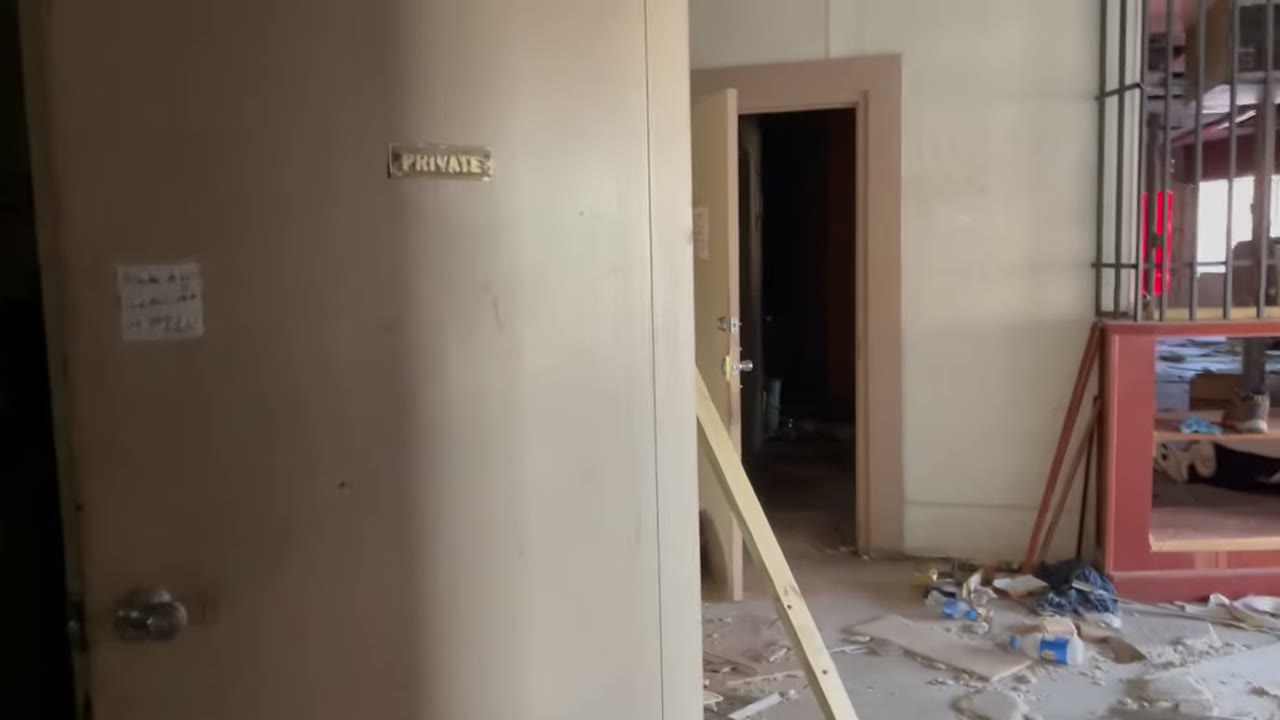
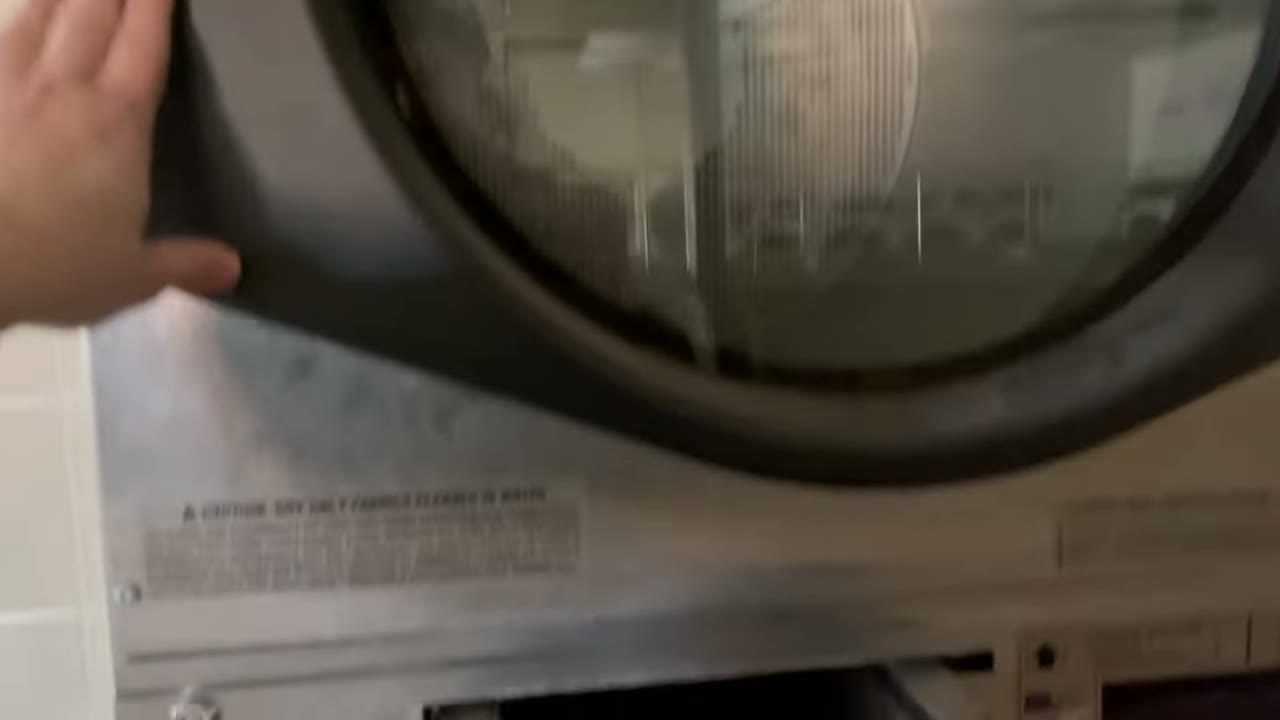
The Illinois diner is the opposite. It closed in 2012, and I called it one of the cleanest abandoned places I’ve explored, with minimal vandalism. Chairs were still stacked on the tables.
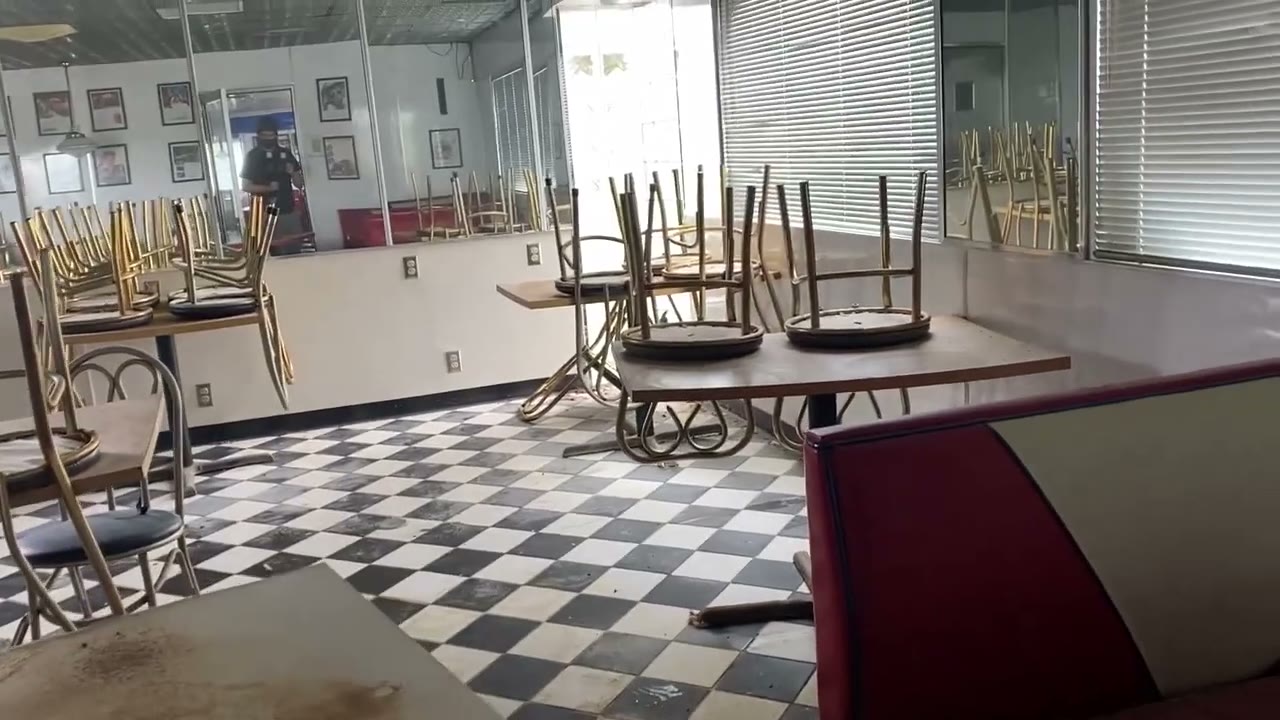
Both are small commercial spaces, the kind of tenant a shopping center depends on. When the traffic goes, those tenants go, and the building waits for someone to agree on what it’s worth. I don’t give out locations, and I explain why in Why Urban Explorers Don’t Share Locations. How I find places and stay safe is in a $9.99 PDF, How to Find Abandoned Places.
The stores leave first, and the lease and loan paperwork keeps the building standing long after that.
Sources
- How did Minnesota become home to the world's first shopping mall?, Minnesota Star Tribune, Nov 28, 2025
- The Blight of Failing Malls, A Rising Burden of E-Commerce, Urbanism Next, University of Oregon, Mar 9, 2017
- Will malls survive in the e-commerce age?, Northeastern Global News, Jun 29, 2017
- The Death and Reinvention of American Malls, Michigan Journal of Economics, University of Michigan, Apr 13, 2026
- Quarterly Retail E-Commerce Sales, U.S. Census Bureau, accessed Nov 4, 2026
- Sears Files For Chapter 11 Bankruptcy, WBEZ, Oct 15, 2018
- Sears store closing list, 142 more Sears, Kmart locations closing in Chapter 11 bankruptcy, Chicago Sun-Times, Oct 15, 2018
- Anchor tenants exert power when it comes to mall upgrades, The Real Deal, Sep 25, 2017
- Report, many anchors blocking landlord attempts to refurbish malls, Retail Dive, Feb 15, 2017
- Lincoln Mall in Matteson Closes, NBC Chicago, Jan 2015
- Matteson gains full control of shuttered Lincoln Mall site, The Real Deal, Nov 25, 2024
- Demolition begins at International Plaza in Arlington Heights, Daily Herald, Apr 2, 2024
More like this


The footage that never goes public lives on Patreon. It's paid, and it's where the rough cuts, the security run-ins and the early releases go.