, exact location withheld
Why Hotels Get Abandoned
Hotels get abandoned after floods, failed inspections, fires, debt and bypassed highways. Real Illinois cases, the court records and what a hotel leaves behind.
Hotels get abandoned when the cost of fixing a problem is bigger than what the building can earn. A flood, a failed inspection, a fire, a bad loan or a highway that moved the traffic can all do it, and the owner walks away while the beds are still made. Then the county or the city ends up in court trying to make someone pay for the building.
This is general information, not legal advice. Every claim links to the court report, agency or newspaper it came from, and none of it is a reason to go inside anything.
What killed the old roadside motels?
The highway moved. The National Park Service says Congress passed a law to build the interstate system in 1956, and that five new interstates replaced U.S. 66 over the next three decades. It adds that the 1984 bypassing of the last section “impacted countless businesses and communities along the road.” Chain motels and restaurants were growing at the same time.
Smithsonian Magazine puts a number on it. According to the motel historian Mark Okrant, about 16,000 motels were operating in 2012, down from a peak of 61,000 in 1964. The article says limited access interstates made small motor courts obsolete, and that chains such as Holiday Inn blurred the line between motel and hotel. The older motels on two lane roads were left “to go to seed.”
That’s a slow way for a hotel to die. Nothing happens to the building. The cars just stop coming, and a motel with no guests has no money for a roof.
Can a flood or a failed inspection end a hotel?
Yes, and the Garden Hotel in South Beloit, Illinois is the case I know best. The hotel at 200 Dearborn Avenue opened in 1964 as a Holiday Inn, later became a Ramada Inn and the South Beloit Hotel, and reopened as the Garden Hotel in 2014. The Beloit Daily News reports the site is in a flood plain and that flooding damaged the hotel’s basement.
The Winnebago County Health Department condemned the building in September 2019. The sources disagree on when guests stopped coming. The Beloit Daily News says the owners suddenly closed it in March 2019, while the Rockton Roscoe News says it shut voluntarily on March 25, 2020. What they agree on is the paper trail. City inspectors found flooding, mold, leaks, structural problems and crumbling ceilings and floors, and break ins and vandalism were reported from 2020.
Why would an owner just walk away?
Because walking away can be cheaper than fixing it, until the fines start. The city of South Beloit sued the owner, New Chapter Group, in August 2022. On March 28, 2024 a judge ruled for the city, citing 1,657 days of violations. The fines were $500 a day for each of ten violations, totaling $8,825,500, plus $5,000 a day from November 15, 2023 until the building came down.
The owner argued the hotel could still be repaired. In April 2025 the Illinois Appellate Court, Fourth District, upheld the ruling. It found that the city engineer’s testimony supported the conclusion that repairs would not have been economically sensible. Demolition was contracted at $1,348,000 for late September through December 2024, and the city planned to seek reimbursement from the owner.
A hotel is an expensive thing to keep alive and an expensive thing to remove. When the first number is higher than what anyone will pay, the second one gets left to the court.
Do fires and ownership changes do it?
They did at the Wagon Wheel Resort in Rockton. It began in 1936 as a seven stool hamburger stand and filling station and grew into a 314 acre resort. By May 1950 it had 55 rooms, five wings and a main lodge, and later added a theater, ice rinks, a bowling alley, a golf course and a ski hill. After a series of fires, a sign went up reading “Closed July 30, 1989.”
The Beloit Daily News adds the ownership story. It says Pheasant Run bought the property from the founder’s estate in the late 1970s, and that a local historian said the company didn’t want the resort competing with its St. Charles resort and let it deteriorate. The paper called that talk, not a finding. Management announced the closing in May 1989, and more than 100 employees lost their jobs.
A series of fires followed in the 1990s, and a 1999 fire gutted most of what was left. The village of Rockton and Winnebago County then fought a five year court battle to have the remaining buildings demolished, and a ruling in 2004 went in their favor. The remains came down that year. I filmed an abandoned farm from the demolished resort too.
What did the pandemic do to hotels?
It hit them hard, though most big downtown hotels reopened. The Real Deal reported in March 2020 that Chicago hotel occupancy fell by a third in a single week and that one analyst expected downtown occupancy to run under 20 percent in April. The Hilton Chicago, with 1,544 rooms, announced it would suspend operations.
The debt side shows up in a smaller example. Procaccianti Companies gave up the 345 room Hilton Chicago Magnificent Mile Suites through a deed in lieu of foreclosure. Payments on its $77.2 million loan stopped soon after COVID hit, and its 2019 cash flow of under $4.4 million was already less than the $4.9 million it paid to service the debt. That hotel stayed open. A hotel with weaker finances in a weaker market might not have.
What does a hotel leave behind?
Everything a hotel keeps ready for strangers. Beds, towels, kitchens, banquet chairs and laundry carts are all inventory. When a building is tied up by liens and court cases, as the Garden Hotel was, the contents tend to stay where they are. Water and mold do the rest. The EPA says to dry water damaged areas and items within 24 to 48 hours to prevent mold growth, and a flooded basement under a closed hotel doesn’t get that.
What does this look like in practice?
My Garden Hotel video is the long version. The description says the hotel shut down in May 2019 after a basement flood, that the owner never fixed the problem, and that the Winnebago County Health Department condemned it that September. It also says liens were placed on the property because the owners reportedly owed thousands of dollars in taxes and other fees.
It wasn’t my first time there. In 2020 I stumbled on the place with most of the glass intact, the rooms untouched and alcohol left behind. By the video, the vandalism and mold were so bad that I didn’t see any hope of it reopening.
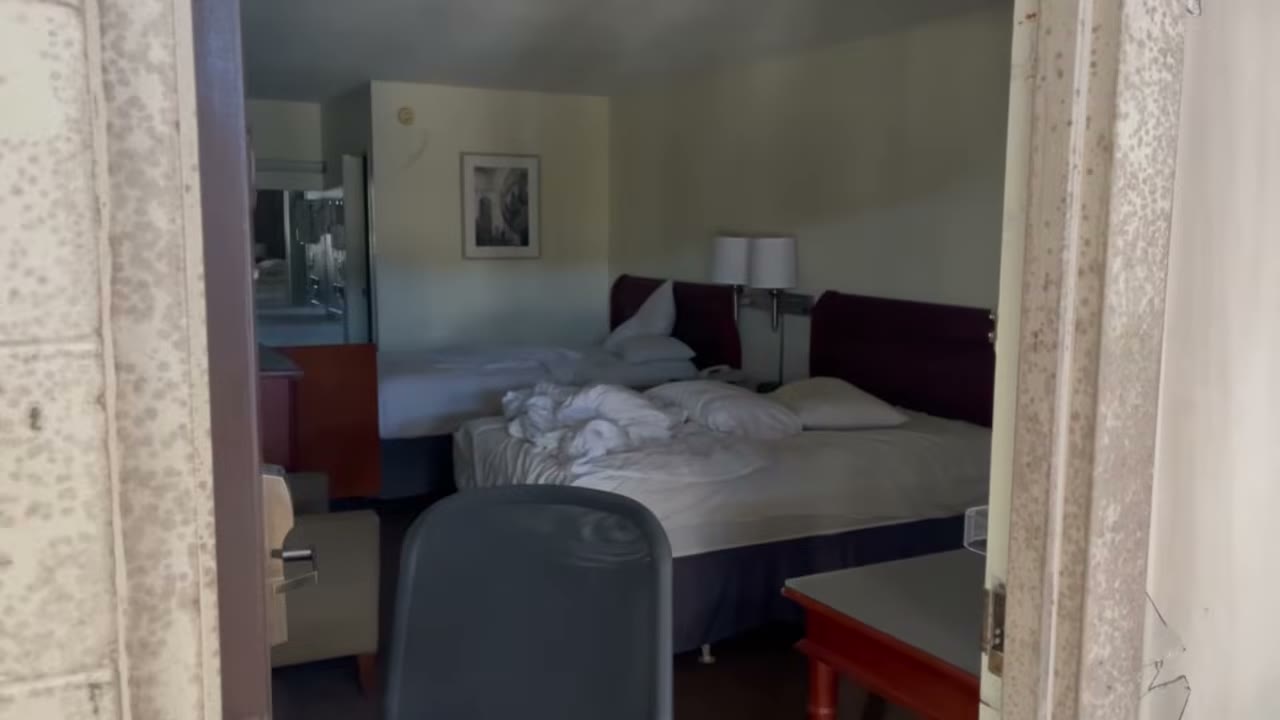
Guest rooms had the beds still made, with a Bible on one bed, and there were maid carts and laundry rooms full of towels.
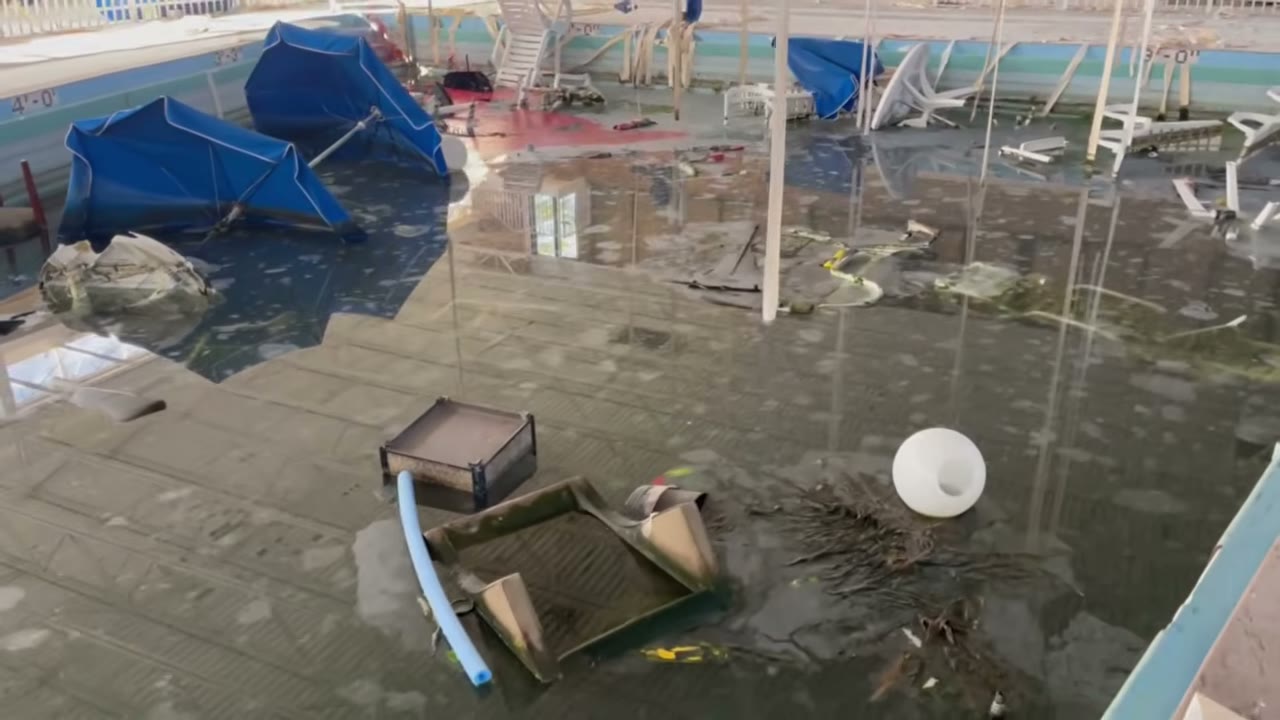
The pool still had its water in it. That’s what I call still water, and the still water post explains why you shouldn’t copy me around it.
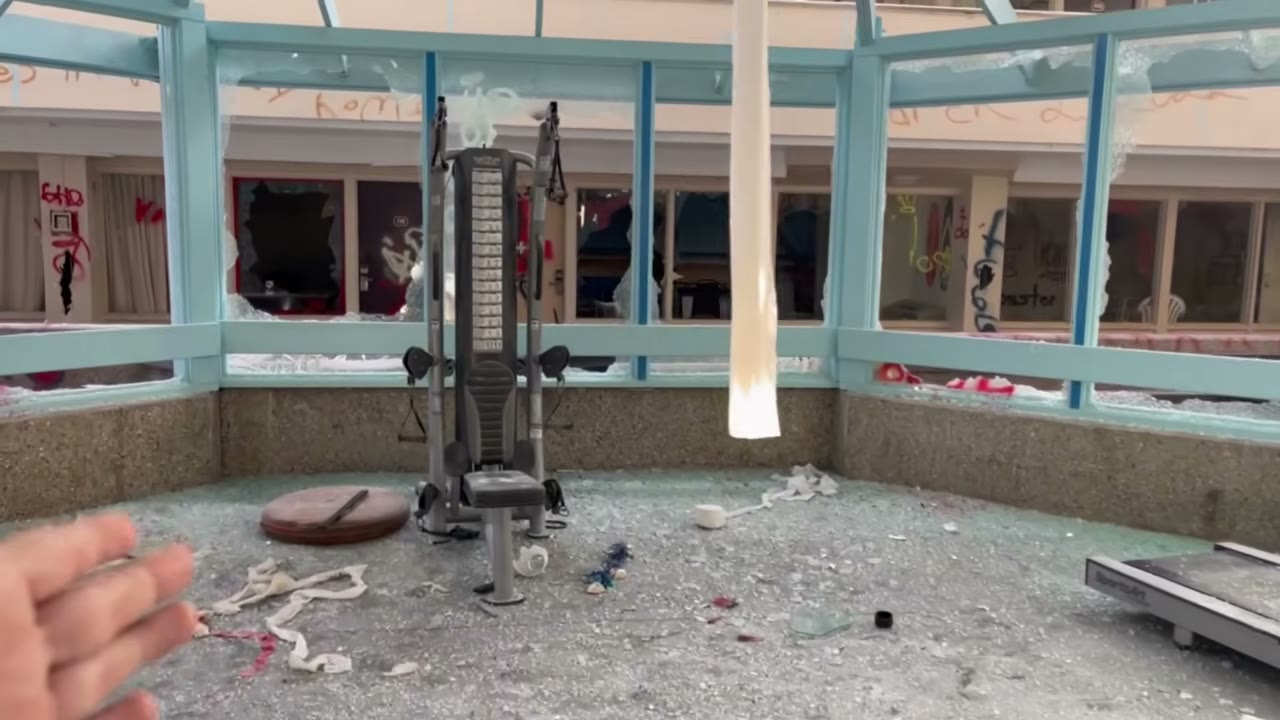
The glass walls around the gym were smashed and the walls beyond them were sprayed, which is the vandalism I mean. Mold is the other half of it, and a respirator like the 3M 6200 half face respirator on my list is built for air like that.
How I find places like these, and how I stay safe in them, is covered in a $9.99 PDF called How to Find Abandoned Places.
A hotel is built to look cared for, so when the care stops, it shows fast.
What I carried in
Same list as every video description.
Sources
- Judge Orders Demolition of South Beloit's Garden Hotel, Owners Fined $8.8 Million, Rockton Roscoe News, Jul 2024
- Garden Hotel in South Beloit Nearly Demolished, Beloit Daily News, Dec 2024
- Off the Docket, South Beloit's Decision to Demolish Garden Hotel Affirmed by Appellate Court, Rockton Roscoe News, Apr 2025
- Wagon Wheel Resort Remembered at Historical Society Event, Rockton Roscoe News, accessed Nov 4, 2026
- Wheel Gone, Not Forgotten, Beloit Daily News, Apr 2009
- Route 66 Overview, U.S. National Park Service, accessed Nov 4, 2026
- The Twilight of the Mom and Pop Motel, Smithsonian Magazine, accessed Nov 4, 2026
- More Hotels Fall Victim to Coronavirus Pandemic, The Real Deal, Mar 25, 2020
- Hilton Chicago Magnificent Mile Transferred to Lender Amid Pandemic Struggles, The Real Deal, Sep 17, 2021
- A Brief Guide to Mold, Moisture and Your Home, EPA, updated Feb 18, 2026
More like this
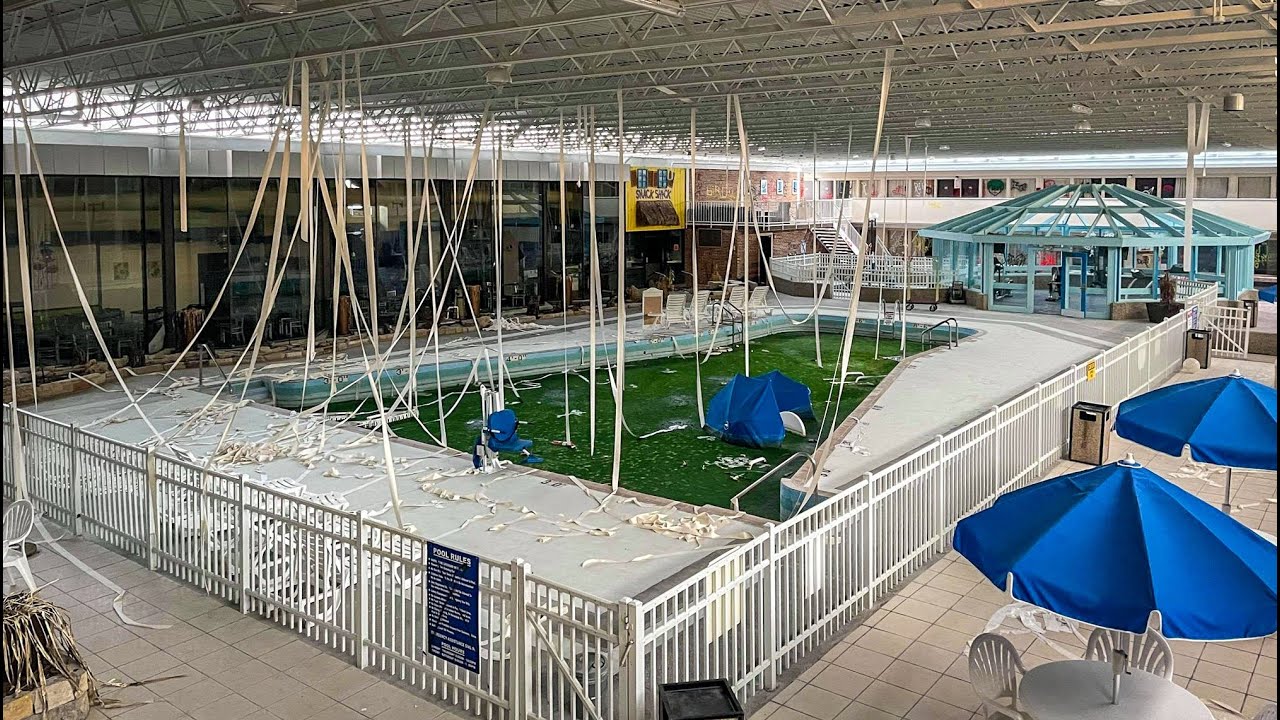


The footage that never goes public lives on Patreon. It's paid, and it's where the rough cuts, the security run-ins and the early releases go.