, exact location withheld
Why Hospitals Close and Sit Empty
Hospitals close when volume and Medicaid payments don't cover costs. Why MetroSouth in Blue Island and West Suburban closed, and why the buildings sit after.
Hospitals close when the patients and payments they get don’t cover what it costs to keep the doors open, and in the Chicago area that has hit hospitals serving mostly Medicaid and low income patients first. The building then sits because a hospital is a huge, specialized property, and the plans to reuse it usually depend on loans that don’t always get paid.
This is entertainment and general information. Closed hospitals are dangerous places, and I cover the hazards in Are Abandoned Hospitals Dangerous?. None of this is a reason to go inside one.
Why does a hospital run out of money?
Usually patients and revenue fall while the fixed costs stay. The best national data on this is for rural hospitals. The Government Accountability Office counted 101 rural hospital closures from January 2013 through February 2020, out of about 2,260 rural hospitals open in 2013. For hospitals that closed between 2014 and 2017, the median operating margin fell from negative 3.3 percent in 2012 to negative 13.8 percent in the year before closure. GAO cites experts linking closures to a declining rural population, competition among hospitals and reduced demand for inpatient care.
Chicago is not rural, but the pattern of losses is familiar. ABC7 Chicago reported that Trinity Health cited operating losses of $4 million a month at Mercy Hospital on the South Side, and said the South Side had too many empty hospital beds. The same story put the number of closures at 22 percent of Cook County’s hospitals over 20 years, and eight Chicago hospitals, or 23 percent of the city’s total, in that time.
Who gets hit first?
The hospitals that treat the most people on Medicaid, and the people around them. WBEZ reported in July 2026 that West Suburban Medical Center in Oak Park closed abruptly in late March 2026, after taking in only 10 to 15 percent of its usual income in the last year. Its emergency room treated about 25,000 people in 2023. About 70 patients were still inside when it closed, and some ICU patients were moved to a hospital nearly 10 miles away, an hour in traffic.
The neighbors absorbed the rest. WBEZ said Rush Oak Park’s emergency room was at “peak census,” meaning nearly closed to ambulances, for about 26 days from mid April through June, compared with two days over the same stretch before the closure. It also reported that about one in four Illinois residents has Medicaid, that major Medicaid cuts were coming the following year, and that more than a dozen hospitals owed over $700 million to the state. ABC7 added that state records showed most of Mercy’s patients were low income people of color.
Who decides a hospital can close?
In Illinois the state has a say, and the timing can be messy. ABC7 reported that Monday, September 30, 2019, was moving day for employees at MetroSouth Medical Center in Blue Island, and the Illinois Health Facilities and Services Review Board had deferred the hospital’s closure application until after its October 22 meeting, so the formal closure was still pending. The owner, Quorum, cited a lack of money, and the mayor said Quorum claimed the hospital was losing about $10 million a year. The hospital had stopped accepting new patients the week before. One official called that a “calculated tactic” to force a closure.
The Real Deal put it more simply in March 2020. The 314 bed hospital shut at the end of September because of a sharp drop in patient volume, and Quorum had been looking for a buyer since July. I covered the inside in Inside the Abandoned MetroSouth Hospital.
Why does the building sit empty afterward?
Because nobody can make the numbers work. The Real Deal reported in January 2026 that MetroSouth is a 12.5 acre campus with a vacant 550,000 square foot hospital building. Lockwood Development Partners bought it in 2020 for more than $20 million and planned senior and veteran housing with a movie theater, spa and library, plus a grocer, medical offices and a 23 room hotel. That plan didn’t happen. Bisnow reported in April 2026 that in 2022 Lockwood marketed the site for film and television production or a life sciences campus and found no buyers or tenants.
The loans are where it stopped. A lender affiliate originated almost $32 million in 2022 and more than $15 million more in 2024, and The Real Deal reported Lockwood defaulted on $44.2 million. The lender filed a foreclosure complaint in Cook County on December 19, 2025. Lockwood had paid about $137,000 in outstanding city bills in September 2024 to settle code violations. In January 2026 the developer told The Real Deal that data centers were the “highest and best use” of the site, and in April the mayor said the city had received only a general inquiry.
There was a brief second life. In March 2020 the city announced a deal to reopen MetroSouth for COVID-19 patients, and the hospital could have been ready to fill 200 beds within days. Bisnow says it was prepared to house patients but never used. After that it went back to waiting.
What about nursing homes?
They close for similar reasons. Capitol News Illinois reported in April 2019 that, per the Illinois Department of Public Health, 20 state licensed nursing homes had closed for financial reasons since March 2014. A report commissioned by the Health Care Council of Illinois, which is an advocacy group for nursing homes, found Illinois ranked 49th in the country for Medicaid rates and that homes lose about $41 a day on each Medicaid funded patient. Treat the report as the industry’s own case, but the closure count is from the state.
What does this look like in practice?
Two of my videos sit on either side of that story. The nursing home and nursing school in Illinois closed in 2016, according to the description, and the power no longer works. I found medical supplies, a bathtub, lots of wheelchairs and tons of medical beds. I wasn’t sure whether it was a nursing home or a nursing school, and I said I thought it was a nursing home that might also have been used for nursing school.

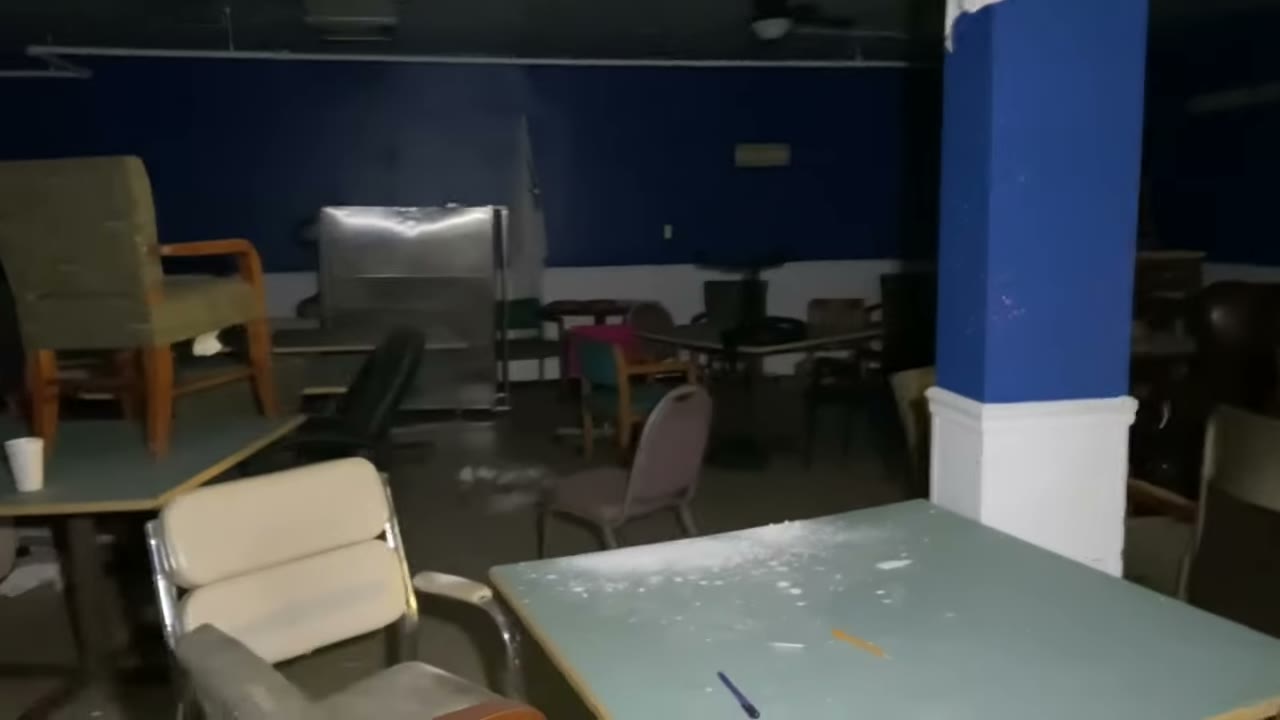
Later in the video I called one stretch “a little mini hospital,” with what I said looked like dialysis supplies, and then found the wheelchair room, oxygen tanks and a lot of keys.
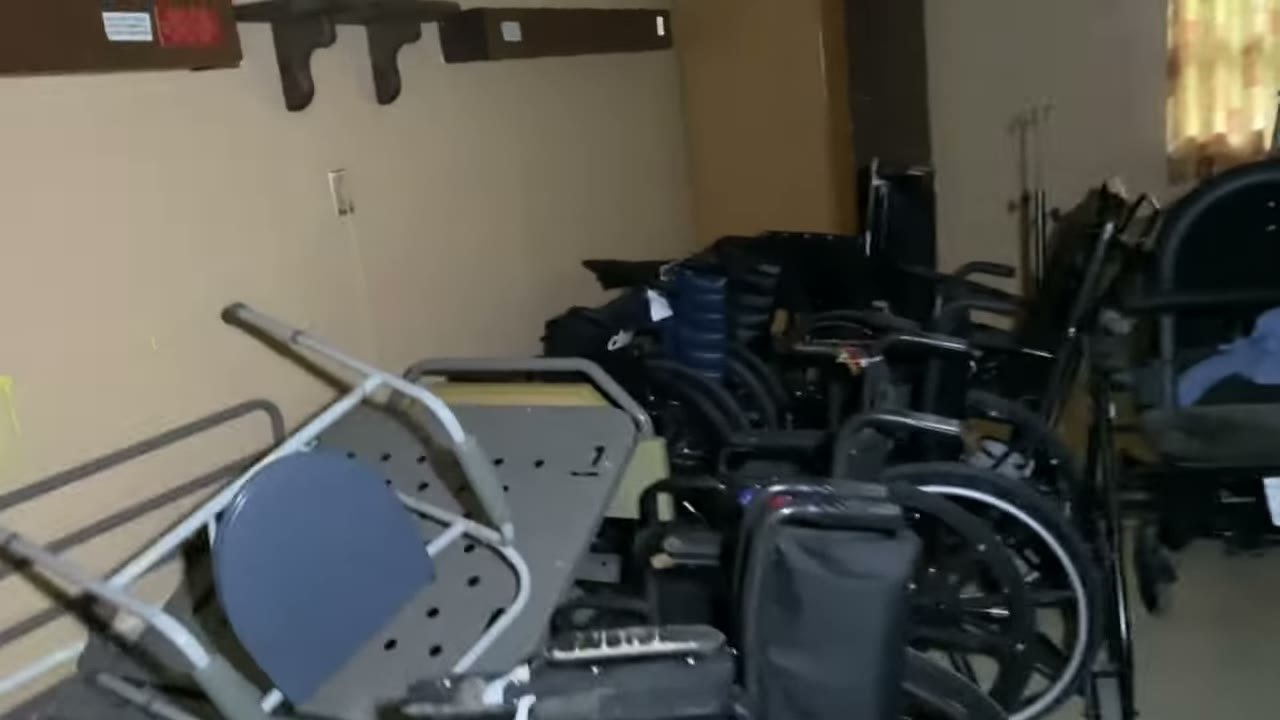
The medical center in Illinois and the hospital after a fire are two more medical buildings from my videos, with the locations withheld, and I explain why in Why Urban Explorers Don’t Share Locations. How I find places and stay safe is in a $9.99 PDF, How to Find Abandoned Places.
The hospital closes first, and the building takes years to find out what it’s worth.
Sources
- Rural Hospital Closures, Affected Residents Had Reduced Access to Health Care Services (GAO-21-93), U.S. Government Accountability Office, Dec 2020
- Where do they go? What West Side patients face after another hospital closes, WBEZ, Jul 11, 2026
- Mercy Hospital's slated closure among wave of medical centers vanishing from Chicago area, ABC7 Chicago, 2020
- MetroSouth Medical Center closes its doors, ABC7 Chicago, Sep 30, 2019
- City strikes deal with MetroSouth hospital owner to reopen shuttered facility, The Real Deal, Mar 25, 2020
- Lockwood defaults on suburban Chicago hospital redevelopment loan, The Real Deal, Jan 7, 2026
- 13 acre suburban medical campus vacant since 2019 eyed for data center development, Bisnow, Apr 24, 2026
- Already in crisis, Report says Medicaid funding shortfalls causing nursing homes to close, Capitol News Illinois, Apr 19, 2019
More like this

The footage that never goes public lives on Patreon. It's paid, and it's where the rough cuts, the security run-ins and the early releases go.