, exact location withheld
What Is a Vacant Building Registration?
A vacant building registration puts a name, insurance and a security duty on the owner of an empty building. How Chicago's works and what it means for the building.
A vacant building registration is a local government requirement that the owner of an empty building file their name, contact information and proof of insurance with the city, then keep the building secured and maintained until it’s occupied, sold or torn down. Many Illinois cities have one, and Chicago’s carries daily fines.
The short version for anyone who looks at empty buildings is that a building that looks abandoned isn’t necessarily ownerless. Somebody is on the hook for it, and the city can fine them every day it sits open. This is general information and entertainment, not legal advice.
What does the registration actually do?
It makes someone responsible. A 2016 summary from Business and Professional People for the Public Interest explains the reasoning. Registration identifies who is responsible for a vacant property so officials can reach that person quickly. Fees help pay for monitoring and enforcement, and fees and fines push owners to act sooner. The same document says these ordinances supplement code enforcement and don’t replace it, and that Illinois had more than 100 municipalities with one at the time, more than twice the number in 2010.
Chicago’s program is run by the Department of Buildings. The city’s registration site says the public can search registered vacant buildings and storefronts and track related enforcement cases without an account. Owners use the same site to register, pay, renew and deregister.
Who has to register in Chicago?
It depends on the kind of building. The city’s FAQ lists the cases.
A building with fewer than 10 units has to register when no one legally lives there and no former resident plans to return within six months. A building with 10 or more units has to register when 90 percent or more of the units are unoccupied. A nonresidential building has to register once substantially all lawful business operations have stopped, and a guard or watchman doesn’t count as occupancy. A construction site registers when permitted work stops. A building damaged by fire stays registered until repairs begin under a proper permit, even while an insurance claim is pending.
The deadline is 30 days after the building becomes vacant, and registration has to be renewed every six months. Municipal Code section 13-12-125 defines vacant broadly. It covers a building without the habitual presence of people who have a legal right to be there, one where substantially all lawful business, construction or residential occupancy has ceased, or one that is substantially devoid of contents. The factors include how much of the square footage is occupied, the condition and value of items inside, and whether there are for sale or rent signs. A residence isn’t vacant if a person entitled to it lived there for at least three of the previous nine months and intends to return.
An owner in foreclosure stays responsible. The FAQ says that lasts until a judge signs an Order Approving Sale and a deed is recorded.
What does an owner have to do?
Quite a lot, and every item is a reason the owner keeps watch.
The owner has to carry liability insurance and show proof at registration. The code text I read sets the minimum at $300,000 per occurrence for residential buildings and $1,000,000 in commercial general liability for other buildings. The owner has to secure every opening to prevent unlawful entry, keep the property clean, and visit it regularly. The building also has to carry a sign, legible from the nearest public street or sidewalk, showing the registration number and the owner’s and agent’s names, addresses and phone numbers.
The city’s rules get specific about how. Openings reachable from ground level, or within eight feet of an exterior stairway, fire escape, ramp or porch, must be secured. One entrance needs a solid wood or steel door with no window, kept locked. Plywood has to be at least 5/8 inch exterior grade and is allowed only for an initial six months. If a secured building is opened again, the rules say the owner has to secure it again immediately.
Fees are less clear. The FAQ lists $250 to $500, higher if the city already found the property in violation, with an added fee at each renewal. The code text I read puts it at $300 and doubles it to $600 when the registration follows a city finding. Check with the city for the current number.
Penalties are daily. Violations of the registration and maintenance sections carry fines of $500 to $1,000 per offense, each day counts as a separate offense, and the fines become a lien on the property. If problems aren’t fixed, the city can go to the Department of Administrative Hearings or Cook County Circuit Court, board the building up, or demolish it.
What is a hazardous vacant building?
It’s a vacant building the city has marked for first responders. Section 13-12-148 lets the fire commissioner put a warning placard on a hazardous vacant building to warn firefighters of structural or interior hazards that call for extreme caution. The code says the placard is informational and that a building without one isn’t thereby safe.
The same section makes it unlawful to enter a marked building, for anyone, including the owner and government inspectors, without notifying the fire commissioner in advance. It also makes covering, damaging, defacing or removing a placard unlawful without written permission. The fine is $500 to $1,000 per offense, per day.
A placard means the city already considers the building hazardous enough to warn firefighters about it.
Does registration make a building okay to enter?
No, and it points the other way. Registration shows that the building has an owner, an insurer and a legal duty to keep people out. It doesn’t make anything open to the public.
Illinois law on buildings is blunt. Section 21-3 of the criminal code makes it criminal trespass to knowingly and without lawful authority enter or remain within or on a building. A Class B misdemeanor is the penalty for that offense. For a building there’s no notice requirement in that clause, so a missing sign isn’t a defense. Posted notice matters for the clauses about land, not this one.
The city also hears about open buildings. Chicago publishes a dataset of 311 requests about vacant and abandoned buildings, and it records details callers reported, including whether the building is open or boarded up, the entry point, whether people who don’t live there are using it and whether it looks dangerous. The page says the entries are as reported by callers and aren’t verified inspection findings. Combined with the rule that owners have to secure a reopened building right away, that’s one reason a place that was open one month can be boarded the next. That’s my reading of how the pieces fit, and the city doesn’t say it in those words.
Do other Illinois cities do this?
Yes. Aurora adopted an ordinance on February 9, 2016. Its program page says a structure vacant for at least six months has to register, that the vacancy status “runs with the property, not the owner,” and that each registration needs a certificate of liability insurance. The fee was $250, rising to $500 at each renewal after the first 24 months, though the page dates that increase to 2018, so confirm the current rate.
The rules differ by town, so the Chicago numbers above don’t carry over to the suburbs. The common thread is the same. Somebody has to put their name on the building.
What does a registered building look like in practice?
I can’t say which of the buildings in my videos were registered. What I can show is what a building looks like after it has been sitting under rules like these.
The Gothic Lutheran church shut down in 2012, and as I wrote in the video description, the City of Chicago sued the owners in 2015 for failing to keep the property secured and declared it hazardous to the public. That’s a city going after an owner over an unsecured vacant church.
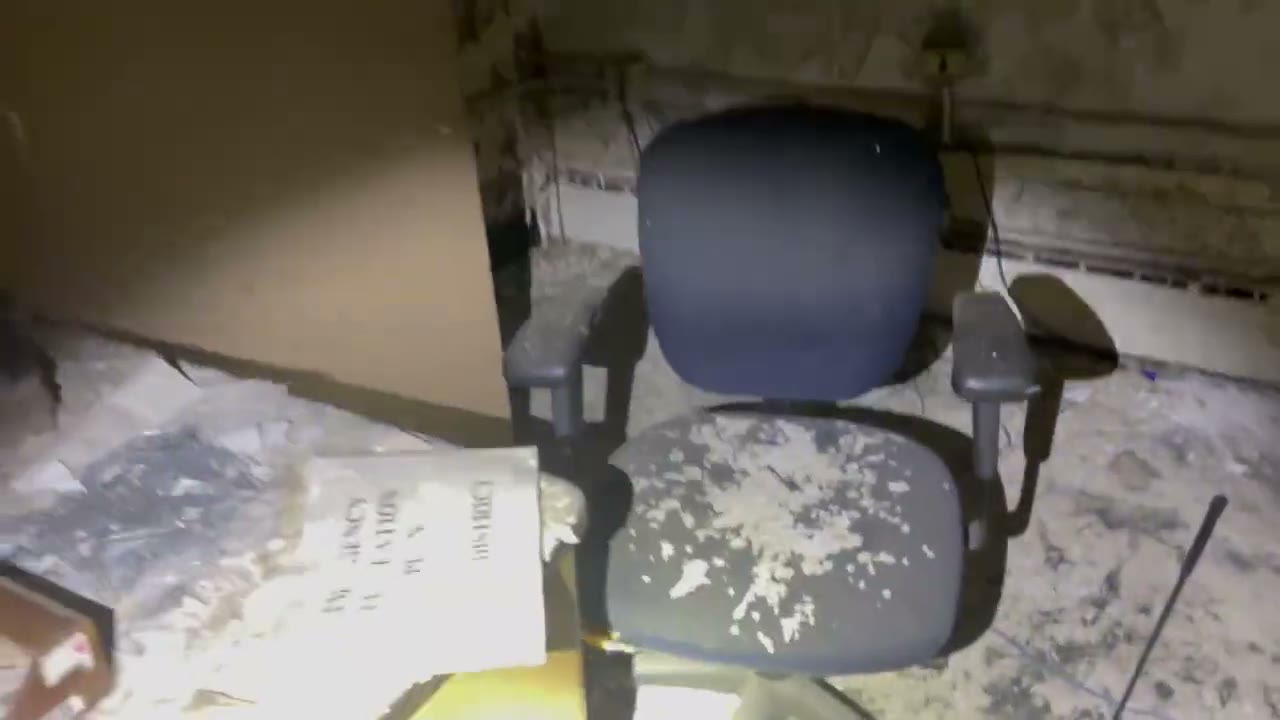
The abandoned police station video shows a police station with the power still on and wanted posters on the wall. The massive Chicago factory was used by a couple of different businesses, which fits the nonresidential rule about operations stopping. The Catholic church, school and rectory is three buildings in one video.
For related terms, what a condemned building is covers an order to close, and what a land bank is covers who holds a building after the owner gives up. How I find my own spots without burning them is in a $9.99 PDF called How to Find Abandoned Places.
An empty building with a registration number on its sign is the opposite of forgotten.
Sources
- Vacant Buildings FAQ, City of Chicago Department of Buildings
- Vacant Buildings and Vacant Storefronts Registration, City of Chicago
- Vacant Buildings, check status, City of Chicago Department of Buildings
- Chapter 13-12, Section 13-12-125, Municipal Code of Chicago, American Legal Publishing
- Chapter 13-12, Section 13-12-148 Hazardous vacant buildings, Municipal Code of Chicago, American Legal Publishing
- Vacant Buildings Rules, effective Oct 22, 2015, City of Chicago
- Vacant and Abandoned Buildings Service Requests, City of Chicago Department of Buildings
- Vacant and Foreclosed Property Registration, City of Aurora, Illinois
- Vacant Building Ordinances, Business and Professional People for the Public Interest, Jun 1, 2016
- 720 ILCS 5/21-3 Criminal trespass to real property, Illinois General Assembly
More like this


The footage that never goes public lives on Patreon. It's paid, and it's where the rough cuts, the security run-ins and the early releases go.