, exact location withheld
What Is a Land Bank?
A land bank is a public agency that takes vacant, tax delinquent property and passes it to buyers who will reuse it. How Cook County's works.
A land bank is a public agency that takes ownership of vacant, abandoned and tax delinquent property and passes it to new owners who will put it back to use. In Cook County, Illinois, that agency is the Cook County Land Bank Authority, and its job is to deal with the houses and buildings that nobody else wants to own.
This is entertainment and general information, not legal advice. If you own a property that’s in trouble, talk to a lawyer or the county.
What does a land bank actually do?
It owns property for a short time and then moves it along. The Cook County Land Bank Authority says it uses available resources to return vacant, abandoned and tax delinquent properties to productive use. It aims to support neighborhood stabilization and to encourage residential, commercial and industrial development. Its stated powers are to “acquire, hold, and transfer interest in real property throughout Cook County as approved by the Board of Directors.”
The board has 16 members, all appointed by the President of the Cook County Board of Commissioners and confirmed by the Board. Members serve three year terms, and the Authority runs under Chapter 103 of the county’s Land Development Ordinances.
Its reach is the whole county and not only the city of Chicago, which matters because the properties in my videos are spread across the city and its suburbs. That’s a different job from a bank or a developer. The name is about holding land, and the Authority says outright that it doesn’t provide financing for anyone’s purchase or rehab.
Where does a land bank get its properties?
The Cook County Board President at the time announced the idea on June 21, 2012, at a conference on reclaiming vacant properties. The announcement called the land bank “a tool of economic development designed to acquire, hold, and transfer property for reuse” and listed four ways it could get property.
- Transfer from a government
- Transfer from a bank or lending institution
- Direct purchase
- A “no cash bid” at the scavenger sale
The last one is the tax route. The county treasurer’s scavenger sale page says taxes on properties with three or more years of delinquent taxes are offered for sale, and that the Treasurer’s Office has to hold the sale every two years. The highest bidder wins a lien on the property. The goal, in the Treasurer’s words, is to return properties to productive use and to the tax rolls. The most recent sale described on that page was completed on March 2, 2022, and offered taxes for tax years 2001 through 2018.
What happens when someone buys a land bank property?
They have to actually do something with it. The Authority’s overview flyer, dated 2023, says it was formed in 2013 to deal with a large and growing inventory of foreclosed and vacant residential, industrial and commercial property. Buyers must professionally redevelop a property within 12 months of the sale. The Authority puts a soft mortgage on the property to stop a buyer from reselling without redeveloping it. It doesn’t provide financing for the purchase or the rehab, and it says staff will confirm within five business days that an application was received.
The 2012 plan had one more idea. Properties the land bank acquired would ideally be held tax free for a pre negotiated period of time, about one to four years.
How is a land bank different from a tax sale?
A tax sale sells a debt, and a land bank takes a property. At the scavenger sale, the highest bidder wins a lien. The Treasurer’s page says the winning bid may be less than the total taxes and interest owed, and the owner can still redeem. The page puts typical residential redemption at about two and a half years after the sale, and typical commercial and vacant lot redemption at six months. If the owner doesn’t pay by the deadline, the page says the owner may lose the property.
The land bank route is different. The 2012 announcement listed a “no cash bid” at the scavenger sale as one way for the land bank to acquire property. I don’t have records of how many properties took that route. I cover the sale itself in the guide on tax sale properties.
Why did Cook County want one?
The numbers in 2012 were large. The announcement said nearly 10% of Cook County’s housing units were vacant and more than 85,000 foreclosure cases were pending. The effort was meant to start as a pilot in south suburban Cook County. The plan also called for an advisory committee, which would have 60 days to name its members and another 60 days to make recommendations.
Those two figures are the reason the idea got traction. A land bank was pitched as a way to move vacant property into reuse instead of waiting on the market to do it.
Is there a catch?
There is, and a federal watchdog pointed at it. In a November 2010 report, the U.S. Government Accountability Office said vacant homes from abandoned foreclosures “can contribute to increased crime and decreased neighborhood property values.” It also said some community actions, such as land banks, could be “potentially encouraging servicers to walk away from properties before initiating foreclosure.”
The idea is simple. If a lender knows a local agency will take on a problem house, it has less reason to finish the foreclosure and pay for the upkeep. GAO said servicers typically abandon a foreclosure when the cost to complete it exceeds the expected proceeds from the sale. That’s a warning about incentives, and I’m not saying it happened in Cook County.
What does this look like in practice?
I can’t tell you whether any house in my videos went to a land bank. I don’t see title records or tax files. What I can show you is the kind of property a land bank is built for, which is a house that has been vacant a long time and has no obvious owner doing anything about it.
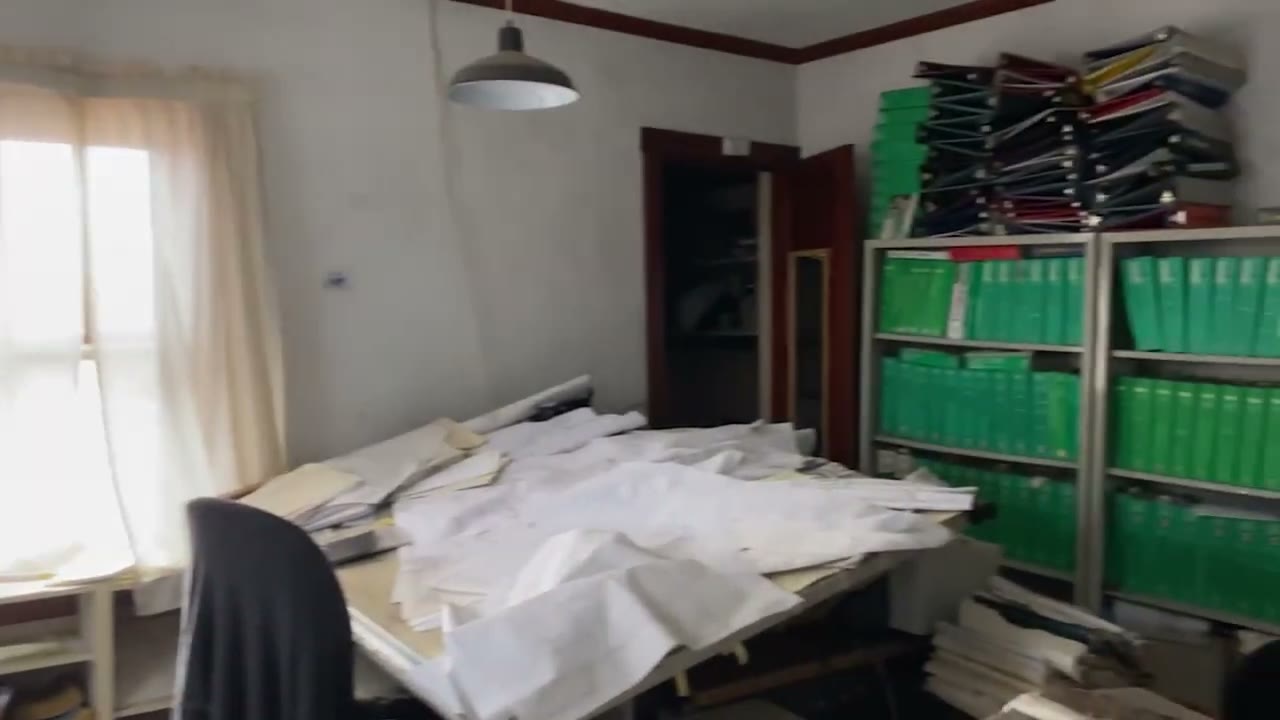
In the Illinois farmhouse video, I said I believed the place was left sometime in 2018 and that I had no idea what happened to the owners. It was one of the most cluttered abandoned houses I’ve been in, with blueprints, binders and documents I wouldn’t show on camera.
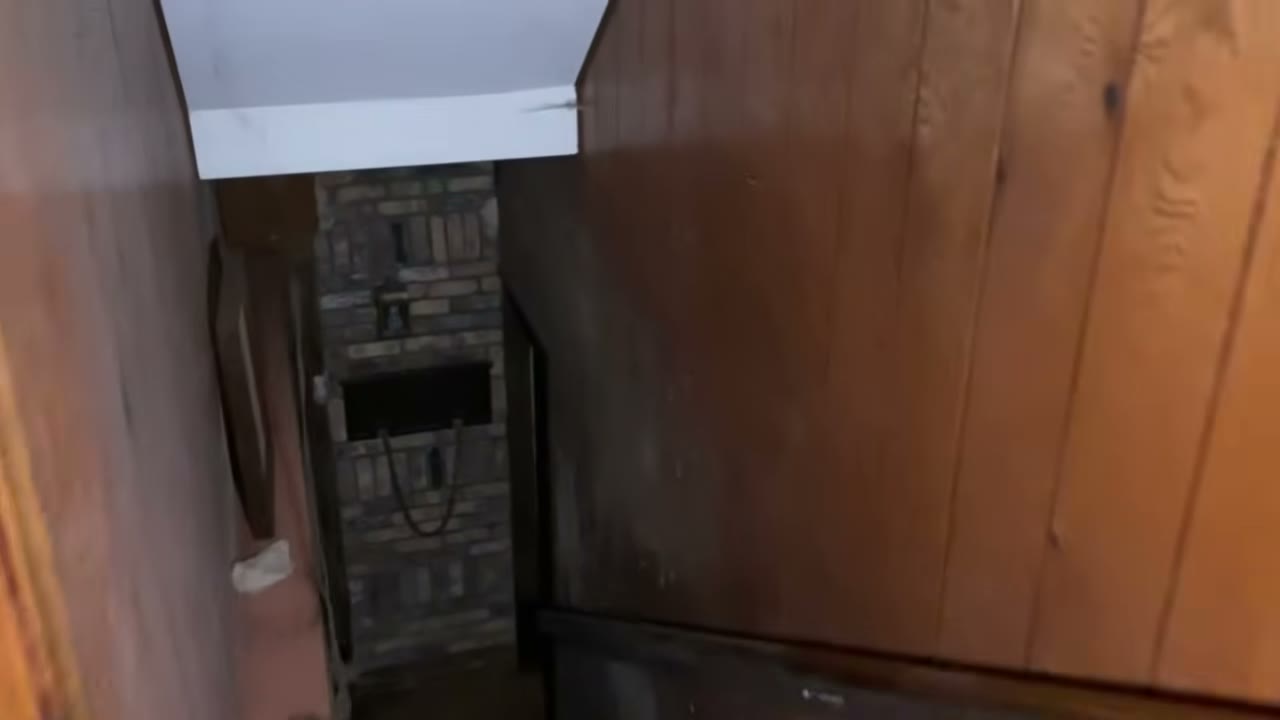
In the hunter’s mansion in the Chicago suburbs, I said they were probably going to end up demolishing the place because it was so moldy. Dishes, bottles and cleaning supplies were still sitting on the kitchen island, and the basement stairs led down to a brick wall.

Neither video tells you who owned the property or what the county planned. I keep locations private on purpose, so I’m not going to walk you through either one. The code I follow is the same wherever a place ends up, which is to leave it exactly as I found it.
How I find places like these, and how I stay safe in them, is in a $9.99 PDF called How to Find Abandoned Places.
If you’re curious whether a property near you is in the pipeline, the Treasurer’s scavenger sale page is public, and it’s where the tax route starts.
Sources
- Cook County Land Bank Authority, Cook County Government (page undated)
- Preckwinkle Lays Out Vision for Cook County Land Bank, Cook County Government, Jun 21, 2012
- CCLBA Overview Information flyer, Cook County Land Bank Authority via City of Chicago, 2023
- Scavenger Sale Information for Property Owners, Cook County Treasurer (page undated)
- Foreclosures, Federal Efforts to Address Abandoned Foreclosures (GAO-11-93), U.S. Government Accountability Office, Nov 2010
More like this



The footage that never goes public lives on Patreon. It's paid, and it's where the rough cuts, the security run-ins and the early releases go.