, exact location withheld
What Is a Liminal Space? Meaning and Real Examples
A liminal space is a place of transition, like a hallway or an empty parking lot, that feels strange without people. Where the term comes from and real examples.
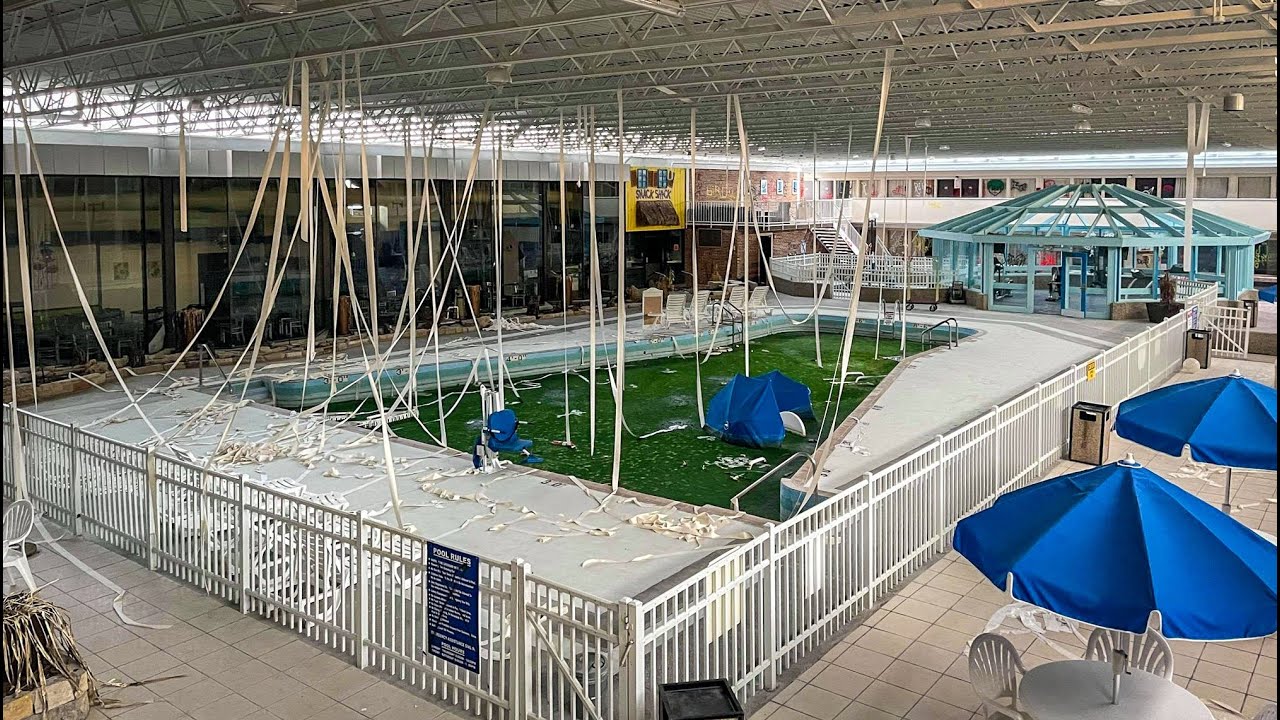
A liminal space is a place of transition, like a hallway, a waiting room or an empty parking lot, that feels strange when nobody is in it. The word comes from the Latin for threshold, and online it now means photos of empty or abandoned places that make people uneasy. Abandoned malls and office buildings show up on nearly every list of examples.
This is entertainment and general information, not legal or safety advice. Closed buildings can be dangerous and entering them can be trespassing.
Where does the word liminal come from?
It started with people, not buildings. EBSCO’s research starter says “liminal” comes from the Latin limen, meaning threshold. The folklorist Arnold van Gennep used it in 1909, and Britannica says he coined the phrase rites of passage and held that these rites have three parts, “separation, transition, and reincorporation.” He called them the preliminal, liminal and postliminal stages, meaning “before, at, and past the limen.”
The middle stage is the liminal one. EBSCO describes it as a period when a person is no longer what they were and not yet what they will become.
The internet took the idea and moved it to rooms. Global News describes liminal spaces as “the space between ‘what was’ and ‘what’s next.’” A hallway fits because nobody lives in a hallway. You only pass through it.
How did it become an internet aesthetic?
Around 2019, on a message board. EBSCO says the aesthetic “got its start in 2019” on 4chan, then spread to Reddit, Tumblr, Instagram and TikTok. Global News dates the online popularity to the same year, when a 4chan user asked for “disquieting images that just feel ‘off’.” The 2020 lockdowns pushed interest higher, since photos of emptied public spaces were everywhere.
The usual examples are the same few places. Global News lists deserted shopping malls, long hallway corridors, waiting rooms, rest stops and parking lots. EBSCO adds dead malls, meaning photos of closed stores, and the Backrooms, a story built on a picture of a yellow room with fluorescent lights. I cover that one in what the Backrooms are.
It also became a real world hobby. Global News reports on a designer, Aryeh Bookbinder, who leads liminal space tours in Toronto. “These are not landmarks,” he said. They are “corners and hallways and rooms and buildings that you wouldn’t usually find yourself in.”
Why do empty places feel off?
The sources describe the feeling better than they explain it. EBSCO calls these places “surreal, often empty places of transition that may also have some sort of nostalgic appeal.” Salon, reviewing the Backrooms movie, describes the photos as stores or buildings made unsettling by their unnatural emptiness, and ties the fascination to the sense that such places were once full of life.
That is a description, not a measurement. None of the sources I opened offers a tested scientific reason, so I won’t invent one. What they agree on is the setup. A space built for crowds, with the crowd missing, is what people respond to. EBSCO also notes a joking version called unliminal spaces, where something silly like an abandoned children’s play area cancels the unease.
Is every abandoned building a liminal space?
No. The definition is about transition. EBSCO describes these as transitional places such as corridors and alleyways, not meant for long stays. A bedroom full of someone’s belongings is a different kind of abandoned. A lobby, a stairwell, a food court, a parking garage or a stretch of office hallway fits the definition, because people were only ever supposed to be walking through.
That is why malls and corporate buildings dominate the examples. They are made almost entirely of passages. When the tenants leave, the walkways are still there and there is nothing at the end of them.
Do liminal spaces have to be abandoned?
No. The same Global News article lists waiting rooms, rest stops, parking lots and, during the pandemic, Times Square and local grocery stores. Its Toronto examples include Cumberland Terrace and the Woodbine Centre and Fantasy Fair, places people still know. Jeff Paris, recalling the opening of the Woodbine Mall, said “Maybe in 50 years, people will be doing this with the spaces that we see as new today.”
So the feeling depends on emptiness and transition, and decay is optional. A working building can be a liminal space late at night. An abandoned one adds a second layer, since the place is still laid out for crowds and nobody is coming back. Salon makes a similar point about photos of stores or buildings, tying the pull to the sense that they were once full of life.
What does this look like in practice?
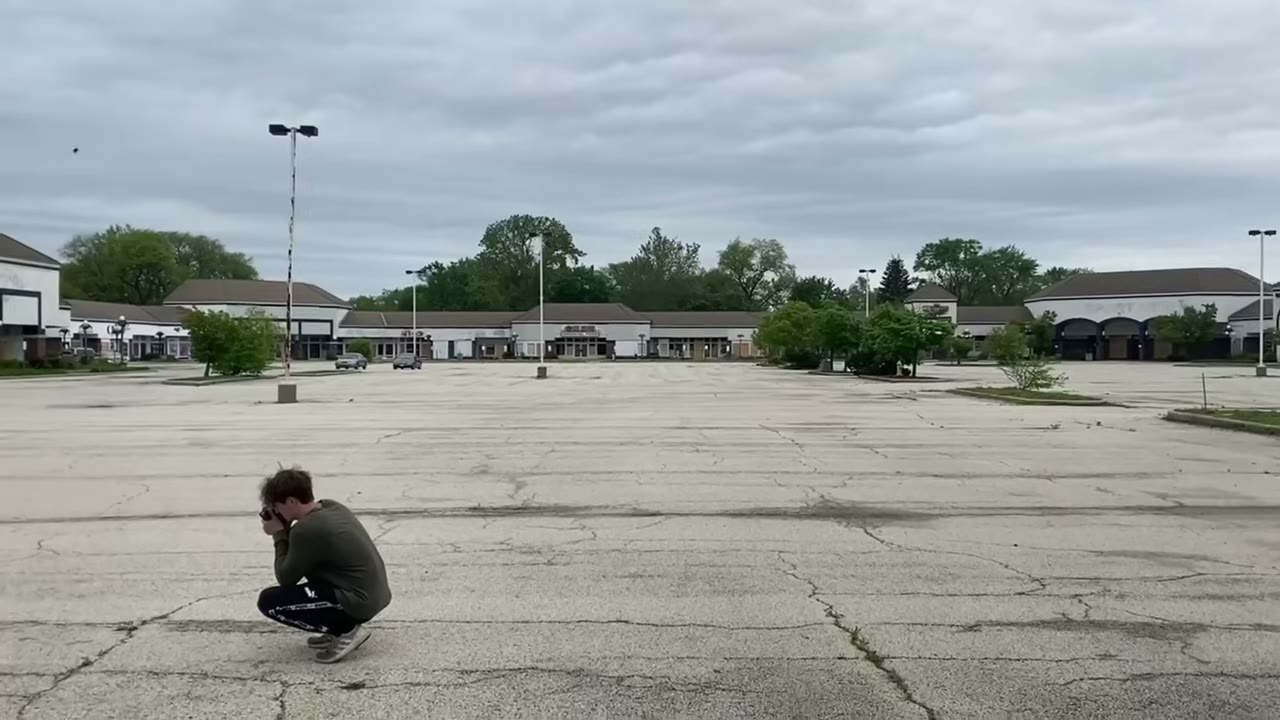
The clearest example in my videos is the strip mall I explored in Arlington Heights, Illinois. The Daily Herald reported on April 2, 2024 that Burger Baron, closed in September 2023, was one of the last businesses there and that bulldozers had started work the week before. The paper attributed the stalled redevelopment to “more than two decades of litigation, recession and failed development prospects.” The village had cited the longtime owner for code violations, with fines in the tens of thousands of dollars, and the fines resumed in November because demolition hadn’t started. The developer’s roughly $100 million plan was for 266 apartments plus senior housing and retail. Before that, the parking lot was just a very large, very empty room with the sky for a ceiling.
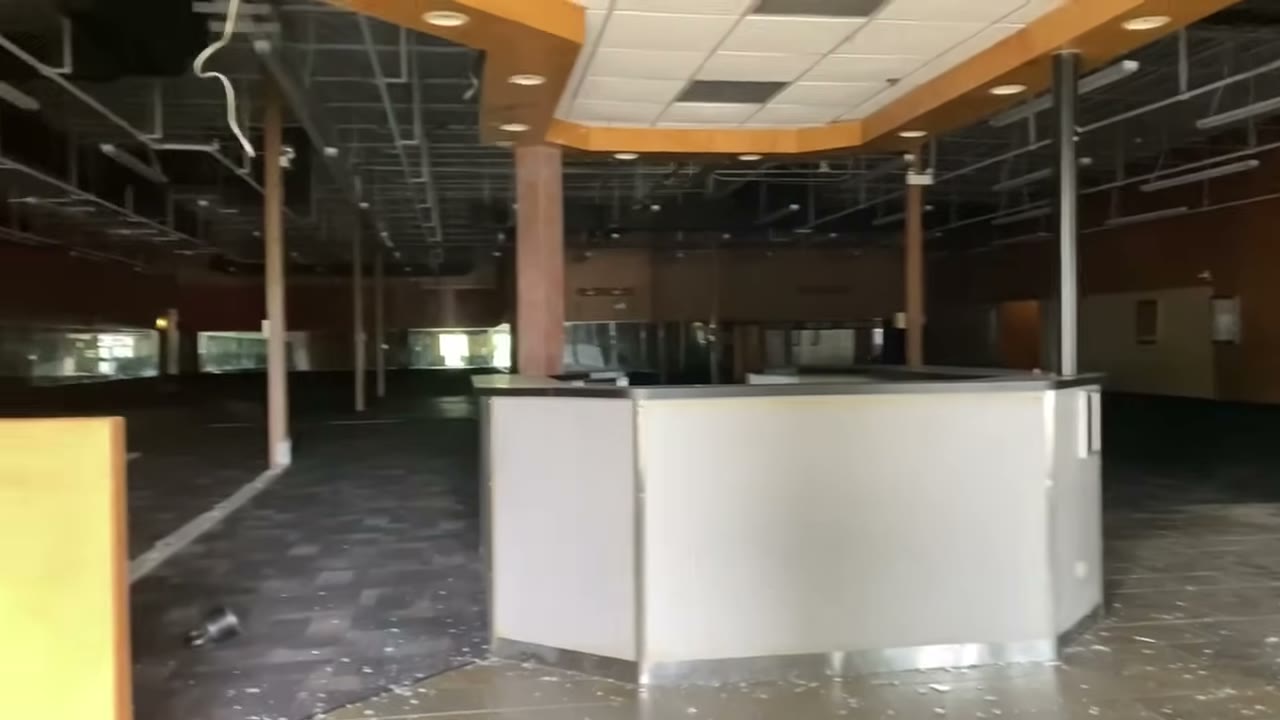
Inside, the units that had already closed looked like this. The full walk through is in the Arlington Heights explore.
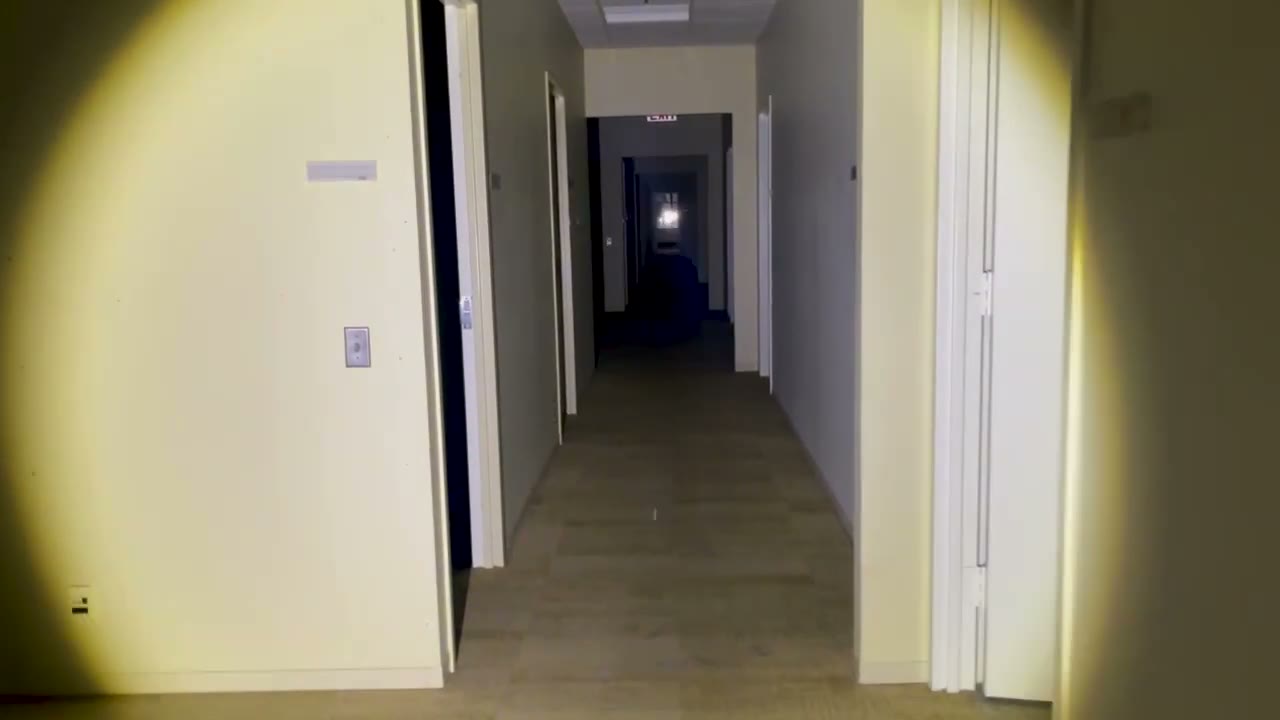
Office buildings do the same thing on a larger scale. The Allstate campus held about 2 million square feet of office space, and Patch reported in November 2021 that 95 percent of the company’s workforce was working remotely when it sold most of the campus for $232 million. A building designed for thousands of people had been mostly empty for a while before anyone walked through it with a camera. The hallway we started in still had power. It was a glass skyway, I could see the highway reflected in the windows, and the lights flickered on as we walked.
The Hewitt Associates headquarters near Chicago was a similar case. The video description calls it a massive office complex full of mold and covered in graffiti, and it has since been demolished. In the video I say almost the whole place is empty rooms and server rooms.
I carry one good flashlight for places like this, because most flashlights, including brand ones, aren’t bright enough to show where a hallway ends. It’s linked at the bottom of this page.
The Garden Hotel video has the same thing in a different building type, with banquet rooms and guest floors connected by dim corridors.
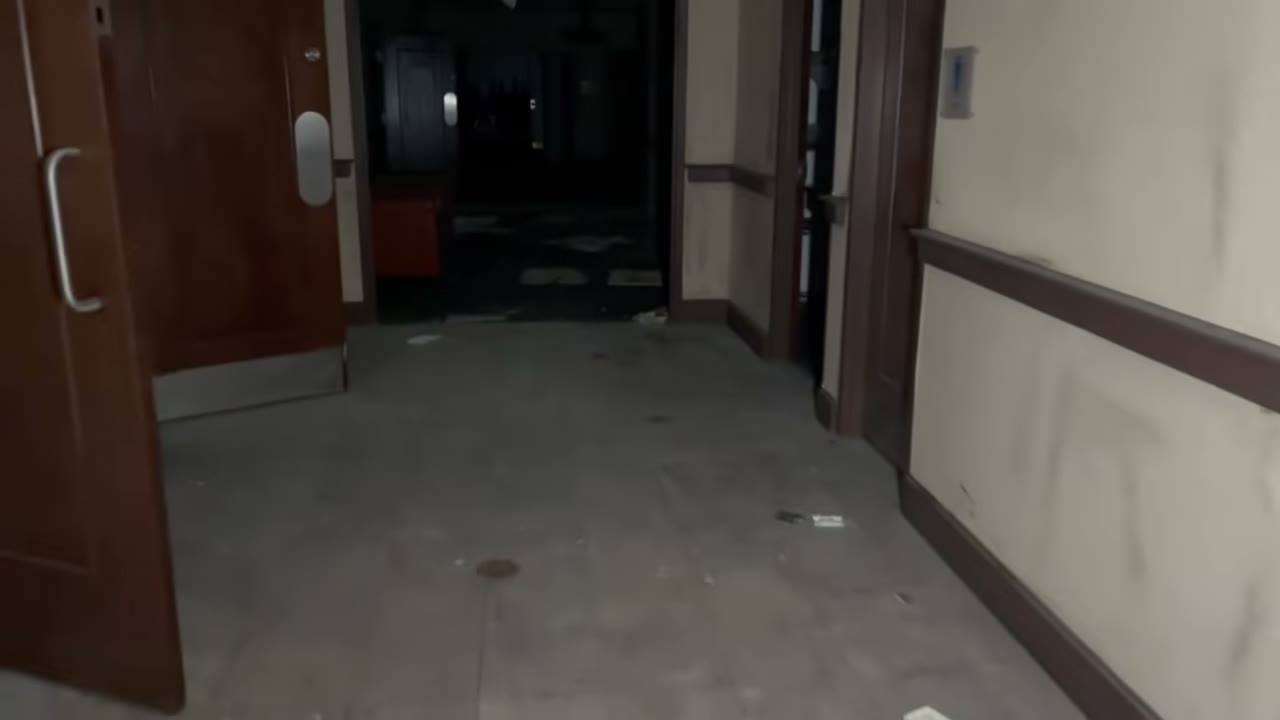
The real ones have mold, broken glass and floors nobody has checked, and I never give out locations. How I find places and stay safe while filming them is in a $9.99 PDF called How to Find Abandoned Places.
A liminal space is any place you were only meant to pass through, and abandoned buildings are full of them.
What I carried in
Same list as every video description.
Sources
- Rite of passage, Encyclopaedia Britannica
- Liminal space (aesthetic), EBSCO Research Starters, 2023
- Liminal spaces in Toronto, Global News, Dec 29, 2023
- Backrooms review, we are trapped in liminal space hell, Salon, May 30, 2026
- Demolition begins at International Plaza in Arlington Heights, Daily Herald, Apr 2, 2024
- Allstate sells Northbrook headquarters for $232M, Patch, Nov 29, 2021
More like this


The footage that never goes public lives on Patreon. It's paid, and it's where the rough cuts, the security run-ins and the early releases go.