, exact location withheld
How to Film in Dark Abandoned Buildings
Light, exposure and battery planning for filming in dark abandoned buildings, with what OSHA, NIOSH, Stanford and DJI publish and what shows up in my videos.
To film in a dark abandoned building you need a light you trust, a camera setup that gathers as much light as it can without turning the picture to mush, and a plan for the moment the light runs out. Most of the time the building helps, because skylights and windows do more than any gear I own.
This is entertainment and general information, not safety or legal advice. Nothing here is a reason to go inside anything, and a dark building is a worse place to make mistakes than a lit one.
How dark is a dark abandoned building?
Darker than any place built for people. OSHA’s construction rule sets a minimum of 5 foot candles in indoor corridors, hallways and exitways, and the same 5 for tunnels, shafts and general underground work areas. That rule covers active work sites, not explorers, but it gives you a number for what the people who write safety rules think a hallway needs. An abandoned hallway with the power off and no window nearby has none of that.
Your eyes are part of the problem. A paper in Frontiers in Psychology says the traditional view is that rods take 20 to 40 minutes to fully recover after a bright light. The authors argue most of the adaptation is much faster than that, and that some receptors can still take many minutes after brighter light. Either way, walking from a skylit room into a dark stairwell leaves you seeing less than you think you do.
That matters because the hazards don’t care how well you can see. The U.S. Fire Administration lists holes in floors, missing stairs, and open shafts and pits as the hazards in vacant buildings. In the school someone says “this hallway is very dark” on camera, and that is the moment to slow down. Slowing down costs nothing. Filming while you walk blind can cost a lot.
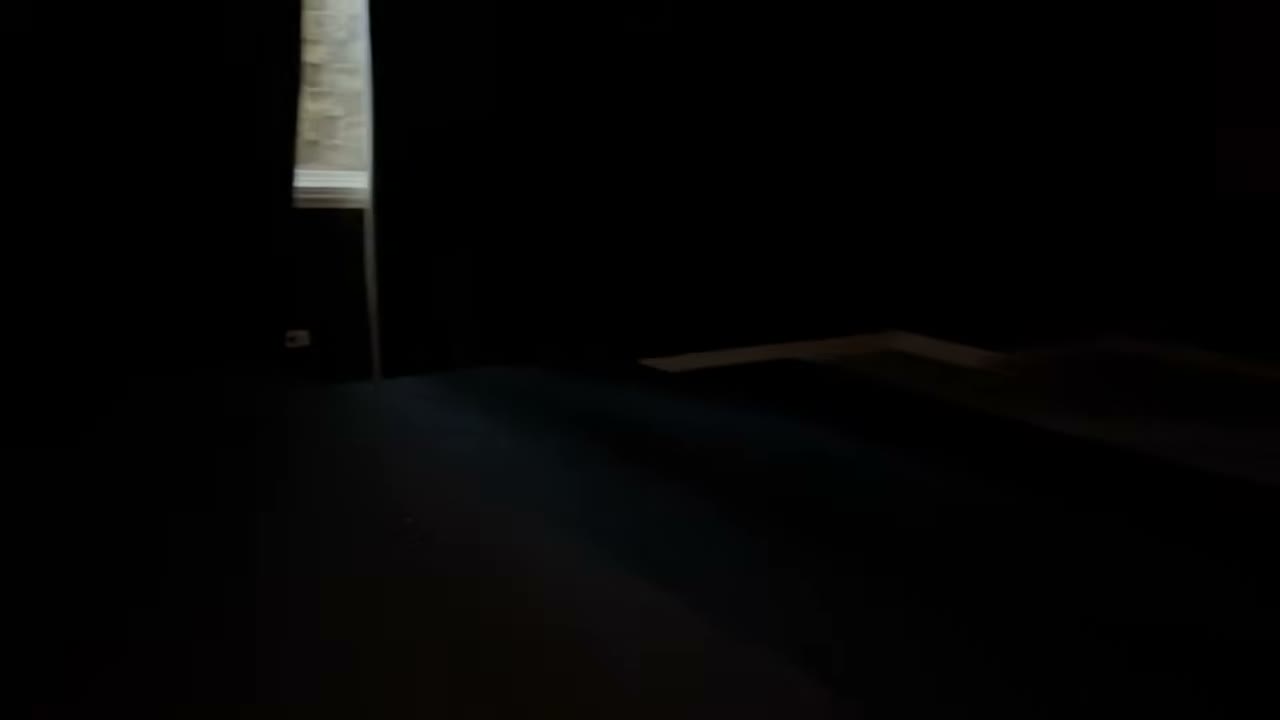
What does a camera need to film in the dark?
More light on the sensor, and every way of getting it costs something. Stanford’s exposure applet lays out the trade. Aperture changes depth of field, shutter speed changes motion blur, and raising the ISO also raises image noise. It also says raising exposure time improves the signal to noise ratio faster than raising the ISO, so the advice is to use as much exposure time as your blur limits allow and only then raise ISO.
Video takes away some of that freedom. The 180 degree shutter rule says to set the shutter to twice the frame rate, which means 1/50 of a second at 25 frames per second. A slower shutter would brighten the picture, but it breaks the rule and smears motion. So in a dim room you are choosing between noise, blur and a lower frame rate, and no setting makes that choice go away.
An action camera is a small box with a small lens, so it leans on its sensor. The camera on my gear list is the DJI Osmo Action 5 Pro, and DJI’s spec page lists a 1/1.3 inch CMOS sensor, an f/2.8 aperture and a video ISO range of 100 to 51200. It also lists a feature called SuperNight for 4K, 2.7K and 1080p at 24 to 60 frames per second. The listing does not cover the 100 and 120 frame modes, so a dark room is not the place for slow motion. DJI doesn’t say what SuperNight does on that page, so I can only tell you what the page lists.
Which light should you bring?
One good one. Most flashlights, including brand ones, aren’t bright enough, so I carry one good light. The Coast XP11R on my gear list is the one I use, and it is linked at the bottom of this page. I wrote a separate post on picking a flashlight.
The numbers on a box mean more when they follow a standard. ANSI/NEMA FL 1 covers hand held flashlights, spotlights and headlamps and sets test methods for light output in lumens, run time, peak beam intensity, beam distance, impact resistance and water resistance. It also governs how manufacturers may label those claims. I couldn’t open the full text, so I can’t give you the pass marks, but the list tells you what to compare. Output is only one line on it.
Brightness isn’t the whole job either. NIOSH built an LED cap lamp for underground miners and says better light improves a miner’s ability to see and avoid potential hazards. Its testing reportedly showed major improvements in trip hazard detection and in spotting moving hazards at the edge of vision, with less glare than other LED cap lamps. A light that blinds you or only lights a small circle leaves the rest of the floor to chance.
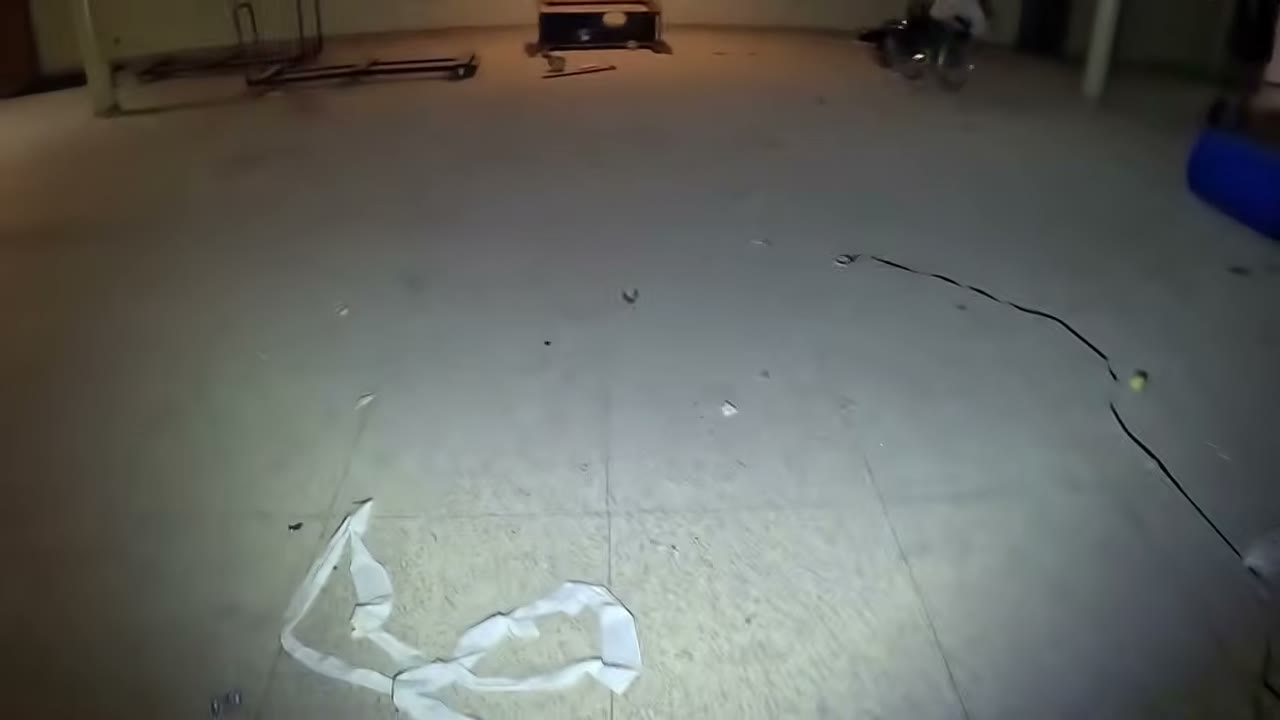
Can you use the building’s own light?
Yes, and it beats anything you carry. Skylights and big windows put even light across a room. Inside the Native American resort mansion you barely need a flashlight in the daytime because of the skylights. In the school gym we pointed out that it looks lit by fluorescent lights but the light is all natural, since the skylights are the only lighting. The Northern Illinois church is the other side of that. Upstairs it gets really dark, and I said a sunny day is the best day for it.
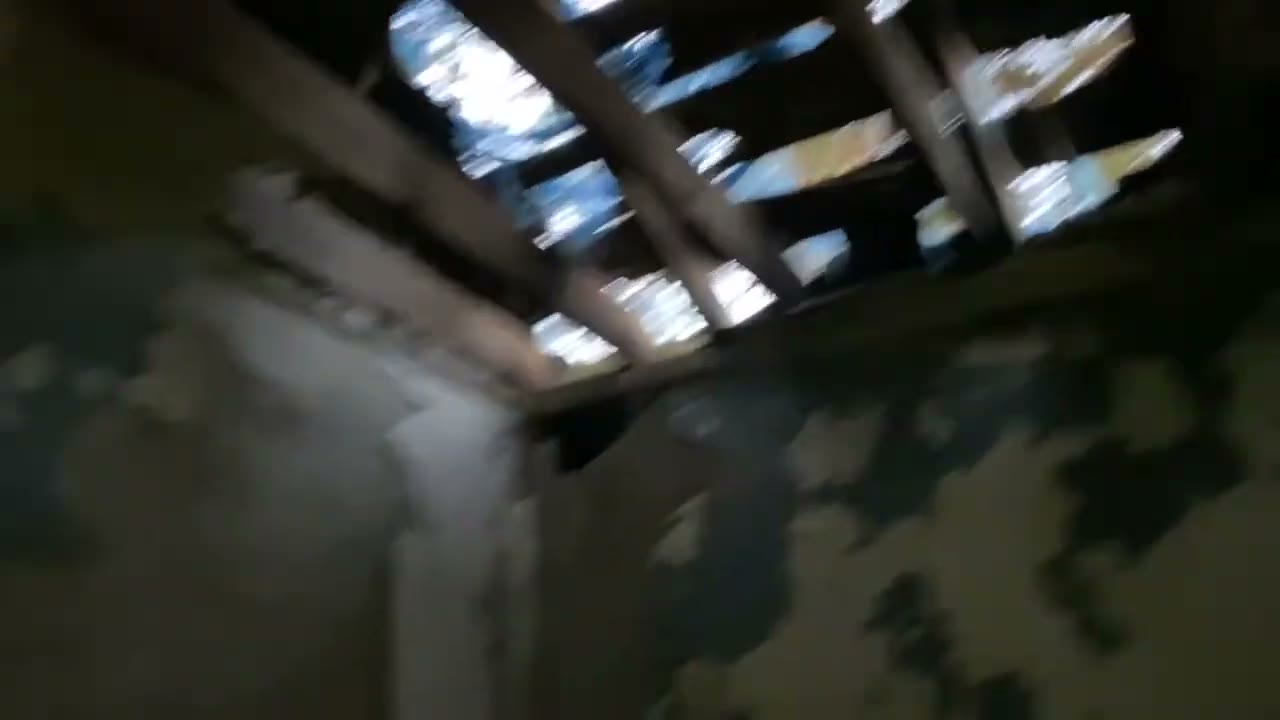
Daylight has a catch. One frame from the Civil War era house is looking up at a roof with daylight pouring through the gaps. Those gaps are bright and everything around them reads as black, so the camera has to pick one. The holes are also a sign of a failing roof, which the water gets through and the floor pays for.
What happens when the light dies?
You find out how much you planned. In the school, near the end, I said I was trying to reach the gym before my flashlight died, which is a sentence you don’t want to say in a building with a warped floor (29:42 in the video). FL 1 includes a run time test with a defined end point, so the number on the box is a guide and not a promise. Decide before you go in how much battery means it’s time to leave, and carry a second source of light. In the architect’s train house I forgot my light and borrowed one for the video, which is a fair argument for checking the bag in the parking lot.
The camera has the same problem. DJI’s page lists a 1950 mAh battery and 240 minutes of runtime, measured at 25 degrees Celsius while recording 1080p at 24 frames per second with the screens off. It lists an operating range of minus 20 to 45 degrees Celsius and a charging range of 5 to 40. So a cold building can run your camera but won’t let you charge it. The 35,000mAh power bank on my list is what keeps the camera and phone alive between stops.
Also tell someone when you plan to be out. I covered why in Should You Explore Abandoned Places Alone?.
What does this look like in practice?
The Highland Park mansion had a dark basement, and I said on camera that it was pretty dark and really cool. The hot tub, a massive aquarium and the movie room were all down there. The frame above is a basement room where the camera caught almost nothing. That is what walking into the dark with a camera that wants a lot more light looks like.
At the bunker in the Civil War era house I had to get my flashlight out to go down, and I said it was pretty small. A light you trust matters most in the one room where you can’t see what you’re stepping on. The school gym is the opposite case, where the building did the work and the footage looks like a lit set.
How I film without burning locations, and how I plan around light and safety, is in my guide, How to Find Abandoned Places.
If you can’t see your feet, put the camera down.
What I carried in
- DJI Osmo Action 5 Pro (Adventure Combo)
- Coast XP11R flashlight
- 35,000mAh power bank with built in cables
Same list as every video description.
Sources
- 1926.56 Illumination, Occupational Safety and Health Administration
- Rapid Adaptation of Night Vision, Frontiers in Psychology, Jan 23, 2018
- Variables That Affect Exposure, Stanford University Computer Graphics Laboratory, updated Feb 29, 2012
- Video Tips The 180 Degree Shutter Rule, Australian Photography, Aug 13, 2025
- Osmo Action 5 Pro Specs, DJI
- ANSI/NEMA FL 1 Flashlight Basic Performance Standard, National Electrical Manufacturers Association, Aug 18, 2009
- The NIOSH LED Cap Lamp Provides Improved Illumination for Greater Safety in Underground Mines, NIOSH, Feb 9, 2017
- Basic Evaluation Procedures for Abandoned and Vacant Buildings, U.S. Fire Administration, Apr 2018
More like this


The footage that never goes public lives on Patreon. It's paid, and it's where the rough cuts, the security run-ins and the early releases go.