, exact location withheld
The Best Drone for Scouting Abandoned Places
A drone under 250 g is the sensible first drone for scouting abandoned places. Seven compared on weight, sensor, flight time, obstacle sensing and range, plus FAA rules.
A drone under 250 grams is the sensible first drone for scouting abandoned places. It folds into a bag, it answers the questions you actually have before an explore, and it’s the lightest regulatory load. The one I carry most is the DJI Mini 5 Pro, and the heavier one is the DJI Mavic 3 Cine.
Disclosure. The DJI Mini 5 Pro and the DJI Mavic 3 Cine are the drones I carry and link to. Those links, and the Amazon search links in the table, earn me a commission when you buy through them. Links to manufacturers and the FAA don’t.
Entertainment, not legal advice. Drone law depends on where you are and what you’re doing, and an abandoned building still has an owner. This post is about choosing a drone and understanding the rules the FAA publishes, not about flying over anyone’s property.
What is a drone actually for on an explore?
Scouting. The questions are the ones a camera on the ground can’t answer. What shape is the roof in? Is there a way to see all four sides of the building without walking up to it? Are there cars in the lot, a fresh tire track, a cut lawn? Is anyone using the place?
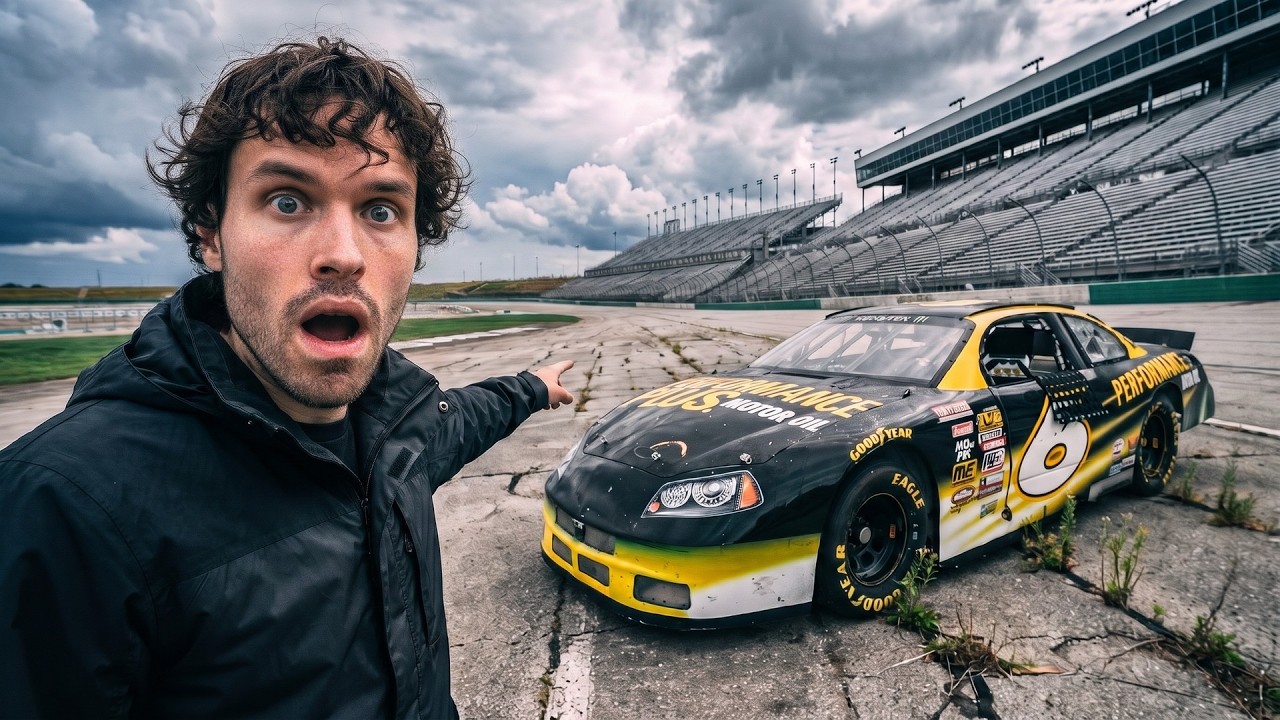
That last one matters most, because “abandoned” is often wrong. The Kentucky Speedway has a locked gate and a #6 car in the garage, and the county sheriff still says it isn’t abandoned. At the French mansion, deep tractor ruts and no tire tracks looked like proof nobody came. The owner turned up and walked in to work on the place. A few minutes of height shows you what a road doesn’t. If you’re looking for places in the first place, a drone checks the records against reality.
It also keeps you off a roof. A drone looks at a failing roof from the air, so you don’t have to stand on it.
That’s the job. Footage for the video is a bonus, and it’s a different question, which comes up with Part 107 below.
Do I need to register a drone under 250 grams?
For recreational flying in the U.S., no, and that’s only half the story. The FAA’s registration page says all drones must be registered except those that weigh 0.55 pounds or less (less than 250 grams) and are flown under the Exception for Limited Recreational Operations. Registration otherwise costs $5, is valid for three years, and covers all your drones if you’re a recreational flyer.
The exemption stops there. The FAA’s recreational flyers page says to take the Recreational UAS Safety Test, TRUST, and carry proof of passage, and the page states no exception for small drones. TRUST is, in the FAA’s words, “an aeronautical knowledge and safety test developed by the FAA for recreational drone flyers.” The same page asks you to fly at or below 400 feet in uncontrolled airspace, keep the drone in visual line of sight or use a visual observer, and get FAA authorization before flying in controlled airspace. It also tells recreational flyers to follow the safety guidelines of an FAA recognized community based organization.
So the under 250 g advantage is real and narrow. You skip registration for hobby flights. You don’t skip TRUST, and you don’t skip any of the operating rules. The FAA’s Remote ID page says drones that are required to be registered or are registered must comply with Remote ID, which means a drone you register, for any reason, also has to broadcast.
What about flying for a YouTube channel?
That’s a Part 107 question, and I’m not a lawyer. The FAA defines recreational flying as flying “for enjoyment and not for work, business purposes, or for compensation or hire.” On its recreational page it adds that “compensation, or the lack of it, is not what determines if a flight was recreational or not,” and “When in doubt, assume Part 107.” Its examples include taking pictures to help sell a property and photographing a high school football game for the school’s website.
For work, the FAA says there are three ways to do it. You can follow the Small UAS rule, get an exemption, or get an airworthiness certificate. Part 107 requires a remote pilot certificate with a small UAS rating, registration of each drone you operate, and bars flying over people unless they’re directly participating. The under 250 g exemption doesn’t carry over. The registration page says drones registered under the recreational exception cannot be flown under Part 107.
Whether footage on a channel counts is for the FAA and a lawyer. I don’t have an answer, and neither should a blog post.
How do the drones compare?
This is from the manufacturers’ own spec and store pages, not from flying them. Weights are the figures each company lists, and most are rounded. Flight times are manufacturers’ best case numbers, in a wind tunnel or in no wind, so expect less. Transmission range is the FCC region, open air maximum. DJI’s own Mini 5 Pro page says urban range is roughly 1.5 to 4 km and that behind buildings it drops to about 0 to 0.7 km, which is the case you’ll actually be in. Price tiers are relative, from $ to $$$$. I’m not listing prices, which change.
| Drone | Weight | Sensor | Max flight time | Obstacle sensing | Video range (FCC) | Wind | Price |
|---|---|---|---|---|---|---|---|
| DJI Mini 5 Pro (DJI) | 249 g | 1 inch, 50 MP | 36 min, 52 with Plus battery | Omnidirectional, forward LiDAR | 20 km | Not rated. DJI says don’t fly at 12 m/s or more | $$ |
| DJI Mini 4 Pro · Amazon | Under 249 g | 1/1.3 inch, 48 MP | 34 min, 45 with Plus battery | Omnidirectional | 20 km | 10.7 m/s | $$ |
| DJI Air 3S · Amazon | 724 g | 1 inch, 50 MP, plus a 1/1.3 inch tele | 45 min | Omnidirectional plus forward LiDAR | 20 km | 12 m/s | $$$ |
| DJI Mavic 3 Cine (DJI) | 895 g listed for the standard Mavic 3, not listed for the Cine | Hasselblad 4/3, plus a 1/2 inch tele | 46 min | Omnidirectional | 15 km | Don’t fly above 13.8 m/s | $$$$ |
| DJI Mavic 3 Pro · Amazon | 958 g (963 g Cine) | Hasselblad 4/3, 20 MP, plus two tele | 43 min | Omnidirectional | 15 km | 12 m/s | $$$$ |
| DJI Flip · Amazon | Under 249 g | 1/1.3 inch | 31 min | Forward infrared, downward sensors | 13 km | 10.7 m/s | $ to $$ |
| DJI Neo · Amazon | About 135 g | 1/2 inch, 12 MP | About 18 min | None listed | Wi-Fi, 50 m | 8 m/s | $ |
| Autel EVO Lite+ · Amazon | 835 g | 1 inch, 20 MP | 40 min | Forward, backward, downward | 12 km | Class 7 (14 to 16.5 m/s) | $$$ |
| Autel EVO Nano+ · Amazon | 249 g | 1/1.28 inch, 50 MP | 28 min | Front, back and down | 10 km | 7.9 m/s | $$ |
Two caveats. The original Mavic 3 Cine and the Mavic 3 Pro Cine are different drones, and the Cine is the one that records Apple ProRes to a built in 1 TB SSD. The page I used for my link is the original, so those numbers are for that one. The Mini line also has a Plus battery that, per DJI’s own FAQ, pushes the Mini 5 Pro over the EU’s C0 weight threshold. DJI’s pages don’t give a U.S. weight with that battery. Weigh yours before you rely on the 250 gram line.
Why is the Mini the one in the bag?
On paper it’s the specs that matter for scouting. At 249 g it’s under the line that exempts a recreational drone from registration. It has a 1 inch sensor, so a quick look at a roof in dim light isn’t mush. It lists omnidirectional obstacle sensing, with forward LiDAR and vision sensors, which matters near buildings with trees and wires. DJI says that sensing works even at night, though it also warns that dirt on the LiDAR can cause false detections and that LiDAR won’t work properly in bright light. The standard battery is 36 minutes, which is a lot of scouting.
The limits are no wind rating and a warning against 12 m/s or more. A drone this light moves around in gusts. The Mini 4 Pro lists a smaller sensor and 34 minutes, but it does list a 10.7 m/s wind rating. If you’re buying your first, that’s the real decision.
When does the Mavic earn its weight?
When the footage is the point, not the scouting. The Mavic 3 line has the larger Hasselblad 4/3 sensor and tele cameras, which let you look at a roof from farther away. The Cine version adds ProRes and a 1 TB drive. It lists 15 km of range, omnidirectional sensing and 46 minutes in the air.
That’s a bigger, heavier, pricier kit. It’s over 250 grams, so it has to be registered, and per the FAA registered drones must carry Remote ID. For a pure scouting pass it’s more drone than you need. For a shot you’ll cut into a video, the sensor is worth the weight.
What about the other drones?
The Air 3S is the middle option, with a 1 inch sensor plus a tele, 45 minutes and LiDAR on the front, at 724 g. It’s over 250 g, so it carries the registration paperwork without the Mavic’s sensor. The Flip is sold with a propeller guard and has a forward infrared sensor, and its page lists no omnidirectional sensing, which is the thing you want near a building. The Neo is 135 g with no obstacle sensing and a 50 m Wi-Fi range. That’s a vlog toy, not a scouting tool.
Autel’s EVO Lite+ has a 1 inch sensor, a wind rating of Class 7 and a longer rating than DJI’s midsize drones, but it’s 835 g and lacks side sensing. The Nano+ matches the Mini on weight and sensor but has a 28 minute battery and a 7.9 m/s wind rating.
Check one more thing before you buy. The FCC added foreign produced drones and critical components to its Covered List on December 22, 2025. Its fact sheet says that does not prohibit the import, sale or use of existing models the FCC already authorized, and does not affect people who already own drones. It applies to new models. In July 2026 the FCC also asked for comment on a possible prohibition for some categories, including drones that integrate LiDAR, and that notice said already purchased drones would be excluded. It’s a proposal, not a rule, and it’s moving. Read the current FCC page before you spend $1,000.
Why never fly over people or active property?
The FAA’s rule for Part 107 pilots is that remote pilots may not operate over people, for any duration without a category compliant drone or a waiver. For hobby flyers, the FAA notes that no recognized community based organization’s guidelines permit recreational flights over open air crowds, and flyers who go outside those guidelines lose the recreational exemption and fall under Part 107. A scouting drone has no business over a car lot with people in it, a road, or a worksite.
Property is separate and local. The FAA and DOT say states and local governments can’t regulate aviation safety or airspace efficiency, but laws on other subjects, “trespass on property,” harassment and privacy, can still apply. In practical terms, the FAA is not the only one with an opinion about your drone, and a place that looks empty is somebody’s. A drone also announces itself. The French mansion had “a drone buzzing somewhere over the trees” while we were hiding in a chicken coop, and it was not mine.
What is the sensible first drone?
The Mini. Pick the Mini 5 Pro if you want the 1 inch sensor, LiDAR and the long range. Pick the Mini 4 Pro if you want the wind rating and a smaller sensor is fine. Take TRUST, carry the proof, weigh the drone with the battery you actually use, and keep it where you can see it.
A drone is a way to learn what a building is before you decide anything about it, and the answer is sometimes “someone is using this.”
What I carried in
Same list as every video description.
Sources
- How to Register Your Drone, FAA, Mar 18, 2024
- Recreational Flyers & Community-Based Organizations, FAA, Oct 29, 2026
- What is TRUST?, FAA
- Small Unmanned Aircraft Systems (UAS) Regulations (Part 107), FAA, Jul 6, 2026
- Know the Rules Before Operating Drones Over People, FAA
- What is the definition of recreational or hobby use of a UAS or drone?, FAA
- How do I fly a UAS or drone for work or business purposes?, FAA
- Remote Identification of Drones, FAA, Mar 19, 2025
- State and Local Regulation of Unmanned Aircraft Systems (UAS) Fact Sheet, FAA and DOT, Jul 14, 2023
- FACT SHEET: FCC Updates Covered List to Include Foreign UAS, FCC, Dec 22, 2025
- FACT SHEET: FCC Takes Action to Secure the Drone Supply Chain, FCC, Jul 21, 2026
- DJI Mini 5 Pro Fly More Combo (DJI RC 2), UK store page, DJI
- DJI Mini 5 Pro, Philippines store page, DJI
- DJI Mini 5 Pro, Greece store page, DJI
- DJI Mini 4 Pro, specs, DJI
- DJI Air 3S, specs, DJI
- DJI Mavic 3 Pro, specs, DJI
- DJI Mavic 3 Cine Premium Combo, DJI Store
- DJI Mavic 3, DJI
- DJI Flip, specs, DJI
- DJI Neo, specs, DJI
- Drones EVO Lite Plus, Autel Robotics
- EVO Nano Series, Autel Robotics
More like this


The footage that never goes public lives on Patreon. It's paid, and it's where the rough cuts, the security run-ins and the early releases go.