Illinois, exact location withheld
Abandoned State Asylum in Illinois, Room by Room
A boarded up state asylum in Illinois with flooded rooms, steel sterilizer doors, old sinks and a classroom full of desks.
By Decay
Part of Seven Abandoned Illinois Hospitals and Asylums With Rooms Left Behind
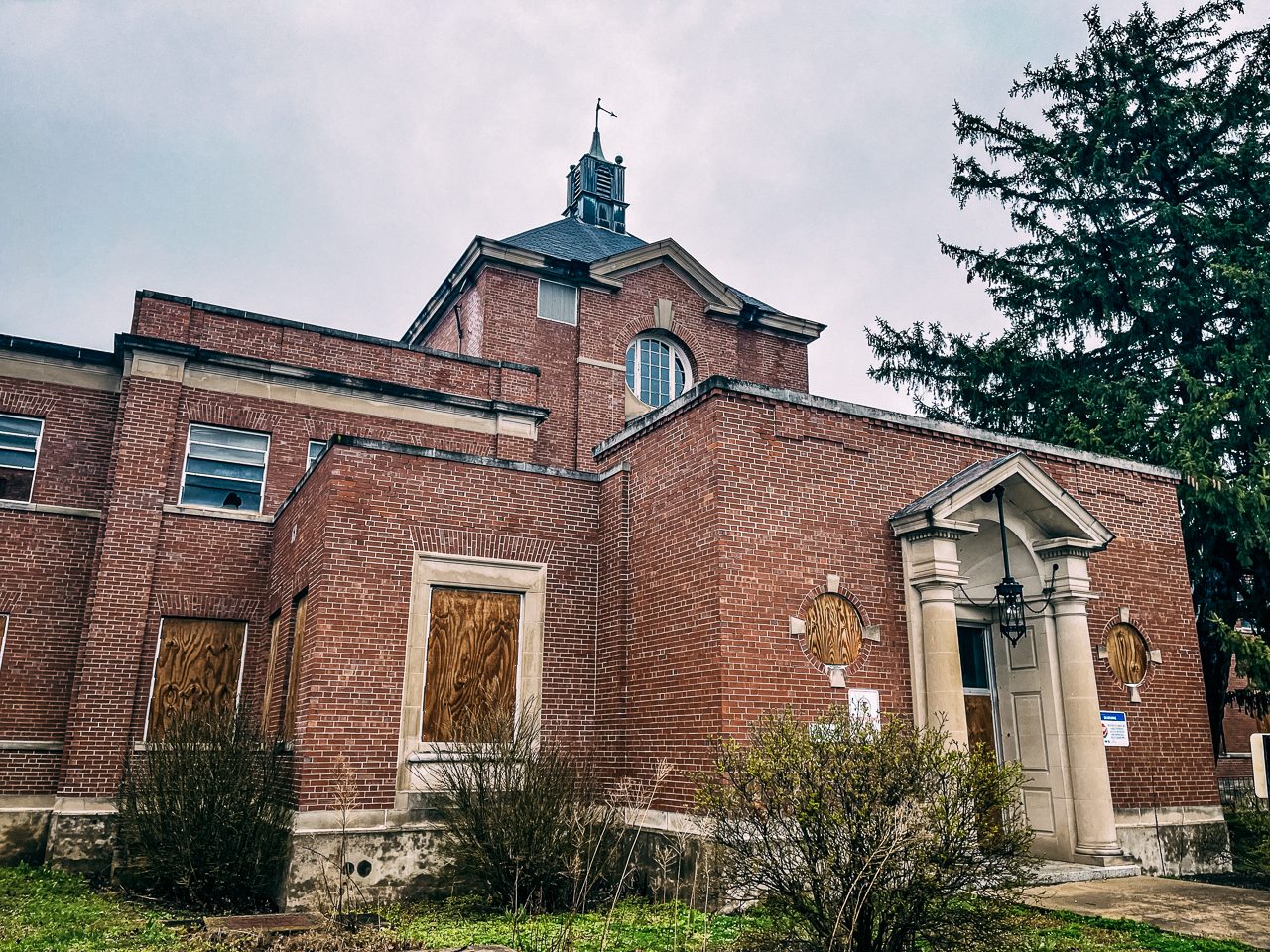
This is an abandoned state asylum in Illinois. The outside is red brick with boarded up windows, a columned doorway and a small cupola on the roof. Inside, the damage is much worse.
Damaged rooms
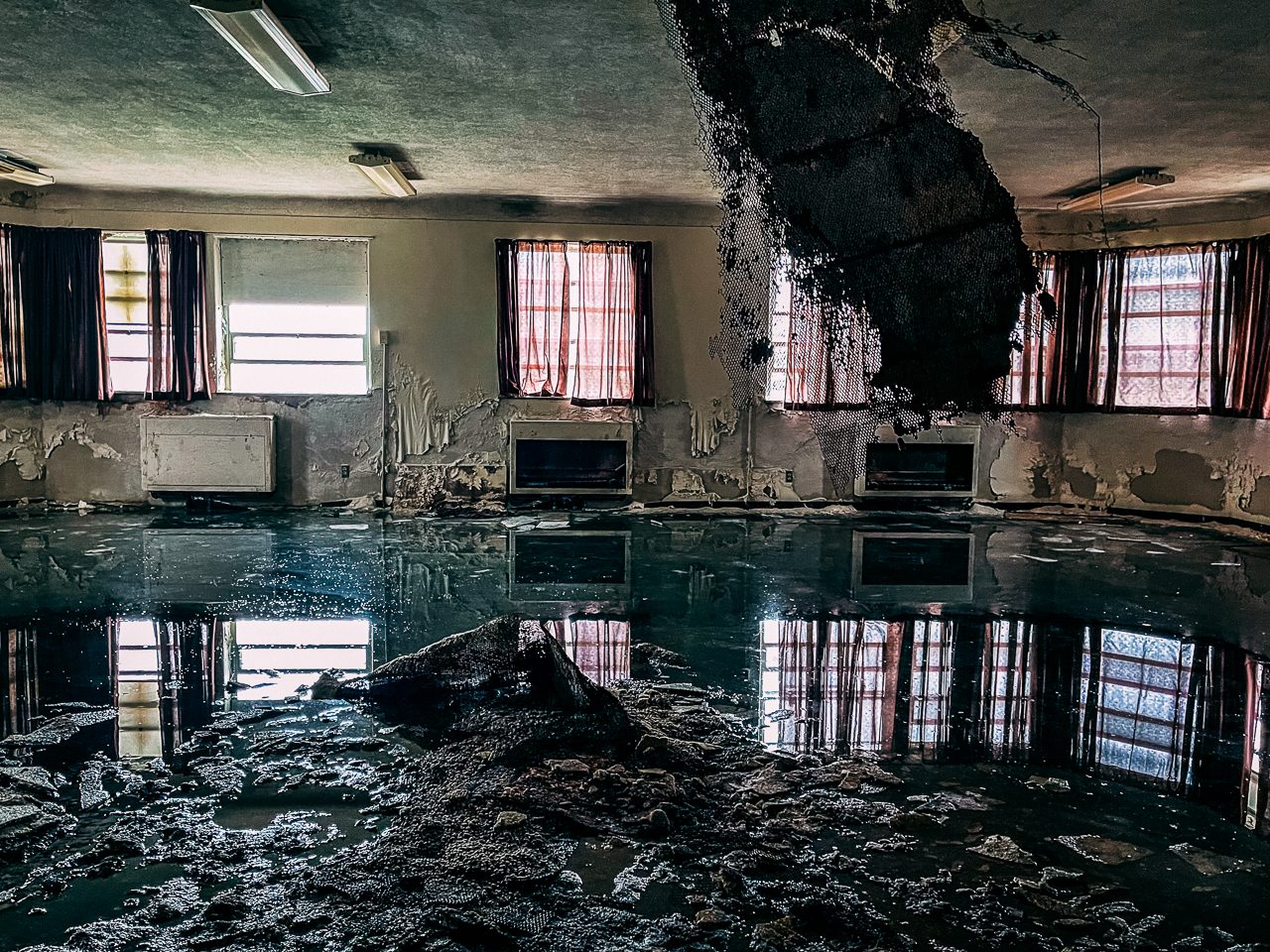
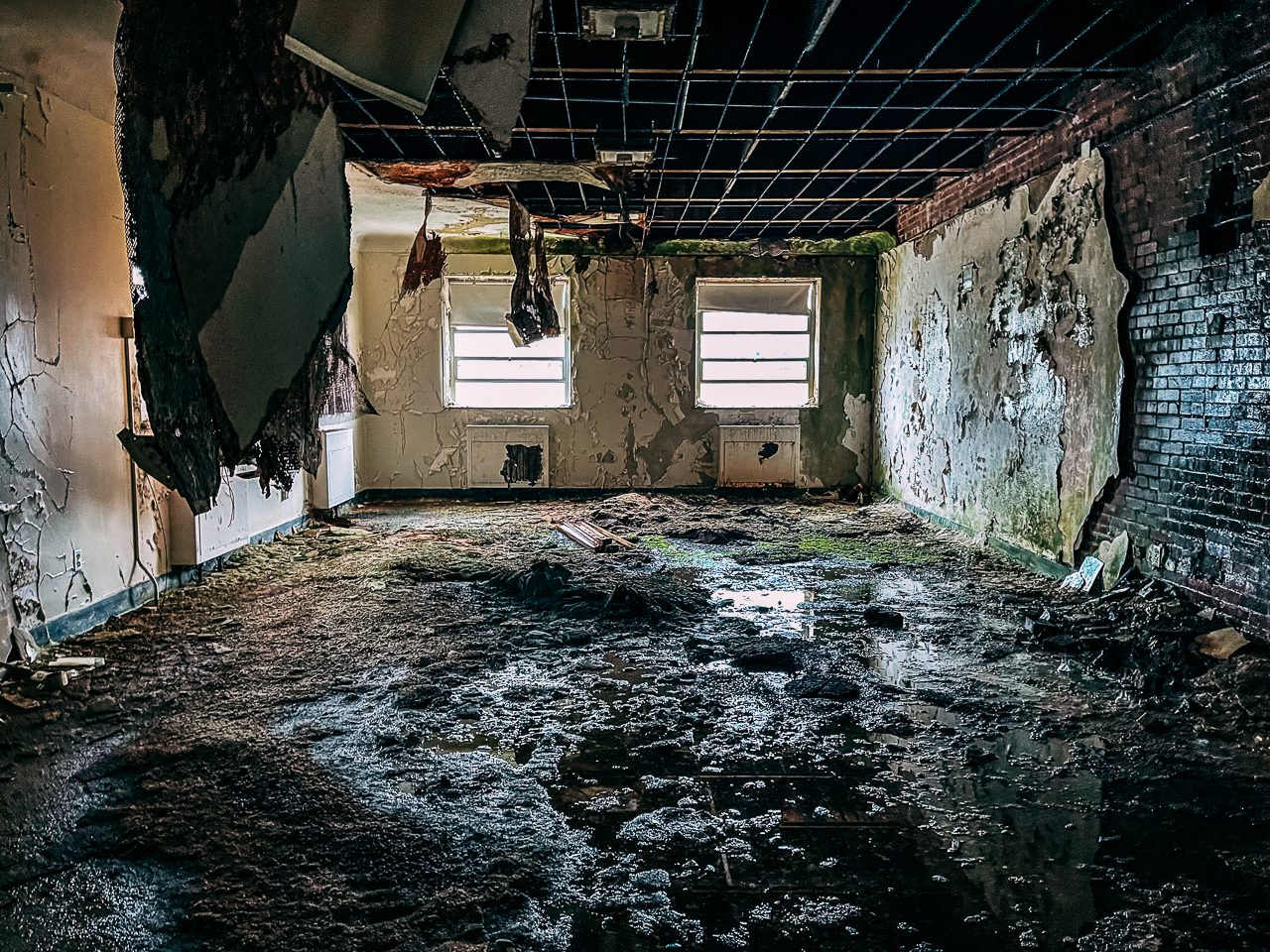
Water has collected on the floor in some rooms, and parts of the ceilings have come down. In one room a black section of ceiling hangs over the water, and the curtains are still up at the windows. Walls are peeling back to the brick, and the floors are covered in wet, dark debris. In the room with the fallen ceiling, the metal grid that held the tiles is still in place overhead.
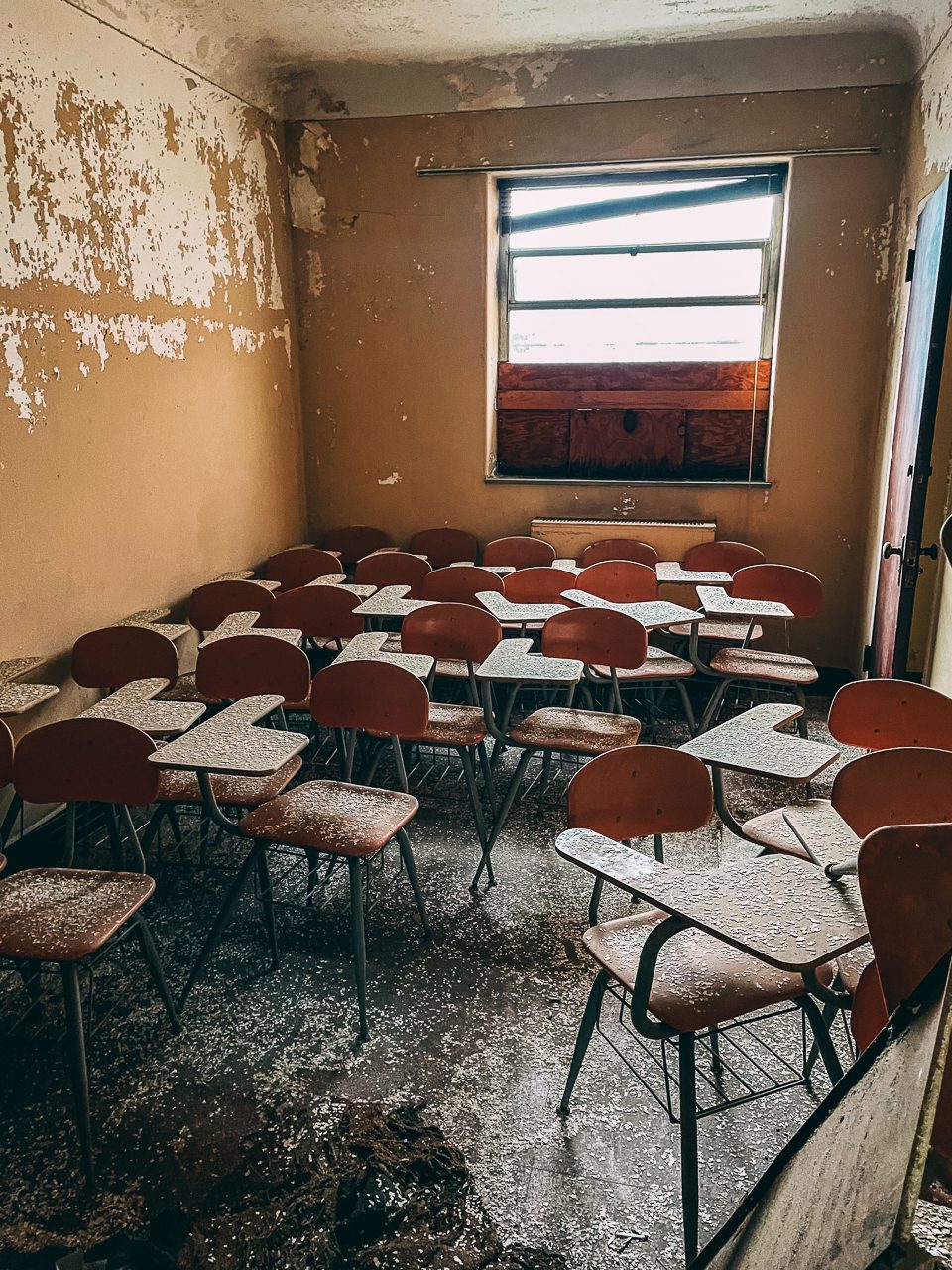
There is also a small classroom with desks still set in rows. The desks have writing arms attached to the seats, and the walls around them are flaking in big patches.
Equipment
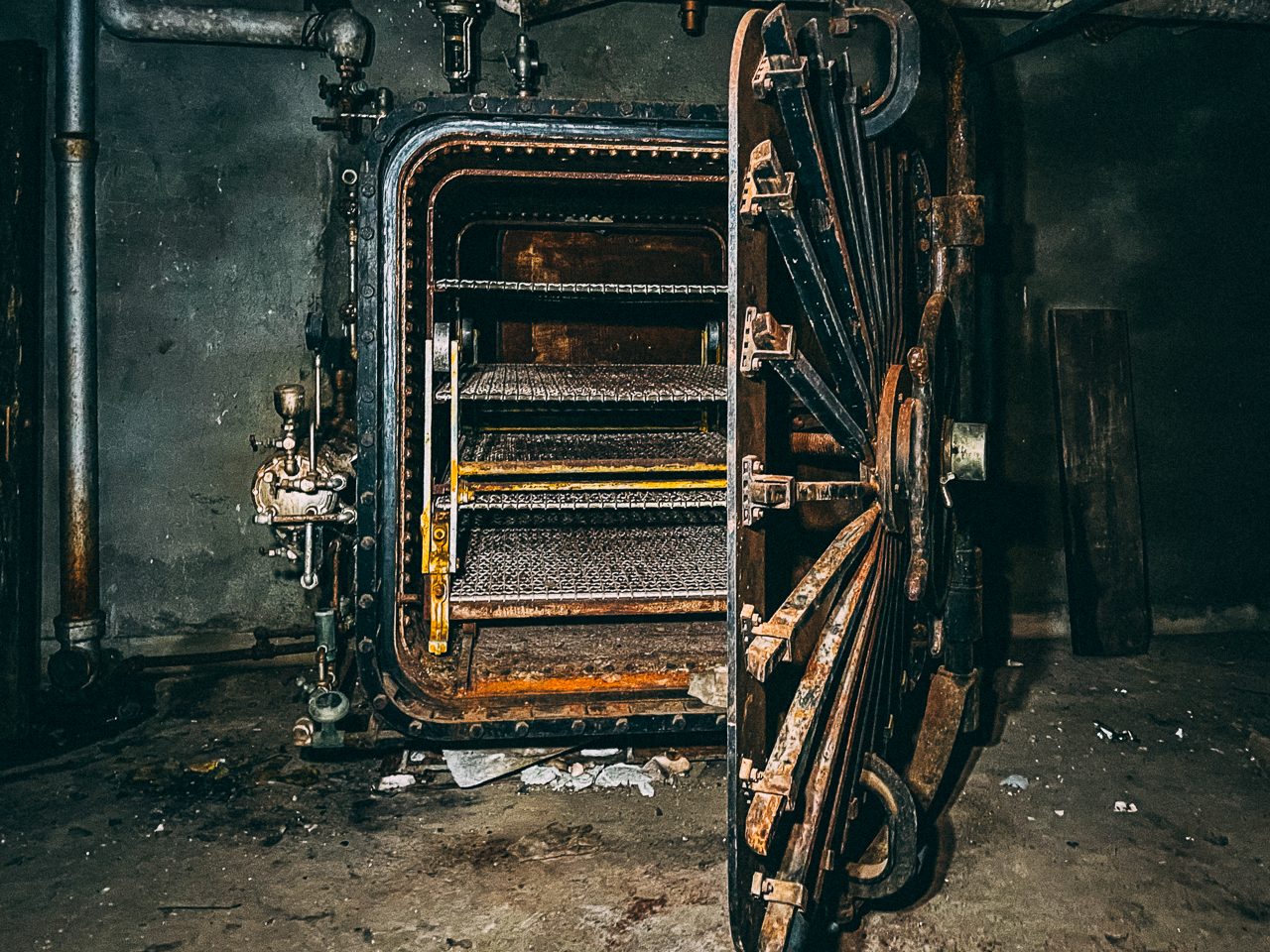
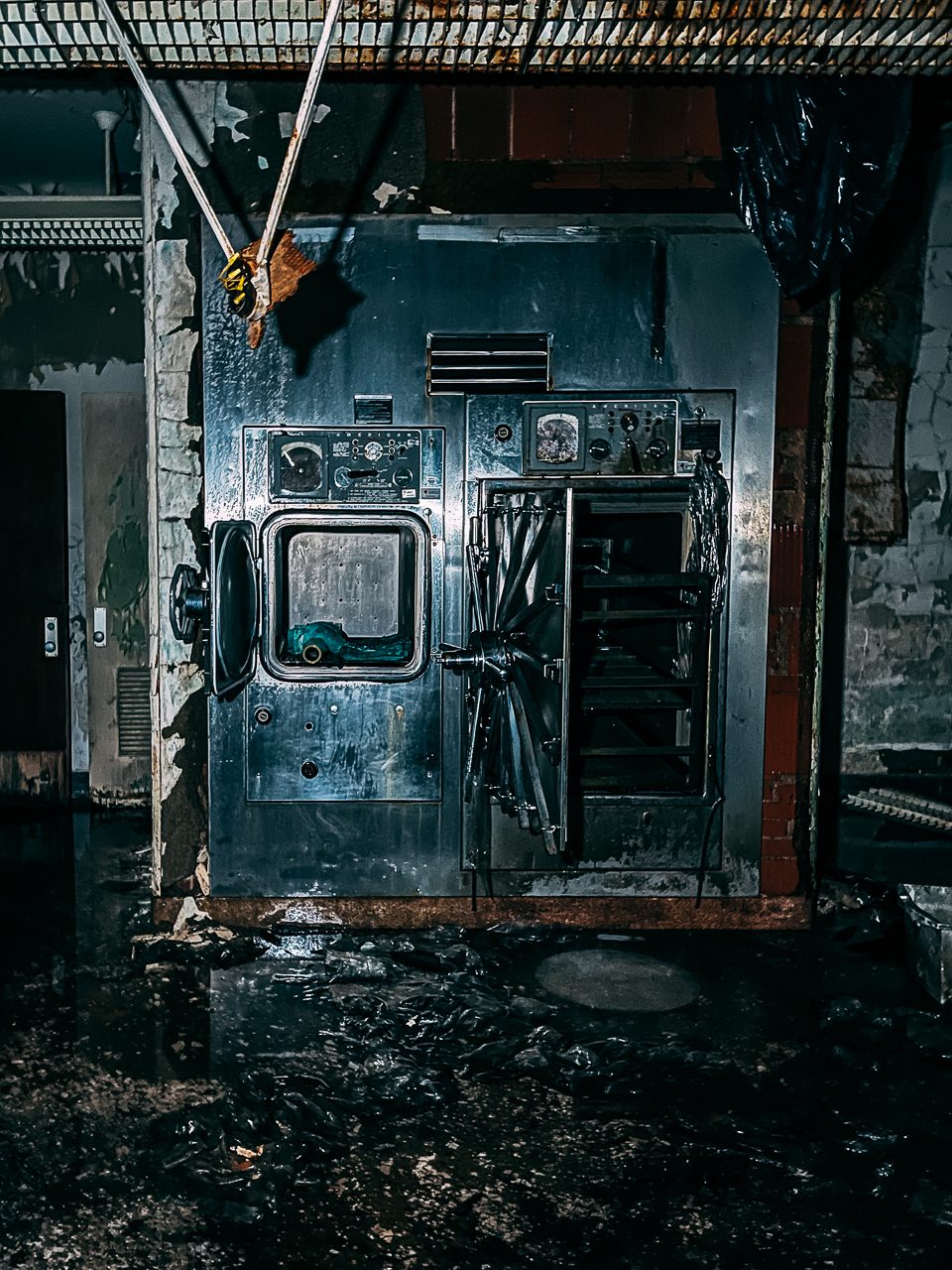
The heavy equipment is what stood out most. Two large steel doors open onto racks inside. One is badly rusted, with a big wheel handle on the door and mesh shelves inside. The other is a steel machine covered in gauges,, with a heavy door and a small window.
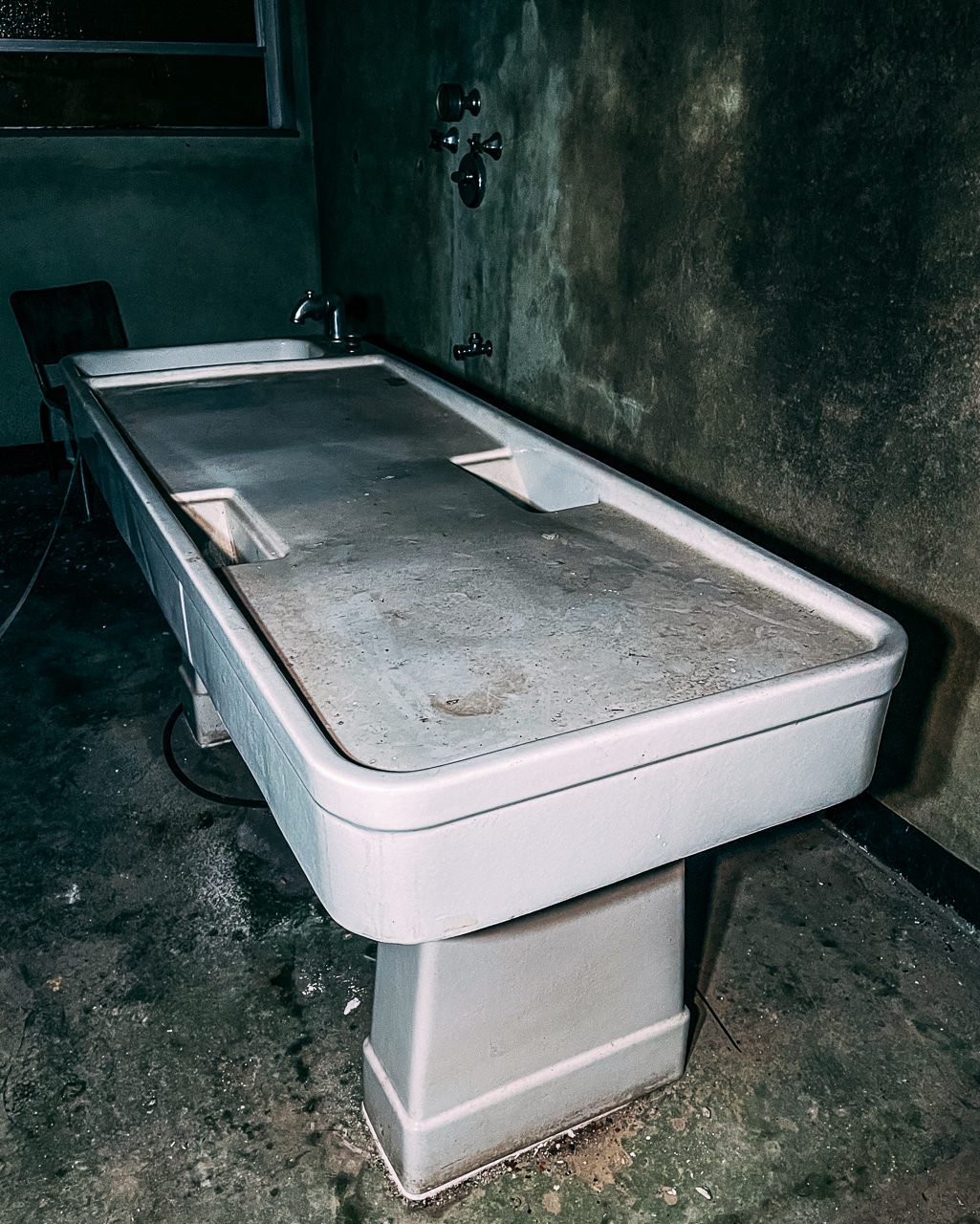
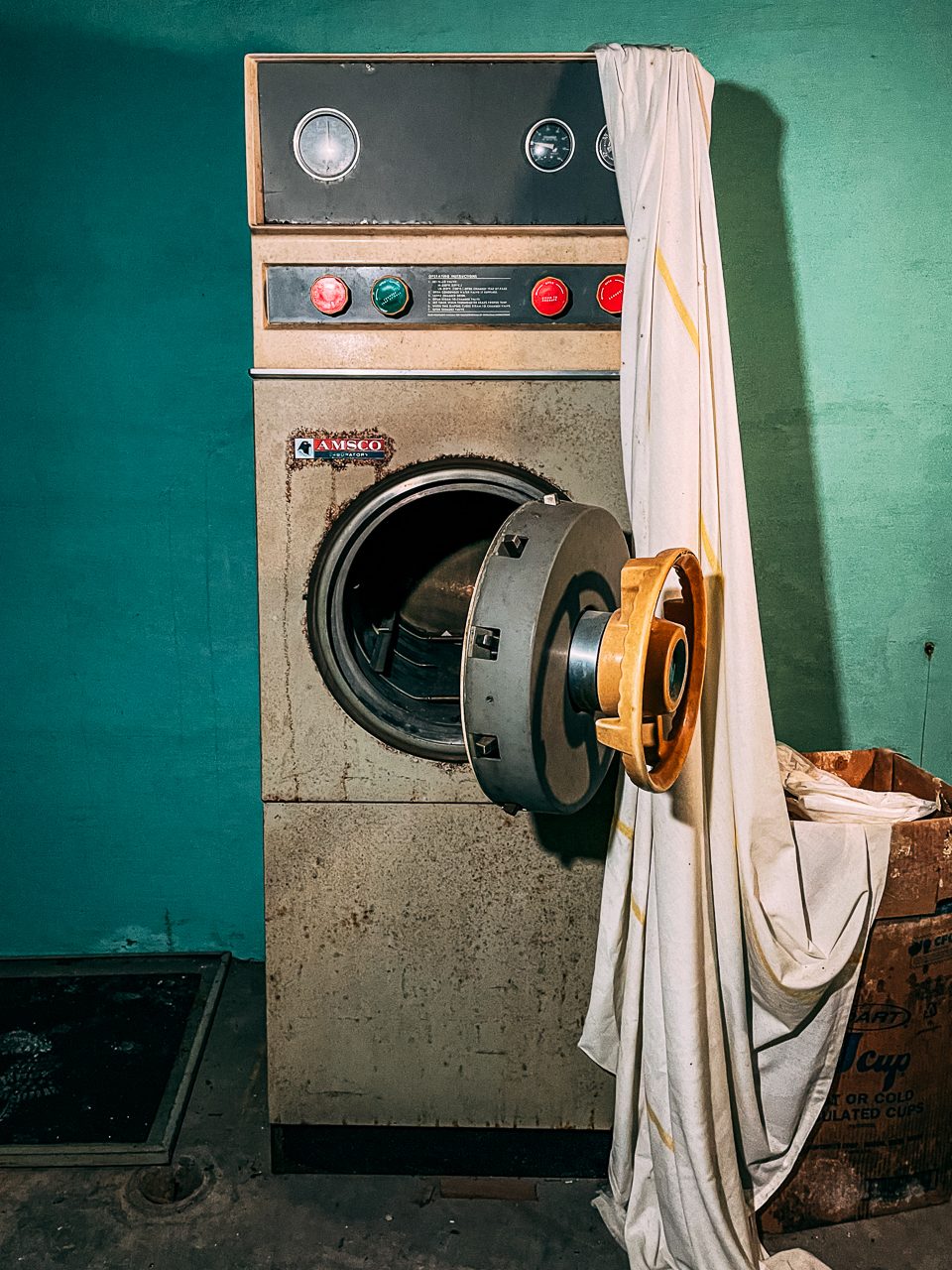
A white porcelain table with drains and a tap sits in a dark room with grimy walls. In another room, a washing machine stands against a bright green wall with a sheet hanging out of the open door.
Smaller things
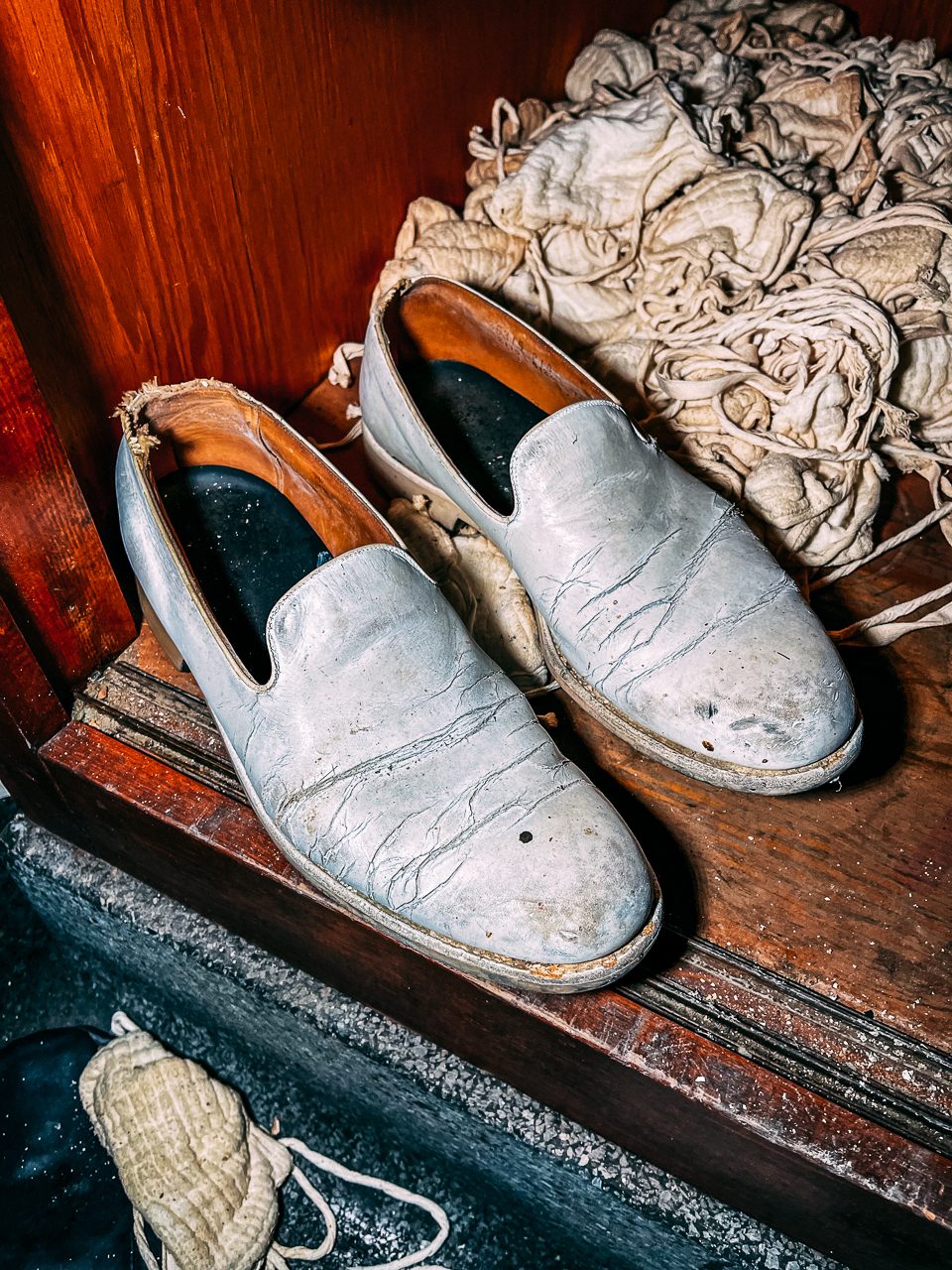
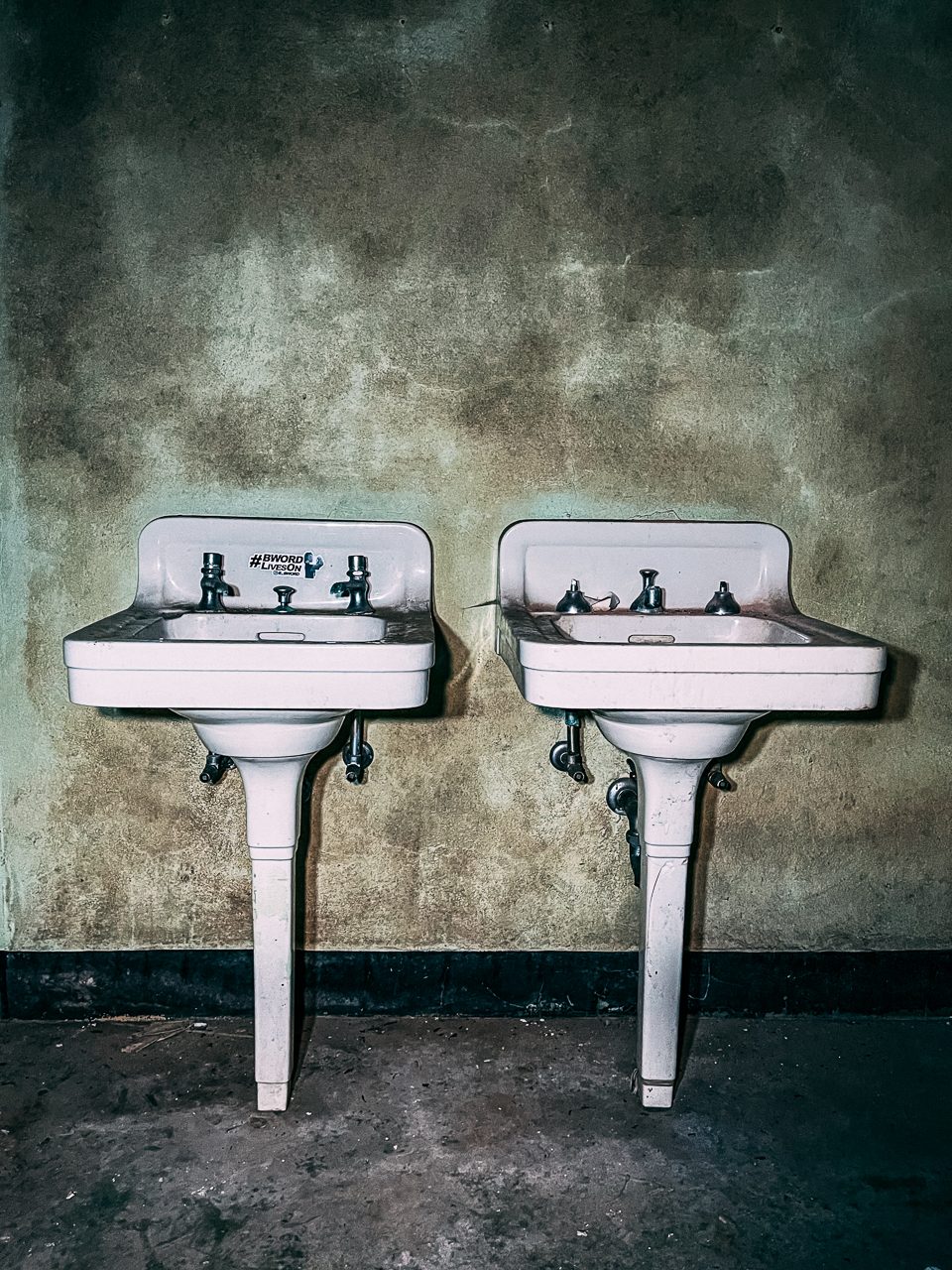
A pair of worn pale leather shoes sits in a wooden cabinet, next to bundles of cloth tied with string. Two white pedestal sinks stand side by side against a stained wall.
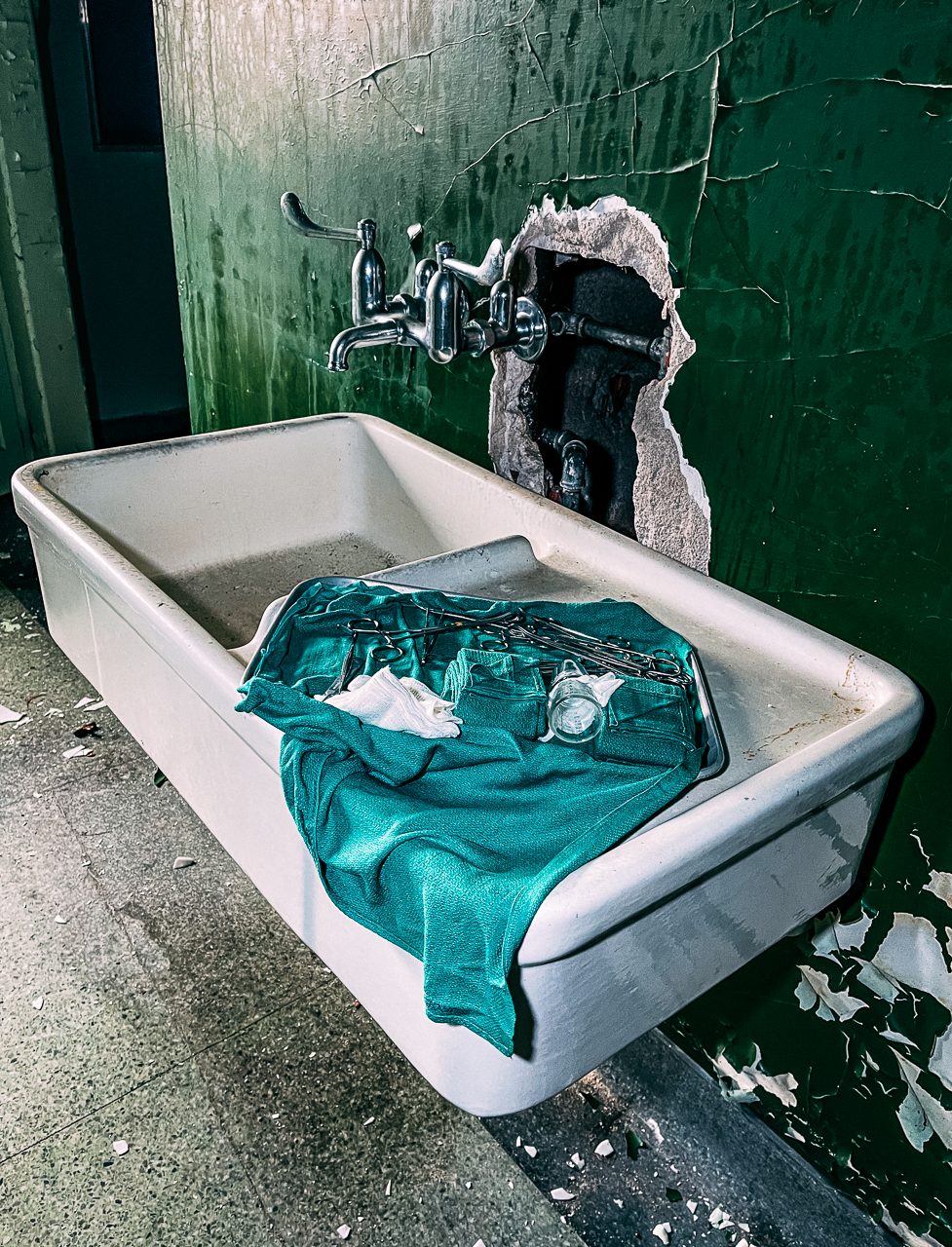
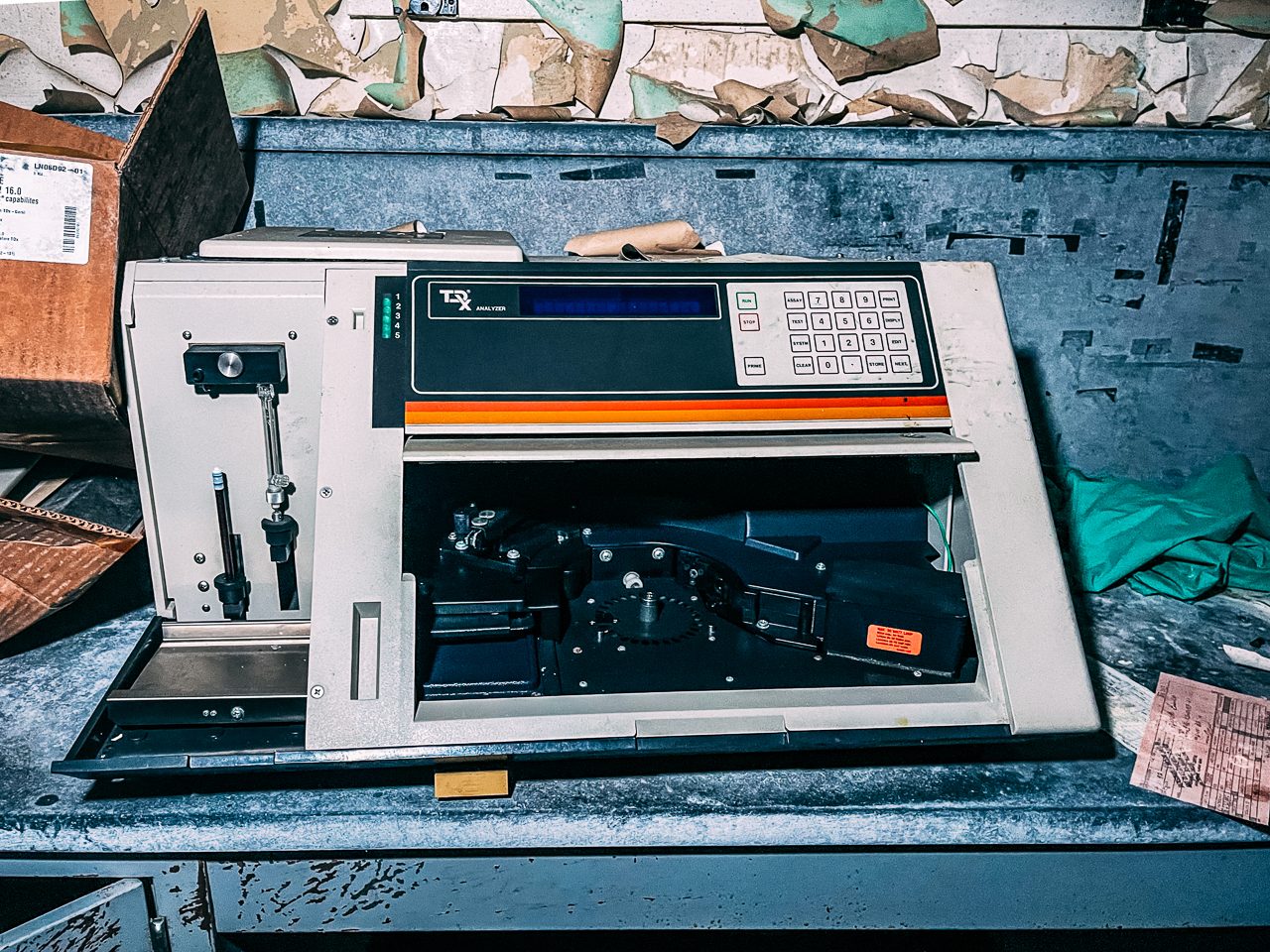
Green scrubs lie in a big sink with a metal tray of instruments, and a hole has been broken in the wall above it. An old machine with a keypad and an open front sits on a blue counter, under wallpaper that is peeling off in strips.
Most of the rooms are dark and damp, and none of them look like they have been used in a long time.
Why state asylums closed
State asylums were built to hold large numbers of people for long stays. An excerpt published by PBS Frontline lists 558,239 patients in public psychiatric hospitals in the United States in 1955, and 71,619 in 1994.
The excerpt points to a few causes. Antipsychotic drugs came into wide use in 1955, Medicaid and Medicare funding followed around 1965, and the goal became treating people in the least restrictive setting. With far fewer patients, the large campuses became hard to justify, and many were closed and left standing.
Sources
Get new posts by email
One email when new posts go up. No spam, unsubscribe any time.
Or follow along on
Subscribe on YouTubeMore like this

The footage that never goes public lives on Patreon. It's paid, and it's where the rough cuts, the security run-ins and the early releases go.
There is also merch. It is not a crowbar.
Comments