Illinois, exact location withheld
Abandoned Catholic Hospital in Illinois With a Chapel and a CT Scanner
An empty Catholic hospital in Illinois with a small chapel, religious statues, a CT scanner, X ray rooms and a full kitchen.
By Decay
Part of Seven Abandoned Illinois Hospitals and Asylums With Rooms Left Behind

This hospital in Illinois was run by the Catholic church, and you can tell from the moment you walk in. The statues, the chapel and the crosses are all still in place, next to the scanners, the kitchen and the supply rooms.
Chapel and statues
The chapel is small, with dark wood beams across the ceiling and two arched stained glass windows behind the altar. A cross hangs on the wall, and rows of gray chairs face a simple white altar table.
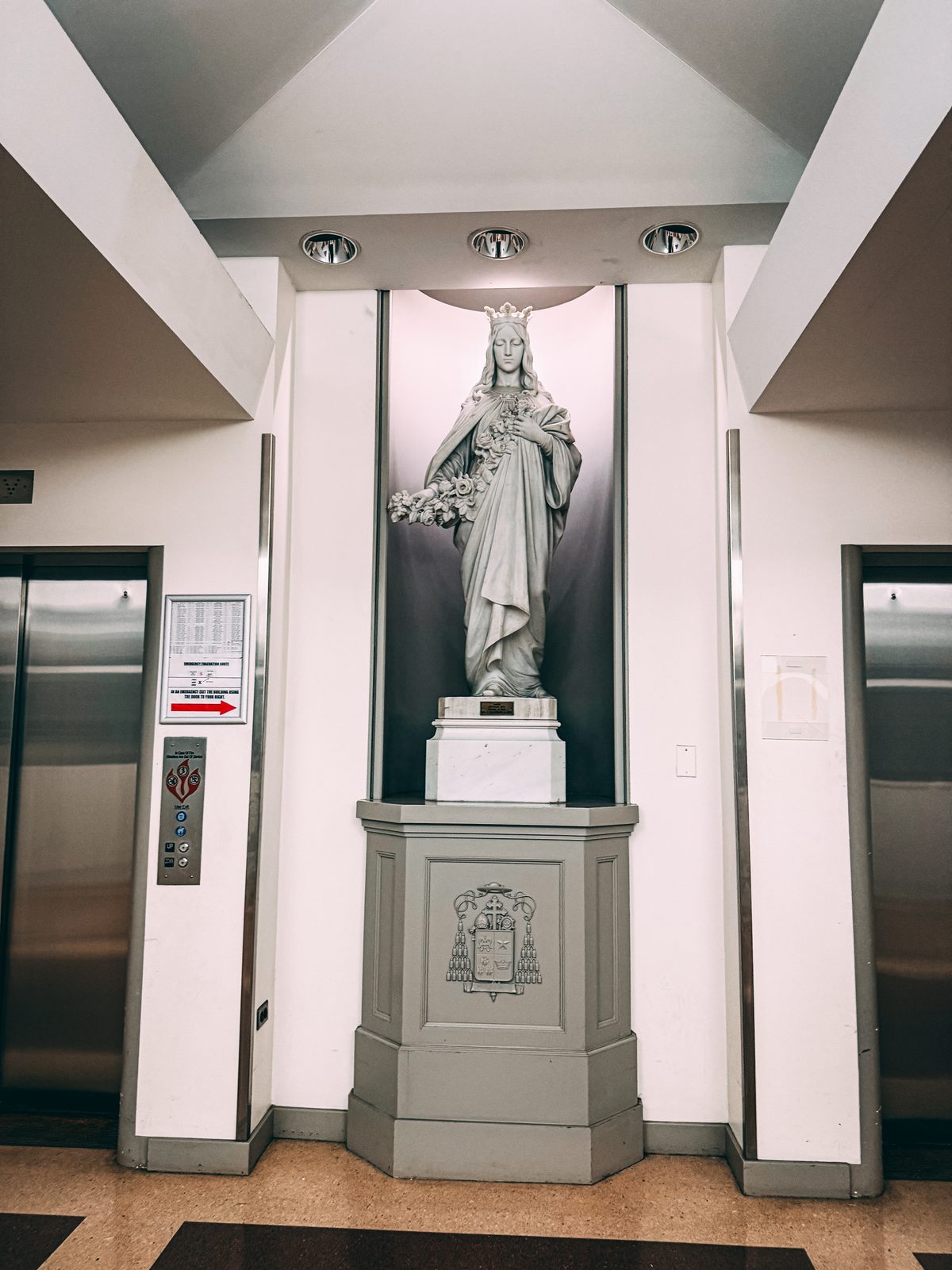
Elsewhere in the building, a white statue stands on a gray stone pedestal between two elevators, with a crest carved on its base. A carved wooden statue of Mary holding the child is on a wall in a quiet corner.

Imaging rooms
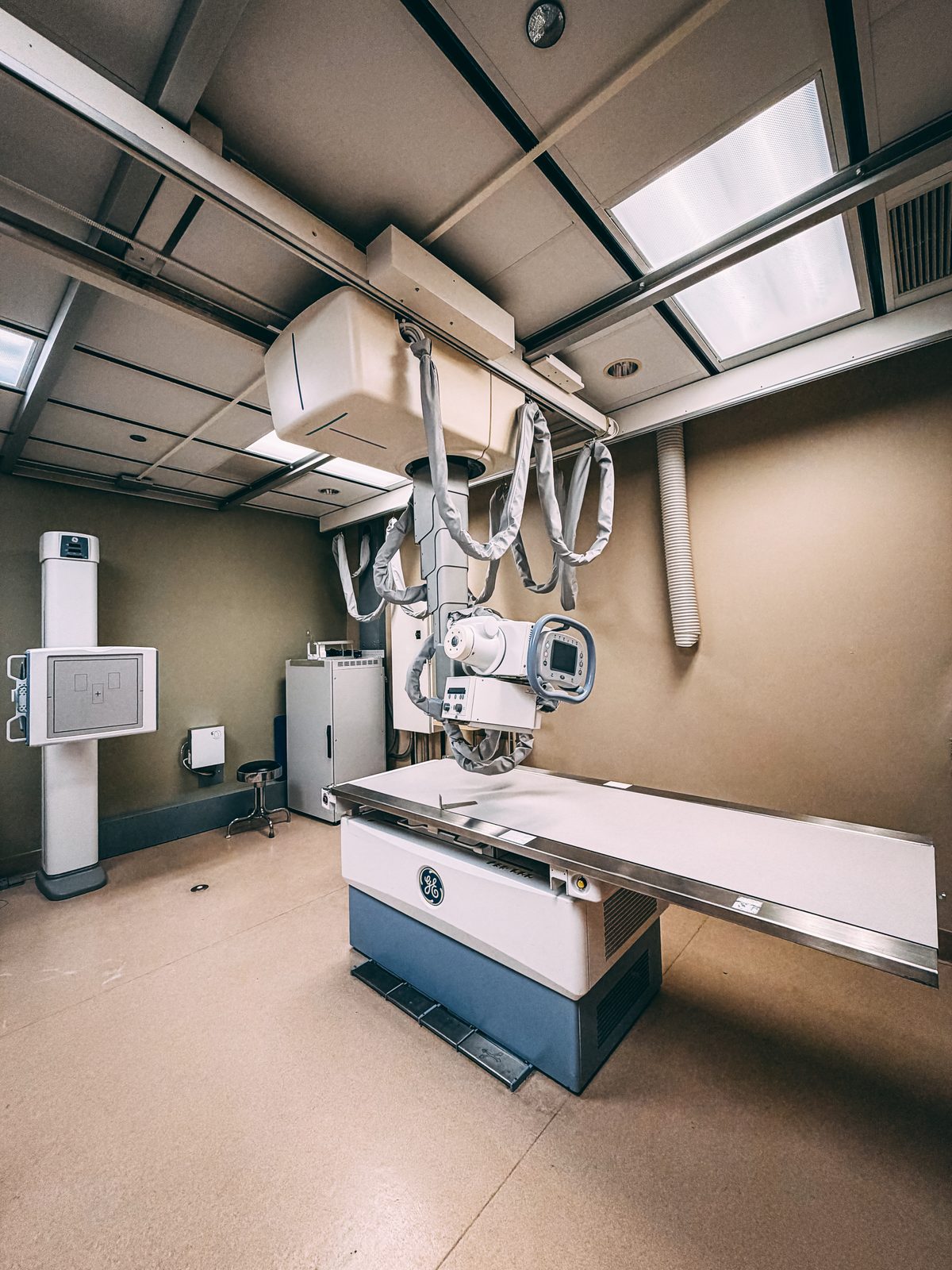
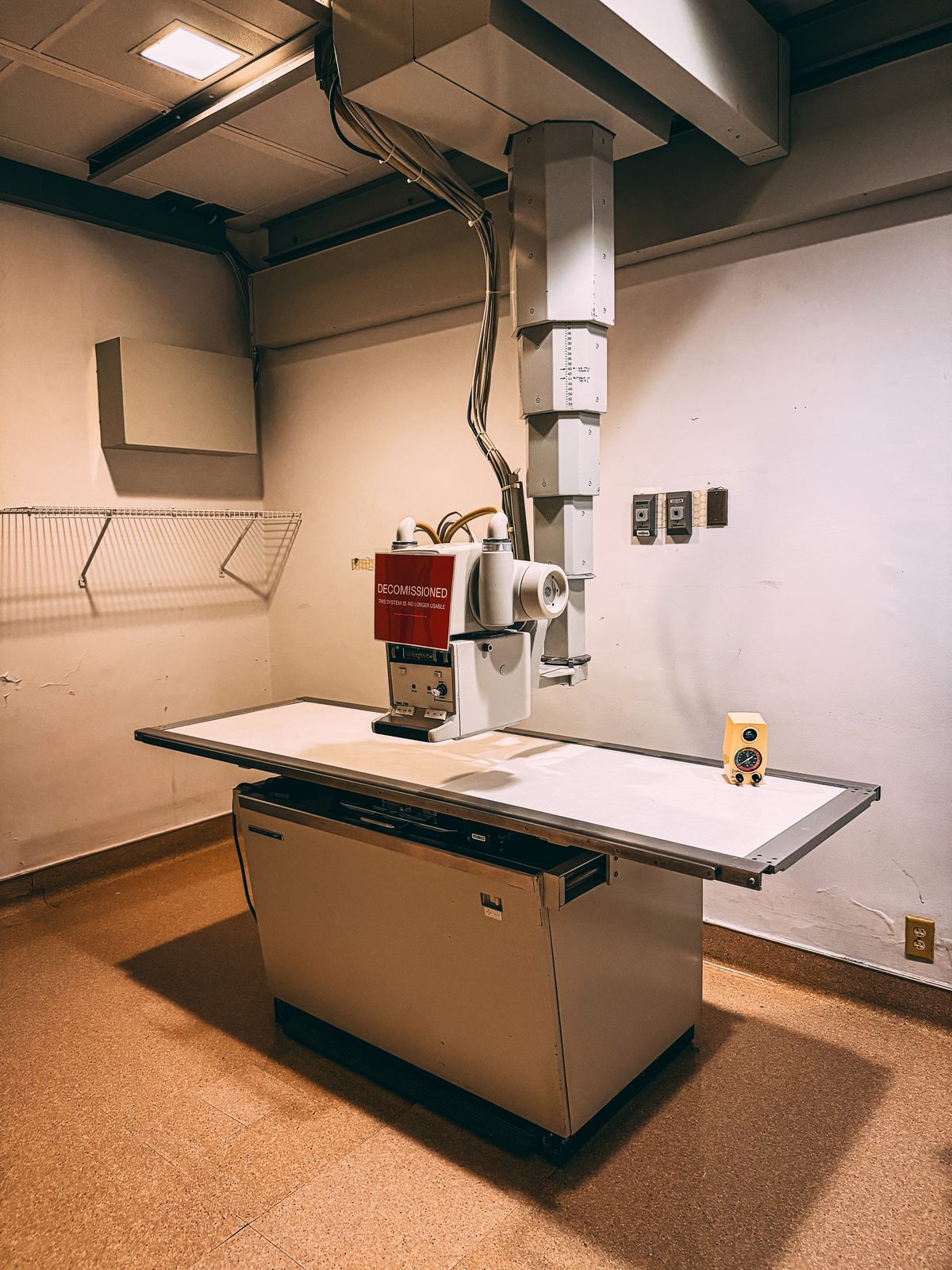
The imaging department is the most complete part. One X ray room has a ceiling mounted arm hanging over a table with a blue base. Another has an older unit with a red housing hanging from a track above a table.
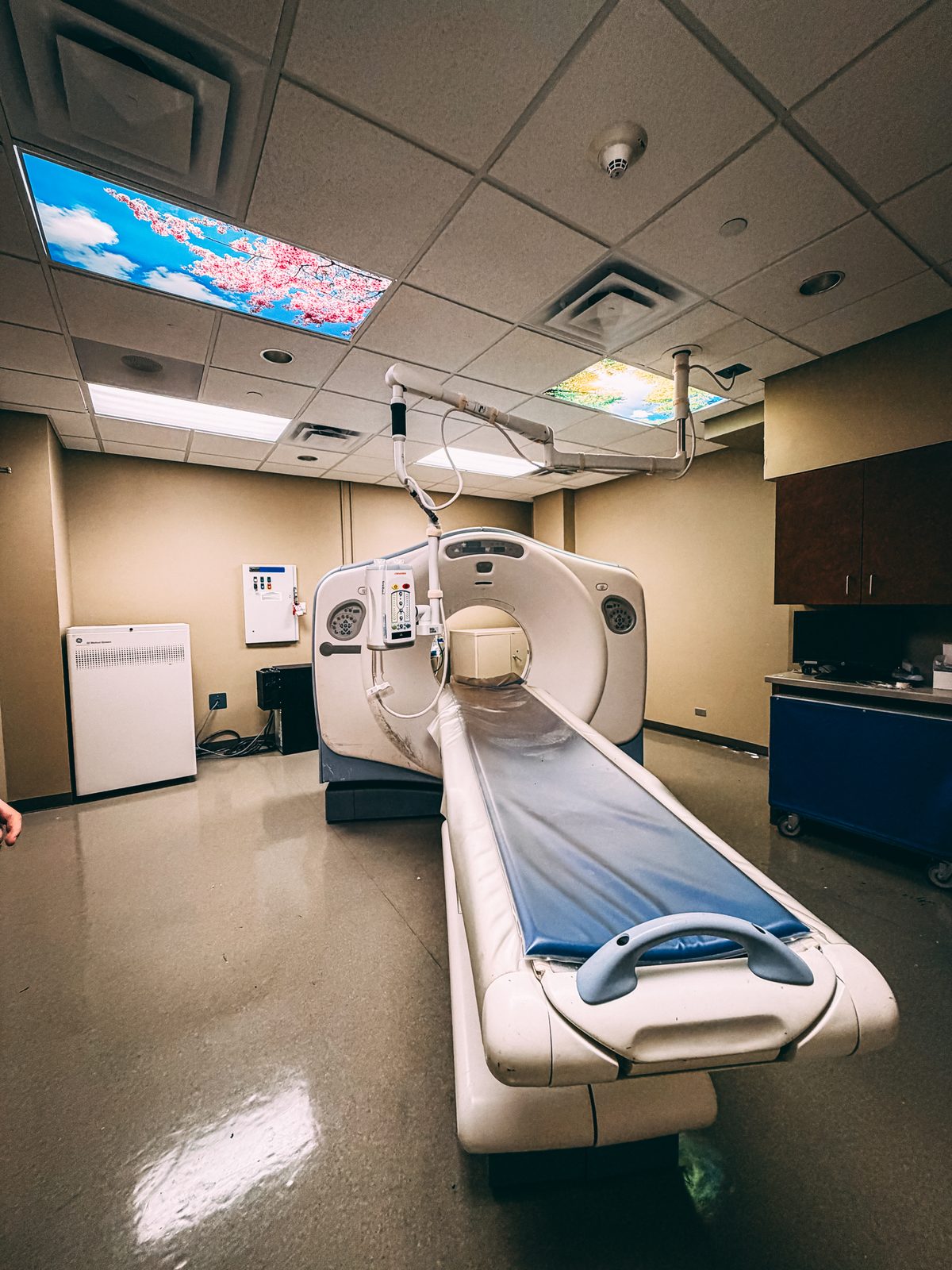
The CT scanner room has pictures of cherry blossoms and sky in the ceiling light panels, so patients had something nice to look at. The scanner and its long table are still in the middle of the room, with a cabinet and sink against the far wall, and a second scanner room next door looks almost the same.
Break room and kitchen
The staff areas feel the most normal, as if a shift could start any minute. Even the walls are still clean in most of these rooms. A table with bright orange chairs sits in a break room, and a large espresso machine stands on a counter. A soda fountain with a Pepsi screen sits nearby, still with its two steel dispensers beside it.



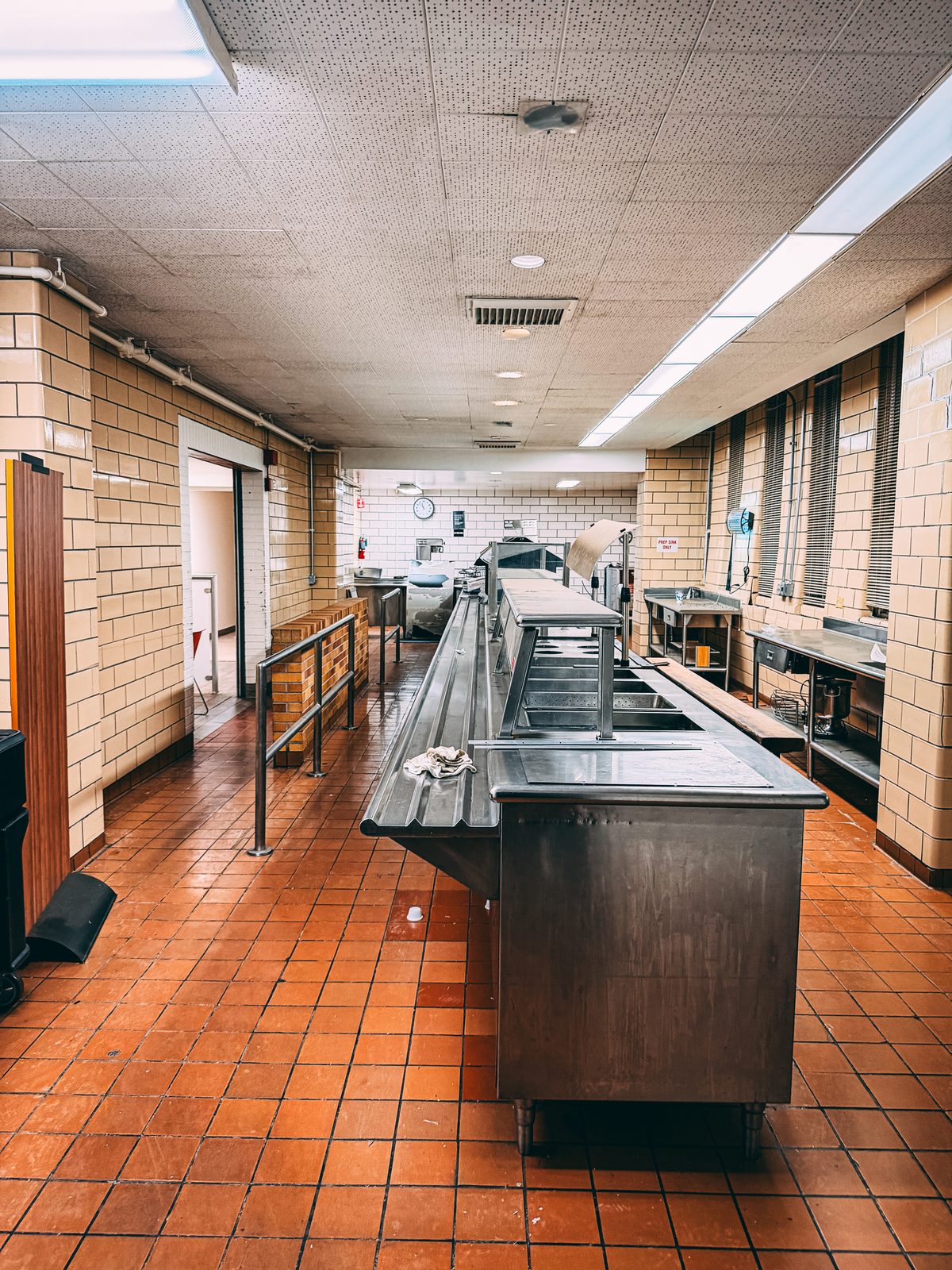
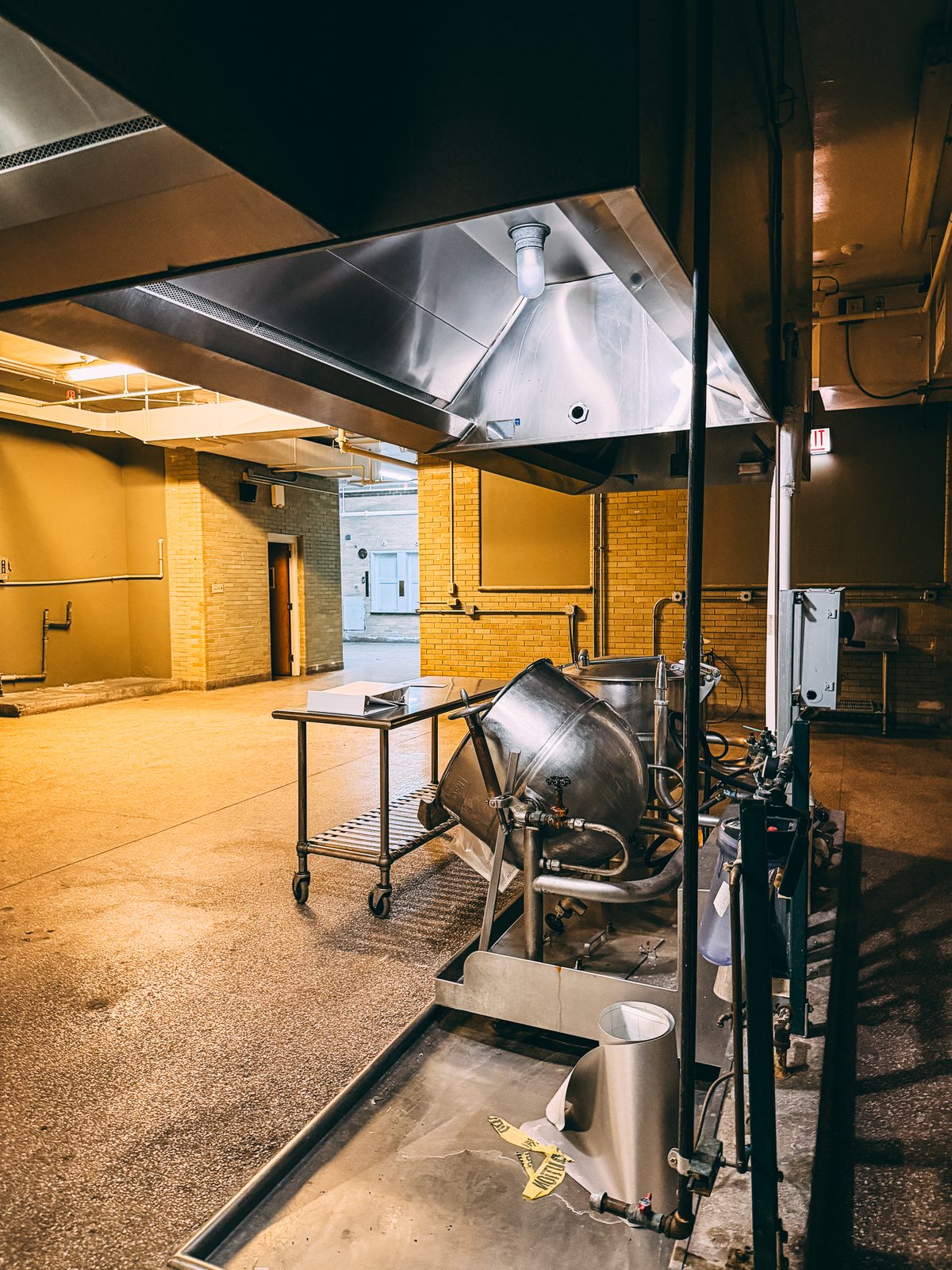
In the kitchen, a long steel serving line runs along a wall of tan brick, over an orange tile floor. A large steel mixing kettle sits in another corner under a hood. In the library, shelves are packed with books, including a section marked Palliative Care and another marked Perioperative.

Why hospitals close in Illinois
Hospitals in Illinois run on tight money. Patch covered a report that put eight Illinois rural hospitals among 300 across the country at immediate risk of closing. It said they run on narrow financial margins and rely heavily on Medicaid, which makes any funding cut a direct threat.
City and suburban hospitals face the same pressure in other ways. Many are owned by large health systems, and those systems often combine services at fewer sites. Catholic hospitals in particular have often merged into bigger groups, which can leave an older building with nothing to do. Once the patients and staff are moved to a main campus, the old site is left to sit until someone decides what to do with it.
Sources
Get new posts by email
One email when new posts go up. No spam, unsubscribe any time.
Or follow along on
Subscribe on YouTubeMore like this

The footage that never goes public lives on Patreon. It's paid, and it's where the rough cuts, the security run-ins and the early releases go.
There is also merch. It is not a crowbar.
Comments