, exact location withheld
Why Theme Parks Get Abandoned
Theme parks get abandoned after debt, storms, bad weather and land deals. Real cases from Illinois, Ohio, Arkansas and New Orleans, and what an empty park leaves.
Theme parks get abandoned when the money stops before the rides do. A park carries debt, depends on weather and crowds, and sits on land that can be worth more than the park, so one bad season, one storm or one buyer with a different plan can end it. The rides then stay behind because they cost more to remove than anyone wants to pay.
This is history and general information, not legal advice. Every claim links to the newspaper, encyclopedia or agency it came from, and none of it is a reason to go inside anything.
Why do theme parks go bankrupt?
Usually it’s a mix of debt and competition. Illinois had a good example in Bolingbrook. Old Chicago opened in mid 1975 as a 345,000 square foot indoor complex with about 200 stores and restaurants, a corkscrew coaster called the Chicago Loop, 31 other rides and a theater, and it was billed as “the world’s first indoor amusement park.” The Bolingbrook Historic Preservation Commission says it closed on March 17, 1980.
The commission lists what went wrong. There were construction cost overruns, no anchor stores to bring local shoppers back, and a competing amusement park in the region. Within six months of opening, the complex was “on the verge of bankruptcy.” The dome came down one April with no fanfare, and the commission says that by the end of that month not a trace of the park remained. Arena Auto Auction occupies the site now.
Dogpatch USA in Arkansas fell the slower way. The Encyclopedia of Arkansas says the park opened in 1968 and drew about 300,000 visitors that year. The owner built a ski resort above it hoping to run year round, and that debt was too heavy. The entry names unusually warm winters, rising interest rates, the Arab oil embargo and the end of the Li’l Abner comic strip after its creator retired in 1977. Dogpatch declared bankruptcy in November 1980.
Can one storm end a park?
Yes. Six Flags New Orleans opened in 2000 as Jazzland. Fortune reports that it went bankrupt within two seasons, that Six Flags took over the lease, and that after Hurricane Katrina in 2005 the park never reopened. Six Flags later went bankrupt itself. Control passed to the Industrial Development Board of the City of New Orleans, and title eventually went to the New Orleans Redevelopment Authority.
Demolition was underway in November 2024, 19 years after the storm. That timeline matters. The park wasn’t forgotten. Ownership, bankruptcies and a damaged site just made it hard to decide who could act.
Why would an owner close a park that still has visitors?
Because the land can be worth more than the park. Geauga Lake in Ohio is the clean example. WKYC reports that its last day was September 16, 2007, and that Cedar Fair announced on September 21 that it would not reopen the amusement side, though the water park side stayed open. Before that the park had changed hands from Funtime to Premier Parks to Six Flags, which expanded it in 2000, and then to Cedar Fair in 2004.
Cedar Fair put the entire parkland up for sale, and WKYC says there were no buyers for the land despite a broker’s efforts. An auction on June 17, 2008 sold the Big Dipper coaster for $5,000 to the only bidder, and the carousel and a Ferris wheel went to other Cedar Fair parks. Later, Aurora voters approved rezoning the site from industrial to mixed use. The article describes the Big Dipper standing alone with trees growing through its tracks, and buildings decaying around it.
Why do abandoned parks stay standing so long?
Because every step after closing costs money and needs an owner. Dogpatch shows how long that can run. After it closed in 1993, the property was sold in 1994 to two companies. In 2011 a county court named new owners, and in 2014 a buyer paid nearly $2 million for about 400 acres. A fire destroyed three buildings in February 2015. By November 2019 that owner had given up and had been served a foreclosure notice. In June 2020 it sold for $1.12 million, and by 2021 the plan was a nature park.
That is more than 25 years between the last season and a plan for the land. Each time the deed changed hands, someone else started the clock over. The ride in the middle just sat.
What does the land turn into afterward?
Usually something with a different business model. Old Chicago’s site holds an auto auction. Geauga Lake’s land was rezoned for mixed use, and the owner’s other parks got its carousel and Ferris wheel. Dogpatch’s property was sold in 2020 to a buyer later revealed to be Johnny Morris of Bass Pro Shops, and the plan described in 2021 was a nature park. Six Flags New Orleans was being demolished in 2024.
None of those endings is about rides. They are about what the land is worth to the next owner, and that is why a park can sit through decades of owners before anyone clears it. The dark tourism post covers why people are drawn to what’s left of places like these.
Are old rides safe to be near?
Nothing I found says they are. Illinois law is clear about open parks. The Illinois Department of Labor says every ride and attraction open to the public must be inspected before it first operates and then annually, with a permit decal that is valid for one calendar year. That is the system for rides that are running. Nothing on that page says anyone inspects a ride after a park closes, so a closed park is outside the system that is supposed to keep rides safe.
Water adds its own problems. The CDC’s mosquito guidance says to empty and scrub, turn over, cover or throw out items that hold water once a week, and it counts pools on that list. A waterpark has pools, slides and drains that hold water, and nobody is on a weekly schedule to empty them. The Geauga Lake article notes that rainwater formed new ponds on the grounds.
What does a closed park leave behind?
The rides nobody wants and the buildings nobody will pay to remove. The valuable pieces get moved, as Geauga Lake’s carousel and Ferris wheel were. The Raging Wolf Bobs coaster there was demolished, and the Big Dipper still waited for a buyer. WKYC describes weeds spreading and buildings decaying around it, with rainwater forming new ponds. A closed park is mostly a long list of things that were worth less than the cost of moving them.
What does this look like in practice?
The closest thing I have to a theme park is the waterpark video. France’s Largest Waterpark Left to Rot is a big glass roofed building full of slides, and I keep the specific location off this page like I do for most of my spots. People always ask, and I won’t give it out.
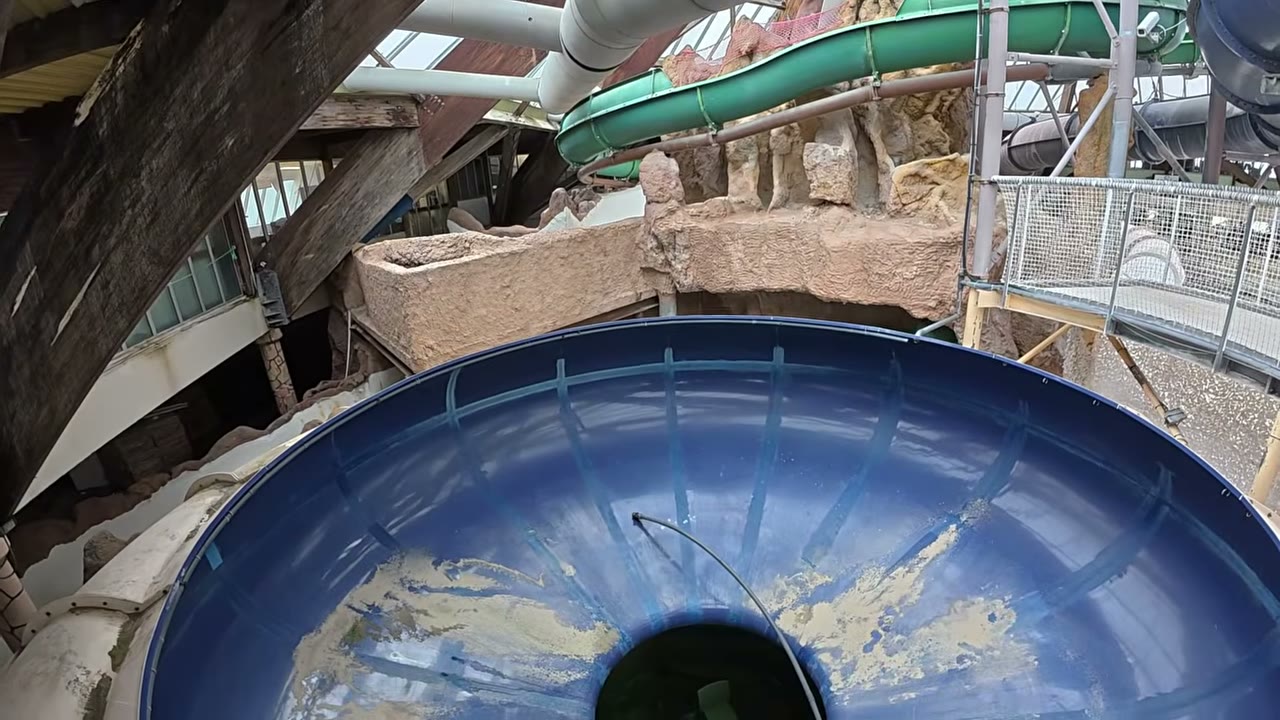
A park like this is slides, pumps and a roof over a lot of water, and none of it runs without power and people.
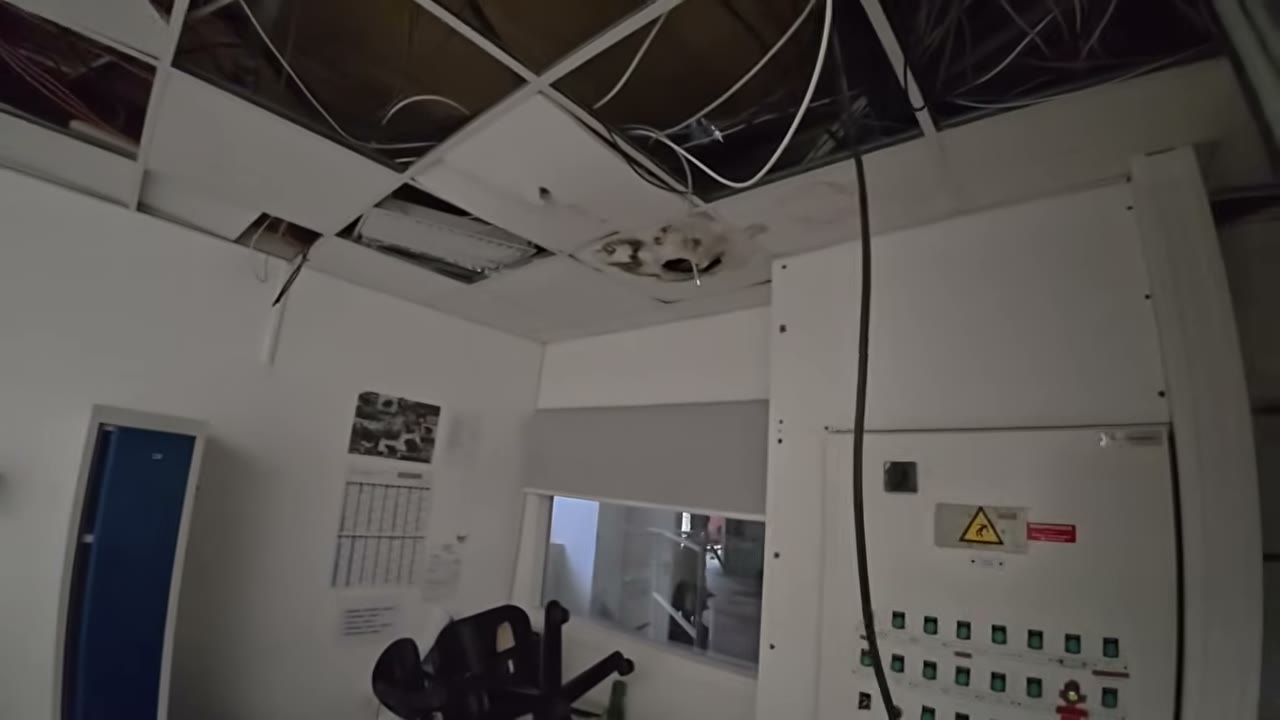
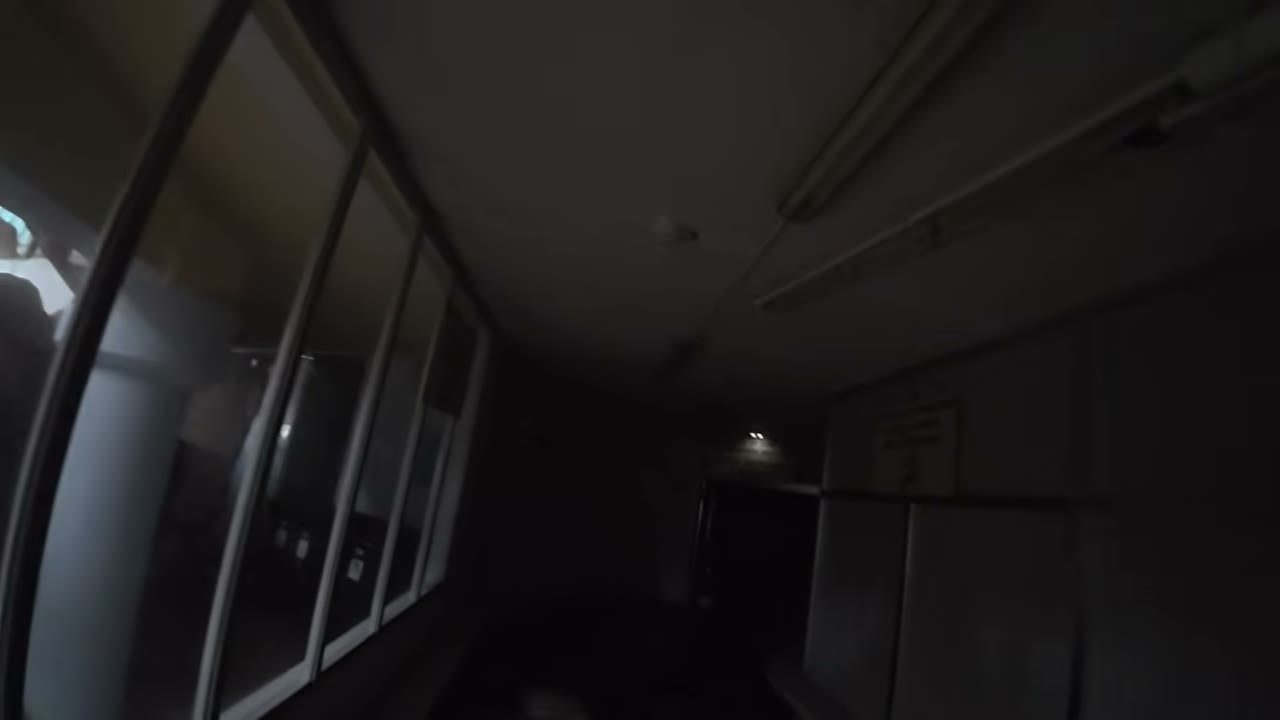
The other video in the same family is the mansion in the Native American resort video. My description says the neighbor told us the old owner was making some sort of theme park. What we found outside were unfinished plaster sculptures, including cactuses and a figure of a chief. That’s the other way a park ends, before it ever opens.
How I find places like these, and how I stay safe in them, is covered in a $9.99 PDF called How to Find Abandoned Places.
A theme park is built around crowds, so when the crowds stop, the only thing left to decide is who owns the land.
Sources
- Old Chicago Amusement Park and Shopping Mall, Bolingbrook Historic Preservation Commission, accessed Nov 4, 2026
- Dogpatch USA, Encyclopedia of Arkansas, accessed Nov 4, 2026
- Geauga Lake From Icon to Eyesore, WKYC, accessed Nov 4, 2026
- New Orleans Six Flags Park Demolished After Hurricane Katrina, Fortune, Nov 5, 2024
- Amusement Ride and Attraction Safety Act, Illinois Department of Labor, accessed Nov 4, 2026
- Mosquito Control at Home, CDC, Apr 16, 2024
More like this


The footage that never goes public lives on Patreon. It's paid, and it's where the rough cuts, the security run-ins and the early releases go.