, exact location withheld
Why So Many Churches Are Closing
Fewer members, fewer priests and buildings that cost too much to keep. What Gallup, Pew and Chicago's Archdiocese say, and why empty churches sit.
Churches close because fewer people join and give, fewer clergy are available to lead them, and the old buildings cost more to keep up than a shrinking congregation can pay. Then the building often sits, because selling or reusing a church is slower and harder than closing one.
This is entertainment and general information. It isn’t a statement about any faith, and none of it is a reason to go inside a closed church, which is someone’s property. I’m looking at the numbers behind the empty buildings in my videos.
Are fewer people actually going to church?
Fewer people belong, yes, but the drop has slowed. Gallup reported in March 2021 that 47 percent of U.S. adults belonged to a church, synagogue or mosque in 2020, the first time in its eight decade trend that the number fell below 50 percent. It was 70 percent in 1999 and 73 percent in 1937. The gap by age is large. Gallup found membership of 58 percent for baby boomers, 50 percent for Generation X and 36 percent for millennials in 2018 to 2020. It tied more than half of the 20 point drop to the rise in Americans with no religious preference, from 8 percent in 1998 to 2000 up to 21 percent in 2018 to 2020.
Pew’s 2023 and 2024 survey of religion in America, published in February 2025, found that 62 percent of adults are Christian and 29 percent are religiously unaffiliated. Pew says the Christian share has been relatively stable since 2019 and that the unaffiliated share has leveled off, at least temporarily. About a third of adults say they attend services at least monthly. So the audience didn’t vanish. It got smaller over decades, and the buildings were built for the bigger one.
How many churches are closing?
Nobody has an exact count, and the people who study it say so. A Lifeway Research study reported by Religion News Service found about 4,500 Protestant churches closed in 2019 while roughly 3,000 new ones started. That was up from 3,700 closures in 2014. There are between 320,000 and 350,000 Protestant churches in the country, so the sociologist Scott Thumma put 4,500 closures at about a 1.4 percent loss and cautioned that closure data is “very hard to come by.” A separate estimate tied to the United Church of Christ put the number of houses of worship closing at 3,850 to 7,700 a year in the decade ending in 2020.
The reasons given are consistent. NPR Illinois quoted Bob Jaeger, president of Partners for Sacred Places, citing aging or dying members, population shifts and high upkeep costs. One of its examples was Brooklyn United Methodist in Jacksonville, founded in 1866, which held its last service as an active church in 2017 and was averaging 10 to 15 people on Sundays.
Why is the Archdiocese of Chicago closing so many parishes?
Priests, people and money, in that order. NBC Chicago reported in February 2022 that the archdiocese would go from 344 parishes to 221 by July 1, a reduction of 123, with 57 church buildings no longer used for Mass. It said the number of priests fell from about 2,400 in 1975 to about 1,200. Rev. Jason Malave, the spokesman for the Renew My Church effort, said, “we are no longer the church of the 1970s, the 1960s.”
WBEZ heard the same from Malave, who said the numbers of priests, Mass attendance and giving weren’t going up. “The only thing that was increasing was the amount of money that it costs to maintain the buildings.” The station added that seven South Side neighborhoods lost double digit percentages of their population in the 2020 census, which made it hard to keep parishes going there. As a concrete case, St. Adalbert in Pilsen closed in 2019, and an archdiocesan document described the building as in a very perilous state of repair, with roughly $3 million in repairs that neither the archdiocese nor the parish could afford.
Why do closed churches sit empty?
Because the options are all slow. Preservation Chicago is an advocacy group, so weigh its numbers as its own estimates, but it counted about 110 churches and parishes closed within city limits through about 2019, with about 57 of them demolished over time. It said more than 88 more were scheduled to consolidate, merge or close under Renew My Church since 2020, and that about 25 of those buildings were expected to be sold. The group says buildings are often left vacant instead of mothballed, without proper heat in winter, which makes later repairs cost more, and that asking prices are often high.
Some do get reused. NPR Illinois described the downtown Springfield First United Methodist building, which sat empty for about ten years and became apartments and the headquarters of the local chamber of commerce. A Presbyterian church in Peoria, built in 1909, sat vacant for nearly five years before becoming a restaurant with a beer garden. Its new owner said that without her team the building would likely have been torn down. Those are the good outcomes, and they took someone with money and a plan.
What does this look like in practice?
The biggest example in my videos is the massive Roman Catholic church in Chicago. The description says it closed several years ago, that old parishioners pray outside every Sunday to save it, that it was supposed to be repaired but the developer dropped out after realizing it would cost too much, and that the city wants to demolish it. I’m not saying which church it is. The pattern matches the sourced one above, a building that costs more to fix than anyone in the deal will pay.
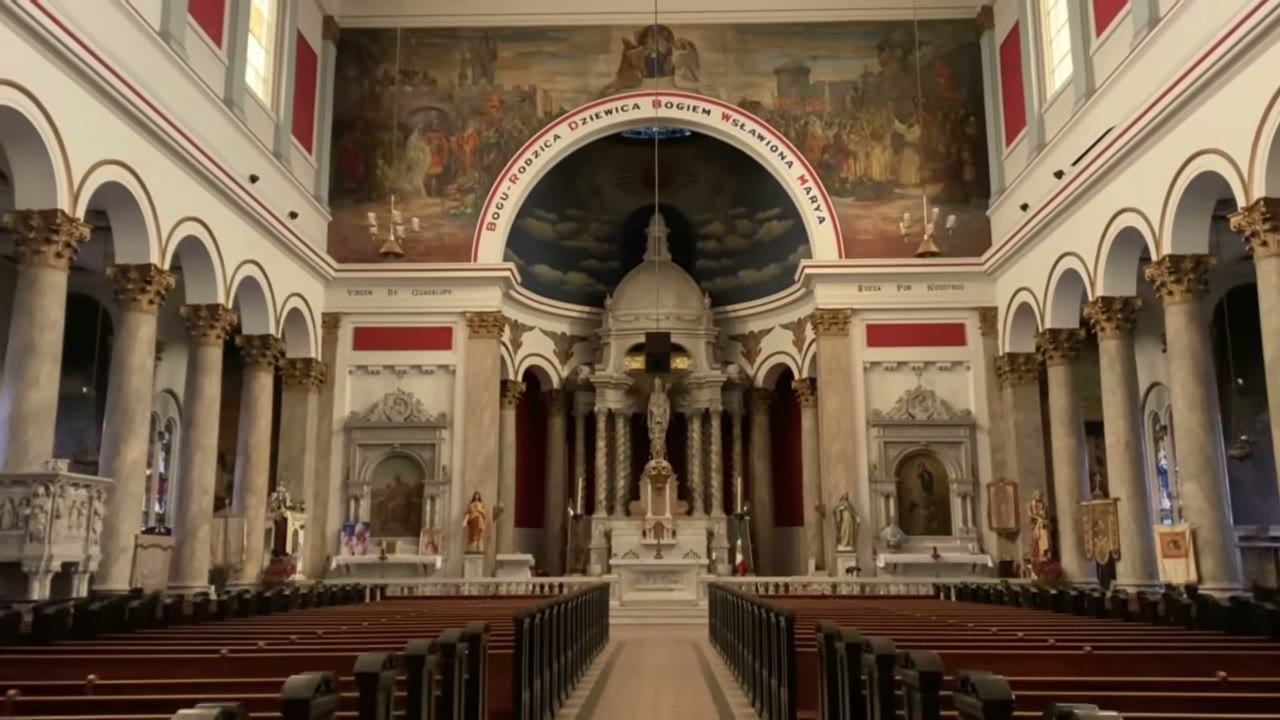
The other end is a church where nobody came back for the contents. My video of an abandoned Catholic church in northern Illinois is titled with everything left behind, and a shelf in it still held books, a pair of glasses and a roll of tape. A large book was still open on its stand with pews behind it.


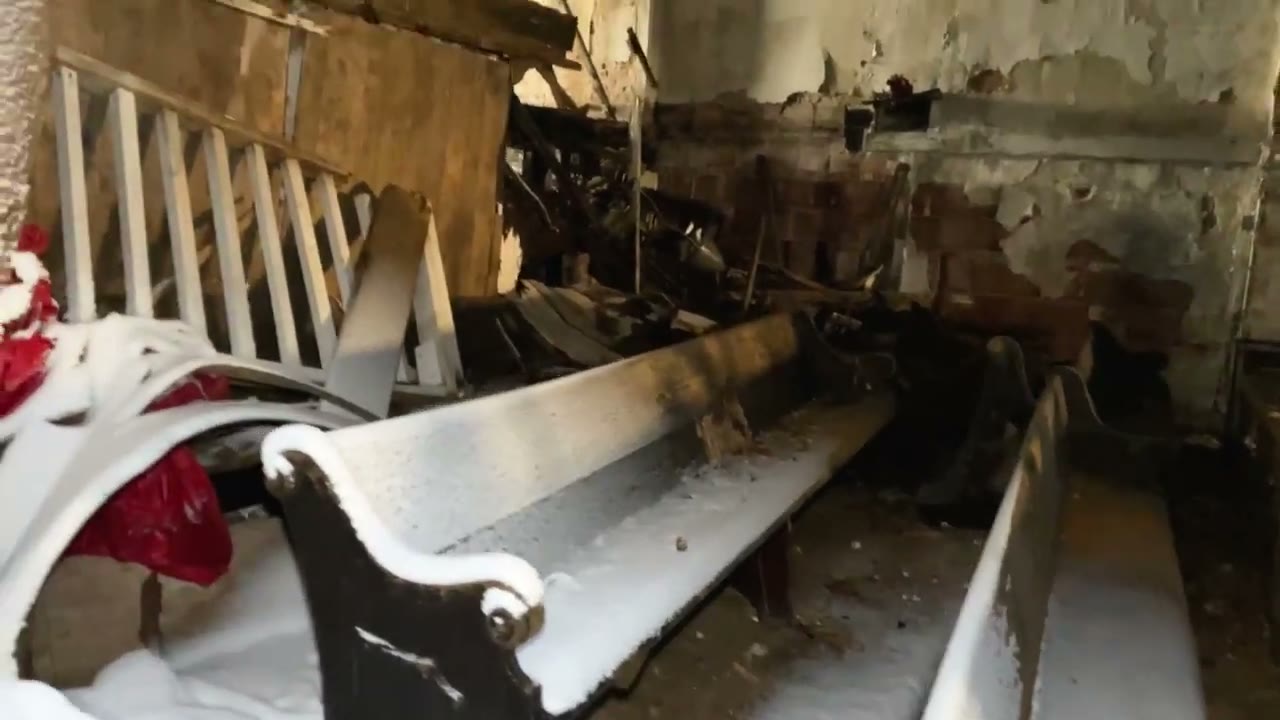
The sinkhole church in Gary is what happens after a building waits too long. The floor had sunk and I said a single beam was pretty much holding me up. The chandeliers were still hanging, and I said I obviously wasn’t going up there. The description says it appeared to go abandoned around 2010, and I kept the video short because there was nothing more to see without risking my life.
I don’t give out locations, and I explain why in Why Urban Explorers Don’t Share Locations. If you want to know how I find places and stay safe, that’s in a $9.99 PDF called How to Find Abandoned Places.
A congregation can outlive its building, and a building can outlive its congregation, and the second one is what I keep finding.
Sources
- U.S. Church Membership Falls Below Majority for First Time, Gallup, Mar 29, 2021
- Religious Landscape Study Executive Summary, Pew Research Center, Feb 26, 2025
- Study, more churches closing than opening, Religion News Service, May 26, 2021
- What's Happening To Illinois' Sacred Buildings In An Age of Decline?, NPR Illinois, Oct 2, 2019
- The Archdiocese of Chicago has reduced its number of parishes by more than 100. Now what?, WBEZ, May 9, 2022
- Major overhaul will leave Chicago Archdiocese with 123 fewer parishes by July, NBC Chicago, Feb 8, 2022
- Roman Catholic Churches, 2021 Most Endangered, Preservation Chicago, Mar 4, 2021
More like this


The footage that never goes public lives on Patreon. It's paid, and it's where the rough cuts, the security run-ins and the early releases go.