, exact location withheld
North Brother Island in New York
North Brother Island in the East River held Riverside Hospital, Typhoid Mary and the General Slocum wreck. Why it is closed and full of nesting birds.
North Brother Island is a roughly 20 acre island in New York City’s East River, between the Bronx and Rikers Island, where Riverside Hospital treated contagious disease from 1881 to 1943. Mary Mallon, known as Typhoid Mary, was confined there, the General Slocum disaster ended at its shore in 1904, and today it belongs to the birds and is closed to the public.
This is a history post. I haven’t been to North Brother Island, and it isn’t open for visits. The city protects it, and nothing here is a reason to try to reach it.
What is North Brother Island?
According to NYC Parks, humans occupied the island for about 150 years. Parks says Riverside Hospital operated there from 1881 to 1943, with a tuberculosis sanatorium, disease pavilions, laboratories and staff housing. After that the island housed World War II veterans from 1946 to 1951, and a youth drug rehabilitation center operated there from 1952 to 1964.
Brick Underground reported that the city bought the uninhabited island in the late 1800s to build the hospital, a facility for New Yorkers with contagious illnesses. It sits between Port Morris in the Bronx and Rikers Island. Parks lists it as a 20 acre forest in the Bronx. The New York State Department of State’s habitat form says the island has a mix of abandoned buildings and deciduous woodland, and that the City of New York owns it.
Today the hospital is a ruin in a forest. Parks says the remnants are dilapidated and that vegetation has been reclaiming the island for about forty years.
Who was Typhoid Mary and why was she on the island?
Mary Mallon was an Irish immigrant and a cook. The ABA Journal’s account says an epidemiologist, George A. Soper, traced a 1906 typhoid outbreak in a Long Island household to her. Six of the 11 people in the house fell ill. Soper linked her to seven other households where she had worked.
Mallon refused to give samples and fled when police and health officers came, and she was found hiding in a closet in a nearby house. Tests at Willard Parker Hospital showed she carried the typhoid bacterium, probably in her gallbladder. She refused to have the organ removed, which would have freed her.
On March 20, 1907, she was taken to Riverside Hospital on North Brother Island and lived there in isolation. A habeas corpus petition after two years was denied. She had never been charged with a crime. After nearly three years she was released on promises not to handle food, to follow hygiene rules and to report to the health department every three months. She later worked under assumed names in hotel, inn, restaurant and sanatorium kitchens, and was arrested again in 1915 at Sloane Maternity Hospital, where she had been working in the kitchen. She was returned to the island and died there on November 11, 1938. The ABA Journal says Soper linked her to 53 cases of typhoid fever, including three deaths, over 15 years, and that there was no formal investigation.
What was the General Slocum disaster?
It was a steamboat fire on the East River. According to the National Archives in New York City, the steamboat General Slocum left a pier on East Third Street on June 15, 1904 with 1,358 members of St. Mark’s Lutheran Church and the surrounding community, mostly women and children. It was bound for Locust Point on Long Island’s north shore and never got there. A smoldering fire in the lower compartments spread, and the ship burned in the East River near Randalls Island and Hell Gate.
The Archives say Captain William H. Van Schaick, 68, was indicted and convicted, and that the conviction record states “the lives of nine hundred persons, whose names and sex are unknown, were then and there destroyed.” NYC Parks places the disaster at North Brother Island, and Brick Underground says the captain steered the ship toward it, where it sank and hospital employees and patients helped pull survivors ashore.
Why can’t people visit North Brother Island?
Because the city says it is dangerous and because of the birds. Parks says all 25 remaining buildings are severely dilapidated and pose a considerable danger to visitors. The island is a protected area where outside access is rare. Permits are granted only for “compelling academic and scientific purposes,” no more than four are issued per season, and visits are not allowed from March 21 to September 21 during shorebird breeding season. There is no public transportation, and approved visitors must charter a boat and show proof of insurance.
The wildlife is the other half. North Brother and South Brother are part of the Harbor Herons Region, a nationally recognized complex of islands and marshes. South Brother Island, next door, was privately owned until Parks acquired it in 2007, and Parks says each spring the New York City Audubon Society, Parks’ Natural Resources Group and volunteers count nests, eggs and baby birds across the region. The Department of State says the island supports a growing population of night herons, with 135 nesting pairs documented in 1989, plus nesting gulls, and describes its undisturbed upland as rare for coastal New York City. It warns that disturbance during nesting, from mid March to August, including pedestrian traffic and boat landings, could harm the birds. Parks says hunting for feathers, egg collecting and water pollution drove herons and egrets out of New York Harbor in the late 1800s, and that legal protections and cleaner water let them recover to modest levels.
Could it ever open?
Possibly, in a limited way. Brick Underground reported in 2016 that the City Council was working on a proposal to allow limited public access, but that the island needed a new dock and major building repairs, and that Parks was not ready to end more than 50 years of isolation. That is the latest status I found, and the Parks page I read says visits are by permit only for academic and scientific purposes.
What does a place taken over by nature look like?
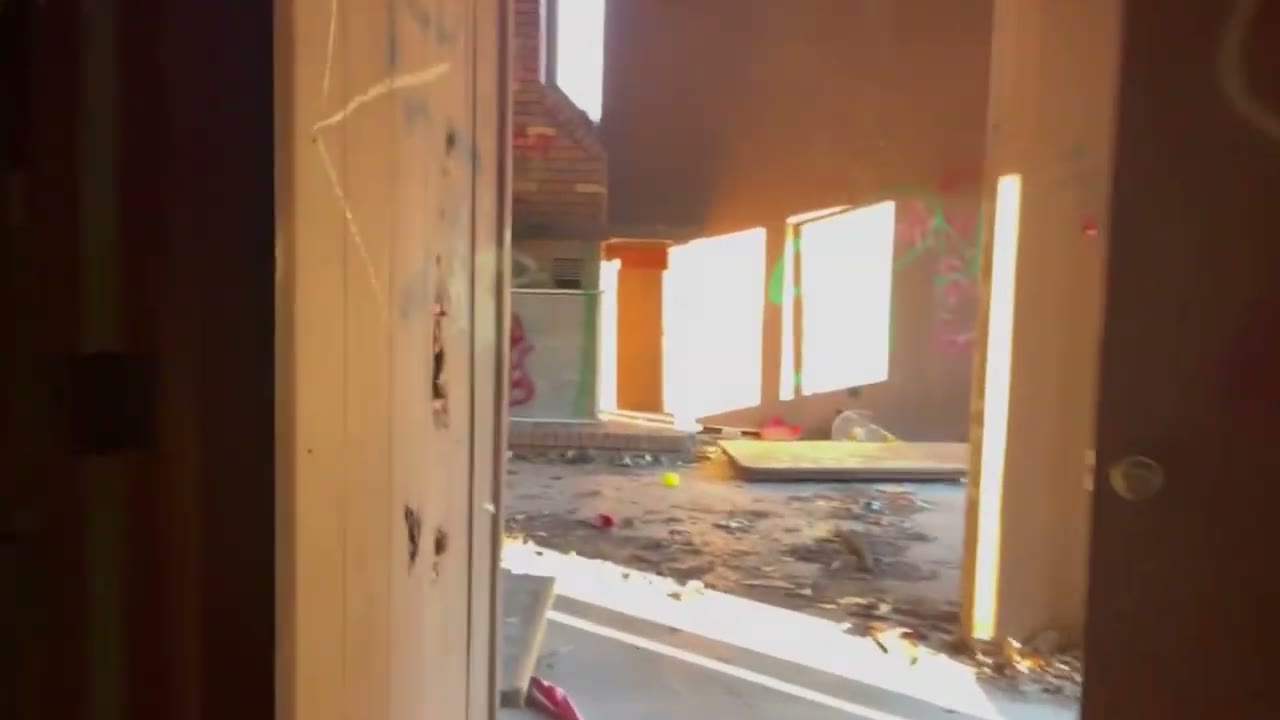
I haven’t been to North Brother Island, so I can’t tell you what the inside looks like. What I can show is what a smaller abandoned site looks like when nobody maintains it. The Girl Scout camp I filmed in Illinois, whose location I’m keeping private, had been vandalized and had water standing on the grounds. In another video I rafted out to an abandoned casino boat, and in another I found an abandoned cemetery hidden in the woods.
Hospitals carry their own risks, and my guide on abandoned hospitals covers them. My guide on wildlife in abandoned buildings explains what shares these spaces with you. If you want to learn how I find places like this without burning them, and how I stay safe, it’s in my $9.99 guide, How to Find Abandoned Places. It doesn’t make trespassing legal. A good light matters in any building with no power, and most flashlights, including brand name ones, aren’t bright enough, so I carry one good one, the Coast XP11R on my gear list.
North Brother Island is protected for two reasons, the condition of its buildings and the birds nesting around them.
What I carried in
Same list as every video description.
Sources
- Visiting North Brother Island, NYC Parks, accessed Nov 4, 2026
- North Brother and South Brother Harbor Herons Preserve, NYC Parks, accessed Nov 4, 2026
- Coastal Fish and Wildlife Habitat Rating Form for North and South Brother Islands, New York State Department of State, accessed Nov 4, 2026
- March 20, 1907 Authorities quarantine Typhoid Mary Mallon, ABA Journal, Mar 1, 2018
- General Slocum Disaster, National Archives at New York City, accessed Nov 4, 2026
- Long off-limits, North Brother Island may finally open to the public, Brick Underground, Nov 2, 2016
More like this

The footage that never goes public lives on Patreon. It's paid, and it's where the rough cuts, the security run-ins and the early releases go.